

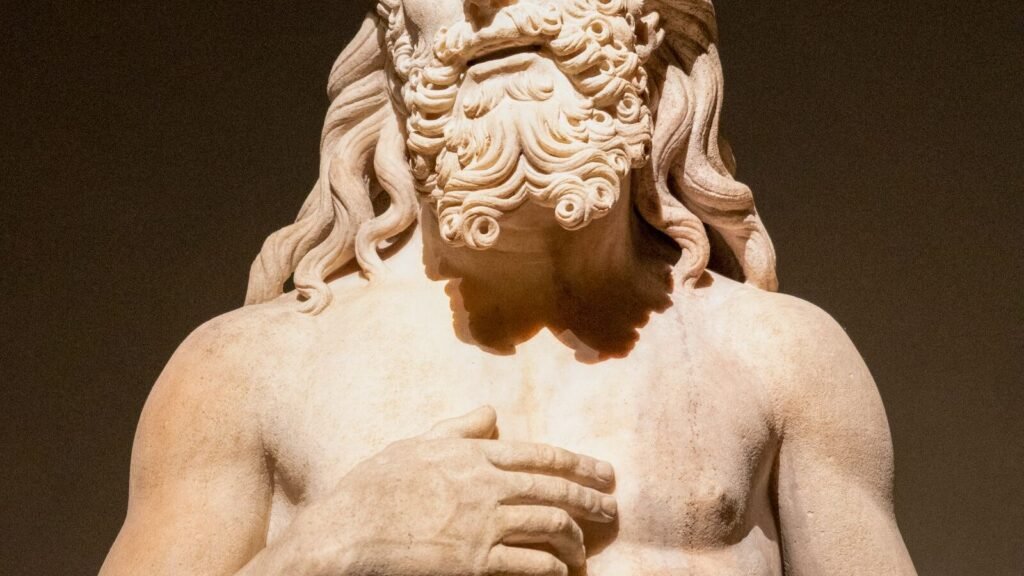
The Cyclops has one eye. That is not a detail buried in a footnote of Homeric scholarship. It is the entire point of the character, the thing every schoolchild remembers, the reason the sharpened stake works.
The five-minute film that just won Elon Musk’s $100,000 prize for a more historically accurate Odyssey gives Polyphemus three of them.
This would be a small joke if the contest had been about anything else. But the whole premise, stated repeatedly by Musk across months of posts, was that Christopher Nolan’s adaptation had betrayed the source material and that AI could do it properly. The competition was the proof. The proof has a three-eyed Cyclops in it.
Quick facts
- X put up $175,000 in total prizes for AI-generated Odyssey adaptations, split $100,000, $50,000 and $25,000 across the top three
- Entries had to be made with Grok Imagine, xAI’s video generation tool
- Filmmaker Nem Perez won first place with a five-minute film, announced by the official Grok Imagine account
- Perez’s entry restores the Phaeacians and Princess Nausicaa, with Odysseus washing ashore and describing what kept him going: his wife, his son and home
- Faces, locations and voices were all generated in Grok Imagine
- Polyphemus appears with three eyes, and changes size dramatically between cuts
- Greek soldiers wear armor matching Roman legionnaires, centuries out of period
- Nolan’s film has grossed about $1.684 billion worldwide, the highest of his career
How a movie review turned into a $175,000 prize fund
Musk started criticizing Nolan’s Odyssey in May 2026, before anyone had seen it. The complaints centered on casting. He objected to Lupita Nyong’o being cast as Helen of Troy and Clytemnestra, and wrote on X that Nolan was “an anti-White racist” and had lost his integrity.
He also amplified a series of posts attacking Elliot Page for supposedly playing Achilles. Page is not playing Achilles. Nolan cast him as Sinon. Musk additionally promoted the claim that the casting was driven by Academy diversity requirements, which is not true either.
Nolan was asked about the campaign and called it irrelevant, which turned out to be an accurate forecast. The film opened enormously and kept going, crossing a billion dollars and finishing as the biggest release of his career at roughly $1.684 billion, with Matt Damon as Odysseus alongside Tom Holland, Anne Hathaway, Robert Pattinson, Zendaya and Charlize Theron.
In July, Musk said Grok Imagine would produce a historically accurate version. By August that had become a formal competition on X with a real prize pool. He also, separately, offered Mel Gibson $100 million to direct a rival adaptation, and it remains unclear whether anything came of it.
What the winning film gets wrong
Perez called his entry “The Odyssey as Homer intended.” Reviewers went through it frame by frame, and the list is not short.
| What the film shows | What the source says | Type of error |
|---|---|---|
| Polyphemus with three eyes | A Cyclops has exactly one eye, which is the basis of the escape | Core mythology |
| Polyphemus changes size between cuts | Consistent scale within a scene | Model continuity |
| Greek soldiers in Roman legionnaire armor | Bronze Age Greek equipment, centuries earlier | Historical period |
| Poseidon rendered cartoonish and hyper-muscled | Visually consistent with the rest of the film | Style collapse |
| Gods resembling mobile game assets | The realistic register the film otherwise uses | Style collapse |
Two different failures are mixed together here, and it is worth separating them, because only one of them is really about AI.
The Roman armor is a research failure. Somebody prompted for Greek soldiers, got something that looked appropriately ancient, and did not know the difference. A human production designer with a library card catches that.
The three-eyed Cyclops and the shifting size are different. Those are the model doing what models do. Grok Imagine has seen enormous numbers of monsters, and monsters have multiple eyes far more often than they have exactly one. Asked for a giant with an eye, it produced a plausible-looking giant with eyes. Consistency across cuts is the oldest unsolved problem in AI video, because each shot is generated more or less fresh.
The accuracy argument was never really about accuracy
Here is the awkward structural fact. The complaint against Nolan was that he cast the wrong actors. The proposed remedy was a tool that cannot reliably render a one-eyed giant with one eye.
If fidelity to Homer were the actual standard, the AI version fails it far more severely than the film it was meant to rebuke. Nolan’s Odyssey takes liberties, as every adaptation of a 2,700-year-old poem does, but nobody in it is wearing equipment from the wrong empire and the Cyclops has the correct number of eyes.
Perez did do one genuinely interesting thing, and it deserves credit. He restored the Phaeacian episode and Princess Nausicaa, a large section of the poem that adaptations routinely cut for time. That is a real editorial choice made by a person who read the book. It is also the part of the film that has nothing to do with the AI.
What this says about AI video in 2026
Strip away the politics and there is a genuine technology story here, which is that a five-minute narrative film with generated faces, locations and voices was produced by one person and is watchable enough to argue about. Three years ago that was not possible at any budget.
The ceiling is also visible in the same footage. Character consistency across shots remains unsolved. Style drifts between scenes. The system has no model of what a thing is, only of what images of that thing tend to look like, which is why a monster with one famous eye acquires two spares.
That gap keeps showing up wherever AI-generated entertainment meets an actual audience. The first fully AI-generated sitcom premiered on YouTube and pulled 630 views in two days, which is the kind of number that settles an argument. The technology is impressive as a demonstration and thin as entertainment, and the gap between those two things is where most of this year’s AI film discourse lives.
Hollywood has noticed, and the response has been contractual rather than aesthetic. Performers now negotiate over synthetic likeness in detail, to the point that one actor’s lawyers spent six months on a single AI clause and were later asked by their union for guidance. The people whose faces are the raw material are the ones treating this most seriously.
The reaction
Responses split predictably. Plenty of replies praised the film, some calling it proof that one person with a laptop can now make an epic. Others called it slop, a word that has done heavy duty this year. Futurism described the winner as laughable nonsense.
Musk has not commented on the result, which is its own kind of answer given how much he had to say about the film that provoked it.
The slop label is worth taking seriously rather than as pure insult. It points at output that is technically finished but has nobody’s judgment inside it, the same quality that made AI-generated tributes to dead celebrities feel so wrong that Robin Williams’ family reactivated his Instagram to ask people to stop. Volume is cheap now. Being right about the Cyclops is apparently still hard.
Where this leaves things
The scoreboard is not close. Nolan’s version made roughly $1.684 billion and is the most successful film of his career. The rebuttal cost $175,000, runs five minutes, and fumbles the most famous monster in Western literature.
None of which means AI video is going nowhere. It means the specific claim being tested, that a generative model could out-accurate a major production, got tested in public and lost on the first detail anyone checked.
Homer gave Polyphemus one eye for a reason. Odysseus needs a single target. Give the monster three and the plan does not work, which is a fairly elegant summary of the whole exercise.
Sources and further reading
- TechRadar: Grok AI Odyssey contest winner features a three eyed Cyclops
- Futurism: the winner of Elon Musk AI Odyssey contest
- PetaPixel: the $100K winner of Musk AI Odyssey contest
About this article: GeekBlog covers U.S. technology news, AI, phones, smartwatches and gaming. Every story is written and checked under our Editorial Policy. Spotted a mistake or have a story tip? Contact our editors.
