

August 12 came and went. Everything stayed on the floor.
That should have been the end of a story that had spent months building on TikTok, Instagram and X: the claim that a leaked, top secret NASA document known as “Project Anchor” warned that Earth would briefly lose its gravity, for exactly seven seconds, on that specific day. Instead the debunking is still spreading two weeks later, which is its own small lesson in how this stuff works. The correction always travels after the panic, and it never travels as far.
The useful thing here is not that the claim was false. It was obviously false. The useful thing is how carefully it was built, because almost every piece of it was chosen to survive a skeptical glance.
The short version
- The claim: a classified NASA program called Project Anchor predicted a global “gravity blackout” lasting seven seconds on August 12, 2026
- The origin: traced back to social posts from 2024, where an account claimed to have seen proof of a secret NASA effort. The price tag attached to it has been quoted as both $89 million and $89 billion, depending on which retelling you found
- NASA’s answer: gravity is a function of mass. The only way Earth loses gravity is by losing mass, and it is not scheduled to do that
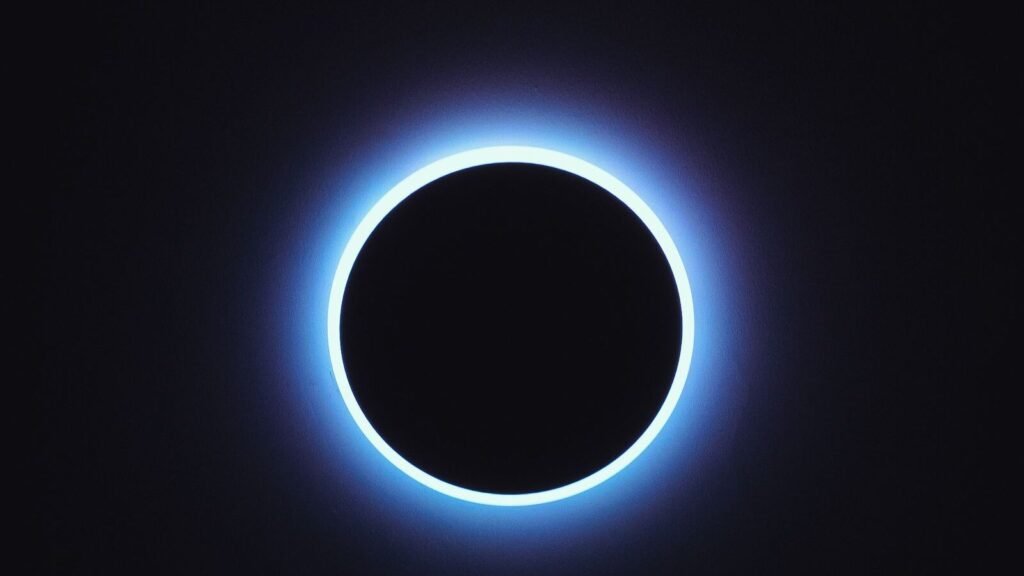
- Why that date: a genuine total solar eclipse crossed Greenland, Iceland, the Atlantic and northern Spain on August 12, 2026. The hoax borrowed a real event to stand on
- The verdict: Snopes, Newsweek, Fact Crescendo and multiple science desks all landed in the same place. There is no Project Anchor, and there was never a mechanism
What NASA actually said
The agency’s statement is short and it does the whole job in three sentences. “The Earth will not lose gravity,” a NASA spokesperson said. “Earth’s gravity, or total gravitational force, is determined by its mass. The only way for the Earth to lose gravity would be for the Earth system, the combined mass of its core, mantle, crust, ocean, terrestrial water, and atmosphere, to lose mass.”
That is not a denial in the political sense, where an agency says a thing did not happen and you weigh their credibility against the leaker’s. It is a statement about what gravity is. Mass curves spacetime. Remove the curvature for seven seconds and you have removed the mass, which means the planet, which means the seven seconds are the least of anyone’s problems.
| What the posts claimed | What is actually true |
|---|---|
| A leaked classified NASA document, “Project Anchor” | No such program appears in any NASA budget, contract database or public record. The document itself was never produced in a verifiable form. |
| Gravity can be temporarily switched off | Gravity is not a system with a switch. It is the geometric consequence of mass and energy. |
| A gravitational wave event would cause it | Gravitational waves stretch and squeeze space by fractions of a proton’s width by the time they reach us. They do not cancel gravity. |
| The eclipse on August 12 is connected | The eclipse was real. Its gravitational effect on you was the same as the Moon’s on any other day, which is to say measurable by instruments and by nothing else. |
| Governments were quietly preparing | No agency in any country issued guidance, because there was nothing to issue guidance about. |
The hoax was engineered, not stumbled into
Look at the components separately and a pattern shows up that has very little to do with space and a lot to do with how attention works.
That drifting budget figure is the cleanest evidence of what happened. The original posts, dating to 2024, described a secret NASA effort costing $89 million. By the time the claim peaked this summer, plenty of versions had promoted it to $89 billion. Documents do not do that. Rumors do, every time somebody retypes them from memory and rounds up for effect.
The eclipse did all the heavy lifting
Pick a random Tuesday and claim gravity will fail on it and nobody bites. Pick the day of a genuine total solar eclipse and you have handed every reader a verifiable fact to confirm, which does something strange to skepticism. People check the date, find that yes, something astronomical is genuinely happening, and quietly transfer that confirmation to the rest of the claim.
The August 12, 2026 eclipse was a real and rare event. Totality crossed the Arctic, Greenland, Iceland, the Atlantic, northern Spain and the far northeastern edge of Portugal. It was the first total solar eclipse visible from mainland Europe in decades, which meant enormous legitimate coverage, travel packages, and an entire internet’s worth of eclipse content for the hoax to shelter inside.
The Moon does exert a gravitational pull on you. It does so every second of every day, eclipse or not, and an eclipse is simply a geometry of shadows rather than a change in force. Alignment does not add pull. Nothing about the arrangement of two familiar objects makes the third one lighter.
The thought experiment people actually wanted
Here is the part that made the claim fun rather than frightening for a lot of people, and it is worth answering properly, because the popular version of the answer is wrong.
If gravity vanished for seven seconds, you would not be launched at the ceiling. Nothing would push you. You would simply keep whatever motion you already had, which for most people sitting still is close to none relative to the ground beneath them. You are moving very fast in an absolute sense, roughly 1,000 miles per hour eastward at the equator, but so is the chair, the building and the air, so nothing separates.
The trouble is the atmosphere. Air pressure exists because a very deep column of gas is being held down. Take away the weight and that column starts expanding outward, and expanding air moves fast. Then gravity returns, and everything that drifted, spilled, tipped or lifted comes back under acceleration at the same moment. The oceans slosh, the atmosphere collapses back inward, and the winds do the damage that the weightlessness did not.
Worth saying clearly
This is a physics exercise about an impossible premise, not a risk assessment. There is no mechanism by which it could happen, no evidence it was ever planned for, and no reason to treat the scenario as anything other than an interesting way to think about what gravity is actually doing all day.
Why the debunk arrived so late
The claim had a two year head start. It surfaced in 2024, sat dormant, then accelerated as the eclipse date approached and every algorithm on the internet started boosting anything tagged with it. TikTok and Meta reportedly stood up escalation procedures with fact checkers as the volume climbed, which is a reasonable response and also an admission that the material had already outrun ordinary moderation.
The structural problem is familiar. A claim that takes six words to make takes six paragraphs to dismantle, and the dismantling arrives after the audience has moved on. It is the same asymmetry we ran into when Pew tried to count how much of the web is now machine written, and found that roughly a third of everything published since ChatGPT launched carries signs of AI authorship. Volume is cheap on one side of this fight and expensive on the other.
Dates are especially good fuel. A claim with a deadline generates engagement right up until the deadline, then dies, then gets recycled with a new one. We looked at a stranger cousin of this recently, where a real 1960 paper in the journal Science named a doomsday date that happens to fall this November. That one at least has a genuine citation behind it, and the gap between “a real paper said a thing” and “the thing will happen” is exactly the gap Project Anchor was designed to hide.
A sixty second check for the next one
There will be a next one, probably attached to the next well publicized astronomical event. Four questions handle almost all of them.
- Can you open the document? Not a screenshot of a screenshot. The actual file, on the actual agency’s domain. “Leaked” claims that never produce the leak are the whole tell.
- Do the numbers stay still? If the budget, the duration or the date shifts between versions, you are watching a rumor evolve, not a fact circulate.
- Is there a mechanism, or just an outcome? Real science tells you how. Hoaxes tell you what, in vivid detail, and skip the how entirely.
- Who would have to be silent? Gravity is measured continuously by thousands of independent instruments and institutions worldwide. A seven second global anomaly cannot be kept quiet by one agency’s press office.
The good news is that this one resolved itself. The date arrived, the floor held, and the only thing that fell was the theory. The less good news is that the same five ingredients are sitting there, ready to be reassembled around the next eclipse, and the next one is never far away.
Want to catch the next one faster? Our guide covers how to spot AI generated images in 2026, and why the old checklist no longer works.
About this article: GeekBlog covers U.S. technology news, AI, phones, smartwatches and gaming. Every story is written and checked under our Editorial Policy. Spotted a mistake or have a story tip? Contact our editors.
