

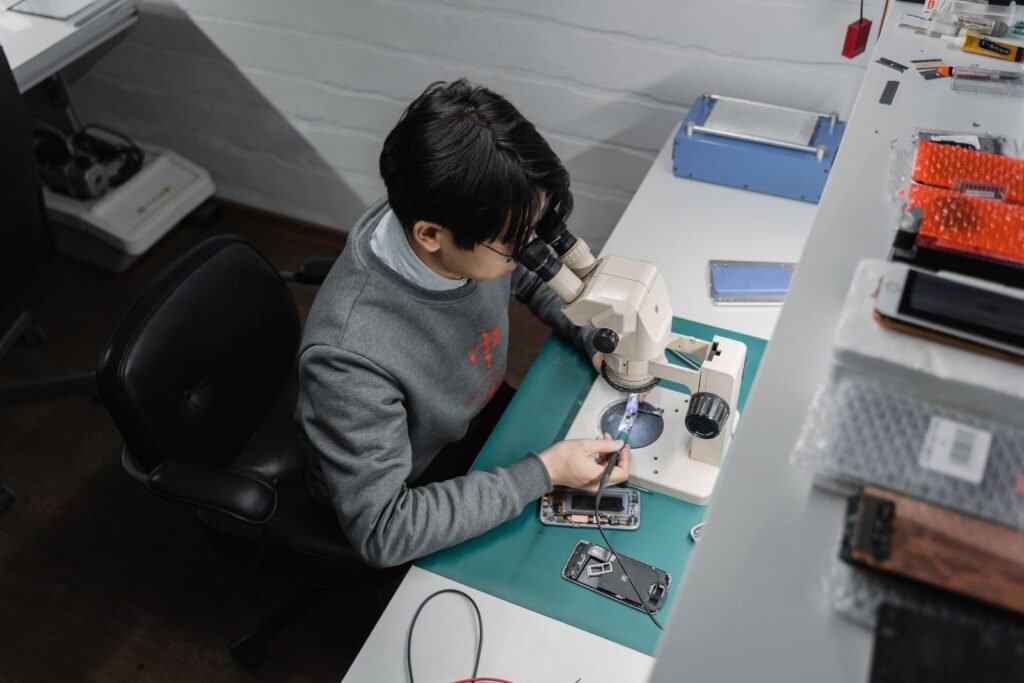
Buying a new phone has rarely felt worse. Samsung’s entry Galaxy S26 now starts at $999. Apple raised the price of every iPhone it sells by at least $100 in September, including models that hadn’t changed in a year, so even the cheapest one, the iPhone 17e, costs $699. IDC expects the average smartphone to sell for a record $523 this year, and it doesn’t see prices sliding back to 2025 levels any time soon.
So people are doing the sensible thing and buying last year’s phone secondhand. UK retailer musicMagpie says its refurbished iPhone sales jumped 53% after the iPhone 18 Pro and Pro Max went on sale, and TechRadar’s Thomas Deehan, a longtime “new phones only” holdout, wrote this week that after two refurbished iPhones he doesn’t plan to go back. His “like new” iPhone 17e arrived with 100% battery health and cost £170 less than Apple charges for a new one.
The savings in the US are just as real, and on some models they’re bigger. But “refurbished” covers everything from a phone Apple rebuilt with a fresh battery and shell to a scuffed handset with an aftermarket screen. Here’s what the numbers look like this Black Friday, which sellers actually stand behind their phones, and the five checks worth doing the day yours arrives.
- Why now: RAM costs pushed new phone prices up across the board, and refurbished prices didn’t follow at the same speed
- Biggest gap: a refurbished iPhone 17 has sold for as little as $638 on Back Market, about $260 under Apple’s $899
- Safest buy: Apple Certified Refurbished, with a new battery, new outer shell and a full one-year warranty
- Best value: Back Market or Amazon Renewed Premium, if you pick a grade with a 90% battery floor
- Don’t go older than: an iPhone 15 Pro or iPhone 16 if you want Apple Intelligence, since older models can’t run it
Why refurbished iPhones suddenly make so much sense
The story behind the price rises isn’t really about phones. AI data centers are buying memory in enormous volumes, and DRAM and NAND contract prices roughly tripled over three quarters of 2026. Phone makers pay those prices too. When Apple added $100 to every iPhone and $300 to the 1TB models, it was passing that bill along.
A refurbished phone sidesteps the whole problem. Its memory was bought and paid for years ago at old prices. What you pay now reflects demand for used devices and the cost of testing and repairing them, not this year’s chip market. That’s why the gap between new and refurbished has widened rather than shrunk as new prices climbed.
IDC’s forecasts point in the same direction. The firm expects smartphone shipments to fall 12.9% this year, the steepest drop it has ever forecast, and a recent IDC report says the memory crunch won’t fully ease until 2028 at the earliest. When new phones get more expensive and people keep their old ones longer, the refurbished market tends to grow. IDC has projected refurbished smartphone sales at roughly 413 million units a year by 2026.
Where to buy a refurbished iPhone in the US
The phone matters less than the seller. Two “excellent condition” iPhones can be very different devices depending on who refurbished them and what they promise if something goes wrong. These are the four places most US buyers end up, and how their guarantees compare.
| Seller | Battery | Warranty | Typical savings | Best for |
|---|---|---|---|---|
| Apple Certified Refurbished | Brand new | 1 year, AppleCare+ eligible | Up to about 15% | Peace of mind, gifts |
| Back Market | 80% minimum, 90% on Premium | 1 year | Often 25% to 40% | The lowest prices |
| Amazon Renewed Premium | 90% minimum | 1 year return or replacement | Usually 20% to 30% | Easy returns |
| Amazon Renewed (standard) | 80% minimum | 90 days | Varies by seller | Budget backup phones |
Apple’s program is the closest thing to buying new. Every Certified Refurbished iPhone gets a new battery and a new outer shell, ships in a fresh white box with a cable, and carries the same one-year warranty as a new phone. The catch is selection and price. Apple only stocks a handful of models at a time, the discount tops out around 15%, and as of late October its US refurbished store listed iPhone 15 and iPhone 16 models but no iPhone 17 at all.
Back Market is a marketplace, so you’re really buying from one of many independent refurbishers who sell through it. Back Market sets the rules, though: every phone must be fully functional, batteries must hold at least 80% of their original capacity, and you get a year of warranty plus a 30-day return window. Only the Premium grade guarantees genuine Apple parts and at least 90% battery health. The lower grades allow “compatible” parts of equivalent quality, which usually means a non-Apple screen or battery.
Best Buy also sells refurbished iPhones, often next to its open-box stock. Warranty terms vary by listing, so read the fine print on each product page before you assume you’re covered for a full year.
Which refurbished iPhone should you actually buy?
The cheapest listing is rarely the best deal. Software support and Apple Intelligence matter more than they used to, and they draw a clear line through the lineup. iOS 27 still runs on everything back to the iPhone 11, but Apple’s AI features and the new Siri need an iPhone 15 Pro, an iPhone 16 or something newer. Buy below that line and you’re paying for a phone that is already missing features its successors get.
| Model | Apple Intelligence | Who it suits | Our take |
|---|---|---|---|
| iPhone 17 | Yes | Anyone keeping a phone 4+ years | Best overall pick if you find one under $700 |
| iPhone 17e | Yes | Small hands, one-handed use | Worth it only well below $600 |
| iPhone 16 Pro | Yes | Camera fans on a budget | 5x telephoto and ProMotion for less than a new iPhone 17 |
| iPhone 16 | Yes | Most people | The value sweet spot right now |
| iPhone 15 Pro | Yes | Bargain hunters | Oldest model that gets the full AI feature set |
| iPhone 15 and older | No | Kids, backup phones | Fine if price is everything, but skip as a main phone |
If you’re torn between the two most common picks, our iPhone 16 vs iPhone 17 comparison breaks down what the newer model’s 120Hz display and bigger battery are worth in practice. In refurbished terms, the gap between them is often bigger than the $100 it was at retail, which makes the iPhone 16 even easier to recommend.
Five checks to do the day your refurbished iPhone arrives
Most return windows run 14 to 30 days, so do these on day one, not week three.
Before buying, Apple’s coverage checker at checkcoverage.apple.com tells you whether a serial number still has AppleCare or warranty left. Many sellers list the serial or IMEI on request, and a phone with leftover AppleCare+ is worth more than the listing price suggests.
Are refurbished iPhones cheaper on Black Friday?
Sometimes, but less than you’d think. Back Market says outright that it doesn’t slash prices for Black Friday because its refurbished prices are already low all year. It runs promotions through November 30 instead, mostly extra discounts on specific models. Prices on marketplaces move with supply, and supply peaks a few weeks after a new iPhone launch when trade-ins flood back into the system. That’s happening right now, about ten weeks after the iPhone 18 Pro arrived.
The best way to judge a refurbished deal is against the new price, not against the “was” price on the listing. Right now that math favors refurbished more than it has in years. New iPhones and Galaxy flagships went up $100 to $200 this year, while refurbished prices are still set by the older, cheaper market they came from.
Your old phone is part of the equation too. If you’re trading in to fund the upgrade, Apple raised its trade-in values earlier this year, though marketplaces like Back Market often pay more if you’re willing to ship the phone yourself.
The bottom line
A 53% jump in refurbished iPhone sales isn’t a fad. It’s people doing the math on a market where the newest phones got more expensive for reasons that have nothing to do with the phones themselves. A refurbished iPhone 16 or 17 from a seller with a one-year warranty and a 90% battery floor is the best value in Apple’s lineup right now, and you won’t find it on Apple’s own price list.
If you want the absolute safest route, buy Apple Certified Refurbished and accept a smaller discount. If you want the biggest savings, use Back Market or Amazon Renewed Premium, pay a little extra for the higher battery guarantee, and run the five checks above the day it lands. Either way, you’ll keep a few hundred dollars that would otherwise have gone to the memory shortage.
About this article: GeekBlog covers U.S. technology news, AI, phones, smartwatches and gaming. Every story is written and checked under our Editorial Policy. Spotted a mistake or have a story tip? Contact our editors.
