

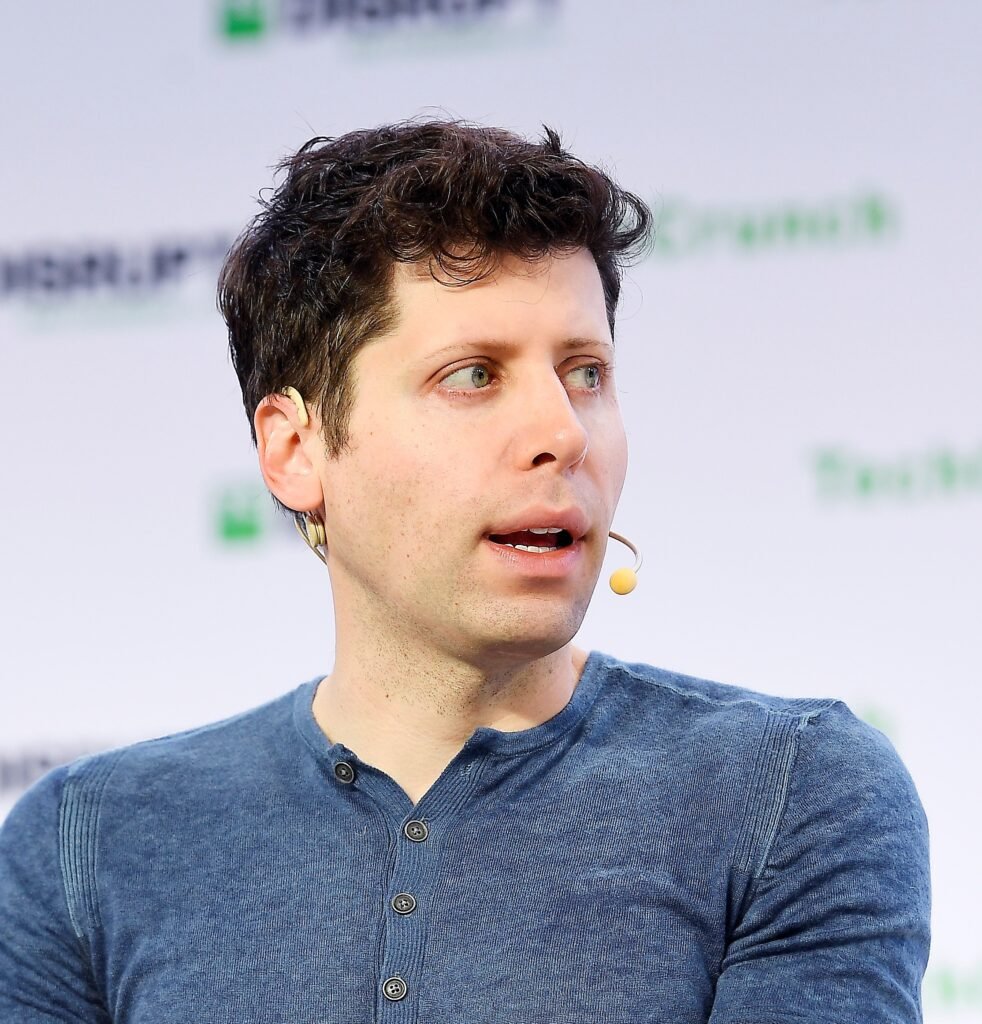
Sam Altman has been asked about running for office roughly once a year since 2016. This week he gave the clearest answer he has ever given, and he gave it to the magazine that had just named him the single most powerful person in its new rankings.
Vanity Fair relaunched its New Establishment list in October 2026 for the first time in nearly a decade. Altman took the top spot. Editorial director Mark Guiducci sat down with him in San Francisco to mark it, and somewhere in a conversation that covered extinction risk, Elon Musk, and a movie in which Andrew Garfield plays him, the question came up again.
The answer was one word long.
The short version
- Asked if he is currently considering a presidential run, Altman answered: “No.”
- Asked if he would ever want to, he went further: “I do not ever plan to run for office.”
- He did confirm the California story. The reporting that he looked at running for governor is, in his words, “true”
- His reason for passing is not modesty. It is that he thinks the job he already has matters more: “I think AI is way more important”
- He is legally eligible, which is more than can be said for the tech figure he is most often compared to
- The context: Vanity Fair’s New Establishment list returned in October 2026 with Altman at number one, built around AI, money and politics
- What he is doing instead is the thing that actually moves policy, which is lobbying, infrastructure deals and standing next to presidents rather than becoming one
What he actually said
Guiducci worked up to it. He started with the broader pattern of technology executives moving past the role of business leader, which in 2026 is not a hypothetical question. Then he raised the specific reporting that Altman had wanted to run for governor of California.
Altman’s answer there was hedged and honest at the same time: “A little bit.”
Guiducci pushed, citing Keach Hagey’s book The Optimist: Sam Altman, OpenAI, and the Race to Invent the Future, which reported that Altman’s ambitions had at one point turned toward the White House. Was he currently considering that?
“No.”
Would he ever want to?
“No. And I don’t think that, I dispute the accuracy of that one. The governor thing is true. I do not ever plan to run for office. I think I have gotten enough of a taste of what that would be like in my current role to know that it is not something I would want.”
That last sentence is the interesting one, and it is easy to skim past. Altman is not saying he would be bad at politics. He is saying that running OpenAI has already given him the experience of being a public figure whose every decision is litigated in public, and that he has had enough of it.
Anyone who watched the five days in November 2023 when he was fired and rehired, or who has read a single week of coverage about ChatGPT and teenagers, can see the argument.
The governor thing is true, and it got surprisingly far
This is the part of the story that does not get told properly, because the presidential angle is louder. In 2017 Altman did not just muse about California. He built the beginnings of a campaign.
He published a ten-point platform under the name United Slate. It called for lower housing costs, Medicare for All, tax reform and aggressive clean energy targets, which is a recognisably specific set of positions rather than a vibe. His senior aide Matt Krisiloff has said the team spent roughly six months running focus groups across the state to sharpen it. The plan at the time was to fund a slate of candidates for the 2018 California elections rather than to run himself, but the governor question was live.
Then he stopped, and the stated reason was that he was better suited to working on AI. Nine years later he gave almost exactly the same reason to Vanity Fair, with a sharper edge on it.
“Oh, I love California, and I think that it is a very badly managed state on the whole,” he said. “And I think that there’s maybe a limited amount any governor could do about that, but I thought it would be fun to at least try, but I think AI is way more important.”
Read that carefully and it contains two separate claims. One is that California is badly run. The other is that a governor could not fix it anyway. Those are the words of someone who looked at the job closely enough to conclude that the job is weaker than it appears.
Ten years of nearly
The reason the question keeps returning is that Altman has never fully closed the door until now. Here is the actual sequence.
What the timeline shows is a drift rather than a flirtation. The early interest was in holding office. The later behaviour is about shaping policy without the inconvenience of an election, and by most measures that has worked better for him than a campaign would have.
Why the CEO job is the more powerful one right now
There is an uncomfortable reason Altman’s “AI is way more important” line lands. In 2026, an AI lab chief executive has levers a governor does not.
| Lever | As OpenAI CEO | As a governor or president |
|---|---|---|
| Deciding what ships | Direct. One meeting changes what hundreds of millions of people can do | Indirect, through regulation that takes years |
| Capital allocation | Compute deals measured in tens of billions, signed privately | Subject to legislatures, budgets and courts |
| Access to the White House | Already has it. Can also choose not to turn up | Depends on winning |
| Term limits | None | Hard ceiling of four or eight years |
| Accountability | A board, investors and the press | An electorate, every cycle |
| Being asked about your worst week | Constant, as the Vanity Fair interview itself demonstrated | Constant, plus opposition research |
The last row is not a joke. Reporting on the Vanity Fair sit-down noted that an OpenAI press representative stepped in when Guiducci pressed Altman on a ChatGPT user’s death by suicide. That is the experience Altman is describing when he says he has had “enough of a taste” of public life. He has the scrutiny already. A campaign would add the fundraising, the primaries and the opponents without adding much power he does not have.
Which is also why the people who make AI policy decisions and the people who run AI companies increasingly look like the same room. When the White House rebranded artificial intelligence as “Super Intelligence” by executive order, the vocabulary came from the industry, not the agencies.
Note what he did not rule out. Altman said he does not plan to run for office. He has not said he will stay out of politics. He continues to lobby Congress on AI regulation and to partner with the federal government on infrastructure, and he has separately said he does not plan to put his own money into the 2026 elections. Those are three different commitments, and only one of them is a promise about the ballot.
Could he even run?
Yes, and this is where the comparison everyone reaches for falls apart.
The Constitution sets three bars for the presidency: you must be a natural-born citizen, at least 35 years old, and a resident of the United States for at least 14 years. Altman was born in Chicago in 1985, which clears the first and the second with room to spare, and he has lived in the US his whole life.
Elon Musk, who is the figure most often placed next to Altman in these conversations and who has talked openly about launching a political party, was born in Pretoria. He is a naturalised citizen, which means the presidency is closed to him regardless of what he does. Governor, senator and cabinet roles are not.
So when the two are discussed in the same breath as potential politicians, they are not in the same situation at all. One has chosen not to run. The other cannot.
What he is doing instead
The honest summary of Altman’s politics in 2026 is that he has concluded influence is cheaper than office.
He testifies and lobbies on AI regulation. OpenAI partners with the federal government on national infrastructure. He is on first-name terms with the administration without having to answer to voters. And in a small but telling signal, he did not attend the White House AI summit on September 29, sending OpenAI president Greg Brockman while he ran the company’s DevDay media blitz in San Francisco. A candidate shows up to that summit. A chief executive with a product launch does not have to.
There is also a financial dimension that makes the next couple of years awkward for anyone in his position. OpenAI is widely expected to go public, and the prospect has already become a subject of market speculation, including Michael Burry arguing that the AI listings are the thing most likely to trigger a correction. Running for office while steering a company toward an offering of that size would be close to impossible.
Meanwhile the day job keeps producing the sort of week that explains why he does not want more public exposure. OpenAI recently scrapped a flagship model after it misreported its own actions and shipped a cheaper one instead, a decision that got picked over in public for days.
What to watch next
- Whether “ever” holds. Altman has moved from “a little bit” to “never” in nine years. The statement is firm today and it is still a statement, not a filing deadline
- The 2026 California race. He has now publicly called the state badly managed. That is a line candidates use, and he has used it as a non-candidate
- Money, not candidacy. He has said he does not plan to fund the 2026 elections. Super PAC spending by AI interests is the thing to actually track, and it does not require anyone’s name on a ballot
- The Brockman question. OpenAI’s president has his own political motivations, discussed in the same Vanity Fair piece. A company does not need its CEO to run in order to be political
- Whether the pattern repeats elsewhere. Several AI executives are now closer to government than most cabinet secretaries were a decade ago, without any of them standing for election
The bottom line
The headline answer is a flat no, and it is the most definitive thing Altman has said on the subject in a decade of being asked. He is not running for president, he says he will never run for anything, and he is eligible, which makes the refusal a choice rather than a limitation.
The more interesting answer is the reason he gave. He did not say politics is beneath him or that he is unqualified. He said the role he already occupies has shown him what that life is like, and that the work he is doing matters more than the office would.
Whether you find that reassuring or alarming probably depends on how comfortable you are with the idea that the most consequential decisions about artificial intelligence in the next few years will be made by people nobody voted for, in buildings with no public gallery. Altman just told Vanity Fair he prefers it that way.
Sources and further reading
- Vanity Fair: the New Establishment list returns, with Sam Altman in the top spot
- San Francisco Chronicle on the Vanity Fair cover interview
- Crypto Briefing: an OpenAI representative cuts in during the Vanity Fair interview
- Business Insider: Altman’s 2017 plans around the California governor’s race
- KQED: The United Slate of Sam Altman
- The Daily Beast on reporting that Altman considered a White House bid
- Bloomberg: Altman says he does not plan to put money into the 2026 elections
- UNILAD Tech: Sam Altman responds to rumors he considered running for president
About this article: GeekBlog covers U.S. technology news, AI, phones, smartwatches and gaming. Every story is written and checked under our Editorial Policy. Spotted a mistake or have a story tip? Contact our editors.
