

In February 2026, OpenAI CEO Sam Altman pushed back on criticism of AI’s environmental footprint by pointing out that humans use a lot of energy too. Speaking in an onstage interview during the India AI Impact Summit in New Delhi, he argued that the fair comparison is the energy an already trained AI model needs to answer a question versus what a person needs, after counting the years it takes to raise and educate that person. The remark spread quickly and drew sharp criticism. Here is what he said, what the data on AI energy use actually shows, and where the debate stands in October 2026.
What Altman said, as reported
According to reports of the interview, Altman made three main points:
- Water: he dismissed widely shared claims that a single ChatGPT query uses gallons of water as completely untrue. He acknowledged water was a real issue when data centers relied on evaporative cooling, but said that is no longer how they are cooled.
- Total energy: he said it is fair to worry about AI’s overall energy consumption, not because of any single query but because the world now uses so much AI. His answer was that the world needs to move quickly toward nuclear, wind and solar power.
- Humans versus machines: he argued that comparisons focusing on the energy needed to train a model are unfair, because training a human also takes enormous energy: about 20 years of life and all the food eaten along the way, plus the long history of human evolution. Measured per answer, once the model is trained, he said AI has probably already caught up with humans on efficiency.
The last point is the one that went viral. Zoho cofounder Sridhar Vembu was among the critics, writing that he did not want to see a world where technology is equated with a human being, and many online commenters called the comparison dehumanizing.
What the data says about AI and data center energy
There is no legal requirement for AI companies to publish detailed energy and water figures, so most of what is known comes from a handful of company disclosures and independent agencies.
| Source | Figure | What it covers |
|---|---|---|
| International Energy Agency | About 415 TWh in 2024, roughly 1.5% of global electricity, rising to about 945 TWh by 2030 | All data centers worldwide |
| Lawrence Berkeley National Laboratory for the DOE | 176 TWh in 2023, about 4.4% of US electricity, projected at 325 to 580 TWh by 2028 | US data centers |
| Sam Altman, June 2025 blog post | About 0.34 watt hours and 0.000085 gallons of water per average ChatGPT query | Company claim, methodology not published |
| Google, August 2025 | 0.24 watt hours and 0.26 milliliters of water per median Gemini text prompt | Text prompts only, excludes training |
The IEA also says that data centers will account for nearly half of the growth in US electricity demand through 2030, and that a typical AI focused data center uses as much electricity as about 100,000 households, with the largest ones under construction expected to use around 20 times that. The Berkeley Lab projection would mean data centers using roughly 6.7% to 12% of all US electricity by 2028.
How the human comparison holds up
As rough arithmetic, a person eating about 2,000 calories a day takes in around 2.3 kilowatt hours of food energy daily, or roughly 17,000 kWh over 20 years. If the per query company figures are accurate, a single day’s worth of a person’s food energy would equal thousands of chatbot answers. That is the logic behind Altman’s point.
Critics see several problems with it. People are not raised to answer questions, so assigning a lifetime of food to a single task is not a like for like comparison. AI does not replace the energy a human uses, because the person still eats whether or not a chatbot answers. And per query numbers from companies are hard to verify: Google did not define how large a median prompt is, and OpenAI has not published how its figure was calculated. The main worry for grid operators and researchers is not a single query anyway, but the steep rise in total demand that Altman himself called a fair concern.
Both sides of the debate
Per prompt energy is small and falling. Google reported its median prompt energy fell 33 times in a year. Viral water figures per query have been far above published company data.
Total demand is growing fast, disclosure is voluntary, and efficiency gains are often swallowed by higher usage. Comparing people to machines on energy cost strikes many as the wrong framing.
Where the two sides tend to agree is on the solution Altman named: adding a lot of clean generation, from nuclear to wind and solar, fast enough to keep up with data center growth.
FAQ
What did Sam Altman say about humans and energy?
He argued that training a human also takes a lot of energy, about 20 years of life and food, and that per answer, a trained AI model has probably caught up with humans on efficiency.
How much energy does one ChatGPT query use?
OpenAI’s CEO has said an average query uses about 0.34 watt hours. The figure has not been independently verified.
How much electricity do data centers use?
The IEA estimates about 415 TWh worldwide in 2024, around 1.5% of global electricity, with demand projected to more than double by 2030.
Is ChatGPT’s water use a real issue?
Altman says claims of gallons per query are untrue. Water use depends heavily on how each data center is cooled and where it gets power, so totals vary by site.
The verdict
Altman’s human comparison is clever but slippery, and it distracted from his more useful point: the real challenge is AI’s total energy demand, not any single query. The independent numbers back that up, and how quickly new clean power comes online will decide how big AI’s footprint becomes.
Updated October 2026: rewritten to explain Altman’s February 2026 remarks, the latest IEA and Berkeley Lab data center figures and the arguments on both sides.
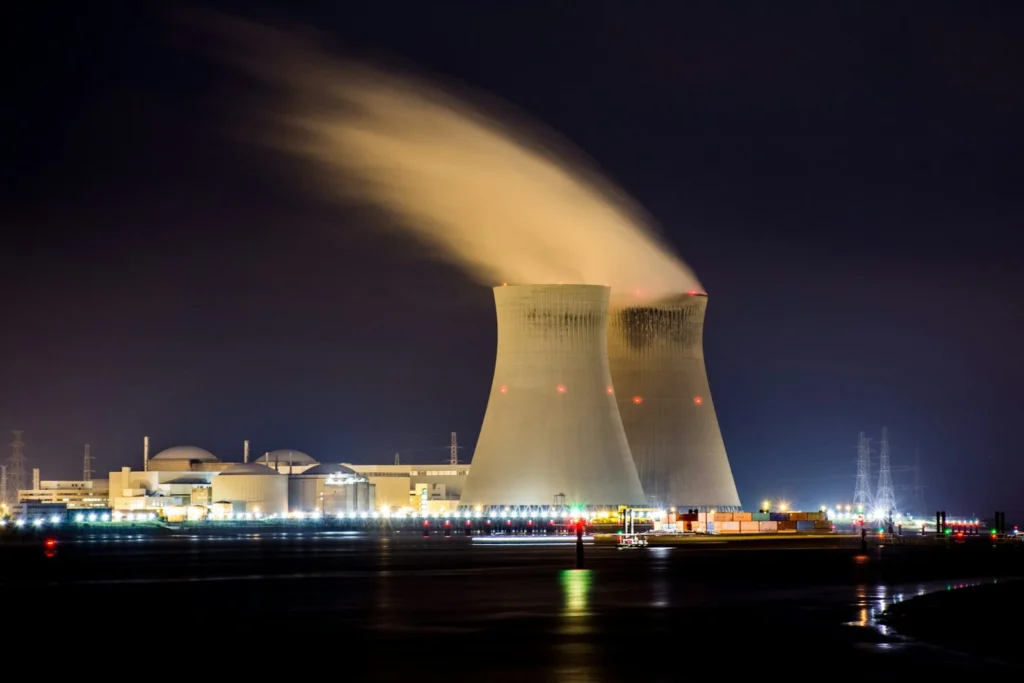
Featured photo: Nicolas HIPPERT on Unsplash.
About this article: GeekBlog covers U.S. technology news, AI, phones, smartwatches and gaming. Every story is written and checked under our Editorial Policy. Spotted a mistake or have a story tip? Contact our editors.
