

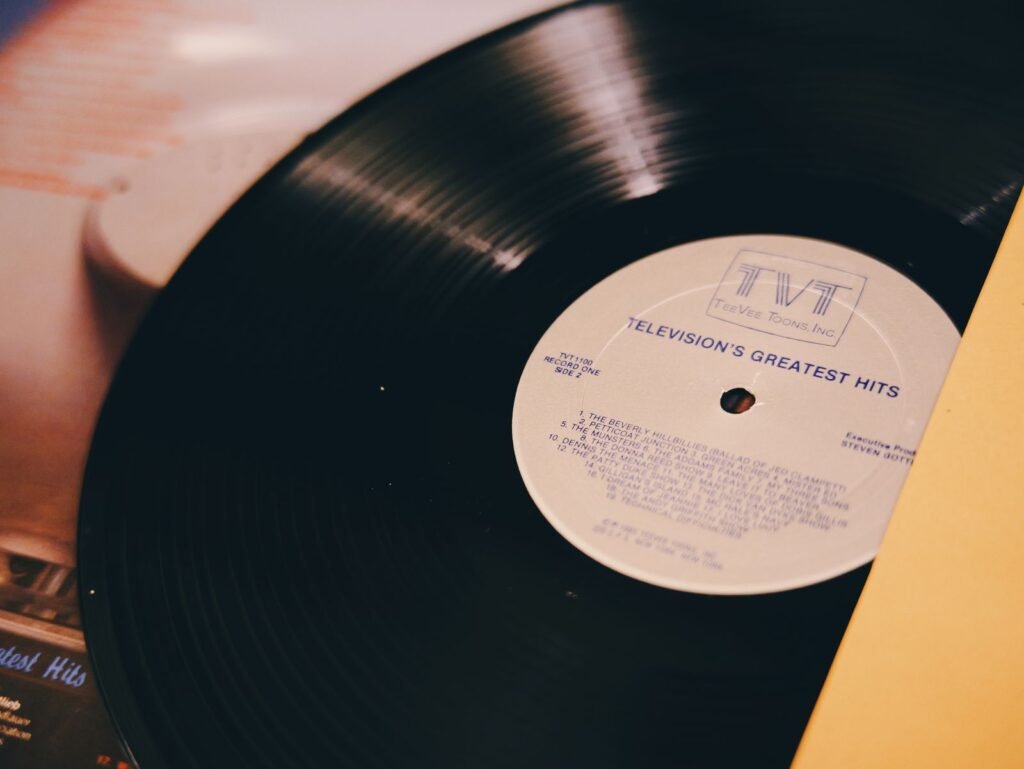
Every so often a claim resurfaces online that Steve Jobs and The Beatles are tied together by theft rather than admiration — that Jobs “copied and stole” the band’s name, ideas, and even its logo when he built Apple. The tidiest version of that story traces back to a Reddit discussion, and it has since been repeated as if it were settled fact. It isn’t, so let’s lay it out and check it against the record.
The claim, stated plainly
The argument, as it circulates, goes something like this: The Beatles founded a company called Apple in 1968. Steve Jobs, a devoted Beatles fan, later named his own company Apple, borrowed the fruit imagery for its logo, and lifted business ideas from the band he idolized. In the harshest telling, this makes Jobs a copycat who “stole” from the group that inspired him. It’s a compact, provocative story, and it lands because a few of its ingredients are genuinely true. The band did have an Apple. Jobs genuinely loved the Beatles. And the two Apples really did spend nearly three decades in court.
The trouble is that stringing those true facts together does not produce the conclusion the claim wants. “Two companies ended up with the same name and fought about it” is a very different statement from “one man copied and stole from the other.” Let’s separate the wiring.
Apple vs. Apple: what the trademark record actually shows
The Beatles’ company, Apple Corps, was founded in 1968 as the band’s multimedia umbrella, best known for the Apple Records label. Its logo is a glossy green Granny Smith apple, whole on the front of records and sliced in half on the reverse. Apple Computer was founded by Steve Jobs, Steve Wozniak, and Ronald Wayne in 1976. Its logo has never been a realistic green apple: the first was an elaborate engraving of Isaac Newton under an apple tree, quickly replaced in 1977 by Rob Janoff’s now-iconic silhouette apple with a bite taken out of it, originally in rainbow stripes. Two apples, two very different marks.
Because both companies used the word “Apple,” they collided legally almost as soon as the computer company grew visible. What followed was not a story of one side copying the other, but a long-running trademark coexistence dispute — the kind that happens whenever two businesses in different fields share a common English word. Here is the timeline.
| Year | What happened | Outcome |
|---|---|---|
| 1968 | The Beatles found Apple Corps and Apple Records. | The “Apple” name is established in the music industry. |
| 1976 | Jobs, Wozniak, and Wayne found Apple Computer. | A second “Apple” enters the computer industry. |
| 1978–1981 | Apple Corps sues for trademark infringement; the case settles in 1981. | Apple Computer pays a reported $80,000 and agrees to stay out of the music business; Apple Corps agrees to stay out of computers. |
| 1986–1989 | Apple adds MIDI and audio-recording features to its machines; Apple Corps says this breaks the 1981 deal and sues again. | The dispute heads back toward court over what “the music business” means. |
| 1991 | A second settlement (reported around $26.5 million) redraws the boundaries. | Apple Corps keeps rights over creative works whose main content is music; Apple Computer keeps rights over goods and services used to deliver content. |
| 2003–2006 | Apple Corps sues over the iTunes Music Store, arguing it crosses into music. | In May 2006 a UK court rules for Apple Computer, finding no breach of the agreement. |
| 2007 | The companies settle everything. | Apple Inc. takes ownership of the Apple trademarks and licenses certain marks back to Apple Corps, ending the dispute. |
Read that sequence and one thing is obvious: this is a coexistence and boundary fight, not a plagiarism case. Apple Corps never argued that Jobs had “stolen” the Beatles’ identity or copied its logo. It argued that a fast-growing computer company was creeping into music-industry territory the 1981 and 1991 agreements had reserved for the band. When the businesses finally overlapped for real — iTunes selling songs — the court sided with the computer company, and the two sides eventually made peace on commercial terms. Money changed hands, but as licensing and settlement, not as damages for theft.
Steve Jobs and the Beatles: real devotion, not disguise
The claim leans heavily on the fact that Jobs was a Beatles obsessive, as though fandom were a motive for fraud. The fandom part is true and well documented. Jobs spoke often about The Beatles and Bob Dylan, kept Dylan bootlegs, and returned to the band as a lens for how he thought about teams. In a 2003 interview with CBS’s 60 Minutes, later rebroadcast after his death, he put it directly:
“My model for business is The Beatles. They were four guys who kept each other’s negative tendencies in check. They balanced each other, and the total was greater than the sum of the parts. That’s how I see business: great things in business are never done by one person, they’re done by a team of people.”
That quote is the strongest evidence the “copied” story has, and it actually points the other way. Jobs is describing an admiration for how the band worked together, not a plan to appropriate its brand. Citing a group as your management inspiration is the opposite of secret theft; it’s public homage. Plenty of executives name a hero. Doing so is not copying, and it certainly isn’t stealing.
What’s true, what’s speculation, and what’s just legend
Sorting the ingredients matters, because the claim survives by blending them.
Documented and true
Apple Corps predates Apple Computer by eight years. Both used the name “Apple.” The two companies litigated on and off from 1978 to 2007. Jobs loved The Beatles and openly called the band his business model. The Beatles’ catalog was famously late to iTunes, arriving only in 2010, years after most major artists.
Speculation dressed as fact
The idea that Jobs chose the name “Apple” because of the Beatles is an assumption, not a documented fact. Jobs’s own account, repeated by biographer Walter Isaacson, is more mundane: he had been on a fruitarian diet and had just come back from an apple orchard at a commune, thought the word sounded “fun, spirited, and not intimidating,” and liked that it would appear ahead of Atari in the phone book. He acknowledged the potential trademark conflict at the time but went with the name anyway. That is a plausible influence story at best, not evidence of intent to copy the band.
Legend and misreading
The notions that Apple “stole” the Beatles’ logo or “stole” the Beatles’ ideas do not hold up. The logos are visibly different fruit rendered in different styles for different industries, and no court ever found the mark itself to be copied. The 2007 payment was a licensing-and-ownership settlement, not a theft judgment. Treating a shared dictionary word and a fan’s admiration as proof of a heist is where the online version of this story overreaches.
The verdict
Strip the story down and you get a far less scandalous, far more interesting reality. Two companies happened to share one of the most common words in English, in industries that started worlds apart and slowly drifted into each other as computers learned to play music. That overlap produced a genuine, decades-long trademark dispute, resolved sensibly in 2007. Layered on top is a founder who genuinely revered the band whose company shared his company’s name — a coincidence rich enough to fuel exactly the kind of Reddit thread that started this.
Did Steve Jobs copy and steal from The Beatles? On the documented record, no. He named his company Apple for reasons he described himself, adopted a distinct logo, and openly praised the band as a model for teamwork rather than quietly lifting its brand. The lawsuits were about where two “Apples” could operate, not about plagiarism, and the band’s own company never accused Jobs of stealing its identity. The honest verdict is that the “copied and stole” framing is a compelling story built on real facts arranged to imply something the evidence doesn’t support. It’s a coincidence and a coexistence dispute, dressed up as a crime.
About this article: GeekBlog covers U.S. technology news, AI, phones, smartwatches and gaming. Every story is written and checked under our Editorial Policy. Spotted a mistake or have a story tip? Contact our editors.
