

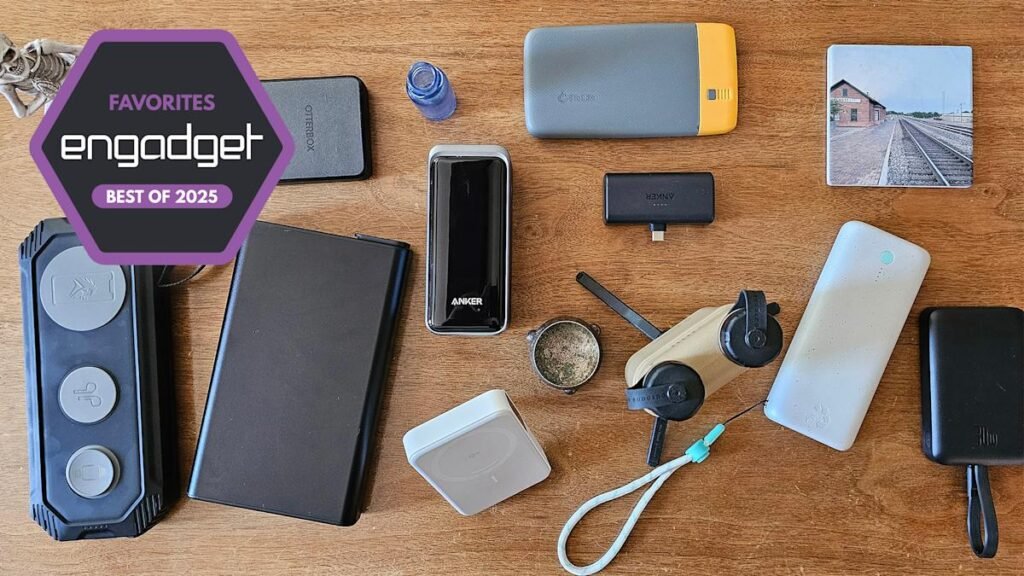
Buying a power bank in 2026 starts with a number that is not printed on the front of the box. Airlines now care about watt hours, not milliamp hours, and since 27 March 2026 the rules are the same worldwide: two power banks per passenger, none in checked baggage, none in the overhead bin, and no charging from one during the flight. A 27,000mAh pack is the largest you can carry without asking permission. Buy above that and you are buying paperwork.
Quick answer
For a phone, 10,000mAh with at least 30W output covers two full charges and fits in a pocket. For a laptop, 20,000mAh with 100W and two USB C ports. For flying, stay under 100 watt hours, which means roughly 27,000mAh or less at typical cell voltage, and keep it under the seat in front of you rather than overhead. Never put a spare battery in checked baggage: that is prohibited everywhere, not just discouraged.
Below is the watt hour maths you actually need, what changed in the air this year and why, how to match capacity and wattage to what you charge, and the safety habits that matter now that regulators are paying attention.
Power banks at a glance
Limits from FAA guidance and the ICAO standard that took effect on 27 March 2026. Individual airlines may be stricter.
What changed in the air this year
Two fires did it. In January 2025 a power bank ignited in an overhead locker on Air Busan flight BX391 and the aircraft was destroyed. In October 2025 a battery caught fire in an overhead locker on Air China flight CA139. By June 2025 the FAA had logged 38 battery incidents in the US alone that year.
The response arrived as a single global standard rather than a patchwork. From 27 March 2026, passengers across ICAO member states are limited to two power banks, may not charge anything from a power bank in flight, and must keep them where they can be seen and reached rather than in the overhead bin. Several airline groups moved earlier: Lufthansa applied a two bank limit and an in flight charging ban across SWISS, Austrian and Brussels Airlines before the rule became mandatory.
The logic behind the overhead rule is worth understanding, because it is the part people find annoying. A lithium cell that goes into thermal runaway is survivable if someone notices it in the first seconds and the crew can reach it. In a closed bin above head height, nobody notices until there is smoke.
Warning
Spare batteries and power banks are prohibited in checked baggage, everywhere, with no exceptions. If your cabin bag gets gate checked because the lockers are full, you have to take the power bank out and keep it with you. This is the rule people break most often and the one with the least tolerance.
The watt hour maths, once
Milliamp hours describe capacity at the cell’s voltage. Watt hours describe energy, which is what regulators limit. The conversion is simple: multiply the mAh rating by the cell voltage, typically 3.7 volts, and divide by 1,000. A well made power bank prints the watt hour figure on the case, usually in small text near the certification marks, and that printed number is the one that counts at security.
| Capacity | Roughly | Flying with it | What it charges |
|---|---|---|---|
| 5,000mAh | 18.5 Wh | Fine | About one phone charge. Pocketable, often magnetic. |
| 10,000mAh | 37 Wh | Fine | Two phone charges. The default size for most people. |
| 20,000mAh | 74 Wh | Fine | A laptop top up plus a phone, or four phone charges. |
| 27,000mAh | 99.9 Wh | Fine, just barely | A full laptop charge. The largest sensible size for travel. |
| 30,000mAh | 111 Wh | Airline approval needed | Same job as the one above, with a conversation at the gate. |
| 40,000mAh and up | 148 Wh and up | Approval, or banned above 160 Wh | Camping and car use. Leave it at home when flying. |
Capacity is half the decision, wattage is the other half
A large battery with a weak output is the most common disappointment in this category. Capacity decides how many charges you get; wattage decides how fast each one happens, and whether it can charge a laptop at all.
For phones, 20W is the floor and 30W or more lets a modern handset take its fast charge properly. For tablets and small laptops, look for 60W. For a full size laptop, 100W, and check that the port carrying it is the one you plug into, because plenty of packs advertise 100W on a single port and drop to a fraction of that when a second device is attached. Two USB C ports beats one USB C and one USB A for anything bought today.
Recharging the bank itself matters more than people expect. A 20,000mAh pack that only accepts 18W takes most of a day to refill. One that accepts 65W does it over a lunch break, and that difference is felt on every trip.
Note
You never get the full rated capacity out. Voltage conversion and heat lose roughly a quarter of it, so a 10,000mAh pack delivers something closer to 7,000mAh of usable charge. That is normal physics rather than a defective unit, and any manufacturer quoting exact charge counts is quoting a best case. We go through the rest of the spec sheet, including how wattage gets split between ports, in our guide to reading power bank specifications.
Which one to buy
| If you want to | Buy | Look for |
|---|---|---|
| Get through a long day with a phone | 10,000mAh, 30W | A built in cable or a magnetic back if you have a recent iPhone, and fast recharging of the bank itself. |
| Work away from a socket | 20,000mAh, 100W | Two USB C ports, a display showing remaining percentage, and the watt hour figure printed on the case. |
| Carry the least possible | 5,000mAh magnetic | Something that sticks to the phone and disappears into a pocket. Treat it as insurance, not a day’s power. |
| Cover a camping trip | 40,000mAh or a power station | Capacity over portability, and accept that it is not flying with you. |
Looking after it
Lithium packs age whether you use them or not, and the two things that shorten their life are heat and sitting at extremes of charge. Storing one in a hot car is the fastest way to ruin it. If a pack is going in a drawer for months, leave it around half charged rather than full or empty.
Retire any pack that has swollen, been through a hard drop, or gets noticeably hot while charging normally. A bulging case means the cell is already failing, and there is no repair. Recycle it at a battery collection point rather than binning it, because a crushed lithium cell in a refuse truck is how a lot of waste facility fires start.
Finally, keep an eye on recalls. Major brands have pulled batches of power banks in recent years, and the manufacturers publish serial number checkers when they do. It takes two minutes and it applies to the pack you already own, not just the one you are about to buy.
Frequently asked questions
What size power bank can I take on a plane?
Anything up to 100 watt hours, which works out to roughly 27,000mAh at typical cell voltage, travels freely in your cabin bag. Between 100 and 160 watt hours you need the airline’s approval in advance and are limited to two. Above 160 watt hours is banned outright, and no power bank of any size may go in checked baggage.
Can I use a power bank during a flight?
No. Since 27 March 2026 the global standard prohibits charging devices from a power bank in flight, and the bank must stay within sight and reach rather than in the overhead bin. The rule follows fires in overhead lockers on Air Busan in January 2025 and Air China in October 2025.
How do I convert mAh to watt hours?
Multiply the mAh figure by the cell voltage, usually 3.7 volts, then divide by 1,000. So 20,000mAh is about 74 watt hours and 27,000mAh is about 99.9. Most compliant power banks print the watt hour figure on the case, and that printed number is what matters at security.
How big a power bank do I need for a laptop?
20,000mAh with 100W output handles a full size laptop plus a phone and stays comfortably within flight limits at about 74 watt hours. Check that the 100W is available on the port you actually use, since many packs split power when more than one device is connected.
Why does my power bank not give the charges it claims?
Because converting voltage loses energy as heat. Expect roughly 70 to 75 percent of the rated capacity to reach your device, so a 10,000mAh pack delivers closer to 7,000mAh in practice. Larger, hotter or faster charging makes the loss slightly worse.
When should I replace a power bank?
When the case has swollen, when it has taken a serious impact, when it gets hot during ordinary charging, or when it no longer holds a useful fraction of its original capacity. Swelling in particular means the cell is failing and the pack should be recycled at a battery collection point rather than kept or binned.
The bottom line
Match the capacity to what you charge, check the wattage before the milliamp hours, and let the 100 watt hour line decide the top end if you ever fly. The rules that took effect in March 2026 make the size on the box a travel decision as much as a battery one, and the one rule with no flexibility at all is the simplest: the power bank stays with you in the cabin, never in the hold.
About this article: GeekBlog covers U.S. technology news, AI, phones, smartwatches and gaming. Every story is written and checked under our Editorial Policy. Spotted a mistake or have a story tip? Contact our editors.
