Close Menu
GeekBlog

    Subscribe to Updates

    Get the latest creative news from FooBar about art, design and business.

    What's Hot

    Diablo 5 Just Got Announced, and This Time You Don’t Stop the Apocalypse, You Survive It

    September 14, 2026

    Meta Spent Three Years Flattening Management for AI. Now It’s Rebuilding the Layer It Cut.

    September 14, 2026

    A Hacker Ran Hundreds of AI Agents at Once. GreyNoise Says It Breached 440 Servers in Four Hours.

    September 14, 2026
    Facebook X (Twitter) Instagram Threads
    GeekBlog
    • Home
    • Mobile
    • Tech News
    • Blog
    • Gaming
    • Smartwatch
    • How-To Guides
    • AI & Software
    Facebook
    GeekBlog
    Home»Tech News»US Data Centers Could Require as Much Water as New York City by 2030, Study Shows
    Tech News

    US Data Centers Could Require as Much Water as New York City by 2030, Study Shows

    Michael ComaousBy Michael ComaousMarch 7, 20264 Mins Read
    Share Facebook Twitter Pinterest LinkedIn Tumblr Email Copy Link
    US Data Centers Could Require as Much Water as New York City by 2030, Study Shows
    Share
    Facebook Twitter LinkedIn Pinterest Email Copy Link

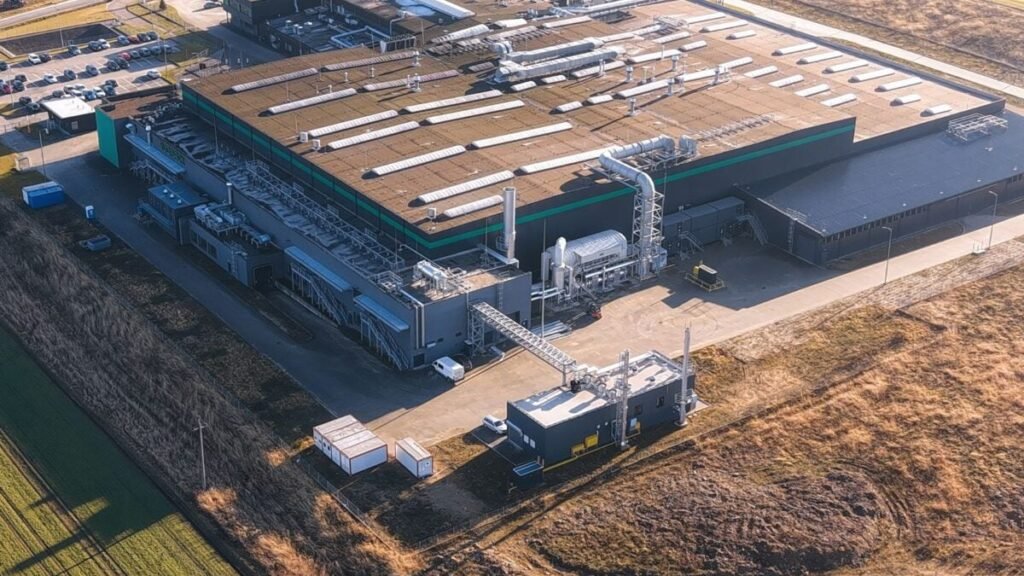
    AI is incredibly thirsty. The data centers that run these models already use massive amounts of water, and by 2030, those in the U.S. could require enough additional water capacity to rival New York City’s daily supply.

    That’s according to a new study led by Shaolei Ren, an associate professor of electrical and computer engineering at the University of California, Riverside. The findings—which have not yet been peer reviewed but are publicly available on the preprint server arXiv—show that limited public water capacity is emerging as a critical bottleneck to data center growth.

    To avoid burdening local ratepayers, tech companies are partnering with communities to fund water infrastructure upgrades, often spending hundreds of millions of dollars. “Those companies are profit driven, right? So I think clearly there is something wrong,” Ren told Gizmodo.

    Why so thirsty?

    Data centers operate continuously, generating lots of heat from dense concentrations of servers, networking equipment, and other forms of IT infrastructure. Liquid cooling techniques are the most efficient way to prevent overheating and system failure, but they tend to be highly water intensive.

    Tech companies will often argue that by using “closed-loop” cooling systems, their data centers recycle most of the water they use and minimize consumption. But even these systems can consume huge amounts of water because many rely on evaporative cooling towers to transfer heat outside of the facility.

    For example, peak daily water demand—the amount required during the hottest days of the year—for a large state-of-the-art data center using evaporative cooling can often exceed 1 million gallons per day, and for some planned facilities it may reach 8 million gallons per day, according to the study.

    The water bottleneck

    Public water systems are engineered to reliably meet maximum demand at all times, so a data center’s peak water usage is a critical factor in infrastructure planning, system resilience, and operational reliability. Despite this, most operators only disclose their total annual water use. To assess the peak water demand of U.S. data centers, Ren and his colleagues analyzed a wealth of data from public sources, including government records and water utility databases.

    This revealed that if the current water use intensity persists, U.S. data centers will require between 697 million and 1.45 billion gallons per day of new peak water capacity by 2030. That’s comparable to the typical daily water supply of New York City. Building this additional capacity could cost between $10 billion and $58 billion, with much of the financial burden falling on the communities hosting data centers.

    And that’s a “very conservative” estimate, Ren said. His team’s calculations assume a peak-to-average daily water use ratio of just 4.5, which is at the low end of the spectrum.

    This presents numerous problems for the tech sector. Insufficient water capacity could directly impact the feasibility and efficiency of data center projects, leading to increased costs, delays, and scalebacks. It could also lead to operational inefficiencies, as data centers often must switch to dry cooling—using air instead of water—when water becomes unavailable. This is far less efficient and increases electricity demand, further straining the grid during summer peaks.

    Ren and his colleagues do have some ideas about how to address the growing water capacity demand of U.S. data centers. Firstly, they emphasize the importance of requiring data centers to report their peak demand, not just total annual usage. They also recommend developing corporate-community partnerships to fund infrastructure upgrades so that residents don’t shoulder all of the burden.

    “I don’t see any ways for them to afford this type of upgrade,” Ren said. “We need corporate funding and support.”

    As data centers continue to proliferate across the country, the tech sector will be forced to contend with this often overlooked bottleneck. If nothing changes, these companies will face the consequences alongside the communities they’re impacting.

    Recommended for you:

    NVIDIA reportedly turning to Samsung to revive the RTX 3060
    Gaming·Mar 9, 2026

    NVIDIA reportedly turning to Samsung to revive the RTX 3060

    Recommended for you:

    Ding-dong! The Exploration Upper Stage is dead
    Tech News·Mar 7, 2026

    Ding-dong! The Exploration Upper Stage is dead

    Source: gizmodo.com

    Data Centers
    Share. Facebook Twitter Pinterest LinkedIn Tumblr Telegram Email Copy Link
    Previous ArticleRenpho Eyeris Zen review: This eye massager doubles as my meditation tool
    Next Article Motorola Razr Fold hands-on: This beats Samsung and Google Pixel in notable ways
    Michael Comaous
    • Website

    Michael Comaous is a dedicated professional with a passion for technology, innovation, and creative problem-solving. Over the years, he has built experience across multiple industries, combining strategic thinking with hands-on expertise to deliver meaningful results. Michael is known for his curiosity, attention to detail, and ability to explain complex topics in a clear and approachable way. Whether he’s working on new projects, writing, or collaborating with others, he brings energy and a forward-thinking mindset to everything he does.

    Related Posts

    5 Mins Read

    Meta Spent Three Years Flattening Management for AI. Now It’s Rebuilding the Layer It Cut.

    6 Mins Read

    A Hacker Ran Hundreds of AI Agents at Once. GreyNoise Says It Breached 440 Servers in Four Hours.

    7 Mins Read

    A Golf YouTuber Is Owed $1.4 Million by a Bankrupt League. He Is Sixteenth in Line.

    6 Mins Read

    Apple Revealed Burgundy on Wednesday. Android Phones in Almost the Same Shade Were Already on Sale.

    7 Mins Read

    Prime Video Is Now Reshaping Actors’ Mouths to Match the Dub. The Voices Are Still Human.

    9 Mins Read

    Your Apple Watch Can Replay the Last 15 Seconds You Missed. Apple Says It Never Recorded Them.

    Top Posts

    Gal Gadot’s Lawyers Spent Six Months on One AI Clause. Then SAG Called Them for Pointers.

    September 2, 20264 Views

    Every iPhone Camera Ranked in 2026 (Best to Worst)

    July 6, 20263 Views

    The Mesh Router Placement Strategy That Finally Gave Me Full Home Coverage

    September 9, 20262 Views
    Stay In Touch
    • Facebook

    Subscribe to Updates

    Get the latest tech news from FooBar about tech, design and biz.

    Most Popular

    How to Change HEIC to JPG on iPhone, Mac, Android and Windows (No Software Needed)

    September 3, 20266 Views

    Gal Gadot’s Lawyers Spent Six Months on One AI Clause. Then SAG Called Them for Pointers.

    September 2, 20265 Views

    How to Spot AI Generated Images in 2026 (The Old Tricks Stopped Working)

    September 3, 20263 Views
    Our Picks

    Diablo 5 Just Got Announced, and This Time You Don’t Stop the Apocalypse, You Survive It

    September 14, 2026

    Meta Spent Three Years Flattening Management for AI. Now It’s Rebuilding the Layer It Cut.

    September 14, 2026

    A Hacker Ran Hundreds of AI Agents at Once. GreyNoise Says It Breached 440 Servers in Four Hours.

    September 14, 2026

    Subscribe to Updates

    Get the latest creative news from FooBar about art, design and business.

    HEICJPG.online - Convert HEIC to JPG online
    Facebook
    • About Us
    • Contact us
    • Privacy Policy
    • Disclaimer
    • Terms and Conditions
    • Editorial Policy
    • Cookie Policy
    © 2026 GeekBlog

    Type above and press Enter to search. Press Esc to cancel.