

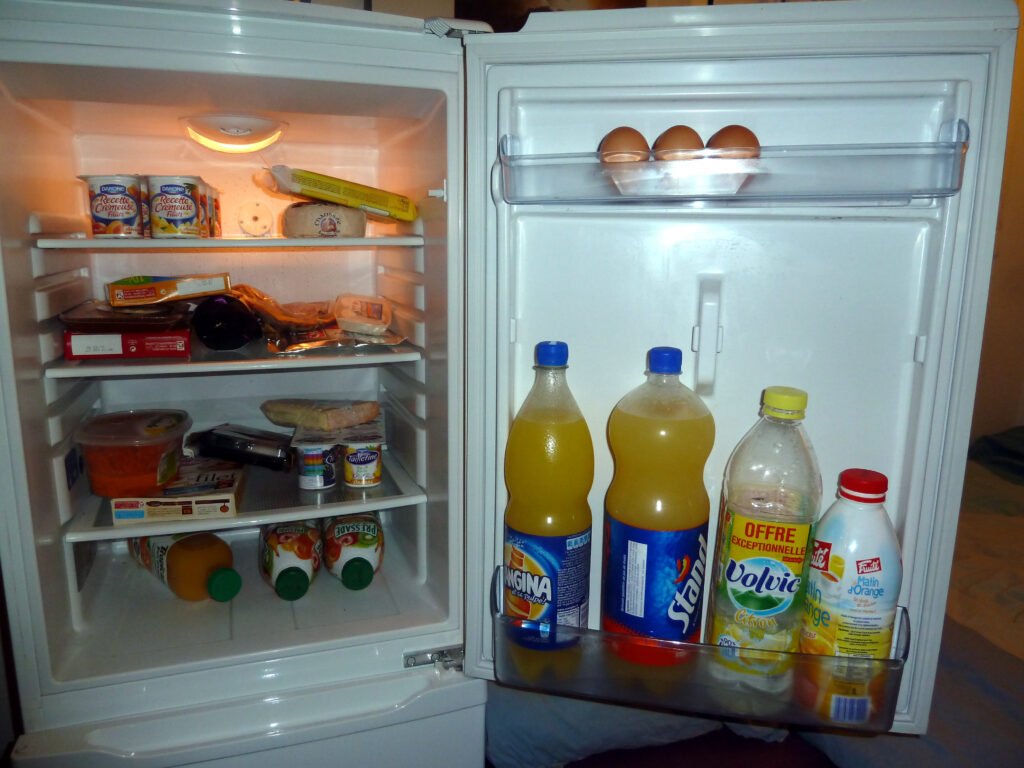
The feature everyone is repeating is the one about the fridge. You open the door, take a photo of whatever is in there, text it to DoorDash, and an AI tells you what you could make with it and what you are missing.
That is real, and it is the smallest part of what DoorDash actually shipped on September 30. The larger part is that the company has put an ordering agent inside Apple’s Messages app, wired it to your account history, and given it the card you already have on file. The fridge photo is the demo. The saved payment method is the product.
The pilot is live in the United States with a waitlist, and roughly 20,000 iOS users are already inside it. DoorDash’s own help text is blunt about the stage it is at: the model can get things wrong, so check the cart before you confirm.
The short version
- Announced September 30, 2026. DoorDash opened a US beta waitlist for an AI ordering agent that works inside Apple Messages
- Around 20,000 users are in the iOS pilot already, according to reporting on the rollout
- It links your phone number to your DoorDash profile, which is how it knows your order history, your addresses and your saved card
- The fridge trick works both ways. Send a photo, get recipe ideas, a list of what is missing, and the option to turn those gaps into a grocery order
- Checkout happens in the thread. No app switch, no card entry, using the payment method already on the account
- It is built on Ask DoorDash, the in-app assistant the company launched in June 2026
- Bloomberg tested an early build and found quoted prices that did not match the app total, plus photos that did not match the recommendation. DoorDash says waitlist users get a newer version
- iPhone only for now. US customers, iOS, with Android listed as coming later
What the fridge photo actually does
The mechanic is image recognition pointed at a shelf. You send a picture of the inside of your refrigerator and the assistant tries to identify what it can see. From there it does three things: suggests things you could cook, flags ingredients that look missing for those suggestions, and offers to put the missing items into a grocery order you can place in the same conversation.
It will also show you food images inside the thread, so browsing suggestions does not mean jumping out to the app and back. That sounds cosmetic. It is not. Every hop between apps is a place where people abandon an order, and a delivery company that removes one has done something commercially meaningful even if nothing about the food changed.
The use case DoorDash keeps describing is the one most people recognize: a fridge with a reasonable amount of stuff in it and no obvious dinner. Half an onion, some eggs, a block of cheese past its best. The assistant is pitched as the thing that looks at that and proposes an answer, then quietly notices you have no bread.
The part that is not a gimmick
Strip out the photo and what is left is an agent with three permissions: it knows who you are, it knows what you usually buy, and it can spend your money.
The identity step is the phone number. When you join the waitlist you match the number you text from to your DoorDash profile, and from that point the thread is authenticated. There is no login screen in a text message, which is exactly what makes it fast and exactly what makes it worth thinking about. Whoever is holding the phone is, as far as the agent is concerned, you.
The preference step is order history. The pitch line DoorDash uses is that it “knows your usual,” and the example the company leans on is natural language with context baked in, something closer to “order my usual protein bowl to the office” than to a search query. That only works because the agent can read what you have bought before and which addresses you have used.
The money step is the saved card. Once a cart is assembled, checkout runs on the payment method already attached to the account. No re-entry, no confirmation screen in a browser. The agent builds the order and the order goes through.
| Step | Ordering in the DoorDash app | Ordering in Messages |
|---|---|---|
| Starting point | Open app, wait for the home feed | Open an existing text thread |
| Who you are | Logged-in session in the app | Phone number matched to your profile |
| Finding food | Browse, filter, search by name | Describe it in a sentence, or send a photo |
| Seeing the item | Menu page with price and options | Images rendered inside the conversation |
| Group orders | Shared cart link | Handled by the agent in the thread |
| Price you see | The app total, which is the real one | Quoted by the model. Early builds got this wrong |
| Checkout | Review screen, then confirm | Saved card, confirmed in the conversation |
Bloomberg found the numbers did not line up
This is the detail that should slow everyone down, and it is not coming from a critic. Bloomberg News tested an early version of the agent and reported two specific failures: prices quoted in the chat that differed from what the app actually charged, and food photos that did not match the item being recommended.
A DoorDash spokesperson’s answer was that people joining the waitlist receive a newer build than the one tested. That is a reasonable thing to say about a pilot and it is also not a fix anyone outside the company can verify yet.
The wrong-price problem is the one that matters, because of where it sits in the flow. In the app, the number you see before you tap is the number you pay. In a text thread, the number you see is produced by a language model describing a cart, and the charge is executed against a card you never have to touch. If those two drift apart, the gap is only visible after the fact.
Mismatched photos are a smaller issue with a similar shape. If the assistant shows you one dish and orders another, the thing that went wrong is not the picture. It is that the model’s description of the cart and the cart itself were not the same object.
Why Messages, and why now
DoorDash did not build a new chat surface. It moved into one that is already open on the phone, already has a keyboard in front of it, and already contains conversations people have every day. That is the whole strategic point, and it is the same bet several companies have made in the past year.
The precedent is close at hand. OpenAI shipped a route for ChatGPT to send messages through Apple’s Messages app, and the interesting part of that story was also about permissions rather than conversation quality. Once an assistant can act inside a messaging thread, the question stops being how well it writes and starts being what it is allowed to do without asking.
The underlying technology is not new either. It runs on the same stack as Ask DoorDash, the in-app assistant the company launched in June 2026 to answer conversational questions and help people find food and groceries. The Messages agent takes that engine, points it outward, and hands it the ability to transact.
What DoorDash itself tells you to do. The company’s guidance for pilot users is to review the cart carefully before checking out, because the model can make mistakes. That is honest, and it is also the part people skip. The convenience being sold here is specifically not having to look at a confirmation screen, which means the one safeguard in the flow is the one the product is designed to let you ignore.
The risk nobody has priced in yet
An agent with a saved card is a different category of thing from a chatbot that answers questions, and the failure modes are not hypothetical.
A Meta shopping agent recently gave out a seller’s home address to a stranger who then turned up at the house. Nothing in that story required malice. It required an assistant with access to account data and no clear sense of which fields were safe to say out loud. A food ordering agent holds a smaller but similar pile: addresses you have delivered to, a card, and a conversation surface where anyone with the unlocked phone is treated as the account holder.
The money side is where the real exposure sits, and DoorDash has recent experience with how expensive a payments dispute gets once it scales. The company agreed to pay 131.5 million dollars to settle a New York case over driver earnings, a reminder that in delivery the arguments that get costly are almost always about who was charged what, and when.
None of that makes the feature a bad idea. Texting an order to a service you already use is a genuinely good interface, probably better than the app for any order that is simply a repeat of something you have had before, which is a large share of them. It just means the honest version of the pitch is “we removed the review screen,” and the honest version of the caveat is that the review screen was doing something.
What to watch next
- Whether the price quotes get fixed. DoorDash says waitlist users have a newer build. The test is whether the chat total and the charged total match every time, not most of the time
- Spending limits. Whether there is a ceiling above which the agent has to hand you back to a confirmation screen
- Android. The company lists it as coming soon, which in practice means a different messaging surface and a different set of identity assumptions
- What happens with a shared phone. Number-based authentication and family devices are not a comfortable pairing
- Grocery conversion. The fridge photo is only worth building if it moves people from restaurant orders to the higher-frequency grocery business, which is the part of DoorDash that needs the growth
- Whether anyone else copies the surface. If this works, the delivery app as a destination starts looking optional
The bottom line
The fridge photo is a good demo and a slightly silly headline. It is also doing useful work as a headline, because it got a lot of people to look at a product whose actual novelty is harder to say in one line.
What DoorDash shipped is an authenticated, payment-enabled AI agent living in the default text app on an iPhone. That is a real convenience and a real change in where the trust sits. In the app, you confirmed the number before the charge. Here, a model tells you the number and the charge happens, and an early build of that model was reportedly telling people the wrong one.
Twenty thousand people are testing it. If you are one of them, the advice is the advice DoorDash already gave you, which is worth repeating precisely because the product is built to make it feel unnecessary: look at the cart.
Sources and further reading
- MacRumors: DoorDash unveils AI food ordering through Apple’s Messages app
- Implicator: DoorDash pilots AI ordering agent in Apple Messages
- PYMNTS: DoorDash opens beta waitlist for AI text ordering
- TNW: DoorDash launches a text-to-order AI agent inside Apple Messages
- UNILAD Tech: DoorDash’s new AI lets you order dinner by texting a photo of your fridge
- Gadget Review: DoorDash’s AI can look at your fridge and decide what you should eat
About this article: GeekBlog covers U.S. technology news, AI, phones, smartwatches and gaming. Every story is written and checked under our Editorial Policy. Spotted a mistake or have a story tip? Contact our editors.
