Close Menu
GeekBlog

    Subscribe to Updates

    Get the latest creative news from FooBar about art, design and business.

    What's Hot

    4chan’s creator says ‘Epstein had nothing to do’ with creating infamous far-right board /pol/

    February 14, 2026

    HP wants you to rent your next gaming laptop

    February 14, 2026

    Dive Into the Elusive World of Particles With the Global Physics Photowalk Finalists

    February 13, 2026
    Facebook X (Twitter) Instagram Threads
    GeekBlog
    • Home
    • Mobile
    • Tech News
    • Blog
    • How-To Guides
    • AI & Software
    Facebook
    GeekBlog
    Home»Uncategorized»PCIe 8’s ludicrously fast speeds break the terabyte barrier
    Uncategorized

    PCIe 8’s ludicrously fast speeds break the terabyte barrier

    Michael ComaousBy Michael ComaousAugust 6, 20253 Mins Read
    Share Facebook Twitter Pinterest LinkedIn Tumblr Email Copy Link
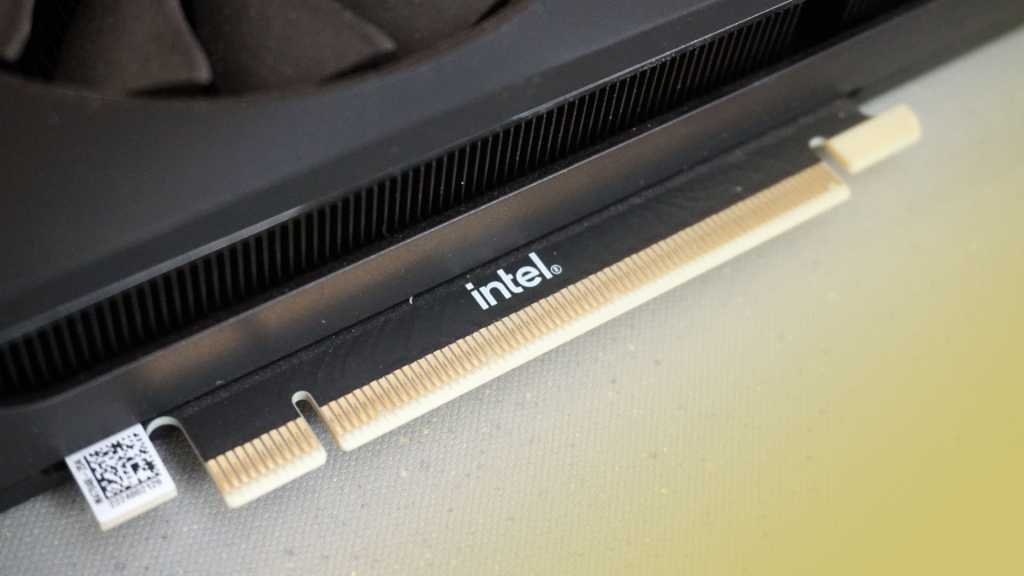
    PCIe connection Intel graphics card
    Share
    Facebook Twitter LinkedIn Pinterest Email Copy Link

    As expected, by 2028 your PC will be internally passing a terabyte’s worth of data per second as part of PCI Express 8.0.

    The PCI Special Interest Group said Tuesday that the PCIe 8 specification is due to be released in 2028, with speeds of 256 gigatransfers per second. In real-world terms, that works out to 1 terabyte per second being passed over a x16 connection via the PCI Express 8.0 bus.

    The new data rate should come as no surprise, as the SIG has consistently released iterative PCI Express standards that double the available bandwidth about every three years. In June, the PCIe SIG formally announced the PCI Express 7 specification, projected to be released in 2027. At that time, the SIG disclosed the existence of PCIe 8 without the bandwidth data, but the projection was easy enough to make.

    The timing of it all can be a bit confusing. Practically, the fastest PCI Express devices currently available for the PC, such as the fastest PC SSDs, use the PCI Express 5 protocol — 128GB/s at x16 speeds. Last week, the first PCI Express 6.0 SSD shipped: the Micron 9650, which can hypothetically process 256GB/s at a time. (They can’t, in reality. The drive reads of up to 28,000 MB/s — which is roughly 13 percent under the peak PCIe 6.0 bandwidth, with sequential writes of 14,000 MB/s.)

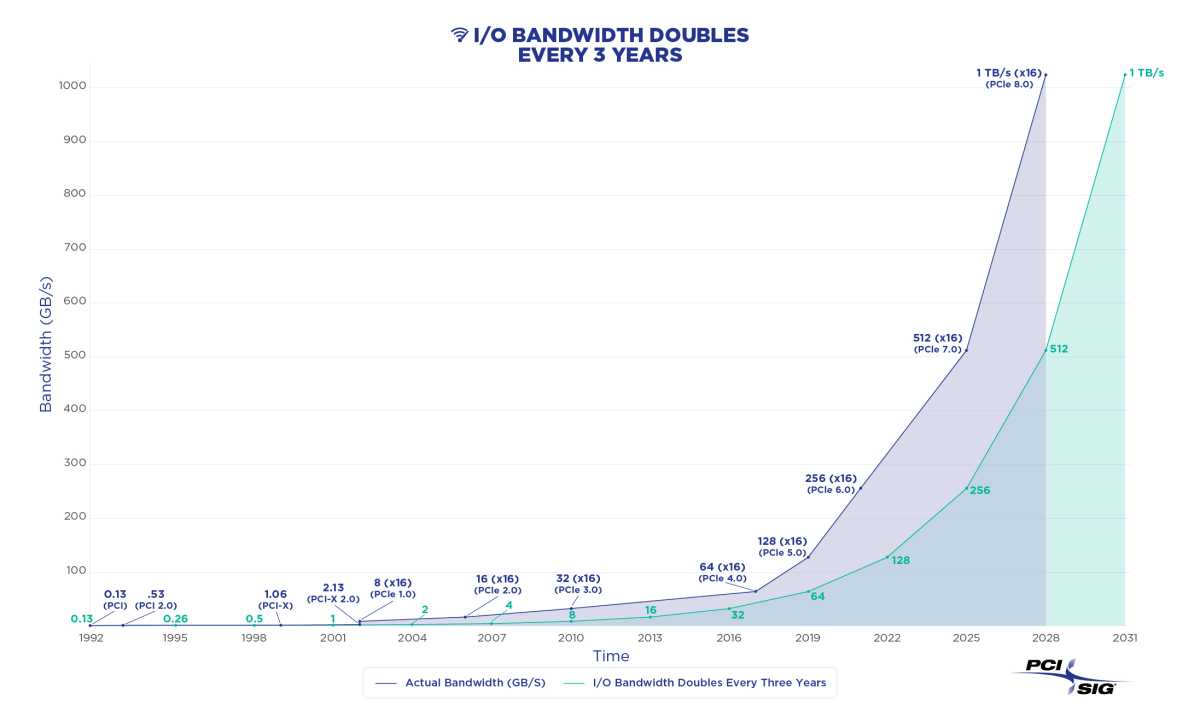
    The graphic below shows the progression of PCI Express speeds, but also hints as the hypothetical limits of certain components, too. SSDs typically use a x4 interface, so they’ll have a maximum hypothetical data rate of 256GB/s under PCI Express 8, versus the 32GB/s they operate under with the current PCI Express 5. Graphics cards, conversely, use a x16 connection, meaning that PCIe 8 will supply about seven times more bandwidth than it does today.

    PCI-SIG

    The Micron 9650, however, is aimed at data centers, not the PC. Micron’s release of the 9650 coincides with our report that the PCI Express 6.0 integrator’s list of actual PCIe 6 hardware will be released this year, though data centers and AI may gobble up all of the available hardware. Silicon Motion’s CEO told Tom’s Hardware that the company doesn’t expect PCI Express 6.0 to appear in PCs for a few years.

    That’s what the PCIe SIG is saying for the first PCIe 8.0 devices, too: they’ll be used for artificial intelligence and machine learning first and foremost, then high-speed networking and quantum computing.

    “As artificial intelligence and other data-intensive applications continue to scale rapidly, PCIe technology demand will be sustained in the long run due to its high bandwidth, scalability and power efficiency,” said Reece Hayden, principal analyst at ABI Research, as quoted by the PCI-SIG. “Data center networks are already preparing to implement PCIe 6.0 technology and are showing great interest in the PCIe 7.0 specification. The introduction of the PCIe 8.0 specification further ensures that the industry’s bandwidth requirements will be supported well into the future.”
    PCI SIG data over time
    A graphic from the PCI-SIG shows how PCI Express bandwidth has increased over time.

    PCI-SIG

    A terabyte’s worth of bandwidth, though, is no joke, and neither are the thermal issues that come with it. The two key problems that need to be addressed are when AMD, Intel, and Qualcomm plan to add PCI Express 6 to their PC roadmaps — let alone 7 or 8 — and how device makers will deal with the corresponding increase in heat that the increased bandwidth will bring with it.

    barrier break fast ludicrously PCIe speeds terabyte
    Share. Facebook Twitter Pinterest LinkedIn Tumblr Telegram Email Copy Link
    Previous ArticleXiaomi Redmi Note 14 Pro Plus 5G review: this could be a solid mid-range choice if you can stand the horrible OS
    Next Article Google’s New AI Agents Will Make Cloud Apps Smarter And Faster
    Michael Comaous
    • Website

    Michael Comaous is a dedicated professional with a passion for technology, innovation, and creative problem-solving. Over the years, he has built experience across multiple industries, combining strategic thinking with hands-on expertise to deliver meaningful results. Michael is known for his curiosity, attention to detail, and ability to explain complex topics in a clear and approachable way. Whether he’s working on new projects, writing, or collaborating with others, he brings energy and a forward-thinking mindset to everything he does.

    Related Posts

    2 Mins Read

    OpenAI sidesteps Nvidia with unusually fast coding model on plate-sized chips

    7 Mins Read

    From Clawdbot to OpenClaw: This viral AI agent is evolving fast – and it’s nightmare fuel for security pros

    2 Mins Read

    AI agents now have their own Reddit-style social network, and it’s getting weird fast

    3 Mins Read

    Android’s new safety tools make it harder for thieves to break into your phone

    2 Mins Read

    Many Bluetooth devices with Google Fast Pair vulnerable to “WhisperPair” hack

    7 Mins Read

    Does the Motorola Razr Have Wireless Charging — Features, Compatibility, and Verdict

    Top Posts

    Discord will require a face scan or ID for full access next month

    February 9, 2026749 Views

    The Mesh Router Placement Strategy That Finally Gave Me Full Home Coverage

    August 4, 2025443 Views

    Past Wordle answers – all solutions so far, alphabetical and by date

    August 1, 2025213 Views
    Stay In Touch
    • Facebook

    Subscribe to Updates

    Get the latest tech news from FooBar about tech, design and biz.

    Most Popular

    Discord will require a face scan or ID for full access next month

    February 9, 2026749 Views

    The Mesh Router Placement Strategy That Finally Gave Me Full Home Coverage

    August 4, 2025443 Views

    Past Wordle answers – all solutions so far, alphabetical and by date

    August 1, 2025213 Views
    Our Picks

    4chan’s creator says ‘Epstein had nothing to do’ with creating infamous far-right board /pol/

    February 14, 2026

    HP wants you to rent your next gaming laptop

    February 14, 2026

    Dive Into the Elusive World of Particles With the Global Physics Photowalk Finalists

    February 13, 2026

    Subscribe to Updates

    Get the latest creative news from FooBar about art, design and business.

    Facebook
    • About Us
    • Contact us
    • Privacy Policy
    • Disclaimer
    • Terms and Conditions
    © 2026 GeekBlog

    Type above and press Enter to search. Press Esc to cancel.

    Ad Blocker Enabled!
    Ad Blocker Enabled!
    Our website is made possible by displaying online advertisements to our visitors. Please support us by disabling your Ad Blocker.