

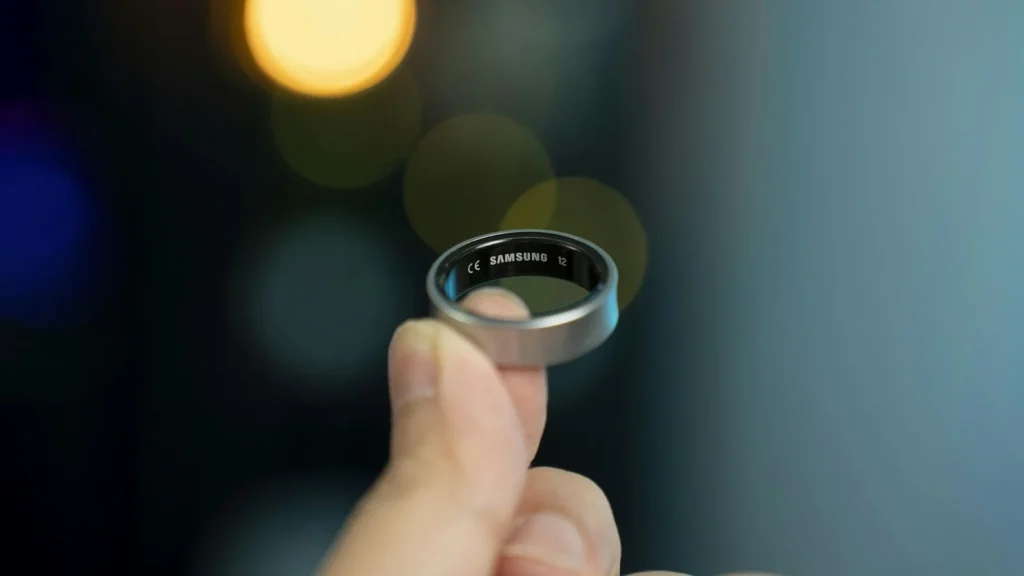
The smart ring behind this one comes from Ultrahuman, and the feature is called Migraine PowerPlug. Ultrahuman announced it in January 2026 together with Click Therapeutics. It is a software add on inside the Ultrahuman app that watches your sleep, recovery, stress and activity data and tries to connect changes in those signals to your migraine patterns. It does not diagnose or treat anything, but it aims to take some of the guesswork out of the weeks between doctor visits.
What Migraine PowerPlug actually is
Ultrahuman makes smart rings that record sleep, heart rate, HRV, skin temperature and movement around the clock. PowerPlugs are its add on system: small modules inside the Ultrahuman app that focus the ring’s data on one goal, such as cycle tracking, caffeine timing, a smart alarm or shift work. Most are free, and a few cost a few dollars a month. Migraine PowerPlug is the first one built around a neurological condition.
The partner is the interesting part. In April 2025, Click Therapeutics received FDA marketing authorization for a prescription app used alongside medication for the preventive treatment of episodic migraine. The company describes it as the first prescription digital therapeutic for that use in the US. Ultrahuman says the PowerPlug draws on the principles and technology behind that program and combines them with its own biomarker analysis. To be clear, the PowerPlug is not the prescription product, and both companies say so.
What it tracks and what the app does with it
Migraine attacks often follow changes in routine: a short night, a stressful week, less movement or not enough water. A ring you wear day and night records some of those shifts automatically, so you are not relying only on memory or a paper diary. Ultrahuman says the PowerPlug focuses on these signals:
Duration, quality and how consistent your schedule is from night to night.
HRV based readiness, a common marker of how strained your body is.
Physiological stress trends across the day.
Daily movement and how it changes before and after attacks.
From there, the app is meant to do three things:
- Show trends across those four areas over weeks, not just day by day.
- Flag possible triggers by linking biometric shifts to the times you log symptoms.
- Suggest routines, including goals for daily movement and sleep consistency, plus hydration recommendations tailored to your patterns.
Ultrahuman also frames the feature around women’s health. The company points out that migraine affects an estimated 15 to 20 percent of people worldwide and that women experience it at nearly three times the rate of men, with hormonal changes often tracking closely with attacks. Ultrahuman already offers cycle and ovulation PowerPlugs, so the two could sit side by side in the same app.
Price and availability
When it announced the feature on January 14, 2026, Ultrahuman said it would reach users through the app in early 2026 after a pilot phase, with planned availability in the US, Canada, the EU, India, Australia and other regions. It also said features may vary by region. No price was announced. As of October 2026, Migraine PowerPlug does not appear in Ultrahuman’s public PowerPlug catalog, so open the PowerPlugs section in the app to see whether it is live for your account before you buy a ring for this reason alone.
There is a hardware wrinkle for US buyers too. After a patent dispute with Oura, a US trade ruling in October 2025 blocked imports of Ultrahuman’s Ring Air. A redesigned model, the Ring Pro, cleared US Customs in March 2026. Check which ring is currently sold in the US and confirm it supports the PowerPlug you want.
What the evidence says about wearables and migraine
Doctors have long asked migraine patients to track sleep, stress, meals and hormonal cycles, because these are among the most commonly reported triggers. A ring that logs some of that automatically is a reasonable upgrade over a notebook. Whether consumer ring data can reliably predict an individual attack is a different and much less proven question.
- HRV, sleep stages and stress scores from rings are estimates based on sensors on your finger, not clinical measurements.
- Research into using wearable data to forecast migraine is still early, and results from small studies do not automatically apply to every person.
- Ultrahuman has not published outcome data showing that the PowerPlug reduces attacks.
The fair way to see it today: a ring is good at building a consistent personal record and nudging you toward steadier habits. It is not a tool for choosing medication or ruling out warning signs.
FAQ
Can a smart ring predict a migraine?
Not reliably, as far as current evidence goes. Ultrahuman says the PowerPlug connects biometric shifts to potential triggers. That can help you spot patterns over time, but it is not a forecast you should depend on.
Is Migraine PowerPlug FDA approved?
No. It builds on technology from a Click Therapeutics product that received FDA authorization, but the PowerPlug itself is positioned as a wellness and educational feature, not a medical device.
How much does it cost?
Ultrahuman has not announced a price. Other PowerPlugs range from free to a few dollars a month, so check the app for current terms.
Does it replace my migraine medication?
No. Keep following the plan from your doctor and treat the ring as a tracking aid.
The verdict
Migraine PowerPlug is a sensible idea: turn the data a smart ring already collects into a trigger journal that fills itself in, then add simple routines for sleep, movement and hydration. The partnership with Click Therapeutics gives it more grounding than a typical wellness feature, but it is still a wellness tool with limited published evidence and unclear availability. If you already wear an Ultrahuman ring, it is worth checking for in the app. If you are buying a ring just for migraine help, talk to your doctor first and confirm the feature is live where you are.
Updated October 2026: rewritten as an explainer on Ultrahuman’s Migraine PowerPlug, covering what it tracks, its availability, the US ring situation and what the evidence supports.
Featured photo: Amanz on Unsplash.
About this article: GeekBlog covers U.S. technology news, AI, phones, smartwatches and gaming. Every story is written and checked under our Editorial Policy. Spotted a mistake or have a story tip? Contact our editors.
