

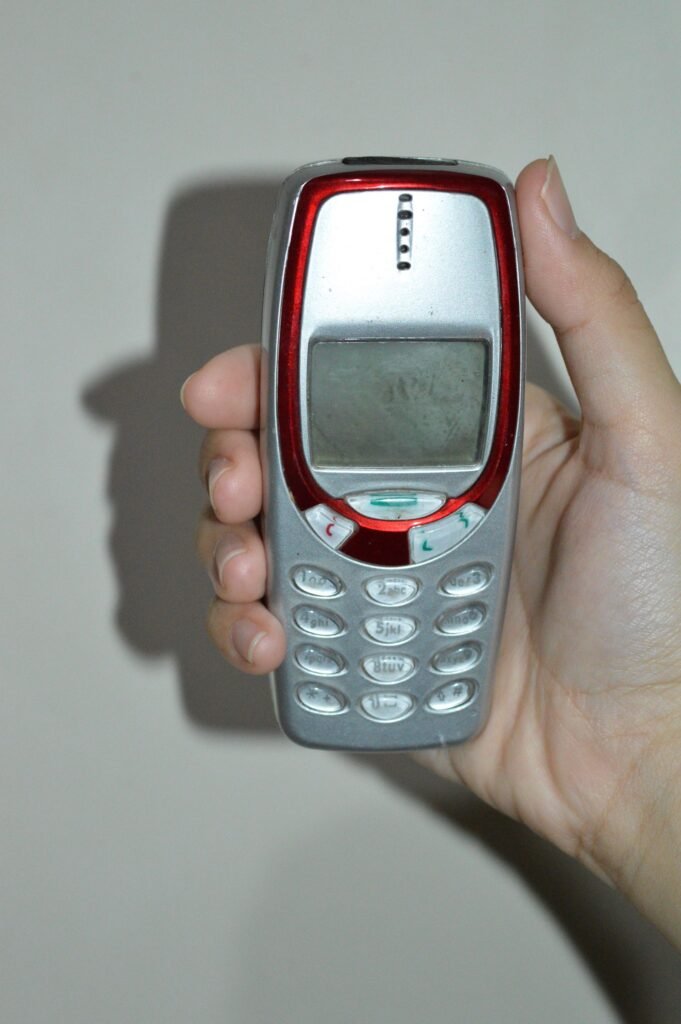
HMD did not throw a launch event, tease a countdown, or send out review units ahead of time. It simply updated its spec pages, and suddenly there were four new Nokia phones on the market, each one a classic keypad handset in the mold of phones people bought two decades ago. That would barely register as news on its own. What makes this release worth talking about is a single new button sitting on every one of these devices: a dedicated key that summons an AI assistant called Sikey AI, built right into a phone that otherwise has no app store, no camera worth mentioning, and in one case, no camera at all.
It is an odd pairing, and the people who actually buy these phones have not been shy about saying so.
Four phones, one new button
The lineup consists of the Nokia 200 4G, the Nokia 210 4G, the Nokia 215 4G Second Edition, and the Nokia 235 4G Second Edition. All four run HMD’s S30+ feature phone software, all four charge over USB-C, and all four ship with a removable 1,450mAh battery, the kind of spec that sounds modest until you remember these phones are built to last for days between charges rather than hours.
Where they differ is mostly screen size and cameras. The 200 4G and 210 4G stick with a small 2.4 inch QVGA display, while the 215 4G Second Edition and 235 4G Second Edition step up to a slightly roomier 2.8 inch IPS panel. Camera hardware is scattered almost at random across the range: the 200 4G only has a front facing camera for basic video calls, the 210 4G adds a modest 0.3MP rear shooter, the 215 4G ships with no camera whatsoever, and the 235 4G tops the range out with a 2MP rear lens. None of that is going to replace anyone’s smartphone camera, and it was never meant to.
Pricing starts at $29 for the base Nokia 200 4G, according to HMD’s own spec sheets. The company has not yet published prices or release windows for the other three models, which is unusual for a brand that typically launches its whole feature phone lineup with pricing attached on day one.
What Sikey AI is actually supposed to do
Every phone in the lineup shares the same processor, a Unisoc T107, alongside 64MB of RAM and 128MB of internal storage, expandable up to 32GB with a microSD card. Those numbers belong to a different technological era entirely, which is exactly the point of a feature phone. What does not belong to that era is a built in AI assistant.
Press the new dedicated key and Sikey AI wakes up, ready to handle a short list of voice commands: turning on the flashlight, opening the camera app, setting a reminder, creating an alarm, placing a call, or answering a simple spoken question. It is a lightweight, on device assistant rather than anything resembling a full conversational AI, and it needs to be, given the hardware it is running on.
Free for six months, then a subscription
Here is the part that has drawn the most attention. HMD’s documentation confirms that Sikey AI is free to use for the first 180 days after activation. After that window closes, continued access requires a paid subscription. The company has not disclosed how much that subscription will cost, which is a strange detail to leave out of an otherwise fully specced announcement.
Think about who actually buys a $29 phone with a 2.4 inch screen in 2026. It is rarely someone chasing the newest AI trend. It is a parent buying a first phone for a child, someone who wants a rugged backup device for travel, or increasingly, someone deliberately downgrading from a smartphone to cut down on screen time. Asking that buyer to eventually pay a recurring fee for a voice assistant they may never have wanted in the first place is a tough sell, and it is worth remembering that the same week HMD announced this, Commodore was busy shipping a flip phone built specifically to block apps, browsers, and social media at a system level, aimed at that exact same audience of people trying to use their phone less, not more.
Why the backlash makes sense
Online reaction to the AI button has ranged from puzzled to openly dismissive, with commenters across social platforms calling it “useless,” “dumb,” and “out of touch” for a device category built around simplicity. That reaction is not really about the technology failing to work. Reports describe Sikey AI handling its narrow set of tasks reasonably well. The frustration is about fit. Feature phone buyers are, almost by definition, people who have already decided they do not want a device stuffed with software they did not ask for. Bolting a subscription based AI layer onto that same phone reads as a solution in search of a problem, applied to the one product category that exists specifically to avoid this kind of feature creep.
There is also a simpler explanation floating around: momentum. Nearly every phone launched in 2026, smartphone or otherwise, seems to arrive with some kind of AI feature attached, whether or not it makes sense for the product. It is easy to imagine a feature phone getting swept up in that pattern almost by inertia rather than by genuine customer demand.
The bigger picture: feature phones are quietly thriving
None of this is happening in a vacuum. HMD is not a struggling business propping up a legacy product line out of nostalgia. The company has grown its feature phone market share for two consecutive years, and by some estimates it now controls close to a third of the entire feature phone market by value. Nokia’s parent brand agreed in late 2025 to extend HMD’s licensing rights for another two to three years, a clear signal that the Nokia name is staying attached to these devices for a while yet.
Part of that resilience comes down to price. While smartphone prices across the board keep climbing to record highs, driven largely by memory chip shortages tied to AI hardware demand, a $29 Nokia phone looks almost radical by comparison. It is not competing with a Galaxy or a Pixel. It is competing with the idea of not needing one, whether that is for a second emergency device, a child’s first phone, or someone genuinely trying to spend less time staring at a screen. That same instinct is showing up elsewhere in the market right now too. Just a couple of days after HMD’s announcement, Nothing is set to use its own launch event to introduce a budget focused smartphone aimed at buyers priced out of the mid range market, which says something about how much attention the affordable end of the phone business is getting this year, even if Nothing and HMD are chasing that value from opposite directions.
Should you actually consider one of these?
If you are shopping in this category at all, the AI button is close to irrelevant to that decision. These phones are worth buying, or not, for the same reasons feature phones have always been worth buying: long battery life, a durable and pocketable design, real button dialing, and a price tag that barely registers as a purchase. The Nokia 200 4G at $29 is a genuinely inexpensive way to get a backup phone, a kid’s first device, or a deliberate step away from a smartphone for a while.
Just do not expect much from Sikey AI, and pay attention to what that subscription ends up costing once HMD actually announces it. A free trial on a feature you can already live without is not much of a selling point, and a locked in “b” Series style value story, in the way Nothing has been aiming its own new budget hardware at similar buyers, would probably have landed better with the exact people HMD is trying to sell to.
About this article: GeekBlog covers U.S. technology news, AI, phones, smartwatches and gaming. Every story is written and checked under our Editorial Policy. Spotted a mistake or have a story tip? Contact our editors.
