

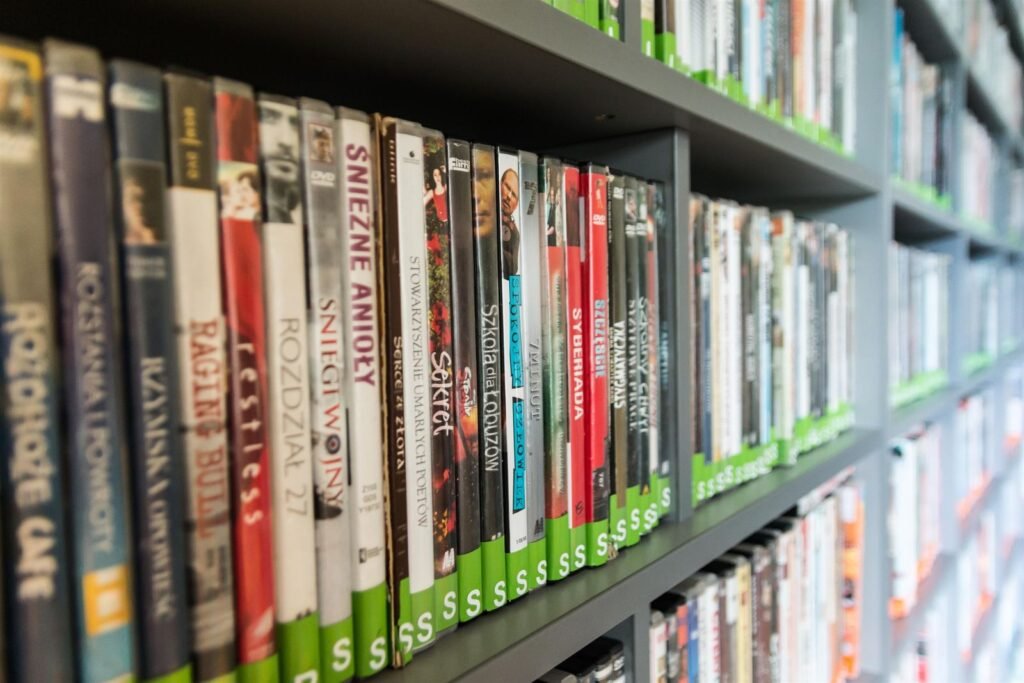
Christopher Nolan has been making the same argument for years, and for years it sounded like a director being precious about his work. Fresh off The Odyssey, he is making it again, and this time the industry has spent enough of the last decade proving his point that it is hard to wave off.
The Quote That Started This Round
Nolan’s framing is blunt and, unusually for this debate, not romantic about celluloid at all. “If you buy a 4K UHD, it’s yours,” he said. “No company is going to break into your house and take it from you.”
That is the whole argument compressed into two sentences. When you buy a disc, you own a copy. When you subscribe to a service, you are buying access to a library the service does not fully control, assembled from licences that expire on a schedule nobody shows you.
Guillermo del Toro has made the same case in stronger terms, describing disc ownership as almost a Fahrenheit 451 level of responsibility and calling collectors the custodians of those films for future generations. Two directors sounding this dramatic about plastic discs would be funny if the last few years had not gone the way they did.
The Part People Underestimate: Bitrate
The ownership argument gets all the attention. The technical one is more persuasive, because it is measurable.
Bitrate is how much data the video carries per second. More data means more detail preserved in the parts of an image that compression destroys first: film grain, gradients in a dark sky, the texture on a face, anything moving fast. Resolution tells you how many pixels there are. Bitrate tells you how good those pixels are.
| Format | Typical or maximum bitrate | What that means in practice |
|---|---|---|
| 4K UHD Blu-ray disc | Up to 144 Mbps | Grain stays grain, shadows keep detail, no drops during busy scenes |
| Standard Blu-ray, 1080p | Up to 40 Mbps | Lower resolution than 4K streaming, often a cleaner image anyway |
| Netflix 4K | Roughly 10 to 15 Mbps on average | Adaptive encoding drops further on scenes it judges simple |
| Any stream on a weak connection | Whatever your line allows that second | Quality is negotiated live and can fall mid scene |
The number that surprises people is the second row. A 1080p Blu-ray from the last decade frequently carries more data per second than a 4K stream of the same film. You are watching a quarter of the pixels with several times the information behind each one, and on a decent television the disc often looks better.
The gap matters most exactly where HDR is supposed to shine. Deep shadow gradients and specular highlights are the first things aggressive compression flattens, which is why a beautifully mastered stream can still look muddy in a dark scene. That is also why the industry keeps fighting over metadata standards rather than raw resolution, and why the newest HDR formats now arriving on streaming services spend their effort telling your television how to interpret a limited signal rather than sending it more data.
Ownership Is Not a Hypothetical Anymore
The licensing risk used to be theoretical. It is not.
Services have pulled films and shows they produced themselves. HBO Max and Disney Plus both removed originals from their own catalogs, and in several cases those titles have never appeared anywhere else. There is no disc, no digital purchase, no rental. The content is functionally lost, and it was removed by the company that made it.
Subscribers have also watched features quietly disappear from plans they were already paying for. Prime Video customers on the ad supported tier lost 4K playback outright, which is a reminder that the thing you subscribed to is not a fixed product. It is a set of terms that can be edited.
Games Are Going First
If you want to know where this ends, look at gaming, where the transition is not a debate but a scheduled event.
Sony confirmed it will stop producing physical discs for new PlayStation releases from January 2028. The company’s reasoning is simply that the market already moved: of roughly 318 million game units sold last year, about 85% were downloads. Games released before the cutoff stay available on disc. Everything after it exists only as a licence tied to an account.
Film is a few years behind that curve, not on a different one. The disc section in most stores has already shrunk to a shelf.
What Discs Still Give You That Streaming Does Not
- A fixed, maximum quality version. No adaptive encoding, no negotiation with your router, no difference between watching at 9pm and 3am.
- Immunity to outages. Your internet going down does not affect a disc, and neither does a service having a bad night.
- Special features. Commentaries, making of documentaries, deleted scenes. Streaming versions almost never carry them, and there is a steady stream of people online discovering that the extras they remember simply do not exist on the platform.
- A one time cost. A disc costs roughly what one month of one service costs, and then never costs anything again regardless of how many times you rewatch it.
- Revenue for smaller films. Nolan has repeatedly pointed out that physical release is a meaningful income stream for filmmakers without blockbuster budgets.
The Honest Counterargument
Nolan is right about the physics and slightly convenient about the economics.
Most people do not rewatch most films. Streaming is not competing with a disc collection, it is competing with the alternative of never seeing the film at all. A vast amount of television has no physical release and never will, so cancelling everything means losing access to entire categories of content rather than upgrading them.
There is also the storage problem, the player problem, and the fact that a lot of new televisions ship without anyone in the house owning a disc player at all. Telling a household to rebuild a physical media setup is a real cost, not a rhetorical one.
The sensible version of this advice is a hybrid. Keep one or two services and be ruthless about which, since the gap between plan tiers is often smaller than the price difference suggests. Buy discs of the ten or twenty films you actually return to, especially anything shot on film or graded for HDR, where the bitrate difference is most visible.
The Bottom Line
Nolan is not asking anyone to become a collector. He is pointing out that the industry sold everyone a convenience upgrade and quietly delivered a quality downgrade and a permanence downgrade at the same time, and that the only fix available to a viewer is to own a copy of the things they care about.
On the technical claim, he is straightforwardly correct. A 4K UHD disc carries roughly ten times the data of a typical 4K stream, and no amount of smart encoding closes that gap. On the ownership claim, the last three years of vanishing catalog titles have argued his case better than he ever could.
About this article: GeekBlog covers U.S. technology news, AI, phones, smartwatches and gaming. Every story is written and checked under our Editorial Policy. Spotted a mistake or have a story tip? Contact our editors.
