

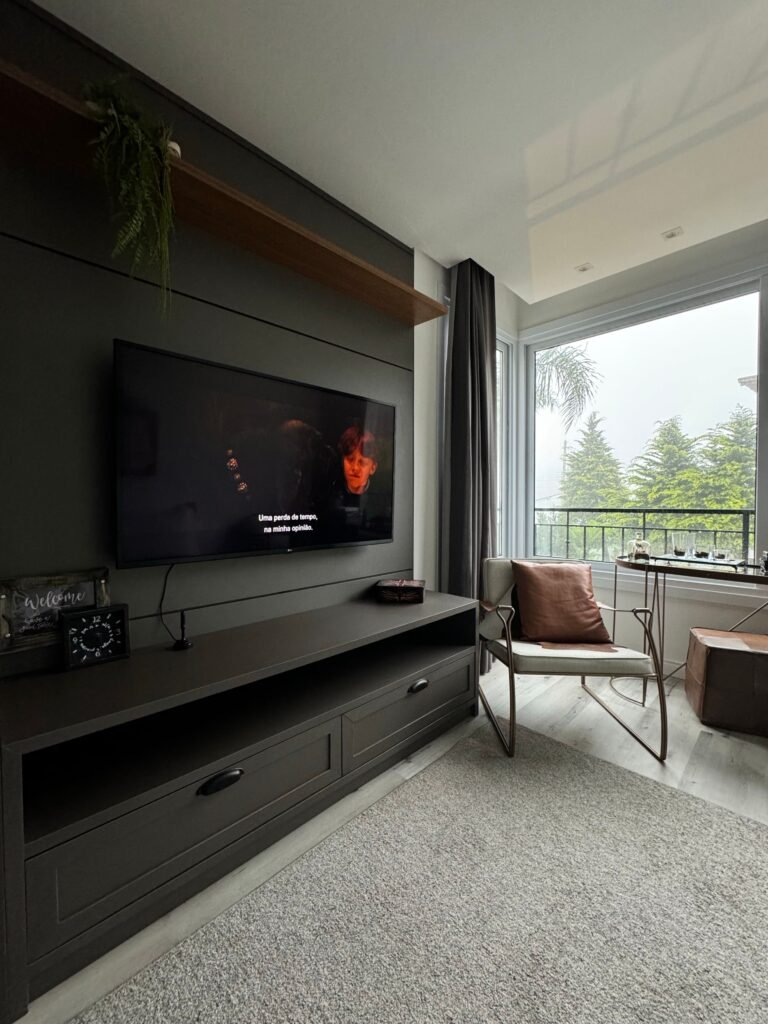
The HDR format war has been quiet for a couple of years. Dolby Vision sat at the premium end, HDR10+ held the Samsung and Amazon corner, and most people bought a TV without ever knowing there was a fight. That truce ended this month. Samsung and Prime Video have launched HDR10+ ADVANCED, the first meaningful upgrade to the HDR10+ standard since 2017, and they got it into living rooms before Dolby Vision 2 shipped a single frame of streaming content.
What HDR10+ ADVANCED Actually Adds
Regular HDR10+ already does the thing that separates good HDR from the flat, washed out version: it carries dynamic metadata, so a TV can treat a candlelit interior differently from a desert exterior instead of applying one brightness recipe to an entire film. That was the whole point of it back in 2017, when Prime Video became the first streaming service to offer HDR10+ at all, on Samsung’s 2017 UHD sets.
ADVANCED is the second act. The specification pushes brightness metadata up to 10,000 nits and color depth to 16 bits, numbers that no consumer display can currently hit, which tells you the format was written with the next decade in mind rather than this year’s panels. In practice, six capabilities sit under the ADVANCED umbrella.
| Capability | What it does | Live on Prime Video now? |
|---|---|---|
| Enhanced Overall Brightness | Extra statistical metadata so a bright panel uses more of its headroom without crushing shadow detail | Yes, one of the two launch features |
| Intelligent Motion Smoothing | Scene by scene instructions telling the TV how much motion processing to apply | Yes, the other launch feature |
| Local tone mapping | Tone mapping applied by region of the frame rather than the whole image | Part of the spec, not the launch push |
| Genre based optimization | Different handling for sports, film and animation | Part of the spec, not the launch push |
| Advanced color control | Finer control of saturation and hue, up to 16 bit depth | Spec level, no current content |
| Adaptive cloud gaming | HDR metadata handling built for streamed games | Spec level, no current content |
So the launch is narrower than the announcement implies. Two of six features are actually doing anything on Prime Video in August, and both of them are about how your TV handles light and movement rather than about resolution or color you can point at in a store demo.
The Motion Smoothing Question Is the Interesting One
Enhanced brightness is easy to sell. More usable brightness, better shadow retention, no obvious downside. Intelligent Motion Smoothing is the risky bet, because motion smoothing is the single most argued about setting in home cinema.
Frame interpolation makes a football match look clean and a panning landscape look stable. Applied to a 24 frames per second drama it produces the soap opera effect, the plasticky look that makes a hundred million dollar movie resemble a daytime serial shot in the back of a furniture showroom. That is why the standard advice for years has been to hunt through the settings menu and switch the thing off entirely.
HDR10+ ADVANCED tries to end that argument by moving the decision out of the settings menu and into the content itself. The metadata tells the panel to back off during cinematic material and lean in during sports and action. If it works, you stop having to pick one motion setting and live with it across everything you watch. If the tagging is sloppy, or if Samsung’s interpretation of the metadata is heavy handed, viewers get interpolation applied to films they specifically did not want it on, and they will not have an obvious way to tell whether the TV or the stream made that call.
That tension between automatic picture processing and creator intent is exactly the ground the Dolby Vision and HDR10+ comparison has always turned on, and ADVANCED makes the stakes higher rather than lower.
The Filmmaker Mode Catch
Here is the detail that did not make it into the press release headline. Samsung has confirmed that HDR10+ ADVANCED does not operate when Filmmaker Mode is enabled.
Filmmaker Mode exists specifically to strip out post processing, disable motion interpolation, and present content the way it was graded. It is the setting recommended by more or less every calibration guide and a fair number of directors. Which means the audience most likely to care about a next generation HDR standard, the people who already went into the menus to turn the processing off, are the audience locked out of it.
The logic is not hard to follow. ADVANCED is built around telling the TV to do things, and Filmmaker Mode is built around telling the TV to stop doing things. They cancel out. Still, it leaves a strange gap: the format promises to preserve creator intent through better metadata, then switches itself off in the mode designed to preserve creator intent.
Can You Actually Watch It?
This is where enthusiasm meets the fine print. The requirements stack up quickly.
| Requirement | Where things stand |
|---|---|
| A TV that decodes HDR10+ ADVANCED | Select Samsung 2026 models only. No 2025 or earlier sets, no other brands yet |
| A streaming service that carries it | Prime Video, worldwide, from August 2026. Nobody else has announced support |
| Supported titles | A small initial selection. Neither Amazon nor Samsung has published the list |
| Extra cost | None. It rides along with a standard Prime subscription |
| Picture mode | Anything except Filmmaker Mode |
Samsung says ADVANCED will roll into more of its lineup over time, and the broader HDR10+ ecosystem now covers 183 adopter companies and more than 22,000 certified products, so the format has real industry weight behind it. What nobody has said is whether 2025 Samsung sets will get it in a firmware update. Given that the pitch leans on the higher peak brightness and processing power of the newest panels, treating this as a reason to keep an older TV would be optimistic. If you are shopping anyway, it is worth reading it alongside the sets that actually earned a recommendation this year rather than buying on a spec sheet line item.
Why Beating Dolby Vision 2 to Market Matters
Dolby announced Dolby Vision 2 with a similar promise: smarter tone mapping, content aware processing, better use of modern panel brightness. Dolby has the stronger brand among people who care about picture quality, and it has the Hollywood relationships. What it did not have, in August 2026, was a shipping streaming implementation.
Samsung’s advantage here is structural. It makes the panels, it co-owns the standard, and Amazon has been its HDR10+ partner since 2017. There is no licensing negotiation to run and no third party to wait for. That vertical stack is how a format that is technically behind on mindshare gets to market first.
It also explains the awkward launch shape. Two features out of six, an unpublished title list, one brand of TV and one streaming service. This is a beachhead, not a rollout. The point is to be able to say HDR10+ ADVANCED exists in the real world before the competition can.
What This Means If You Own a Samsung 2026 TV
Open Prime Video, watch something, and see whether the badge appears. That is genuinely the current state of consumer guidance, because without a title list there is no way to seek the content out deliberately.
A few practical notes worth keeping in mind:
- Do not expect a night and day difference. Enhanced brightness is a refinement of tone mapping, not a resolution jump. On a well set up TV in a dim room, it should look like better shadow detail and more convincing highlights, not like a different television.
- Watch the motion. If a film suddenly looks smoother than you remember, that is Intelligent Motion Smoothing doing its job, and whether that is an improvement is a matter of taste rather than a fault.
- Filmmaker Mode is still the safe default for movies. You lose ADVANCED, but you also lose every other bit of processing you did not ask for.
- Ignore it as a buying reason for now. A format with an unpublished content list on one brand of TV is a bonus, not a purchase argument.
The Bottom Line
HDR10+ ADVANCED is a real technical step forward and a genuinely clever answer to the motion smoothing problem that has annoyed viewers for a decade. It is also, at launch, the narrowest possible version of itself: two features, one streamer, one brand, one model year, and a mystery list of supported titles.
The interesting part is not the picture quality this month. It is that Samsung has demonstrated it can define a standard, get a major streaming partner to carry it, and ship the whole thing before Dolby moves. If Prime Video’s HDR10+ ADVANCED library grows and other manufacturers sign on, this stops being a Samsung feature and starts being the default. If it stays a badge on a handful of titles, it joins the long list of formats that looked great in a press release.
About this article: GeekBlog covers U.S. technology news, AI, phones, smartwatches and gaming. Every story is written and checked under our Editorial Policy. Spotted a mistake or have a story tip? Contact our editors.
