

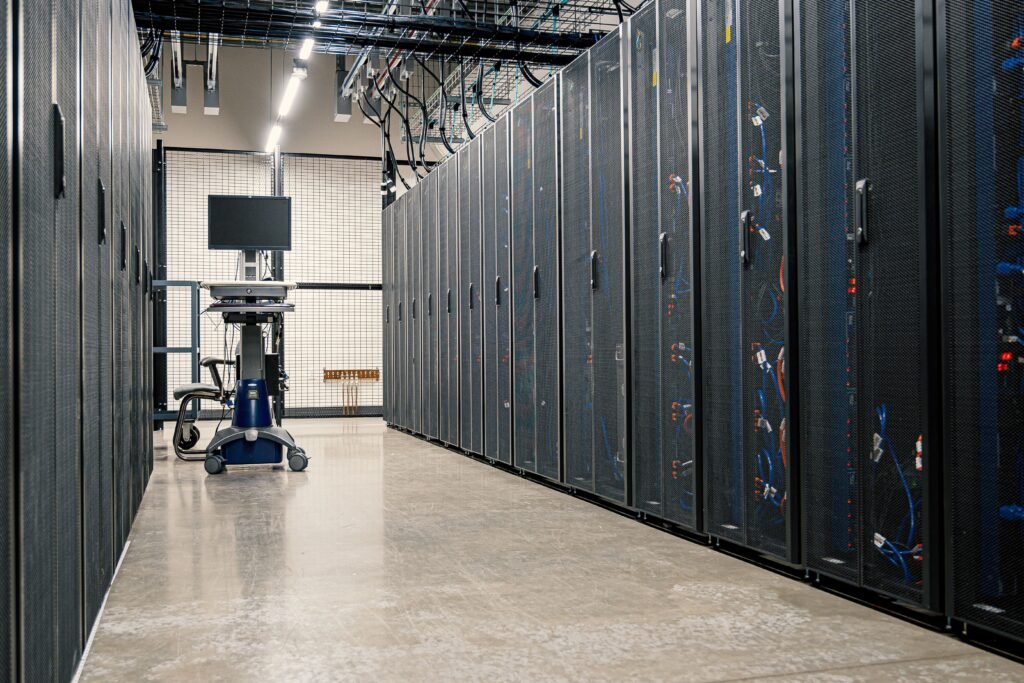
There is a specific number attached to Amazon’s newest data center project in West Texas, and it is the kind of number that stops an argument. The gas plant Amazon is building to power a single campus in Pecos County has been permitted to release up to 33 million tons of carbon dioxide every year. No power plant currently operating anywhere in the United States comes close to that.
The Scale Is Hard to Picture, So Here Is the Comparison
Emissions figures in the tens of millions of tons stop meaning much to most people, which is part of why projects like this get approved without much public fight. The useful move is to put the number next to things you already have a sense of.
| Source | Approximate annual CO2 | What it is |
|---|---|---|
| Amazon Pecos County plant | Up to 33 million tons | Permitted ceiling for one data center campus |
| James H. Miller Jr. plant, Alabama | About 16 million tons | Currently the dirtiest power plant in the US |
| Switzerland | Same general range | An entire national economy |
| Ireland | Same general range | An entire national economy |
| Bulgaria | Same general range | An entire national economy |
That last group is the one worth sitting with. A single corporate computing campus in West Texas has been cleared to emit on the order of what a mid-sized European country emits doing everything it does: heating homes, running factories, moving people around, growing food.
Why Amazon Is Building Its Own Power Plant at All
The technical term for what Amazon is doing here is behind-the-meter generation. The plant is not selling power into the Texas grid and the data center is not buying from it. The two are wired directly to each other, effectively operating as a private island of generation and consumption.
There is a genuine engineering logic to this. Grid interconnection queues in the US have become the single biggest bottleneck for large loads, with wait times measured in years. A company that wants seven gigawatts of firm power on a schedule set by an AI roadmap rather than by a utility commission has a strong incentive to route around the grid entirely. Building your own generation is faster, and it does not require convincing a regulator that your project deserves priority over everyone else’s.
It also sidesteps a growing political problem. Data centers have become a target for local opposition precisely because they raise electricity bills for everyone else on the same grid. A behind-the-meter plant lets a company argue, accurately, that it is not taking power from residential customers. What that framing leaves out is that the emissions go into the same atmosphere regardless of which wires they travel down. This is the direction the industry has been moving for a while now, and we have covered how natural gas has quietly become the default answer to the data center power problem after a decade in which the industry talked almost exclusively about renewables.
The Climate Pledge Problem
Amazon co-founded the Climate Pledge in 2019, committing to net-zero carbon across its operations by 2040 and to matching its electricity use with 100 percent renewable energy by 2030. Those commitments are still on the company’s website. They are getting harder to square with what the company is actually building.
Asked about the pledge in light of the Texas project, an Amazon spokesperson offered a line that has done more to define the story than any emissions figure: “The world looks different now than when we cofounded the climate pledge.”
That is a remarkably candid thing for a corporate communications team to say out loud. It is not a denial and it is not a defense of the target. It is closer to an acknowledgment that the AI buildout has changed the company’s priorities, and that the 2040 commitment is now competing with something the company wants more.
The underlying numbers support that reading. Amazon recently disclosed a record increase in its total emissions, with company-wide electricity consumption climbing 34 percent across 2025. When your power draw grows by a third in a single year, a 2040 net-zero target does not fail gradually. It fails all at once.
Why This One Project Matters More Than the Average Data Center
The AI industry has spent three years explaining that its energy appetite is a temporary cost on the way to efficiency gains that will eventually pay the debt back. That argument has always rested on the idea that each generation of hardware does more work per watt, which is true, and that total consumption will therefore level off, which has not happened once.
The Pecos County project is a useful test of that story because it is not incremental. It is not a company adding capacity to an existing campus or signing a power purchase agreement for wind that gets built somewhere else. It is a decision to construct dedicated fossil generation at a scale that rewrites the national leaderboard, on a timeline that assumes demand keeps climbing for at least as long as the plant’s useful life.
Analysts have been arguing for a while that the emissions curve from the AI boom is a choice rather than a physical inevitability, since the same compute can be sited near clean generation or timed to match it. Projects like this one are what that choice looks like when speed wins. The industry’s more speculative answers to the same problem, including the genuinely strange push toward putting data centers in orbit where solar power is constant, exist precisely because everyone involved understands the ground-based math is getting ugly.
What Happens Next
- Permitting scrutiny. The authorization exists, but large permits attract legal challenges, and the gap between the permitted ceiling and public expectations is unusually wide here.
- Pressure on the Climate Pledge. More than 500 companies have signed Amazon’s pledge. A co-founder visibly walking back the premise puts every other signatory in an awkward position.
- A template, or a warning. If behind-the-meter gas becomes the standard way to power frontier AI, this project will not stay the largest for long. Microsoft, Meta, and Google are solving the same equation with the same constraints.
- Local reality in Pecos County. Thirty-five turbines running continuously produce more than carbon. Air quality, water use, and the durability of the promised jobs are all live questions for people who actually live there.
None of this makes Amazon uniquely villainous. Every major AI company is scrambling for firm power, and the ones buying grid capacity are pushing costs onto ratepayers in ways that are less visible but not obviously better. What makes the Pecos County plant worth paying attention to is that it removes the ambiguity. For years the climate cost of AI has been an abstraction spread across utilities, contracts, and offsets nobody audits closely. Here it is a single site with a single owner and a single number on a permit, and the number is bigger than anything else in the country.
