

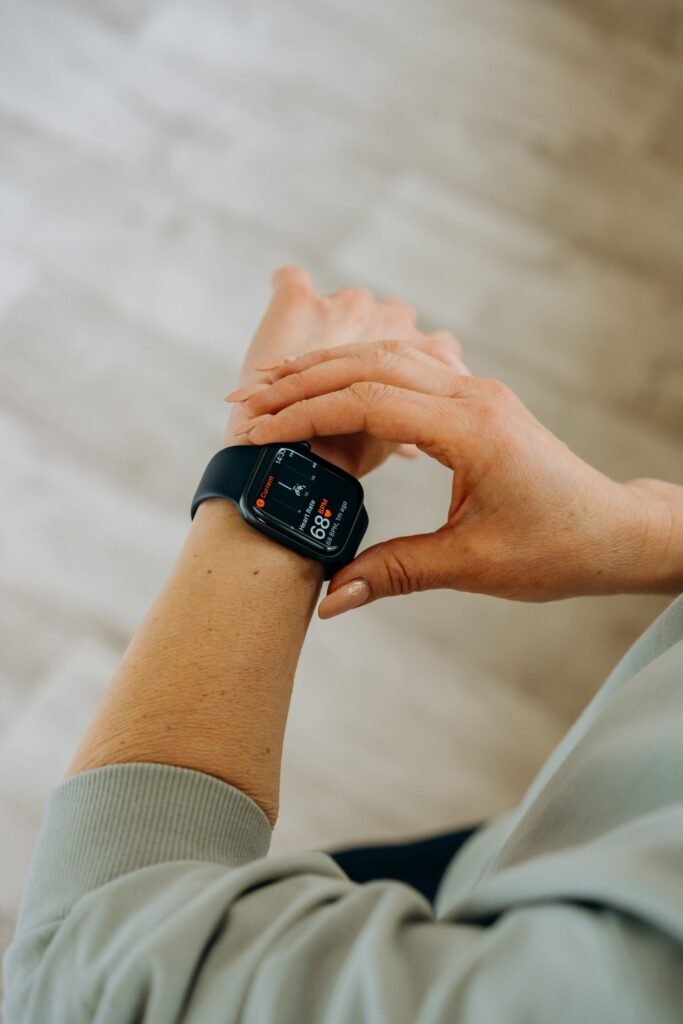
If you live with a racing heart, tight chest or constant background worry, a smartwatch can look like a handy way to see what is going on inside your body. Brands certainly market it that way, with stress scores, calming breathing sessions and alerts that tell you when to take a break. The honest picture is more mixed. A watch can show you patterns, and it can nudge you to slow down, but it cannot tell you that you have anxiety.
This guide explains what a smartwatch for anxiety actually measures, how Garmin, Apple, Google and Samsung handle stress, where the accuracy problems are, and who is likely to get real value from one. Features change with software updates, so confirm your exact model on the manufacturer’s page before buying.
Quick answer
For most people, a Garmin watch is the most practical choice because it shows an all day stress score and a Body Battery energy estimate with no subscription. Pixel Watch and Fitbit add skin conductance (EDA) sensing for a more hands on mindfulness check. Apple Watch and Galaxy Watch lean on heart rate variability and guided breathing. None of them diagnose anxiety, and every one of them can be wrong on a given day.
What a Smartwatch Can Actually Measure About Stress
A watch cannot read your thoughts or your cortisol level. What it can do is track body signals that tend to shift when you are under pressure. Three of them matter most.
- Heart rate variability (HRV). This is the small variation in time between heartbeats. When your body is in a “fight or flight” state, those gaps become more even and HRV drops. Most stress scores are built on this signal.
- Heart rate and activity. A raised resting heart rate while you are sitting still can hint at strain. The watch has to rule out exercise, caffeine and a hot room first.
- Electrodermal activity (EDA). Sweat changes how well skin conducts a tiny electrical signal. Fitbit and Pixel Watch models use this, either as a short manual scan or, on the Pixel Watch 4, as a continuous sensor.
A 2021 systematic review of smart devices for mental health and stress found that average heart rate, which is what many consumer devices rely on, is less accurate for spotting stress and anxiety than HRV, EDA and possibly breathing rate. The same review noted that EDA showed high accuracy in studies but with questionable reliability. In plain terms, the sensors are real, but the signal is noisy.
Stress Features Compared: Garmin, Apple, Google and Samsung
| Brand | Stress tool | What it uses | Watch out for |
|---|---|---|---|
| Garmin Vivoactive 6, Venu 4 and others | All day stress score and Body Battery | HRV, resting heart rate, activity and sleep, using Firstbeat analytics | Best read as a trend over days and weeks, not a single number |
| Google Pixel Watch and Fitbit | Stress Management Score, EDA Scan, and Body Response alerts on Pixel Watch 4 | Heart rate, sleep and activity for the score. EDA, HRV and skin temperature for the newer alerts | Some reviewers found the Pixel Watch 4 alerts frequent and often off the mark |
| Samsung Galaxy Watch8 | High stress alerts, Vascular Load and Mindfulness tracker | Heart signals and sleep data, plus guided breathing and mood logging | Launch coverage and early reviews, with little long term testing |
| Apple Watch | Mindfulness app and HRV in the Health app | HRV readings and breathing sessions | I did not find a built in all day stress score from Apple, so you read HRV yourself |
Sources: Google Fitbit support pages, Google Store, Samsung launch coverage, third party Garmin explainers. Check each brand’s support page for the current list of supported models.
Garmin: The Most Complete Stress Dashboard
Garmin turns HRV into a stress number between 0 and 100 across the day. Lower is calmer. The scale is split into rest (0 to 25), low (26 to 50), medium (51 to 75) and high (76 to 100), and the watch draws it as a bar graph so you can spot which hours were rough.
Body Battery sits alongside it. It is a 0 to 100 estimate of how much energy you have left, built from HRV, resting heart rate, stress, activity and sleep. Stress drains it and rest recharges it. It is an inference, not a measurement, and things like illness, alcohol and caffeine can skew it. Garmin does not charge a subscription for any of this. If you are shopping, our guide to the best Garmin smartwatch covers which models carry these features and what each one costs.
Pixel Watch and Fitbit: Stress Plus Skin Conductance
Google’s support page lists the Stress Management Score tile on a wide range of Fitbit and Pixel Watch devices, including the Charge 4, 5 and 6, Inspire 2 and 3, Luxe, Sense series, Versa 2, 3 and 4, and Pixel Watch 2. The score blends heart rate, sleep and activity. The EDA Scan app is separate. You rest your palm over the watch for a short scan, and it measures small electrical changes in your skin as a mindfulness check. Google lists it on the Charge 5, Charge 6, Sense, Sense 2 and Pixel Watch 2.
The Pixel Watch 4 went a step further with a continuous EDA sensor. Google says a machine learning model combines it with heart rate, HRV and skin temperature to flag possible signs of stress or excitement, then sends a Body Response notification. You can log your mood, start a breathing exercise or pause alerts. The model takes about a month to learn your baseline.
Reviewers were split. Android Police found the alerts frequent and often inaccurate, with the writer saying they were neither stressed nor excited when most of them arrived. Fast Company was kinder, though it noted the timing problem: you often get pinged about something that happened 10 or 15 minutes earlier, when you can no longer remember what caused it. We covered the newest hardware in our Pixel Watch 5 review roundup.
Samsung and Apple: HRV and Guided Breathing
Samsung’s Galaxy Watch8 added Vascular Load, which looks at strain on the vascular system, plus High Stress Alerts that suggest taking a break and a Mindfulness tracker for breathing exercises and mood logging. The launch price was $349.99. The features are new, and most of what is written about them comes from launch coverage rather than long term testing.
Apple takes a lighter approach. The Mindfulness app (the former Breathe) runs guided sessions, and your HRV readings live in the Health app under Browse, Heart, Heart Rate Variability. That is useful if you like looking at your own numbers, but there is no single stress score to glance at. If you already own an iPhone and an Apple Watch, it is a decent free way to build a breathing habit. It is not a reason to buy one on its own.
How Common Anxiety Is, and Why That Matters for Buyers
Anxiety is far more common than most people assume, which is part of why stress tracking sells. The National Institute of Mental Health estimates that 19.1% of US adults had an anxiety disorder in the past year, and 31.1% will have one at some point in life. Past year rates were higher for women (23.4%) than men (14.3%). NIMH puts generalized anxiety disorder at 2.7% and social anxiety disorder at 7.1% of adults in a year. These figures come from survey work done in the early 2000s, so treat them as a rough guide.
Where Wrist Stress Tracking Falls Short
It helps to be blunt about the limits, because stress scores can backfire if you take them too seriously.
- Stress is not the same as anxiety. Anxiety is a clinical condition diagnosed through an interview. A watch only sees physical arousal, and that rises with coffee, a brisk walk, excitement and a hot shower too.
- Validation is thin. Reviews of the research note that many studies test people at rest or on simple lab tasks, not during messy daily life. One university thesis testing a research grade wrist EDA watch found weak agreement with a reference device in virtual reality stress tasks.
- Numbers can feed worry. If you check your score every ten minutes and a “high” reading makes you more tense, the tool is working against you. Switching alerts off is a perfectly reasonable choice.
- Rings may do better overnight. Several guides favor smart rings and chest straps for HRV accuracy, though many of those sources are affiliate style and thin on method.
Because sleep and stress feed each other, it is worth checking how well a watch handles both. Our breakdown of the best smartwatch for sleep tracking shows which models give you a reliable overnight baseline.
Who Should and Should Not Rely on a Watch
A watch can help if you
- ✓ Want to notice stress patterns over weeks
- ✓ Like guided breathing prompts
- ✓ Plan to log mood alongside the data
- ✓ Treat the numbers as a hint, not a verdict
Talk to a professional if you
- ✕ Have panic attacks or constant dread
- ✕ Avoid daily activities because of worry
- ~ Get chest pain or fainting with a racing heart
- ✕ Feel worse after checking your scores
Frequently Asked Questions
Can a smartwatch detect anxiety?
No. It can detect physical changes such as lower HRV or a raised heart rate that often go along with stress, but it cannot diagnose an anxiety disorder. Only a clinician can do that.
Which smartwatch is best for anxiety?
For all day stress scores without a subscription, Garmin is the most practical pick. If you want skin conductance checks and mindfulness prompts, look at a Pixel Watch or a Fitbit that supports EDA Scan. Apple Watch and Galaxy Watch suit people who mainly want guided breathing and HRV data.
Is the Pixel Watch 4 stress alert accurate?
Google says it combines EDA, heart rate, HRV and skin temperature, and that it needs about a month to learn your baseline. Independent reviewers disagreed on how reliable it is, and I did not find an independent accuracy study.
Can a watch stop a panic attack?
No. Guided breathing sessions may help some people slow down, but a watch is not a treatment. If you have panic attacks, speak with a doctor or mental health professional.
Do I need a subscription for stress tracking?
Garmin’s stress score and Body Battery do not require one. Google’s Fitbit app has a premium tier for some deeper insights, so check which features sit behind it before you buy.
Final Verdict
The Bottom Line
A smartwatch for anxiety is best seen as a mirror, not a doctor. Garmin gives the clearest day long picture, Pixel and Fitbit add skin conductance checks, and Apple and Samsung offer solid breathing tools. Use the data to spot patterns, ignore any single reading, and see a professional if anxiety is getting in the way of your life.
This article is for general information and is not medical advice.
Featured image: Pexels.
About this article: GeekBlog covers U.S. technology news, AI, phones, smartwatches and gaming. Every story is written and checked under our Editorial Policy. Spotted a mistake or have a story tip? Contact our editors.
