

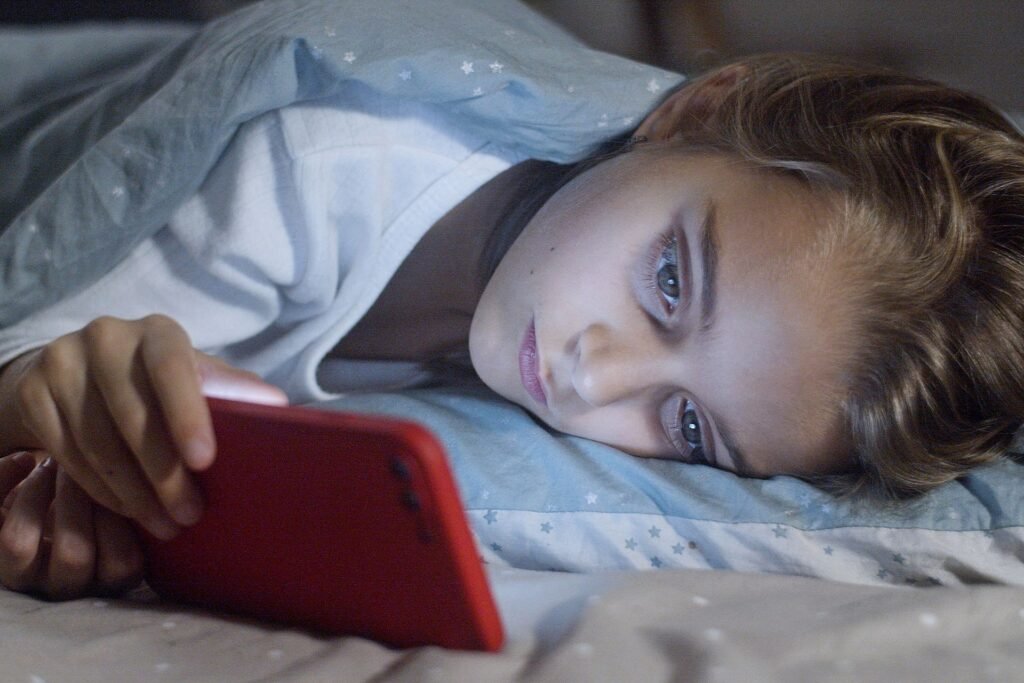
Saying “goodnight” to a chatbot sounds harmless. According to entrepreneur and parent Josh Felber, who shared five warning signs with UNILAD Tech, it can also be one of the first clues that a child has stopped treating an AI as a tool and started treating it as someone they owe something to. His list is short and specific: decoding group chats, shopping for agreement, bedtime goodbyes, outsourced apologies and guilt about logging off.
American kids are already deep into this technology, often further than their parents realize. The good news is that none of the signs call for confiscating a phone. Most call for a conversation, and in 2026 parents also have more controls, and more legal backup, than a year ago.
The short version
- Josh Felber’s five signs: asking AI to decode group chats, rephrasing until it agrees, saying goodnight to it, using it to write apologies, and feeling guilty for time away.
- Pew found 64% of US teens use AI chatbots, but only 51% of parents say their teen does. Another three in ten parents are not sure.
- Most teen use is homework and information. Only 12% of teens told Pew they have used a chatbot for emotional support or advice.
- Tools exist now: ChatGPT parental controls and a teen mode, Character.AI’s ban on open-ended chat for under-18s, and California’s SB 243 break reminders.
- The fix is rarely taking the app away. It is curiosity first, limits second.
How many kids are actually doing this
The UNILAD piece leans on UK data from Internet Matters. Its July 2025 report, Me, Myself & AI, surveyed 1,000 children aged 9 to 17 and found that 64% had used AI chatbots. Among those users, 35% said talking to one feels like talking to a friend, and 12% said they talk to chatbots because they have no one else to talk to. “Chatbots are starting to reshape children’s views of ‘friendship’,” Internet Matters co-CEO Rachel Huggins warned.
The American numbers line up closely. Pew Research Center surveyed 1,458 US teens aged 13 to 17 and their parents between September 25 and October 9, 2025. In the report published on February 24, 2026, 64% of teens said they use AI chatbots, but only 51% of parents said their teen does, and about three in ten parents were not sure. Just over half of parents said they ever talk to their teen about chatbots.
Companion apps, built to be a friend or character, are a separate category. Common Sense Media’s July 2025 report Talk, Trust, and Trade-Offs found that 72% of US teens had used an AI companion at least once and over half used one at least a few times a month. About one in three teen users had chosen to discuss something serious with an AI companion instead of a person, and about one in three found those conversations as satisfying as, or more satisfying than, talking with real friends.
That is the context for any warning list. The typical teen uses a chatbot to look things up and get through algebra, not to replace friends. The signs below are about the minority whose use has drifted somewhere more personal.
The warning signs, and what to do about each
Felber’s five signs come from the UNILAD interview. The last two rows come from a companion UNILAD piece in which Dr Sarah Boss, a psychiatrist and clinical director at The Balance Clinic, described what AI overuse looks like in her patients.
| Sign | What it can look like | What to try |
|---|---|---|
| Decoding group chats | Uploading screenshots and asking the bot what a friend “really” meant | Read the message together. Separate what it says from the fear your child is projecting onto it. |
| Shopping for agreement | Rewording a question or switching bots until one says they were right | Explain that their own framing shapes the answer. Ask how the other person would tell the story. |
| Saying goodnight | Feeling they “must” sign off properly or finish a chat before sleep | Say plainly that the bot does not need care and will not suffer when they log off. Protect sleep. |
| Outsourcing apologies | Having AI draft hard messages to friends or family | Make it safe to tell you what happened. Rehearse the real conversation with them. |
| Guilt about time away | Talking about “loyalty” to an app, or feeling they are “cheating” on it | Ask why it feels that way and whether the service still suits them. Let them decide some of the limits. |
| Hours that crowd out life (Boss) | Use that eats into sleep, sport, homework or time outside | Track actual time for a week. Use quiet hours and keep devices out of the bedroom overnight. |
| Swapping people for a bot (Boss) | Skipping plans because the bot is easier and never rejects them | Treat it as a loneliness or anxiety question, not a tech one. Talk to a pediatrician or counselor if it persists. |
The agreement-shopping sign deserves extra attention, because it plays on a known weakness of the technology: chatbots tend to tell you what you want to hear. “An answer that agrees with them is not automatically an independent assessment of what happened,” Felber told UNILAD. A teenager who has just argued with a friend is the person least likely to notice that.
Felber’s broader point is about tone. He recommends a dialogue “built on a foundation of curiosity rather than accusations.” As he put it: “If they feel lonely, simply removing an app will not address the loneliness.”
What the research says about heavy use
Boss told UNILAD that she now asks patients how many hours a day they spend on AI, and that some answer eight or ten. UNILAD also pointed to a study in Computers in Human Behavior linking chatbot use as an escape from negative emotions to more addictive use. Boss’s worry is what the bot displaces: a partner that never rejects you is easy to choose over people when you are anxious.
A four-week randomized study by the MIT Media Lab and OpenAI, with 981 adult participants, found that heavier daily chatbot use correlated with more loneliness, more emotional dependence and less socializing. Correlation is the key word: lonely people may simply use chatbots more. None of this shows that a teen venting to ChatGPT about a bad day is being harmed.
The case for not panicking
Kids are getting real value here. In Pew’s survey, about a quarter of teens said chatbots had been extremely or very helpful for schoolwork, and teens were more than twice as likely to expect AI to have a positive impact on their own lives over the next 20 years (36%) as a negative one (15%). Internet Matters found children using chatbots for everything from schoolwork to practicing tough conversations, which is close to what Felber suggests parents do with them in person.
Even among companion app users, Common Sense found that 80% still spend more time with real friends than with AI, and half said they distrust the advice these bots give. Common Sense still recommends that no one under 18 use AI companions in their current form, and that is a reasonable line for character and romance apps. General assistants used for homework are a different conversation.
The controls and laws parents can lean on now
| Date | What happened | What it means at home |
|---|---|---|
| Sept. 11, 2025 | FTC orders seven companies (Alphabet, Character.AI, Meta, Instagram, OpenAI, Snap and xAI) to explain how their companion bots affect kids | A fact-finding study, not an enforcement action. |
| Sept. 29, 2025 | OpenAI launches ChatGPT parental controls | Link accounts, set quiet hours, turn off voice, memory and image generation. Parents can be alerted to signs of acute distress. No access to chat transcripts. |
| Nov. 25, 2025 | Character.AI ends open-ended chat for under-18 users | Teens get guided “Stories” instead. The company filed for Chapter 11 on Oct. 12, 2026, and its future depends on a pending sale. |
| Jan. 1, 2026 | California SB 243 takes effect | For known minors, companion bots must disclose they are AI and remind users to take a break at least every three hours. |
| Jan. 20, 2026 | OpenAI rolls out age prediction | Accounts that look under 18 get teen safeguards automatically, even without a linked parent. |
| Aug. 18, 2026 | ChatGPT for Teens launches | No romantic tone, no claims of feelings, tighter limits on self-harm content. |
Other states are following. New York’s AI companion law took effect in November 2025, and Washington and Oregon passed companion chatbot laws in March 2026 that start on January 1, 2027. At the federal level, the Senate Commerce Committee advanced the bipartisan CHATBOT Act, which would require parental consent and “family accounts” for teen chatbot use, as part of a package of kids’ AI bills in August. It still needs a full Senate vote and a House version.
The limits are real, too. OpenAI has said its guardrails are not foolproof, and a reporter got the new teen mode of ChatGPT to write a full essay within hours of launch. Controls only cover accounts a parent knows about, and kids rarely use just one chatbot.
A practical plan for this week
Start by asking, not checking. Felber says the usual question about which apps a child uses “should evolve to cover what they’re discussing with the tool.” Then link accounts where the platform allows it, set quiet hours that match bedtime, and agree on what the chatbot is for in your house: homework, curiosity, practice. Revisit it in a month.
If you see two or three of the signs above together, especially alongside slipping sleep, grades or friendships, treat that as information about how your child is doing, not just how they are using an app. The chatbot is usually the symptom. The goodnight is worth noticing because of who it is not being said to.
Sources and further reading
- UNILAD Tech: Expert warns parents of 5 signs their child is becoming too attached to AI chatbots
- UNILAD Tech: Psychiatrist shares the worrying signs that someone may be addicted to AI
- Pew Research Center: How Teens Use and View AI (Feb. 2026)
- Pew Research Center: What parents say about their teen’s AI use
- Common Sense Media: Nearly 3 in 4 teens have used AI companions
- Internet Matters: Me, Myself & AI report (PDF)
- MIT Media Lab and OpenAI: How AI and human behaviors shape psychosocial effects of chatbot use
- Engadget: The FTC is investigating companies that make AI companion chatbots
- TechCrunch: Character.AI ends open-ended chat for minors
- The Next Web: Character.AI files for bankruptcy
- California SB 243 bill text
- Orrick: 2026 State Chatbot Laws
- AP via ABC News: OpenAI launches ChatGPT for Teens
- Senate Commerce Committee: CHATBOT Act advances to the Senate floor
About this article: GeekBlog covers U.S. technology news, AI, phones, smartwatches and gaming. Every story is written and checked under our Editorial Policy. Spotted a mistake or have a story tip? Contact our editors.
