

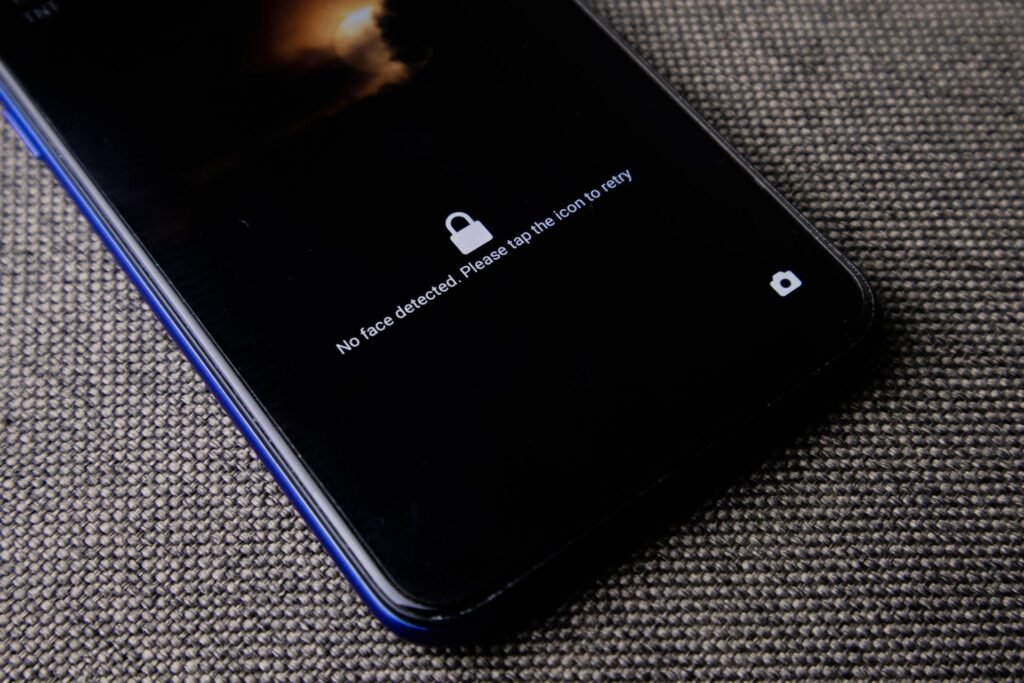
The iPhone Duo has been in buyers’ hands for about two days, and the conversation has already moved to the iPhone Duo 2. As UNILAD Tech reports, prototypes of Apple’s second foldable are said to include Face ID, the feature Apple left out of the first model and the one reviewers have complained about most.
The word “leak” oversells it a little. Nobody has published photos or parts. The claim comes from Bloomberg’s Mark Gurman, who said on his Power On podcast that Apple has Duo 2 prototypes with under-display Face ID on the outer screen. Gurman has the best track record of anyone who covers Apple, so the report deserves weight. But a prototype in a lab is not a shipping feature, and Gurman himself gave a two-to-three-year window rather than a date.
The short version
- On the October 22 episode of Bloomberg’s Power On podcast, Mark Gurman said he is “told there are iPhone Duo 2 prototypes at Apple already” with an under-display Face ID sensor on the outside screen.
- He expects the Touch ID to Face ID switch to happen “by the first update or the second update,” meaning the Duo 2 or Duo 3, within “two to three years or so.”
- Apple has also tested an Action button for the Duo 2, Gurman says, but he “definitely can’t vouch” that it will ship.
- The shipping iPhone Duo is 5.2mm thick unfolded and unlocks with Touch ID in the side button. Apple has not officially said why it dropped Face ID.
- Samsung, Google and Honor also rely on side-mounted fingerprint readers for their foldables. None of them has a 3D face scanner like Face ID.
What Gurman actually said
The source is a 56-minute Power On episode published on October 22, the day before launch, in which Gurman talked through the phone with Gear Live’s Andru Edwards, who had tested it for a week. Edwards brought up the fingerprint reader without being asked. “Touch ID is annoying,” he said, adding that it often asks him to try again, while “Face ID never is like, hey, we didn’t get your face.”
Gurman gave three likely reasons Apple chose Touch ID. The outer half is “iPhone Air thinness” but has to hold more parts. Apple wanted the unlock to work the same way on both screens. And the Face ID module costs much more than a fingerprint sensor at a time when memory prices are rising. Then he passed on what he had heard:
“One thing that Apple has been actively working on is under-display Face ID,” Gurman said. “I’m told there are iPhone Duo 2 prototypes at Apple already that have an under-display Face ID sensor and camera feature on the outside screen.” He added that he would “anticipate this Touch ID to Face ID thing is fixed by the first update or the second update. So in the next two to three years or so.”
He also said Apple had internally tested an Action button for the Duo 2, but he was careful about it: “I definitely can’t vouch for if it’s going to happen or not.” Every iPhone since the iPhone 15 Pro has had one, and the Duo is the first iPhone with neither an Action button nor a mute switch. Silent mode lives in Control Center.
Confirmed, reported, or just a guess
The new report also seems to clash with what Gurman wrote a month ago. In his September 13 Power On newsletter, as summarized by MacRumors, he guessed that Face ID and a telephoto camera would arrive “by its third generation,” with Apple pairing smaller depth-sensing hardware with AI processing. Several outlets read that as a 2028 timeline.
The two reports are not as far apart as they look. Prototypes are how Apple tests options, and plenty of them never ship. Gurman’s own wording still covers both the Duo 2 and the Duo 3. What changed is that he now says Duo 2 hardware with Face ID exists. Here is how the claims stack up.
| Claim | Source | Status |
|---|---|---|
| iPhone Duo uses Touch ID in the side button, no Face ID | Apple specs | Confirmed |
| 5.2mm unfolded, 11.3mm folded, 254g | Apple, via MacRumors | Confirmed |
| No Action button or mute switch on the Duo | Apple tech specs page | Confirmed |
| iPhone 18 Pro moved part of Face ID under the display | Shipping hardware (Daring Fireball review) | Confirmed |
| Duo 2 prototypes have under-display Face ID on the outer screen | Gurman, Power On podcast, Oct 22 | Reported |
| Face ID ships on the Duo 2 or Duo 3 | Gurman’s expectation | Reported |
| Action button returns on the Duo 2 | Gurman, “can’t vouch” | Tested only |
| Telephoto camera on a future Duo | Gurman: “on their list,” no timing | Speculative |
Why the first Duo shipped with Touch ID
Apple calls the Duo the thinnest iPhone it has made. Unfolded, it is 5.2mm thick, 0.4mm thinner than the 5.6mm iPhone Air. Folded, it is 11.3mm thick and weighs 254 grams, the heaviest iPhone yet. Apple has not explained publicly why it dropped Face ID, but the numbers explain a lot.
Face ID is not a single camera. It is a stack of parts: a dot projector, a flood illuminator and an infrared camera, and each needs some physical depth behind the glass. The iPhone Air fits that stack into 5.6mm, but the Air has one screen. Each half of the Duo is thinner still, the phone has to make room for a hinge, two batteries and a vapor chamber, and the half with the cover screen stacks two displays back to back.
Then there is the problem of having two front faces. A Face ID module above the 5.4-inch cover screen would be useless when the phone is open, and adding a second set of TrueDepth hardware for the inner screen would double the cost and the space. Apple’s own camera choices show how tight things are. The inner display hides a 1080p FaceTime camera under the panel, and it is a regular camera with no depth sensing. A side-button sensor works the same whether the phone is open or closed, and you can enroll a different finger for each grip.
That is why the Duo 2 report focuses on the outside screen. Face ID on the cover display, the screen you see first when you pull the phone from a pocket, would fix most of the daily friction even if the inner screen never gets it.
The complaint that would not go away
In the reviews we rounded up last week, the missing Face ID came up in nearly every one. PCMag told readers to “toss all that muscle memory out the window,” and TechRadar caught itself staring at the cover screen and waiting for it to unlock.
Marques Brownlee made the strongest case. In his review, he said the fingerprint reader has a deliberate delay that makes unlocking feel slower than it should, and he predicted, “I really think Face ID is going to be the number one thing people miss coming from other iPhones.” He still called the phone fun “after the learning curve and getting used to not having Face ID,” and said his biggest complaint at launch was the lack of third-party apps built for the new screen sizes.
None of this was a surprise. Before the September event, the missing TrueDepth hardware was already at the top of the list of features Apple’s foldable was expected to give up. What reviewers found is that knowing about it ahead of time does not make it less annoying when you are used to Face ID.
The iPhone 18 Pro already shows the way
Gurman’s report rests on something you can already buy. On the iPhone 18 Pro and Pro Max, Apple moved the Face ID infrared camera under the display, into the top-left corner beneath the clock. The Dynamic Island cutout got noticeably smaller as a result, as John Gruber described in his review. Only part of the system moved, so this is a step toward under-display Face ID, not the finished version.
Every part Apple can hide under the panel is one less part that needs its own cutout. If Apple extends that approach to more of the TrueDepth parts, the Duo’s cover screen becomes a realistic home for Face ID.
How Samsung, Google and Honor handle it
Apple is not the odd one out here. Samsung, Google and Honor all put a fingerprint reader in the power key of their book-style foldables. On Samsung’s Galaxy Z Fold 8, the reader by default needs a press as well as a touch, which adds a beat to every unlock, much like the delay Brownlee described on the Duo. Google’s Pixel 11 Pro Fold pairs a side fingerprint sensor with face unlock. Honor’s Magic V6, the thinnest of the group at 4.0mm open, also uses a side sensor.
The face unlock on those Android phones runs off the regular selfie camera. None of them has a projector and infrared camera like Face ID. That is the gap Apple would be filling: if the Duo 2 ships with real Face ID on its cover screen, it would be the only major foldable with 3D face authentication.
| Phone | Unfolded | Folded | Weight | Unlock | US price |
|---|---|---|---|---|---|
| iPhone Duo | 5.2mm | 11.3mm | 254g | Touch ID side button | $1,999 |
| Galaxy Z Fold 8 | 4.5mm | 9.7mm | 201g | Side-key fingerprint | $1,899 |
| Pixel 11 Pro Fold | 5.0mm | 10.1mm | 239g | Side fingerprint, face unlock | $1,899 |
| Honor Magic V6 (white) | 4.0mm | 8.75mm | 219g | Side fingerprint, face unlock | Not sold in US |
Gurman noted that Samsung’s foldable is already thinner, and Brownlee pointed out that the Fold 8 is more than 20% lighter. Apple has already lost the thinness race, and Face ID probably matters more to iPhone owners than a few tenths of a millimeter.
When a Duo 2 could actually arrive
Apple has not announced a second foldable, and it never comments on unreleased products. Analyst Ming-Chi Kuo and other supply chain reports expect a second-generation model in the second half of 2027, with September 2027 the most common guess. If Face ID makes the Duo 2, that is the earliest it ships. If it slips to the Duo 3, the timeline moves to around 2028, which matches Gurman’s September newsletter.
The bigger takeaway is that the feature reviewers missed most is already on Apple’s test benches. Whether it shows up in 2027 or 2028 depends on how quickly Apple can fit TrueDepth hardware into a phone that is only 5.2mm thick when open.
Sources and further reading
- UNILAD Tech: iPhone Duo 2 prototypes leak with potential to fix the first generation’s biggest complaint
- Bloomberg Power On podcast: iPhone Duo Review + Apple’s Pre-Order Blunder With Andru Edwards (October 22, 2026)
- MacRumors: Gurman says iPhone Duo likely to get Face ID, telephoto lens by third gen
- MacRumors: iPhone Duo beats iPhone Air as Apple’s thinnest iPhone, but only when open
- MacRumors: iPhone Duo doesn’t have an Action button
- Dexerto: Marques Brownlee explains why most people shouldn’t buy the iPhone Duo
- iThinkDifferent: Why iPhone Duo has Touch ID and not Face ID
- Daring Fireball: the iPhone 18 Pro’s under-display Face ID sensor and smaller Dynamic Island
- SamMobile: Galaxy Z8 fingerprint settings for faster unlocks
- SamMobile: Samsung confirms Galaxy Z Fold 8 price starts at $1,899
- Droid Life: Pixel 11 Pro Fold official at $1,899
- Digit: Apple may launch its second foldable iPhone in 2027
About this article: GeekBlog covers U.S. technology news, AI, phones, smartwatches and gaming. Every story is written and checked under our Editorial Policy. Spotted a mistake or have a story tip? Contact our editors.
