

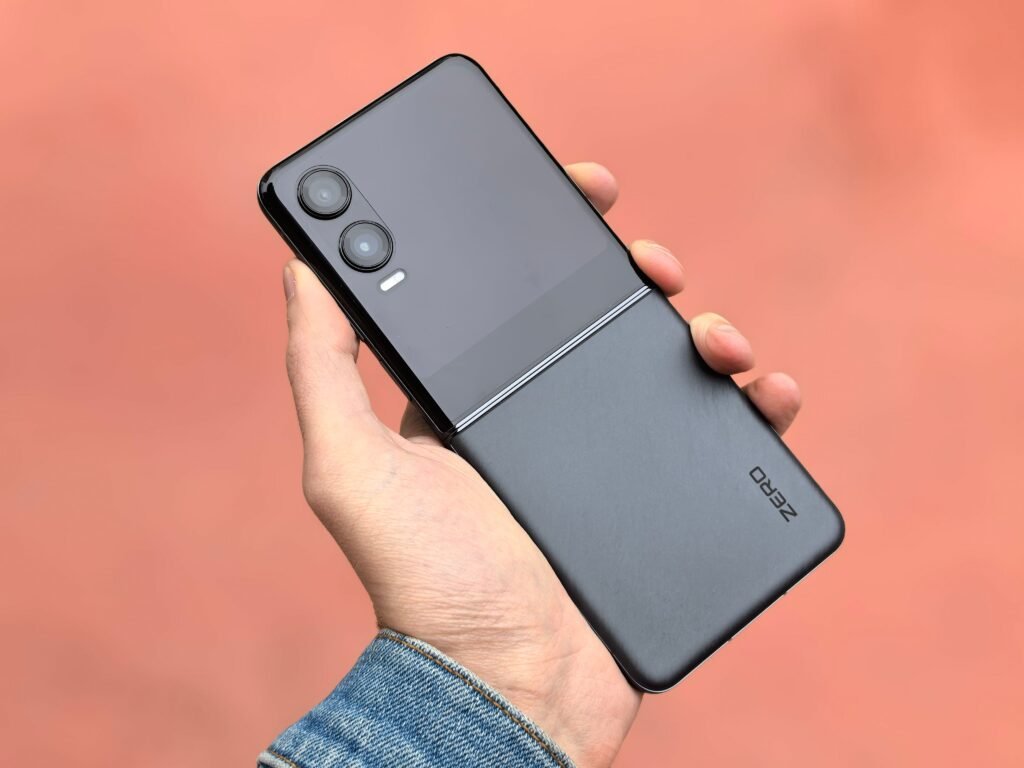
For years, comparing a foldable iPhone with a Galaxy Fold was a thought experiment. This fall it became a shopping decision, and an unusually tidy one. Samsung’s Galaxy Z Fold 8 and Apple’s iPhone Duo are both short, wide “passport-style” foldables. Both open to a 7.6-inch screen. Both have two rear cameras and no telephoto. And they are $100 apart.
That is not a coincidence. Samsung Display makes the folding panel in the iPhone Duo, and Samsung launched its own passport-shaped Fold over the summer, a couple of months before Apple’s September 9 announcement. The Duo reached stores on October 23. Now that reviewers have lived with both, including TechRadar’s Lance Ulanoff, who says he still cannot pick a favorite, the differences are clear enough to map out.
The specs side by side
On paper these two are closer than any iPhone and Galaxy have been in years. The table below pulls together Apple’s and Samsung’s numbers along with figures confirmed in reviews.
| iPhone Duo | Galaxy Z Fold 8 | |
|---|---|---|
| Starting price | $1,999 (256GB) | $1,899 (256GB) |
| Inner display | 7.6 inches, 1878 x 2670, nano-texture finish | 7.6 inches, 2448 x 1848, glossy with anti-reflective coating |
| Cover display | 5.4 inches, 1398 x 2034 | 5.5 inches, 1248 x 1972 |
| Refresh and brightness | 1 to 120Hz, 3,000 nits | 1 to 120Hz, 3,000 nits |
| Chip | A20 Pro | Snapdragon 8 Elite Gen 5 for Galaxy |
| RAM / storage | 12GB / 256GB to 2TB | 12GB (16GB on 1TB) / 256GB to 1TB |
| Rear cameras | 48MP wide, 48MP ultrawide | 50MP wide, 50MP ultrawide |
| Selfie cameras | 12MP Center Stage (cover), 4MP under-display (inner) | 10MP (cover), 10MP hole-punch (inner) |
| Battery | 4,883mAh | 4,800mAh, 45W wired, 20W wireless |
| Weight | 254g | 201g |
| Thickness (open / closed) | 5.2mm / 11.3mm | 4.5mm / 9.7mm |
| Water and dust | IP68 | IP48 |
| Unlock | Touch ID in the power button (no Face ID) | Side fingerprint plus face unlock |
| Stylus | Apple Pencil (USB-C) | None, no digitizer |
| SIM | eSIM only | Physical SIM and eSIM |
| Software | iOS 27 | Android 17, One UI 9 |
Green cells mark the clear winner in each row. Where both phones are effectively tied, neither is highlighted.
The crease: Apple’s best trick
If you only look at one thing in a store, look at the inner screen under a bright light. Samsung’s crease on the Fold 8 is already mild. Most reviewers barely notice it in daily use. But tilt it under an overhead light and a wavy band about half an inch wide shows up down the middle.
On the iPhone Duo, that band is much harder to find. Apple did not eliminate the crease, and you can still feel it with a fingertip, but its matte nano-texture finish scatters light so the fold almost disappears visually. BGR called it the most convincing crease solution it has tested on any foldable. Apple also hides the inner camera under the display, so there is no hole punch cutting into apps when you rotate the phone.
The hinge follows the same theme. The Fold 8 opens to almost flat and needs a slight push to lie completely level. The Duo opens flat, full stop, and its hinge ends sit flush instead of forming small bumps at the top and bottom. That tighter sealing is part of why Apple could hit IP68, while Samsung’s rating stays at IP48. The “4” means real dust and sand protection is not guaranteed, which matters more on a device with a moving hinge.
Weight: Samsung’s clear win
The Duo’s polish costs grams. At 254g it is 53g heavier than the Fold 8, a gap of more than 25%, and at 11.3mm it is noticeably chunkier when closed. Ulanoff says he sometimes forgets the Fold 8 is in his pocket, while the Duo in Apple’s folio case is always there. BGR’s reviewer found the Duo only slightly heavier than an iPhone 18 Pro Max, so how much this matters depends on what you carry today.
Software: Samsung has had seven years of practice
This is where the Fold 8 pulls ahead for power users. One UI runs three apps at once, two side by side plus a floating window, and Samsung DeX turns the phone into a desktop when you plug in a monitor. Nearly every major Android app has been tuned for Samsung’s foldables by now.
The Duo runs iOS 27 with a new Split View, but it tops out at two apps, and you cannot open two windows of the same app. The dock sits vertically on the right side on both screens, a choice some reviewers find odd. Plugging into a monitor only mirrors the screen. App support is still catching up too: plenty of apps do not yet look right on the inner display, even if a few developers have built genuinely fun foldable-first apps. Tom’s Guide also gave Samsung the edge on AI, saying Gemini handles multi-step tasks inside apps that Siri still cannot.
On the other hand, the Duo supports the Apple Pencil (USB-C), which arrived with iOS 27.2. The Fold 8 dropped the digitizer layer to get so thin, so no S Pen works with it. The Galaxy Z Fold 6 was the last Fold to support one. If you want to sketch or take handwritten notes on the inner screen, that alone may decide it.
Cameras, performance and battery
Rear cameras are a wash. Both phones use a wide and an ultrawide in the high 40 to 50 megapixel range, and neither has a telephoto, so zoom shots rely on cropping. Tom’s Guide gave the Duo a clear win in its photo shootout. Samsung tends to push saturation a little more, although less than it used to.
Selfies favor Samsung. The Fold 8’s inner camera is a real 10MP hole-punch lens. The Duo hides a 4MP sensor under the display, fine for FaceTime but poor for photos. On the outside, Apple’s 12MP Center Stage camera is excellent.
Performance favors Apple, slightly. The A20 Pro beat the Snapdragon 8 Elite Gen 5 in TechRadar’s benchmarks, but both handle games, video editing and multitasking with ease. Samsung can record 8K video if that matters to you.
Battery life is close and contested. The Duo’s cell is a hair bigger at 4,883mAh, and Apple quotes up to 31 hours of video on the inner screen and 44 on the cover. Tom’s Guide found the Duo lasted longer; Engadget leaned toward Samsung. Results swing a lot depending on how much time you spend unfolded, as our roundup of iPhone Duo battery tests showed, with scores five hours apart.
Durability and repair costs
Foldables are still more fragile than slab phones, and both of these have had early complaints. A small number of Duo owners have reported inner screen cracks near the hinge. Apple is replacing affected units, but out of warranty an inner display costs $999, as we explained in our look at Apple’s response to cracked Duo screens. Ulanoff’s long-term Fold 8 also picked up a couple of unexplained scratches on its cover screen. Whichever one you buy, AppleCare+ or Samsung Care+ is worth pricing in.
Which one should you buy?
| If you… | Get |
|---|---|
| Already use an iPhone, Mac and AirPods | iPhone Duo |
| Hate seeing the crease, or spend time at the beach or pool | iPhone Duo |
| Want to draw or write on the inner screen | iPhone Duo |
| Notice every gram in your pocket | Galaxy Z Fold 8 |
| Work with lots of windows, or want a desktop mode | Galaxy Z Fold 8 |
| Travel often and swap physical SIM cards | Galaxy Z Fold 8 |
| Can actually find one in stock this month | Probably the Galaxy Z Fold 8 |
That last row is only half a joke. Duo inventory has been thin since launch, while the Fold 8 has been on shelves since summer and is already seeing carrier deals. Samsung says the Fold 8 and Fold 8 Ultra together outsold last year’s Fold 7 by 30% in their first month, which suggests the passport shape is landing with buyers on both sides. If you missed the details of Samsung’s lineup, our Galaxy Unpacked 2026 recap covers the full range.
About this article: GeekBlog covers U.S. technology news, AI, phones, smartwatches and gaming. Every story is written and checked under our Editorial Policy. Spotted a mistake or have a story tip? Contact our editors.
