

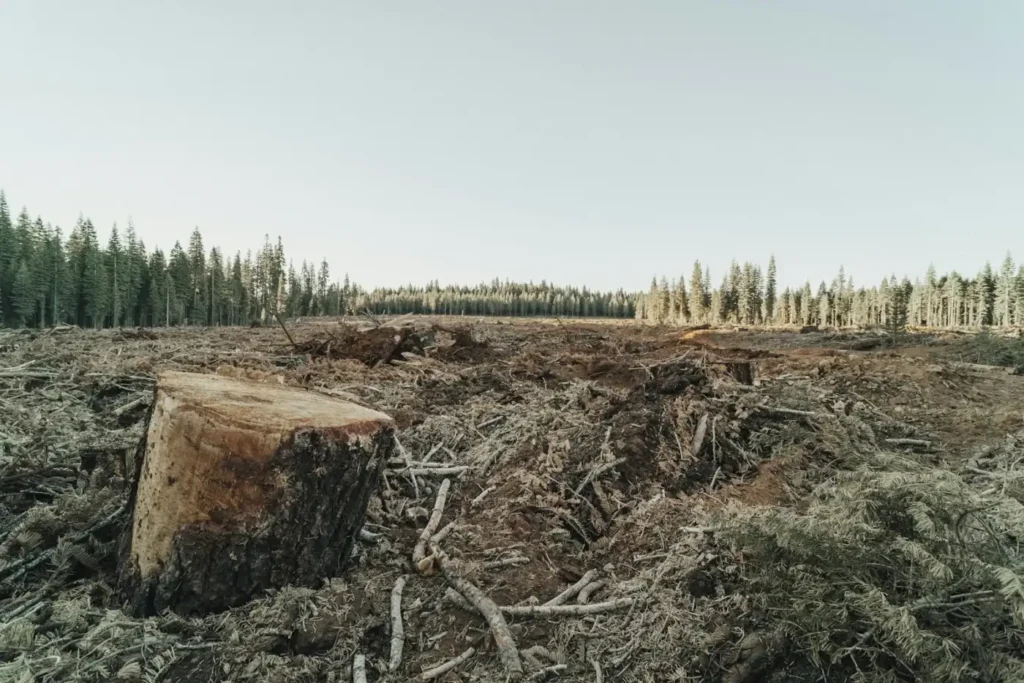
Picture a forest the size of 600 football fields. Now picture it gone in a matter of weeks: trees felled, topsoil scraped away, ditches dug, and brown water running toward one of the biggest rivers in northern Finland. That is what locals say they found outside the small town of Muhos this fall, on land where Google plans to build an AI data center.
On October 29, Finnish police opened a criminal investigation. The company under investigation is Tuike Finland, the local subsidiary that builds Google’s data centers in the country.
The short version
- What happened: about 330 hectares (815 acres) of forest were cleared and drained at Google’s Muhos site before the environmental impact assessment Finnish law requires was finished
- How many trees: roughly 250,000 at Muhos and about 150,000 more at a second site near Kajaani, according to estimates from conservationists
- Who is investigating: the Oulu Police Department, on suspicion of environmental degradation, with other charges possible
- What Google says: its Finland country director apologized, but says the company followed the law as it understood it
- What comes next: a regulator deadline for a detailed water plan on November 5, a police update expected in December, and a final result in 2027
A €13 billion bet on Finland
In September, Google announced it would invest €13 billion (about $15 billion) in digital infrastructure in Finland over two years, its largest single investment in Europe. The money is spread across four sites: the existing campus in Hamina on the southern coast, plus new projects in Vaala, Muhos and Kajaani further north. Finland’s prime minister praised the plan for bringing “lasting benefits” to the country.
Finland is an easy sell for data centers. It is cold, which cuts cooling costs, and it has a lot of clean electricity. Google has already locked in a huge share of nuclear power for its Finnish operations, a deal we covered in Google just bought half a nuclear plant’s output through 2049.
What it did not have yet, at least at Muhos and Kajaani, was a finished environmental impact assessment.
What crews did before the paperwork was done
According to Finnish reporting, Tuike Finland started preparatory work at Muhos anyway. Around 330 hectares of forest were clear cut. The topsoil was removed, leaving mostly mud, and the land was drained. Residents say they watched brown water from the site flow into a stream that feeds the Oulujoki river, roughly 400 meters away.
At the second site in Otanmäki, near Kajaani, almost 200 more hectares were cleared. Mari Annala of the Finnish Association for Nature Conservation estimates that about 150,000 trees were removed there, on top of roughly 250,000 at Muhos. One family that has lived in Otanmäki for generations told reporters that wolves have started “coming into the village” since the forest disappeared.
The conservation group’s board chair, Hanna Halmeenpää, told The Guardian the whole situation reeked of “pure arrogance.”
Why the soil matters: parts of the area sit on black shale, a rock that can turn water acidic and release metals when it is disturbed and exposed to rain. That is why regulators want a detailed plan for heavy rainfall and spring snowmelt before anything else happens on the site.
The timeline, step by step
| When | What happened |
|---|---|
| September 2026 | Google announces its €13 billion investment across four Finnish sites |
| Early October | The Finnish Supervisory Agency (LVV) orders work halted at Muhos and Kajaani until the environmental assessments are complete |
| Mid October | Google’s Finland country director publicly apologizes for the clearances |
| October 29 | Oulu police open a preliminary criminal investigation into the Muhos site |
| November 5 | Deadline for Tuike Finland to file a more detailed water management plan with the regulator |
| December 2026 | Police expect to give an update |
| 2027 | Investigation expected to conclude |
What the police are actually looking at
The case is being handled by the Oulu Police Department and was opened at the request of the regulator. Police have classified it as suspected environmental degradation and said that more charges could be added later. In their statement, they pointed to “ambiguities and deficiencies in drainage and water management” at the construction site.
Officers have warned that this will not be quick. They expect to share an update in December and to wrap up the investigation sometime in 2027.
There is also an older thread. Finnish broadcaster Yle has reported that Tuike cut trees for an expansion of the Hamina campus in 2018 and 2019 without the necessary permits.
Google’s response: sorry, but we followed the law
Antti Järvinen, Google’s country director for Finland, apologized in an interview with Yle. “This is our project, and we take full responsibility for what has happened,” he said. “I am extremely sorry that we are in this situation. I want to apologise for that.”
At the same time, he defended how the company acted. “All decisions were made based on the best understanding we had of the legislation at the time,” Järvinen said. He maintains that authorities knew about Google’s plans, though he declined to say which ones.
That point is now part of the fight. Muhos’s building inspector told the newspaper Helsingin Sanomat that Google’s lawyers pressured him into allowing the preparatory work. Järvinen denied that Google lawyers attended the permit meeting and denied pressuring any municipality.
Google says it will replant trees across 130 hectares at Muhos. Conservationists point out that is less than half of what was cleared there.
Why Americans should pay attention
This is not only a Finnish story. The AI boom is pushing tech companies to build data centers faster than local rules were designed for, and construction problems are showing up in the US too. In September, regulators in Chesterfield County, Virginia, cited Google’s “Project Peanut” site after construction sediment reached nearby streams and wetlands. Google blamed heavy rainfall for overwhelming its stormwater controls. In Cheyenne, Wyoming, bacteria from a Meta construction site contaminated the city’s reuse water earlier this year.
The pattern is the same: huge sites, tight deadlines, and water problems that neighbors notice before regulators do. Some communities are already pushing back hard, like the Cherokee Nation’s ban on hyperscale AI data centers, and states are writing their own rules, as we explained in why states, not Washington, may solve the data center water fight.
In Finland, the backlash is already measurable. More than 90,000 people have signed a citizens’ initiative calling for stricter data center rules and a fee to compensate local communities for environmental damage. Under Finnish law, an initiative with 50,000 signatures has to be considered by parliament.
Frequently asked questions
Did Google really cut down 250,000 trees in Finland?
That figure is an estimate from local campaigners and ecologists for the Muhos site, where about 330 hectares (815 acres) of forest were cleared. Another roughly 150,000 trees are estimated to have been cut at a second site near Kajaani. Google has not published its own tree count.
Is Google being charged with a crime?
Not yet. Oulu police have opened a preliminary criminal investigation into Tuike Finland, Google’s Finnish subsidiary, on suspicion of environmental degradation. No charges have been filed, and the investigation is expected to run into 2027.
Is construction stopped?
Yes, for now. The Finnish Supervisory Agency ordered preparatory work halted at Muhos and Kajaani until the required environmental impact assessments are completed.
Will Google replant the forest?
Google plans to plant trees across 130 hectares at Muhos. Conservation groups say that is not enough, because it covers less than half of the cleared area.
TL;DR: Google’s Finnish subsidiary cleared and drained hundreds of hectares of forest for AI data centers before environmental reviews were done. Work is frozen, Google has apologized, police are investigating, and the case is turning into a test of how far countries will bend their rules for the AI building boom.
Sources and further reading
- Yle News: Google’s Finland chief apologises for forest clearances
- AFP via The Star: Finnish police launch probe over Google data centre site
- TechRadar: A criminal investigation is now underway into Google’s AI data center project in Finland
- BGR: Illegal destruction of 250,000 trees for a Google data center causes outrage in Finland
- Silicon UK: Police open criminal probe after Google levels Finnish forest for data centre
Featured photo: roya ann miller on Unsplash.
About this article: GeekBlog covers U.S. technology news, AI, phones, smartwatches and gaming. Every story is written and checked under our Editorial Policy. Spotted a mistake or have a story tip? Contact our editors.
