

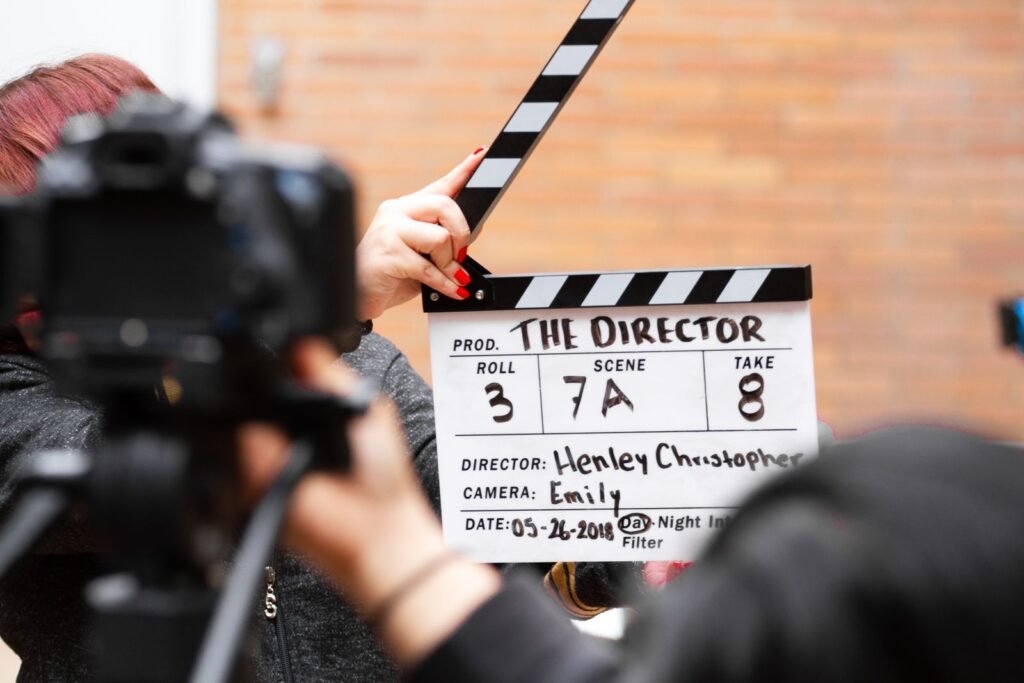
Yes, you can use movie clips in YouTube videos, but only in two situations: you have a license from whoever owns the film, or your specific use qualifies as fair use under US copyright law. There is no third option. Posting a clip because it is short, because you credited the studio, or because your video is not monetized is still infringement, and YouTube’s automated systems will usually find it within minutes of upload.
Quick answer
You may use movie clips on YouTube if you license the footage, if the film is in the public domain, or if your use is genuinely transformative under the four fair use factors in 17 U.S.C. 107, such as criticism, review, commentary, parody or news reporting. Simply re-uploading a scene, recapping a plot, or adding a voiceover over an unedited clip is not fair use. Expect a Content ID claim on almost any commercial film footage. A claim is not a strike, but ignoring the difference is how channels get terminated.
The gap between what creators believe and what the law says is enormous on this topic. Below is what actually governs the decision: the statute, the two YouTube enforcement systems you will run into, the amounts of money at stake, and the sources where you can get film footage that nobody will claim. Every number here comes from the statute, a court ruling, or YouTube’s own policy pages.
The legal answer: permission, public domain, or fair use
A feature film is a bundle of copyrights. Under 17 U.S.C. 106, the owner holds the exclusive right to reproduce the work, distribute copies, prepare derivative works, and perform or display it publicly. Uploading 40 seconds of a movie to YouTube touches at least three of those rights at once. That is why the default answer is no.
Three things move you out of the default. A license is explicit permission, usually paid and in writing. Public domain means the copyright term has expired and nobody owns the film anymore. Fair use is a legal defense written into the statute that permits unlicensed use in narrow circumstances. Note the word defense: fair use is something you argue after being accused, not a box you tick before uploading.
The four fair use factors, applied to movie clips
Fair use is defined in 17 U.S.C. 107. The statute names criticism, comment, news reporting, teaching, scholarship and research as example purposes, then instructs courts to weigh four factors. No factor decides the case alone, and courts weigh them together.
The four factors are: the purpose and character of the use, including whether it is commercial; the nature of the copyrighted work; the amount and substantiality of the portion used; and the effect of the use on the potential market for the original. For movie clips, factors one and four do most of the work.
Courts do apply this to online video. In Hosseinzadeh v. Klein, decided in the Southern District of New York on 23 August 2017, a fourteen minute reaction video used roughly three minutes of a five minute skit. That is around 60 percent of the original, far more than the ten seconds creators imagine is safe. The court still granted summary judgment for the defendants, calling the video “quintessential criticism and comment” and noting it “does not serve as a market substitute” for the original.
The lesson is not that 60 percent is fine. It is that the ratio was irrelevant because the commentary was continuous and substantive. A creator who plays the same three minutes with occasional nodding would lose the same case.
How many seconds of a movie can you use without copyright?
There is no legal number. Not ten seconds, not thirty seconds, not seven, not ten percent. The US Copyright Office states plainly that “there are no legal rules permitting the use of a specific number of words, a certain number of musical notes, or percentage of a work” and that whether a use is fair “depends on all the circumstances.”
The seconds myth survives because Content ID sometimes fails to match very short fragments, so creators mistake a detection gap for a legal rule. Detection and legality are unrelated. YouTube says the same thing in its own words: “There aren’t any magic words to automatically apply fair use when you use someone else’s copyrighted work.”
| The myth | What actually happens |
|---|---|
| “Under 10 seconds is legal” | No statute or case creates a duration safe harbour. A 4 second clip of the final twist can lose on factor three. |
| “I credited the studio in the description” | YouTube: giving credit “won’t by itself turn a non-transformative copy of their material into fair use.” |
| “I wrote no copyright infringement intended” | YouTube: that phrase “won’t automatically protect you from a claim of copyright infringement.” |
| “My video is not monetized, so it is fine” | Non commercial use helps factor one. It does not settle factors two, three or four, and does not stop a takedown. |
| “I mirrored it, sped it up 1.1x and cropped the edges” | Content ID fingerprints audio and video and tolerates those edits. Legally, evasion of detection is evidence of bad faith. |
| “Trailers are free promotional material” | Trailers are separately copyrighted works owned by the studio. They are among the most aggressively claimed footage on YouTube. |
Warning
Statutory damages under 17 U.S.C. 504(c) run from $750 to $30,000 per work, and a court may raise that to $150,000 per work for willful infringement. “Per work” means per film, not per video. A ten film compilation is ten works.
What YouTube actually does when it detects a movie clip
YouTube runs two separate systems and creators constantly confuse them. Content ID is an automated fingerprint match that produces a claim. The DMCA takedown process is a human legal request that produces a strike. A claim affects one video. Three strikes end your channel.
YouTube states the distinction directly: “Copyright claims are different from copyright removal requests and copyright strikes,” and “copyright claims affect videos, but usually don’t impact your channel or account.” Strikes, by contrast, “happen as a result of a valid copyright removal request.”
Speed: usually within minutes of upload
Hits: the single video
Channel standing: unaffected
Owner can: block, monetise, or track
Typical outcome: the studio takes your ad revenue
You can: dispute, or edit the clip out
Speed: days to months after upload
Hits: the whole channel
Channel standing: damaged
Owner can: force removal of the video
Typical outcome: video deleted, features restricted
You can: wait it out, get a retraction, or counter notify
That last point is the trap. Disputing a Content ID claim is free and low risk in most cases, but if the claimant rejects your dispute and your appeal, they may escalate to a removal request, which converts a harmless claim into a strike. Creators who dispute reflexively on weak footing are the ones who lose channels.
Which uses of movie footage survive, and which do not
The pattern across YouTube enforcement and US case law is consistent. Footage used as evidence for something you are saying tends to survive. Footage used as the content itself does not.
| Type of video | Legal risk | Why |
|---|---|---|
| Video essay or scene analysis with continuous commentary | Low | Clearly criticism and comment. Clips are illustrations, not the product. |
| Review with short illustrative excerpts | Low | Named in the statute’s preamble. Keep excerpts short and interleaved. |
| Parody that targets the film itself | Low to moderate | Strong precedent, but the joke has to be about the original, not merely use it. |
| Reaction video with real, moment by moment commentary | Moderate | Survived in Hosseinzadeh v. Klein, but only because the commentary was substantive and continuous. |
| Reaction video that mostly plays the film in silence | High | Nothing transformative. Direct market substitute for watching the film. |
| Plot recap or “movie explained in 10 minutes” | High | Substitutes for the viewing experience. Factor four is fatal. |
| Best scenes, funniest moments and other compilations | Very high | No commentary, takes the heart of multiple works, competes with official clip channels. |
| Full film uploaded in parts, or with a border and mirrored image | Very high | Straightforward infringement plus evidence of willfulness, which raises the damages ceiling. |
Tip
A practical editorial test: mute your own voice track and watch the result. If what remains is still watchable as entertainment, your clips are carrying the video and your fair use argument is weak. If it becomes incoherent, the commentary is doing the work, which is exactly what factor one rewards.
What to do when a movie clip gets claimed
Most creators will meet Content ID long before they meet a lawyer. The process has fixed deadlines that are worth knowing before you are staring at the dispute form.
Before disputing anything, consider the quiet option. YouTube’s editor lets you trim out the claimed segment, replace claimed audio with a track from the Audio Library, or mute it. Any of these removes the claim automatically, and the video keeps its original URL and view count. For a single flagged shot in an otherwise clean video, that is almost always the right call.
If you do dispute, write a factor by factor rationale rather than an appeal to fairness. Something in this shape works:
Basis: fair use, 17 U.S.C. 107

Purpose      This video is a critical review. The clip appears at 04:12
             and is interrupted three times by my analysis of the editing.
Nature       Published feature film, used only as the subject of criticism.
Amount       11 seconds of a 128 minute film. The excerpt is the minimum
             needed to show the cut I am describing.
Market       The video is not a substitute for the film. It sends viewers
             to it. It does not compete with any clip licensing market.
Note
Rights holders are not free to fire off takedowns without thinking. In Lenz v. Universal Music Corp. the Ninth Circuit held in 2015 that a copyright owner must consider fair use before sending a DMCA takedown notice. It is a real constraint, but enforcing it means going to court, which is why it rarely helps an individual creator in practice.
Where to get movie footage you are allowed to use
If your channel depends on film footage, licensing or public domain material removes the whole problem. These are the routes that actually work in 2026.
| Source | Cost | What to know |
|---|---|---|
| Public domain films | Free | Everything published in the US in 1930 or earlier is now public domain, including All Quiet on the Western Front, Animal Crackers, The Blue Angel and Hitchcock’s Murder!. A restored 4K scan can carry its own new copyright, so take the original transfer. |
| Internet Archive and Prelinger | Free | Large libraries of public domain and openly licensed film. Always read the per item rights statement, not the collection page. |
| Creative Commons footage | Free with conditions | CC BY needs attribution. Avoid NC licences on a monetized channel, and ND licences if you intend to edit. |
| Stock footage libraries | Free to a few hundred dollars per clip | The realistic replacement for a mood shot you were going to lift from a film. Check whether the licence covers monetized online video. |
| Studio licensing and clip agencies | Hundreds to thousands per clip | The only way to clear a specific scene from a specific film. Expect a multi week turnaround and rate cards aimed at broadcasters. |
| Official press kits and EPKs | Free | Distributed to press for promotion. The permission is usually narrow and time limited, so keep the email that granted it. |
Monetization is a separate hurdle from copyright
Clearing copyright does not clear monetization. On 15 July 2025 YouTube renamed its “repetitious content” rule to inauthentic content, and the policy now requires that content “be your original creation” and that “if you borrow content from someone else, you need to change it significantly to make it your own.” It must also “not be mass-produced, generic, repetitive, or manipulative.”
YouTube names acceptable transformations explicitly: “using clips for a critical review”, “reaction videos where you comment on the original video”, and “edited footage from other creators where you add a storyline and commentary”. It also states that “the substance of each video should be materially varied and deliver creative, educational, or other value”. A licensed clip channel with no commentary can therefore be perfectly legal and still fail review.
Two systems, two failure modes. Copyright decides whether the footage can exist on your channel. The Partner Program decides whether it can earn. Channels built on borrowed film footage regularly pass one and fail the other, which is worth understanding alongside how YouTube counts views before you plan a format around clips.
Mistakes that get clip channels terminated
Termination almost never comes out of nowhere. These are the recurring patterns behind it.
- Treating claims as the ceiling. Months of harmless Content ID claims teach creators that nothing bad happens, right up to the day a studio switches from claiming to filing removal requests across the whole channel at once. Three arriving together is three strikes.
- Disputing everything on reflex. Each rejected dispute and appeal hands the claimant a clean route to a takedown. Dispute when you have a factor by factor argument, not when you are annoyed.
- Deleting the claimed video. Deleting a video that already has a strike does not remove the strike. Deleting one under an active dispute can forfeit the reinstatement.
- Evasion edits. Mirroring, pitch shifting, zooming and speed ramps rarely fool Content ID for long, and if a case ever reaches court they read as deliberate circumvention, which supports a willfulness finding and the $150,000 ceiling.
- Assuming an old video is safe. Rights change hands. A film acquired by a studio with an aggressive enforcement policy can trigger claims on footage that sat unclaimed for years.
- Building a business on one format. If every video on the channel depends on the same studio’s footage, one policy change ends the channel. Mix in original material the way strong creator workflows do.
Frequently asked questions
How many seconds of a movie can I use on YouTube?
There is no safe number. The US Copyright Office states there are no legal rules permitting a specific number of words, notes or percentage of a work. Courts weigh the amount used against the purpose, and a very short clip can still fail if it takes the most important moment of the film.
Does crediting the movie studio make it legal?
No. YouTube says giving credit “won’t by itself turn a non-transformative copy of their material into fair use”, and the same applies to writing “no copyright infringement intended”. Attribution is good manners and a defence against plagiarism claims, not against copyright infringement.
Are movie trailers copyright free?
No. A trailer is a separate copyrighted work owned by the distributor. Studios do want trailers shared, but that goodwill is not a licence, and trailer footage is heavily fingerprinted in Content ID. Embedding the official trailer from the studio’s own channel is the safe alternative.
Can I monetize a video that contains movie clips?
Sometimes. If a Content ID claim is active, the rights holder usually takes the ad revenue for that video. If the claim is released or you licensed the footage, you keep it, provided the video also satisfies YouTube’s inauthentic content rules by adding significant original commentary or editorial value.
Do Content ID claims hurt my channel or my search ranking?
YouTube states that claims “affect videos, but usually don’t impact your channel or account”. They do not create strikes and do not directly demote your channel. What they can do is redirect that video’s revenue to the claimant, or block it in certain countries.
Is educational use automatically fair use?
No. Teaching is listed in the statute’s preamble, but it is one input into factor one, not a free pass. A classroom lecture that shows a clip to make a point is very different from an “explained” channel that reproduces the plot of a film for a general audience with ads running.
What if the movie is not available anywhere legally?
Unavailability is not a defence. Copyright does not lapse because a film is out of print, and orphan works remain protected for the full term. It can slightly soften factor four, since there is no market to harm, but it will not carry a case on its own.
The bottom line
You can use movie clips in YouTube videos, and plenty of respected channels do it every week without incident. What separates them from the channels that vanish is not clip length, credit lines or disclaimers. It is that their clips serve an argument the creator is making, they are as short as that argument allows, and nobody would watch the video instead of the film.
Practically: prefer public domain and licensed footage where you can, keep excerpts tight and interleaved with real commentary, expect Content ID claims on anything from a major studio, and resolve most of them by trimming rather than fighting. Save disputes for the cases where you can write out all four factors and like the answer on every one. If a claim ever escalates toward a takedown and the video matters to your business, that is the point to talk to a copyright lawyer rather than a comment section. Nothing here is legal advice, and fair use is decided case by case.
If you are still setting up your channel, our beginner’s guide to using YouTube covers the basics, and the same copyright logic applies almost unchanged if you are also posting to TikTok.
About this article: GeekBlog covers U.S. technology news, AI, phones, smartwatches and gaming. Every story is written and checked under our Editorial Policy. Spotted a mistake or have a story tip? Contact our editors.
