

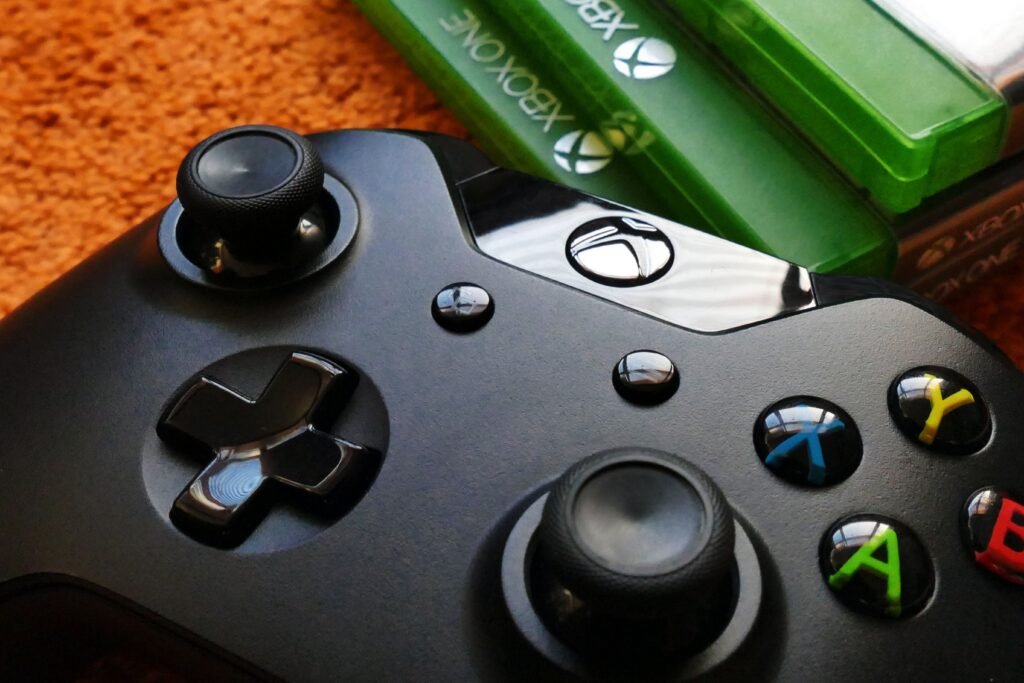
Featured image: Xbox controller beside game cases, free stock photo via Pexels
Microsoft has finished testing one of its more interesting ideas for physical games. Xbox Disc to Digital, which spent the last month with Xbox Insiders, is now available to every player. Put an eligible disc in your console, launch the game, and a digital license lands on your Microsoft account. The disc keeps working exactly as before.
It sounds like a pure win, and for many people it will be. But the fine print matters here, because the license is tied to the disc itself and not to you. Here is how it works, what is excluded, and where the catch is.
The short version
- Who gets it: all Xbox players, after an Insider test that began on August 31
- What you need: an Xbox One or Xbox Series X console with a disc drive and an eligible Xbox One or Series X disc
- What you get: a digital license on your Microsoft account, with Xbox Play Anywhere and Xbox Cloud Gaming where the game supports them
- Limit: one revocable digital license per disc
- Not included: Original Xbox and Xbox 360 discs, and some Xbox One and Series X titles
- The catch: sell or give away the disc and the license can move to whoever claims it next
How Disc to Digital works
The process is deliberately simple. You insert a supported disc into an Xbox One or Xbox Series X, launch the game once, and the console registers an entitlement to your account. The disc is not consumed or deactivated in the process. Once the license exists, you can play without the disc in the drive, and you get the same benefits as a store purchase, including Xbox Play Anywhere on PC and compatible handhelds and streaming through Xbox Cloud Gaming.
From disc to digital in four steps
The whole claim happens on your console with the disc inserted.
What is eligible and what is not
Microsoft says most Xbox One and Xbox Series X discs are supported, with thousands of titles and more to come. But it is careful not to promise everything. Eligibility can vary by title because of technical, licensing, publishing and manufacturing reasons, so a small share of your shelf may not qualify.
| Disc type | Status |
|---|---|
| Xbox Series X|S discs | Supported for most titles |
| Xbox One discs | Supported for most titles |
| Multi-disc games | Only the first disc is supported |
| Ultimate and similar editions | On-disc add-ons may be included |
| Xbox 360 and Original Xbox discs | Not included at this stage |
The catch: the license follows the disc
This is the part worth reading twice. Microsoft describes the result as one revocable digital license per disc. The entitlement is tied to the physical disc and can move from one account to another. If you sell, lend or give away the disc and the next person claims it, the license on your account can be revoked.
Claiming does not stop you from reselling, and the disc still works normally. But if you plan to keep the digital copy long term, you need to keep the disc too. Think of it as a bridge between formats, not a permanent purchase like buying from the store.
Before you claim a stack of discs
- Only claim discs you plan to keep, since selling one can pass the license along
- Check that the disc is an Xbox One or Series X title, not an Xbox 360 one
- For multi-disc games, use the first disc
- If a game does not trigger a license, it is probably one of the titles that is not eligible
Why it matters
The biggest winners are people with a growing disc collection who want the convenience of digital. You can play without swapping discs, keep a game available on a handheld or PC through Play Anywhere, and stream a title you own on a device with no disc drive. It also softens a real frustration for players who bought physical because they wanted to own something, then found their console increasingly built around downloads.
That ownership question is a hot topic right now. Sony recently reminded everyone that its digital games are licensed, not sold, and Xbox’s disc-linked license shows a middle path where the physical copy remains the anchor of what you own. Microsoft is also adjusting how subscribers play away from the console, with new cloud gaming time limits that depend on your tier, so getting a disc converted into a license you can stream is more useful than it first looks.
Not every Microsoft idea for your library has landed well, either. The company was recently spotted in a patent describing a system that freezes your game to show an ad in exchange for a credit. Disc to Digital is a much friendlier direction for players, and it costs nothing.
Should you use it?
Yes, for the discs you intend to keep. It is free, quick and reversible in the sense that your disc is untouched. The only real risk is forgetting that the license depends on the disc, so do not claim games on discs you are about to trade in. If you are a collector, a Game Pass subscriber with a few favorite physical releases, or a handheld owner who wants your library everywhere, it is worth spending an evening running your shelf through the console.
Microsoft says the supported list will keep growing, so if a disc does not work today, it is worth trying again later.
Sources: Game Informer, Windows Central, Neowin, Niche Gamer
About this article: GeekBlog covers U.S. technology news, AI, phones, smartwatches and gaming. Every story is written and checked under our Editorial Policy. Spotted a mistake or have a story tip? Contact our editors.
