

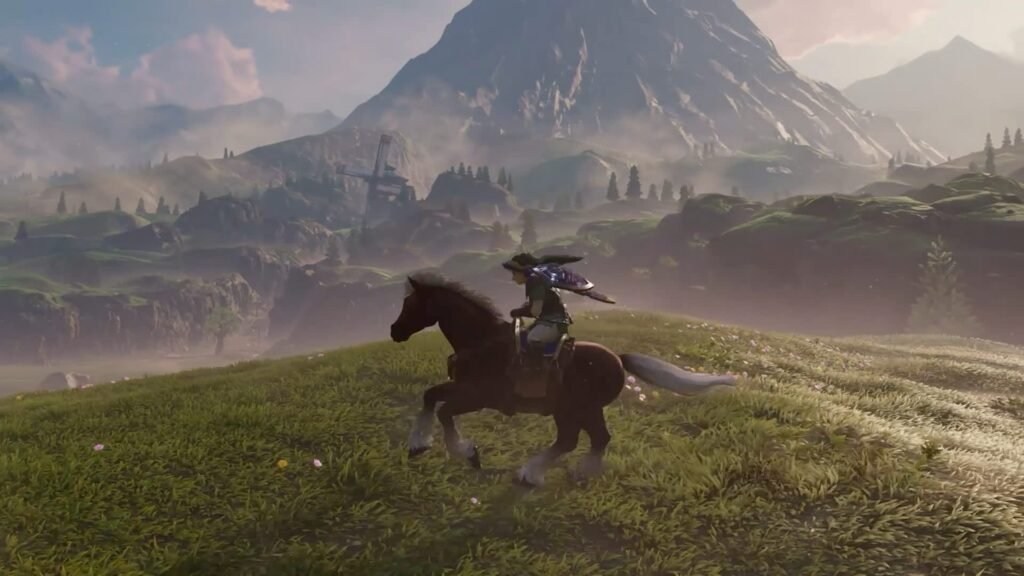
Featured image: official artwork for The Legend of Zelda: Ocarina of Time via Nintendo
Nintendo released The Legend of Zelda: Ocarina of Time remake on November 5, and by the end of its first week the game was doing two very different things at once. On store shelves, it was breaking sales records. On the internet, hobbyist programmers were already getting it to run on PC, in one case with frame generation, DLSS and HDR support. That is a lot of attention for a game that first appeared on the Nintendo 64 almost 30 years ago.
Here is a clear look at both stories: the numbers behind the launch, the native PC recompilations that appeared within days, and the files that hint at what Nintendo may add next.
The short version
- Launch: November 5, 2026, exclusively on Nintendo Switch 2
- Sales: the biggest physical game launch of 2026 in the UK so far, per The Game Business analyst Christopher Dring
- Reception: the highest Metacritic score of 2026 and the highest user score ever recorded on the site
- PC: two native recompilations, Hookshot and NX2navi, plus the Lichii emulator, all appeared within days
- Next: datamined files reportedly point to Master Quest and a possible Majora’s Mask remake
A record launch for a 30 year old game
GamesRadar reports early UK estimates from Christopher Dring of The Game Business. According to those figures, the Ocarina of Time remake is the second biggest Zelda launch in Britain in terms of physical copies, ahead of the original, Majora’s Mask, Wind Waker and Breath of the Wild. Its first week is roughly 35% higher than Breath of the Wild managed across both Switch and Wii U.
It is also the biggest selling physical game of the year so far, ahead of Resident Evil Requiem, Call of Duty: Modern Warfare 4 and Crimson Desert. Only Tears of the Kingdom sits above it in the Zelda ranking, and that is easy to explain. When Breath of the Wild launched, people had to buy a console to play it. When Tears of the Kingdom arrived, the Switch already had an enormous installed base. Ocarina of Time is posting these numbers on a newer, slower-selling machine, which makes the result more impressive.
Ocarina of Time remake: launch snapshot
UK physical estimates from The Game Business via GamesRadar. File size from the Nintendo Store.
Those sales also fit the bigger picture of the platform. Our recent look at Switch 2 sales dropping 37% this summer showed Nintendo needed a hit for the holiday quarter, and a remake of one of the most loved games ever made is about as safe a bet as exists.
What Nintendo actually built
This is not a simple resolution bump. Nintendo’s store page describes completely overhauled visuals, orchestral music, voice acting and expanded cutscenes, with support for TV, tabletop and handheld play. You can even play the ocarina by humming or playing real instruments into the Switch 2 microphone. Reviews have been glowing: GamesRadar notes the game holds the highest Metacritic score of 2026 and the best user score ever recorded on the site.
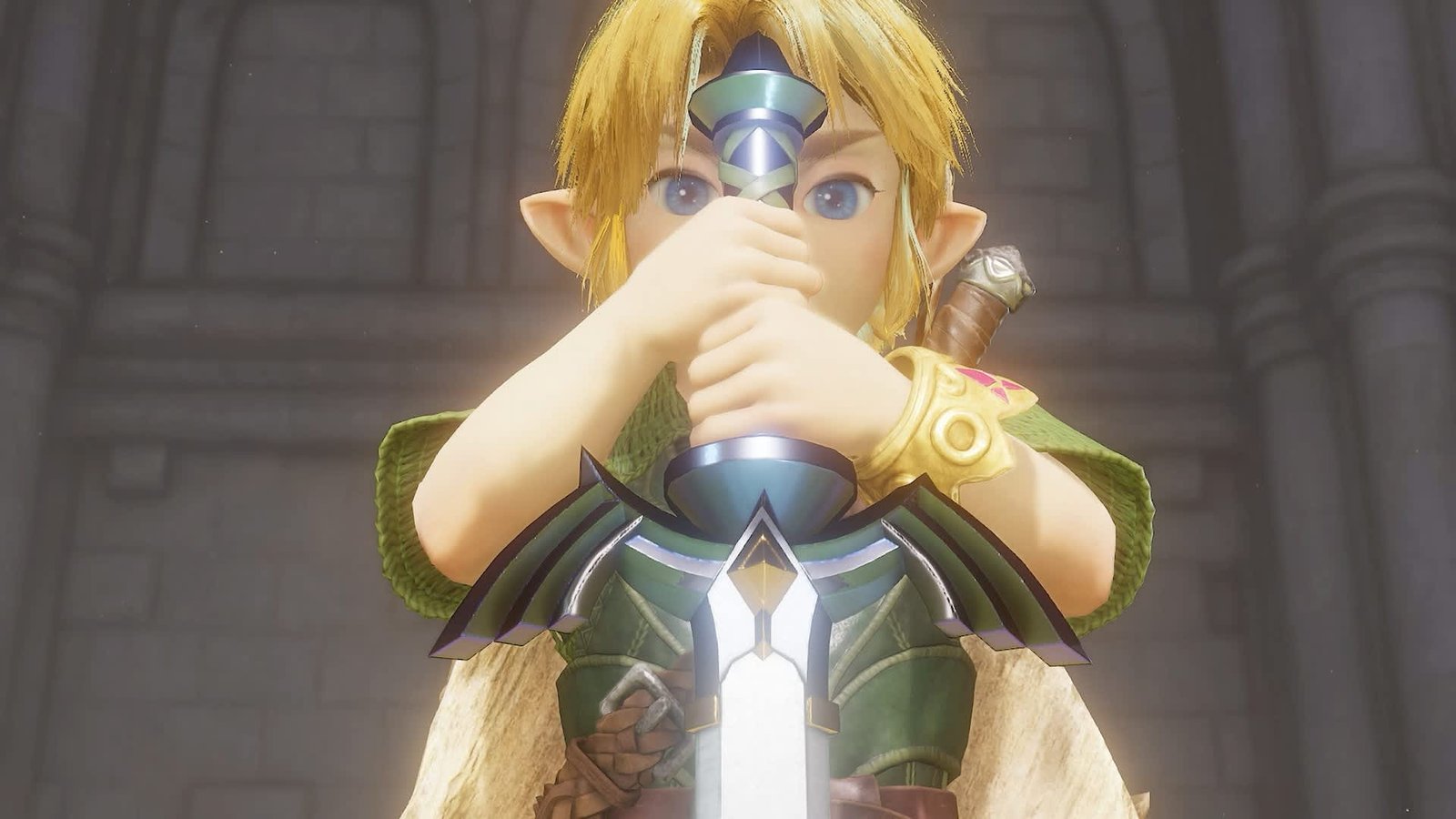
The game arrives as part of Zelda’s 40th anniversary year, a celebration we covered when Nintendo gave Zelda its first ever dedicated Direct. Few releases in the franchise have been built up like this one.
PC players did not wait for permission
Switch 2 exclusives normally stay on Switch 2. This one did not. Wccftech reported that the remake was booting on PC emulators within hours of launch at 15 to 30 FPS with heavy visual glitches. A day later, the Lichii emulator had fixed most of the problems, with the starting area and the Great Deku Tree running at 60 FPS. Lichii is a fork of Eglantine, which builds on Eden, yuzu and Sudachi, and the Eglantine team pushed two Ocarina specific test branches in the space of a day.
Emulation is the rough option, though. The more interesting story is the pair of native recompilations that followed, described in a second Wccftech report.
| Option | Approach | Notable features |
|---|---|---|
| Hookshot (by NotRexed) | Native recompilation, built locally from your own copy in 10 to 45 minutes | Frame generation from 2x to 8x, output up to 4K, ultrawide toggle, full control remapping, native mouse look, mod support |
| NX2navi (by tangerineturtle1) | Native recompilation, Windows only, early but playable | DLSS with DLAA, FSR 3.1 and frame generation, 21:9 and 32:9 ultrawide, up to 5K, 30 to 240 FPS or unlimited, HDR, 5.1 surround |
| Lichii emulator | Switch 2 emulation, fork of Eglantine | 60 FPS in early areas after fixes, but shader stutter and AMD black screens were reported |
Hookshot versus NX2navi
Hookshot needs roughly 60 GB of free space while it builds, and because the game relies on mesh shaders, it requires an RTX 20-series card or newer, an RX 6000 or newer, or an Intel Arc card. NVIDIA is the best tested. Intel reports are mostly black screens. YouTuber RJTHEGAME said the ultra preset held a solid 60 FPS with better image quality than Lichii, and frame generation pushed the counter to 180 FPS.
NX2navi looks more feature complete on paper. Kokiri Forest, Kakariko Village, Death Mountain Trail, the Temple of Time and the Great Fairy fountains are reported to run at 60 FPS or better. It also precompiles every shader at build time, which in theory avoids the compilation stutter that still plagues the other options.
Maximum framerate options at a glance
Reported figures. Frame generation values are advertised caps, not guaranteed results. Source: Wccftech.
Bar lengths are scaled against 240 FPS, and NX2navi’s figure is a settings ceiling rather than a benchmark.
The FSR 1.0 puzzle
One detail from Wccftech’s coverage stands out. YouTuber ElAnalistaDeBits injected NVIDIA DLSS into the Switch 2 signal over HDMI as a demonstration, and the result substantially cleaned up the shimmering that comes from Nintendo using AMD FSR 1.0 in the native game. As the report points out, the Switch 2 hardware supports DLSS and third party developers do use it, yet Nintendo’s own first party games keep using the older upscaler. Nintendo has not explained the choice, and given the reception, it probably does not feel it needs to.
What may be coming next
Almost every review has made the same complaint: the remixed Master Quest mode is missing. GamesRadar reports that Bluesky user MrCheeze found references in the game files, including code strings labeled “DodongoCavern” and “DodongoCavern_MQ.” That does not prove DLC is coming, but it makes the idea more plausible.
The files also contain NPC reactions to masks. Zelda and Link masks, which arrive with amiibo in 2027, are listed as Mask 101 and 102, and a third unrevealed Mask 103 is described by NPCs as “otherworldly” and “suspicious.” One line suggests monsters might ignore the wearer, which mirrors how the Majora’s Mask item works in Breath of the Wild and Tears of the Kingdom. That is speculation, so treat any Majora’s Mask remake talk as a rumor for now.
My take
Nintendo has built the kind of remake that makes people forget they ever worried about remakes. The sales are enormous, the reviews are the best of the year, and the PC scene has responded in a way that would be unthinkable for most console exclusives.
That last point deserves a note of caution. Native recompilations and emulators are legally contested territory, and Nintendo has a long history of taking action against projects like these. Hookshot and NX2navi build from your own copy of the game, but that does not make them risk free for the developers or guaranteed to stick around. If you want the intended experience, the Switch 2 version is the one Nintendo actually supports, and with a Master Quest expansion possibly on the way, it is also the one that is likely to keep growing.
If you have been following the broader Zelda anniversary, you may also have seen the chaos around hardware, since the Zelda themed Switch 2 sold out in four hours and landed on eBay at inflated prices. Between that and these sales numbers, Nintendo’s 40th anniversary year is working exactly as planned.
Sources: GamesRadar, UK sales report, GamesRadar, datamine report, Wccftech, PC recompilations, Wccftech, emulator progress, Nintendo Store.
About this article: GeekBlog covers U.S. technology news, AI, phones, smartwatches and gaming. Every story is written and checked under our Editorial Policy. Spotted a mistake or have a story tip? Contact our editors.
