

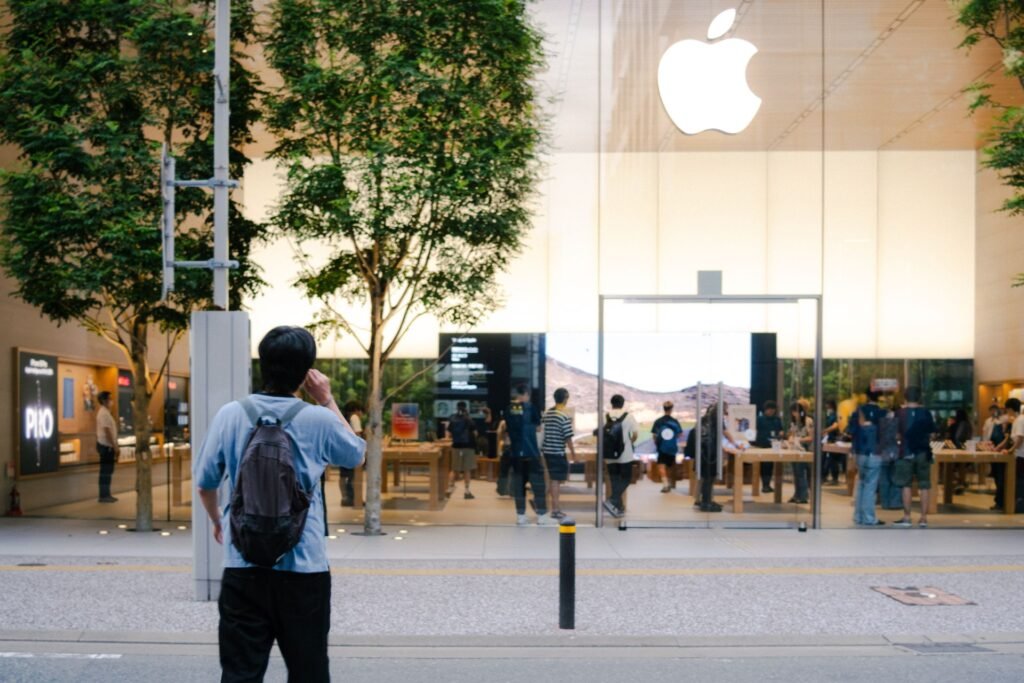
When the first iPhone went on sale in 2007, carriers decided almost everything about the phone in your pocket. They chose what went on store shelves, stamped their logos on the hardware, preloaded their own apps and sat on software updates for weeks. Apple took most of that away in a single product cycle.
Nineteen years later, Apple is chipping away at what carriers have left. Apple Upgrade, the leasing program it launched in the US on July 28, 2026, looks like a simple way to spread out the cost of an increasingly expensive iPhone. Read the fine print, though, and the most important line is not about money. It is this one: “A leased iPhone is always unlocked, so you can switch carriers at any time.”
Here is how the program actually works, what the monthly prices add up to, and why the companies that should be most nervous about it are Verizon, AT&T and T-Mobile.
How Apple Upgrade works
Apple Upgrade sits in the normal checkout flow on Apple’s website, in the Apple Store app and in Apple Stores. You configure a device, choose Apple Upgrade, and Klarna runs a soft credit check that does not affect your score. From then on, payments, due dates and account details live in the Klarna app rather than in your Apple account.
Your first payment is due about 30 days after the device ships or is ready for pickup. You can trade in an old device, Android phones included, to lower the monthly price during the first term. Payments made with Apple Card earn 3% Daily Cash. Education pricing does not apply.
At any point, including day one, you have three choices:
- Upgrade to a new device and start a fresh lease.
- Buy the device by paying the difference between what you have paid and the list price.
- Return it and leave the program. If you leave early, you owe the remaining payments.
Miss a payment and Klarna rolls it into the next month with no late fee. Miss three in a row and the lease ends, you owe the outstanding balance, and the missed payments can show up on your credit report. Apple also says you may face a damage fee if you return a device in rough shape.
| Device | Lease terms | Starting price |
|---|---|---|
| iPhone | 12 or 24 months | $17.99/mo (iPhone 17e) |
| Apple Watch | 12 or 24 months | $11.99/mo (Series 11) |
| iPad | 24 or 36 months | $11.99/mo (iPad mini) |
| Mac | 24 or 36 months | $24.99/mo (MacBook Air) |
| Not eligible | iPhone 16, iPhone 16 Plus, Apple Watch SE, MacBook Neo, Mac mini, iPad (A16), Studio Display | |
Apple Upgrade also replaces the old iPhone Upgrade Program and iPhone Payments financing. The old program was a zero interest loan through Citizens One that bundled AppleCare+ and let you keep the phone after 24 months. Existing members can stay until their next upgrade. The new one is a true lease and does not include AppleCare, which you can add for an extra monthly fee or fold into an AppleCare One bundle.
The math: what the monthly prices really mean
Most leases make money by charging you more over time than the item is worth. Apple Upgrade does not. Add up the payments and the buyout, and you land exactly on the list price. Klarna’s cut is presumably paid by Apple, not by you.
Run the numbers on a few phones and a clear pattern shows up. Over 24 months, the lease payments cover almost exactly 70% of the list price. Over 12 months, they cover about 50%. That remaining 30% or 50% is the value Apple expects to recover from the returned phone, which is a polite way of saying it is betting on strong iPhone resale prices.
| Model (list price) | Monthly | Total paid | Buyout to keep it |
|---|---|---|---|
| iPhone 17 Pro 256GB ($1,099), 24 mo | $31.99 | $767.76 (70%) | $331.24 |
| iPhone 17 Pro 256GB ($1,099), 12 mo | $45.99 | $551.88 (50%) | $547.12 |
| iPhone 18 Pro 256GB ($1,199), 24 mo | $34.99 | $839.76 (70%) | $359.24 |
| iPhone 18 Pro 256GB ($1,199), 12 mo | $49.99 | $599.88 (50%) | $599.12 |
| iPhone Duo 256GB ($1,999), 24 mo | $57.99 | $1,391.76 (70%) | $607.24 |
| iPhone Duo 256GB ($1,999), 12 mo | $82.99 | $995.88 (50%) | $1,003.12 |
Prices before trade-in, sales tax and AppleCare. Monthly figures from Apple’s US store as reported by 9to5Mac and PCMag.
Compare that with Apple’s own 24 month financing on the iPhone Duo, which comes to about $83 a month. The lease is $57.99. You pay $25 less every month and still have the option to own the phone for the same total at the end. Trade in a recent iPhone and the Duo drops to as little as $9.24 a month on a 12 month lease, according to 9to5Mac’s checkout test. That sounds absurd, but the trade-in credit only applies to the first term, so the price jumps if you roll into a new lease.
The timing is not an accident. Apple raised prices in June and again in September, blaming nothing publicly but clearly feeling the pressure of the memory shortage. The iPhone 18 Pro starts $100 higher than its predecessor, and the iPhone 18 Pro Max now tops out at $2,499 for 2TB. A lease that turns a $1,999 foldable into a $58 monthly line item makes those sticker prices much easier to swallow.
The fine print that matters: the iPhone is unlocked
There is one condition that only applies to iPhones. When you enroll, you have to connect the phone to AT&T, T-Mobile or Verizon. Prepaid plans do not count, and neither do Mint, Visible or other MVNOs. That sounds like a gift to the big three. It is not as generous as it looks.
According to a former member of Apple’s carrier team who wrote to Daring Fireball’s John Gruber, the activation rule is a concession Apple gives its “tier 1” partners in exchange for marketing deals worth hundreds of millions of dollars. A former retail employee added a second reason: fraud. Financing at the Apple Store led to a surge in phones that were never paid for, and carrier activation adds a layer of identity checks.
But activation is all the carriers get. Apple states that a leased iPhone is always unlocked. Once it is set up, you can move your number to any carrier you like, subject only to that carrier’s own terms. Compare that with buying through a carrier, where the phone is typically locked until it is paid off and sometimes longer. Verizon, for example, recently added new hurdles to unlocking phones that are already paid off.
A real comparison: iPhone 17 Pro, no trade-in
Engadget ran the numbers on a 256GB iPhone 17 Pro. Through Apple Upgrade, you pay $767.76 over 24 months, plus $331.24 if you want to keep it, for a total of $1,099. Your phone plan is a separate choice, and after activation you can move to a cheaper one.
Through Verizon’s promotion, the phone itself costs just $2.77 a month over 36 months, or roughly $100. But the deal requires Unlimited Ultimate, which for a single line runs $95 a month with autopay. Over three years that is about $3,420 in service, for a combined $3,520. If you were going to pay for Verizon’s top plan anyway, that is a great deal. If you were not, the “discount” is really a three year contract dressed up as a free phone, and the credits disappear if you cancel the line or move your number.
Why carriers should be nervous
TechRadar’s Nirave Gondhia, who sold phones at UK reseller Phones4U when the original iPhone arrived, argues that Apple Upgrade is great for buyers and great for Apple but bad news for carriers. His case comes down to lost leverage, and it holds up.
Carrier subsidies and bill credits exist for one reason: to keep you on the network for years. A locked phone on a 36 month credit plan is a customer who almost never leaves. An unlocked iPhone paid through Klarna is a customer who can leave whenever a better offer shows up. A locked phone also cannot take a cheap local SIM or eSIM abroad, which pushes travelers toward carrier roaming passes. An unlocked one can.
Gondhia sees a few likely knock on effects if the program takes off:
- Higher plan prices. Carriers that lose device lock-in will look for money elsewhere, through plan prices, add-ons or fees.
- More MVNO growth. People with unlocked phones shop on price, which helps budget brands. But many of those brands are already owned by the big three, such as T-Mobile’s Mint and Verizon’s Visible.
- Slower network spending. Publicly traded carriers under revenue pressure tend to slow rollouts, as happened during the LTE and 5G transitions.
- Fewer stores. Phone retail is already shrinking and T-Mobile has moved some services fully online. Less device revenue speeds that up, which hurts customers who rely on in person help.
Our take: the first two are already happening for other reasons, and Apple Upgrade will mostly accelerate them. The bigger shift is psychological. For years, the default way to get a new iPhone in the US has been through your carrier. Apple Upgrade makes Apple the place you pay for the phone, and your carrier the place you pay for service. That is how the market already works in much of Europe and Asia, and it is a healthier split for buyers.
Who should lease, and who should not
Buyers are not universally sold. When TechRadar’s Lance Ulanoff polled readers shortly after launch, about 80% of respondents on Threads and 78% on X said they would not lease their next iPhone, mostly because they want to own what they pay for. That objection misses something. With Apple Upgrade, owning the phone costs exactly the same as buying it. You just get to defer the last 30%.
| If you… | Apple Upgrade is | Why |
|---|---|---|
| Upgrade every year or two | A strong fit | You only pay for the 50% to 70% you use, with no resale hassle. |
| Would have financed anyway | A strong fit | Lower monthly cost than 24 month financing, same total if you buy out. |
| Want to leave your carrier soon | A strong fit | Unlocked phone, no credits to forfeit. |
| Already pay for a top carrier plan | Compare first | Carrier credits can be worth more if you were staying anyway. |
| Only use prepaid or an MVNO | Awkward | You must activate on AT&T, T-Mobile or Verizon first. |
| Keep phones four years or more | Not much benefit | You end up paying full price anyway, without AppleCare included. |
If you are eyeing the foldable, the lease is especially tempting. iPhone Duo preorders open on Friday, October 16, and Apple Upgrade is one of the payment options you can pre-save with its “Get Ready” feature before the rush. Just remember that the iPhone Duo’s $57.99 rate assumes you hand it back or pay $607 at the end.
FAQ
Is Apple Upgrade available outside the US?
Not yet. As of October 2026, Apple Upgrade is only offered in the United States.
Does Apple Upgrade charge interest?
No. There is no interest and no late fee. If you buy the device at the end of the lease, you pay the remaining list price, so your total matches buying outright. You can be charged a damage fee if you return a device in poor condition.
Can I use a leased iPhone with Mint, Visible or another MVNO?
You need to activate it on AT&T, T-Mobile or Verizon when you enroll, and prepaid plans are not allowed. Apple says leased iPhones are always unlocked, so you can switch carriers afterward, subject to that carrier’s terms.
Is AppleCare included?
No. Unlike the old iPhone Upgrade Program, Apple Upgrade does not include AppleCare. You can add it for an extra monthly charge or attach the device to an existing AppleCare One plan.
What happens if I miss payments?
A missed payment rolls into the next month without a late fee. After three consecutive missed payments, the lease ends and you owe the outstanding balance. Missed payments can be reported to credit bureaus and eventually sent to collections.
What happened to the iPhone Upgrade Program?
Apple discontinued it and iPhone Payments financing when Apple Upgrade launched. Existing members keep their Citizens One loan and can stay until they are ready to upgrade.
About this article: GeekBlog covers U.S. technology news, AI, phones, smartwatches and gaming. Every story is written and checked under our Editorial Policy. Spotted a mistake or have a story tip? Contact our editors.
