

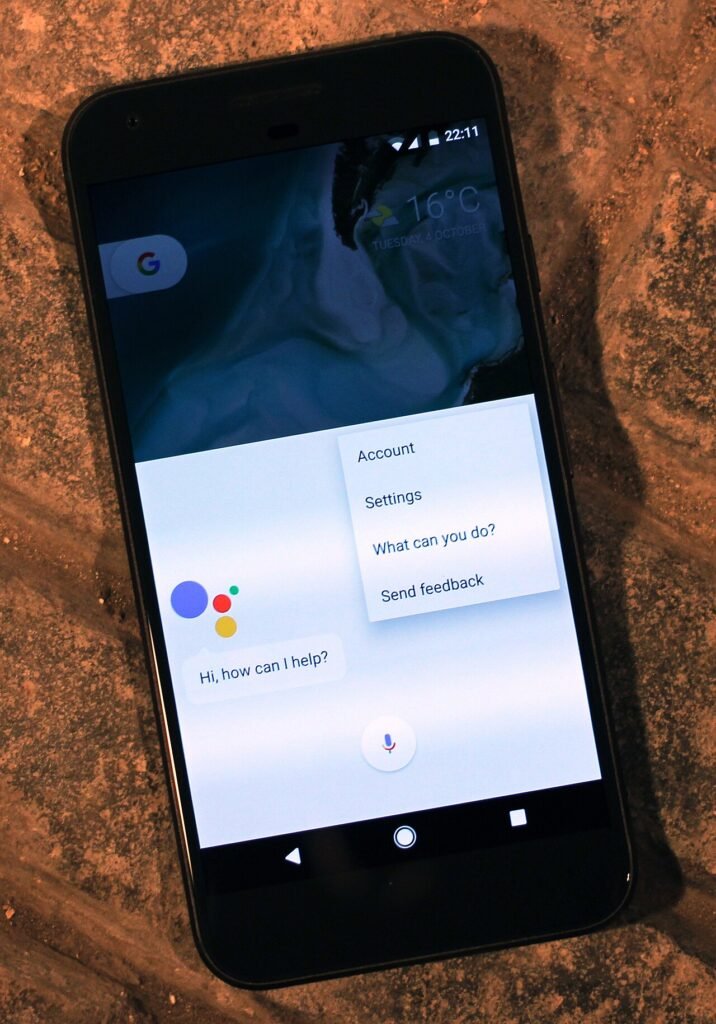
Google has finally given Google Assistant a death date, and the reaction from Android users has been louder than the company probably expected. Starting September 4, 2026, Assistant stops working on Android phones, tablets, Wear OS watches, and Android Auto, replaced by Gemini. There is no toggle to switch back, no legacy mode, and no opt out. Once the migration reaches your device, the assistant you have used for the better part of a decade is gone.
Scroll through the Pixel and Android communities right now and you will find a phrase repeating itself: “this will be my last Pixel.” That is strong language for a software change, and it is worth understanding why a voice assistant swap has landed this badly, because the complaints are more specific than simple change aversion.
⭐ Quick facts
- Google Assistant shuts down starting September 4, 2026, with the rollout taking several weeks to reach everyone.
- Affected: Android phones and tablets, Wear OS watches, headphones, and Android Auto.
- Still on Assistant for now: Google Home speakers, Google TV, and cars with Google built in.
- There is no way to revert to Assistant once your device migrates.
- Older flagships like the Pixel 9 and Galaxy S25 get cloud based Gemini, not the faster on device version.
What Is Actually Shutting Down, and When
Google is not flipping one switch on September 4. That is the date the shutdown begins, and the company has said it will take a few weeks to reach every user, every region, and every device category. Some people will lose Assistant that first week. Others will keep it into October before the change arrives.
The split between what dies and what survives is the part most coverage has glossed over, so here it is plainly.
| Device type | Status after September 4 |
|---|---|
| Android phones and tablets | Migrating to Gemini |
| Wear OS watches | Migrating to Gemini |
| Android Auto | Migrating to Gemini |
| Headphones and earbuds | Migrating to Gemini |
| Cars with Google built in | Keeps Assistant for now |
| Google Home and Nest speakers | Keeps Assistant for now |
| Google TV devices | Keeps Assistant for now |
Note the phrase “for now” doing heavy lifting in that second group. Google has been rolling Gemini onto Home and Nest hardware gradually, and nobody at the company has suggested those devices are permanently exempt. They are simply later in the queue.
The Hardware Split That Is Fueling Most of the Anger
Here is the detail that turned a routine software transition into a genuine backlash, and it has almost nothing to do with Gemini being worse in the abstract.
Gemini can run in two very different ways. On qualifying hardware it uses Gemini Nano v3 on the device itself, which keeps responses fast because the phone is not waiting on a round trip to a server. On everything else, it runs from the cloud, which means every request travels out to Google and back before you hear an answer.
The requirement for the fast version is steep: a 2026 generation flagship chipset, at least 12GB of RAM, and native Gemini Nano v3 support. That specification excludes a lot of phones people are still actively paying for.
| Tier | Requirement | Experience |
|---|---|---|
| Gemini Nano v3 | 2026 flagship chip, 12GB RAM | Hybrid on device, fastest responses |
| Gemini Nano v2 | Pixel 9 series, Galaxy S25 line, Galaxy Z Fold 7 | Cloud based, noticeably slower |
Read that second row again. The Pixel 9 series and the Galaxy S25 lineup are not budget handsets. They are recent flagships, many still under contract, and they are being moved off a fast local assistant onto a slower remote one. Users are not upset that Google changed the assistant. They are upset that the replacement is measurably slower on hardware they paid flagship prices for.
The upgrade trap: If you want the fast on device experience, the practical answer is a new phone. That is exactly why the complaint threads keep circling back to feeling pushed into an upgrade rather than offered one. If you were already considering a new device, the Pixel 11 launch on August 12 lands just five days from now and is expected to meet the Nano v3 bar.
The Features That Do Not Survive the Move
Assistant has been shedding capabilities for a while. Google removed 28 features in early 2024 and cut another seven the following March, so the version being retired is already thinner than the one people remember. Even so, a few losses in this final transition sting more than others.
Interpreter Mode. The real time two way spoken translation across 26 languages is gone and has no Gemini equivalent as of July 2026. For anyone who travels, this was not a novelty feature. It was the reason to keep a Pixel in your pocket at a train station in a country whose language you do not speak.
Daily smart home briefings. The scheduled morning rundowns that some households built an actual routine around do not carry over cleanly.
Routine reliability. Smart home routines are not fully implemented in Gemini yet. “Yet” is doing real work in that sentence, and it is a lot to ask of people whose lights and thermostats currently work.
Is Gemini Actually Worse? It Depends What You Ask It
This is where fairness matters, because Gemini is not a downgrade across the board. It is genuinely better at anything requiring reasoning, context, or follow up questions. Ask it to plan something, summarize something, or work through a problem, and it is not close. Assistant was never able to do that.
The trouble is that most voice assistant use is not reasoning. It is a timer, a light, a song, a unit conversion. For those, Assistant’s near instant response was the whole product, and Gemini’s tendency to think before answering registers as lag. Reported issues include slower simple commands, weaker accuracy on basic tasks like spelling and arithmetic, misread requests, and weather answers defaulting to the wrong location despite a correct address in the Home app.
So the honest summary is a trade: you gain a far more capable assistant for complex requests and lose speed and consistency on the simple ones you actually issue twenty times a day. Whether that is an upgrade depends entirely on which kind of user you are. If you want to get more out of the new system rather than fight it, our guide to using Google Gemini covers the prompting habits that make the difference.
What to Do Before September 4
A short checklist:
- Switch early, on your terms. You can move to Gemini now through the Google app or your device settings. Migrating deliberately beats waking up to it.
- Audit your routines. Write down every Assistant routine and smart home command your household depends on, then test each one under Gemini.
- Find a translation replacement. If you relied on Interpreter Mode, install a dedicated translation app before your next trip.
- Check your RAM. Under 12GB means cloud based Gemini. Knowing that now prevents an unpleasant surprise later.
- Warn the household. If family members use voice commands daily, the wake behavior and phrasing are changing for them too.
The Bigger Picture
Google is doing something genuinely unusual here: retiring a product used by hundreds of millions of people, on a fixed date, with no fallback. The company is betting that Gemini’s ceiling matters more than Assistant’s floor, and that a few weeks of friction is an acceptable price for consolidating everything onto one AI stack.
That bet is defensible. Running two assistants indefinitely is expensive and confusing, and Gemini is the more capable technology. But the execution has handed users a real grievance, because the people hit hardest are not laggards on ancient hardware. They are recent flagship buyers being told their year old phone is not quite good enough for the fast version of a replacement they did not ask for.
The phrase “this will be my last Pixel” is almost certainly an overreaction, and most people saying it will still be on Android next year. Ecosystem lock in is powerful, and the alternatives involve their own compromises, as anyone who has seriously looked at alternatives to Google’s services can attest. But the sentiment is a useful signal. Google spent years teaching people to trust a voice assistant with their lights, their commute, and their morning. Replacing it with something slower at those exact jobs, while pointing at a new phone as the fix, is the kind of thing users remember at upgrade time.
September 4 is four weeks out. If Assistant runs anything important in your life, this is the month to find out what breaks.
About this article: GeekBlog covers U.S. technology news, AI, phones, smartwatches and gaming. Every story is written and checked under our Editorial Policy. Spotted a mistake or have a story tip? Contact our editors.
