

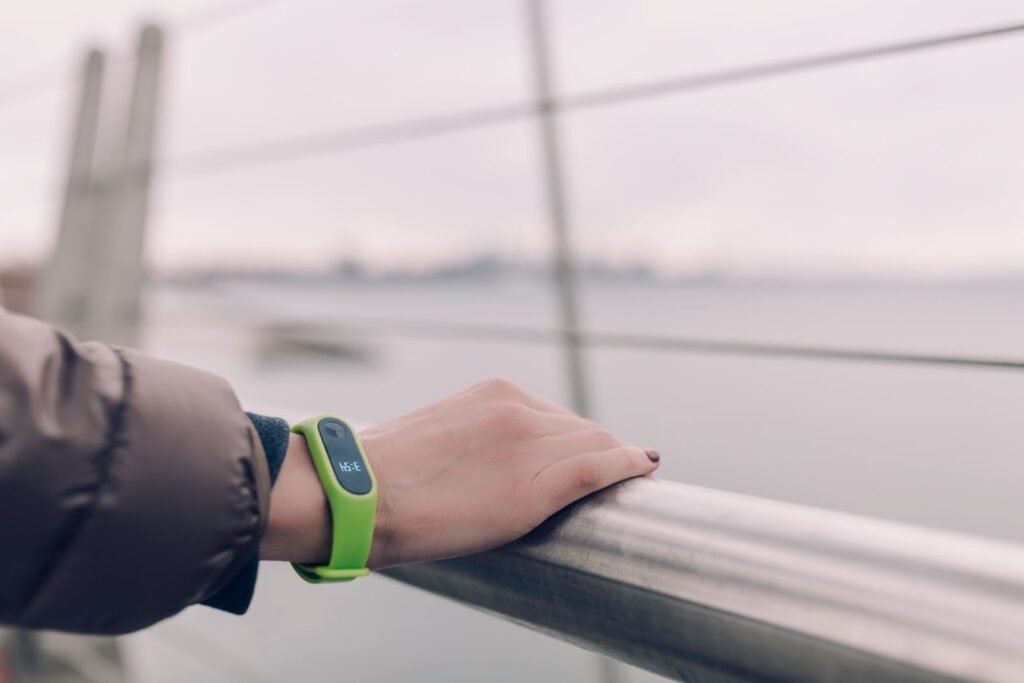
Fitbit and Whoop sit at opposite ends of the fitness tracker spectrum, even though both promise to help you understand your body better. Fitbit, now owned by Google, is the friendly, affordable, screen-equipped band that has introduced millions of people to step counting and sleep tracking. Whoop is the screenless, subscription-based recovery tool favored by athletes who want to optimize every workout. Choosing between them is less about which is better and more about what you actually want from a wearable.
This guide compares Fitbit and Whoop as they stand in 2026, including Google’s newer screenless Fitbit Air and the freshly rebranded Google Health app, and walks through price, the all-important subscription question, battery life, accuracy and who each device genuinely suits. If you are open to other form factors entirely, it is worth skimming our roundup of the best Whoop alternatives in 2026 alongside this piece.
Quick Answer
Buy a Fitbit (the Charge 6 with a screen, or the screenless Fitbit Air) if you want an affordable tracker you own outright, with optional coaching for about $10 a month. Choose Whoop if you are a serious athlete who wants best-in-class recovery and strain analysis and does not mind paying $199 to $359 a year, with no way to use the band once you stop. For most everyday users, Fitbit is the smarter and cheaper pick.
Two very different products
A typical Fitbit, such as the Charge 6, is a slim band with a 1.04-inch AMOLED touchscreen, built-in GPS and a heart rate sensor. You can see the time, your steps, your heart rate and notifications right on your wrist, and it works happily on its own without your phone nearby. It also packs ECG and EDA sensors for heart-rhythm and stress readings, plus SpO2 and skin-temperature tracking. It is designed to be approachable, motivating and useful out of the box.
Whoop is the opposite. The Whoop 5.0 has no screen at all, and neither does the medical-grade Whoop MG that sits above it. It is a fabric band that quietly logs your heart rate, heart rate variability, sleep and strain around the clock, then feeds everything into an app that produces recovery and strain scores. You never glance at the device itself; you check the app. It is built for people who want deep, coaching-style insight rather than a glanceable gadget.
In 2026 the lines have blurred. Google launched the Fitbit Air, a screenless tracker priced at around $99.99 (with a $129.99 Special Edition), that goes after Whoop’s recovery-band niche directly. It shows that even Fitbit sees value in the minimalist, app-first approach, while undercutting Whoop dramatically on cost. Between the screen-equipped Charge 6 and the screenless Air, Fitbit now covers both philosophies in one lineup.
Price and the subscription question
This is the heart of the decision. A Fitbit Charge 6 carries a list price of around $159 and is frequently discounted well below that, often into the $120 range and occasionally lower during major sales. The screenless Fitbit Air launched at around $99.99. In both cases you buy the device once and own it. Many features work for free, although the premium subscription (more on the rebrand below), at roughly $10 a month, unlocks the Daily Readiness Score, deeper sleep analysis, guided programs and the new AI coach.
Whoop has no upfront hardware price in the usual sense. Instead you pay for a membership, which includes the band. In 2026 plans start at around $199 a year for the entry One tier, rise to roughly $239 a year for Peak, and reach about $359 a year for the Life tier, which is the only way to get the medical-grade Whoop MG hardware. There is no way to use Whoop without an active membership; stop paying and the band stops working. Over two or three years, Whoop comfortably costs several times what a Fitbit does, even if you add the Fitbit subscription. If budget matters at all, Fitbit wins this round clearly.
Doing the subscription cost math
It is worth putting real numbers to this, because the gap is bigger than it first appears. Say you keep either device for three years. A Fitbit Charge 6 bought on sale for around $120, used entirely for free, costs you $120 over that whole period. Add Google Health Premium at $9.99 a month and you are looking at roughly $120 plus about $360, or a little under $480 across three years, and even that is optional. The screenless Fitbit Air is cheaper still up front at $99.99, and it ships with a three-month Premium trial before the coaching fee kicks in.
Whoop, by contrast, is subscription all the way down. Three years on the entry One plan at $199 a year is roughly $597; on the Peak plan at $239 a year it is about $717; and on the Life plan at $359 a year it is around $1,077. Because the hardware is bundled into the membership, there is no version of Whoop that gets cheaper the longer you own it. A free-tier Fitbit user pays nothing after buying the band, while a Whoop member keeps paying indefinitely. That is the single most important financial fact in this comparison.
Battery life and charging
Both brands do reasonably well here, but in different ways. A Fitbit Charge 6 lasts up to around seven days per charge, dropping if you use the always-on display or GPS heavily, and it must be removed to recharge. The Fitbit Air is rated for up to about a week too, with roughly five minutes of charging giving around a day of use for quick top-ups. Whoop’s 5.0 and MG bands last roughly 14 days and, crucially, charge via a slide-on battery PowerPack you attach while still wearing the band, so it never has to come off. For uninterrupted 24/7 data, Whoop’s charging system is genuinely clever and gives it an edge for round-the-clock wear.
Accuracy and the data you get
For everyday metrics like steps, heart rate and basic sleep stages, Fitbit is accurate and well-proven, with years of refinement behind it. Whoop tends to go deeper on the physiology, with a stronger emphasis on heart rate variability, recovery and the relationship between strain and rest. Its overnight tracking and recovery modeling are widely respected among serious trainers, and the Whoop MG adds medical-grade features such as ECG and blood-pressure insights for those on the top tier.
That said, Fitbit closed much of the gap with its readiness scoring, and for the vast majority of users the practical difference is small. Both will tell you roughly how well you slept and whether you are ready to train. Whoop simply presents that information with more depth and a coaching philosophy designed to keep you accountable, where Fitbit leans toward gentle encouragement, badges and nudges. The right answer depends on whether you want a personal trainer in an app or a supportive companion on your wrist.
Screen versus screenless: which suits you?
This used to be the cleanest line between the two brands, and it is worth thinking through honestly. A screen, as on the Charge 6, means glanceable stats, on-wrist notifications, a visible clock and live workout metrics without reaching for your phone. It makes the device a standalone gadget you can rely on during a run or a meeting. The trade-off is a small display that shows one data field at a time and a battery that drains faster with an always-on face.
Screenless designs, whether the Fitbit Air or any Whoop band, strip all of that away. There is nothing to glance at; every insight lives in the app. That keeps the hardware light, discreet and long-lasting, and it removes the temptation to treat a fitness band as a mini smartwatch. The downside is obvious: no notifications, no on-wrist time, and you have to open your phone to learn anything. If you already wear a watch, or you find screens distracting, screenless is liberating. If you want your tracker to double as a smart device, a screen matters.
The Google Health ecosystem shift
One of the biggest 2026 changes has nothing to do with hardware. On May 19, 2026, the Fitbit app was rebranded as the Google Health app, and Fitbit Premium became Google Health Premium. The monthly price held at $9.99, but the annual plan rose from $79.99 to $99.99. The headline addition is the Google Health Coach, an AI feature built on Gemini that delivers proactive, adaptive guidance rather than static charts, and it is bundled free for subscribers to Google AI Pro and Ultra in many countries.
This matters because it deepens Fitbit’s ecosystem story. Your data now lives inside Google’s broader health platform, and the coaching layer is designed to feel more conversational and personal over time. It also means the screenless Fitbit Air, which leans entirely on that app-and-coach model, is really Google’s answer to the Whoop experience at a fraction of the ongoing cost. If you are comparing coaching quality, you are increasingly comparing Gemini-powered guidance against Whoop’s long-established recovery science.
Fitbit vs Whoop at a glance
| Feature | Fitbit (Charge 6 / Air) | Whoop (5.0 / MG) |
|---|---|---|
| Upfront price | ~$159 Charge 6 (often ~$120); ~$99.99 Air | No separate hardware cost; band included with membership |
| Subscription | Optional: Google Health Premium ~$9.99/mo or $99.99/yr | Required: ~$199, $239 or $359/yr; band stops working if unpaid |
| Battery life | Up to ~7 days; remove to charge | ~14+ days; slide-on PowerPack charges on the wrist |
| Screen | Charge 6 has an AMOLED touchscreen; Air is screenless | No screen; all data in the app |
| Key metrics | Steps, HR, GPS, sleep, SpO2, ECG, EDA, readiness, AI coach | HRV, recovery, strain, sleep coaching; ECG/BP on MG |
| Best for | Everyday users, beginners, budget-conscious buyers | Dedicated athletes and data lovers focused on recovery |
Everyday experience
Living with a Fitbit is low-friction. You glance at your wrist, see your stats, get a buzz for a text and carry on. The Charge 6 doubles as a watch and a basic smart device, while the Air keeps things minimal but still hands-off. Whoop asks more of you: you have to open the app to learn anything, and the value only emerges once you start acting on the recovery and strain guidance over weeks and months. For data enthusiasts that ritual is part of the appeal; for casual users it can feel like extra work.
So which should you buy?
Choose Fitbit if you want an affordable, easy-to-use tracker with solid all-round health tracking that you own outright. The Charge 6 is the better pick for most everyday users, beginners and anyone who balks at a recurring subscription, thanks to its screen, GPS and one-time cost. The screenless Fitbit Air is the one to look at if you like the idea of a Whoop-style band with AI coaching but refuse to pay Whoop-style prices.
Choose Whoop if you are a dedicated athlete or data lover who wants best-in-class recovery and strain coaching, values never taking the device off thanks to on-body charging, and is comfortable paying an ongoing fee for that depth. It is a specialist tool, and for the right person it is excellent, but it is overkill and overpriced for someone who mainly wants step counts and sleep scores.
Key Takeaways
- Fitbit is bought once and owned; Whoop is a membership that stops working when you stop paying.
- Over three years, Whoop can cost from roughly $597 to $1,077, versus around $120 (or up to ~$480 with coaching) for a Fitbit.
- The screenless Fitbit Air (~$99.99) directly targets Whoop’s recovery-band niche at a fraction of the ongoing cost.
- Whoop leads on battery (14+ days, on-wrist charging) and deep recovery science; Fitbit leads on price, ease and standalone use.
- In May 2026 the Fitbit app became Google Health, with an AI-powered Gemini coach in Google Health Premium.
The Bottom Line
For most people, Fitbit is the sensible choice: pick the Charge 6 for a screen and standalone use, or the Fitbit Air for a cheap, screenless, coached experience you own. Whoop earns its premium only if you are a committed athlete who lives inside recovery and strain data and accepts an open-ended subscription. Match the device to your habits and budget, not the hype.
Frequently Asked Questions
Is Fitbit or Whoop cheaper overall?
Fitbit is far cheaper for almost everyone. You buy the hardware once and can use core features for free, while Whoop requires an ongoing membership of roughly $199 to $359 a year that never goes away. Even adding the optional $9.99-a-month Google Health Premium keeps Fitbit well below Whoop over any multi-year period.
Does the Fitbit Air compete directly with Whoop?
Yes. The Fitbit Air is Google’s screenless, app-first tracker with Gemini-powered coaching, aimed squarely at the recovery-band niche Whoop created. At around $99.99 up front and no mandatory subscription, it undercuts Whoop dramatically, though Whoop still offers deeper recovery science and longer battery life.
Do I need a subscription to use a Fitbit?
No. A Fitbit works without any subscription for steps, heart rate, sleep and basic tracking. Google Health Premium (formerly Fitbit Premium) is optional and unlocks the Daily Readiness Score, advanced sleep analysis, guided programs and the Google Health Coach for about $9.99 a month or $99.99 a year.
What happens to Whoop if I stop paying?
The band stops working. Whoop’s hardware is tied to an active membership, so if you cancel, you lose access to your data and the device becomes unusable. That is a key difference from Fitbit, which you continue to own and use even without any subscription.
Which is more accurate for sleep and recovery?
Whoop is generally regarded as more sophisticated for recovery, heart rate variability and strain, and the Whoop MG adds medical-grade features. Fitbit is accurate and reliable for everyday sleep and readiness, and its scoring has narrowed the gap considerably, so most casual users will not notice a meaningful difference.
Did the Fitbit app really become Google Health?
Yes. On May 19, 2026, the Fitbit app was rebranded as Google Health, and Fitbit Premium became Google Health Premium. The monthly price stayed at $9.99, the annual plan rose to $99.99, and subscribers gained the Gemini-based Google Health Coach.
If a full smartwatch is also on your shortlist, our Apple Watch vs Whoop comparison is a useful companion read, and our roundup of the best Whoop alternatives in 2026 covers rings and bands across every budget.
Featured image: Burst on Pexels.
About this article: GeekBlog covers U.S. technology news, AI, phones, smartwatches and gaming. Every story is written and checked under our Editorial Policy. Spotted a mistake or have a story tip? Contact our editors.
