

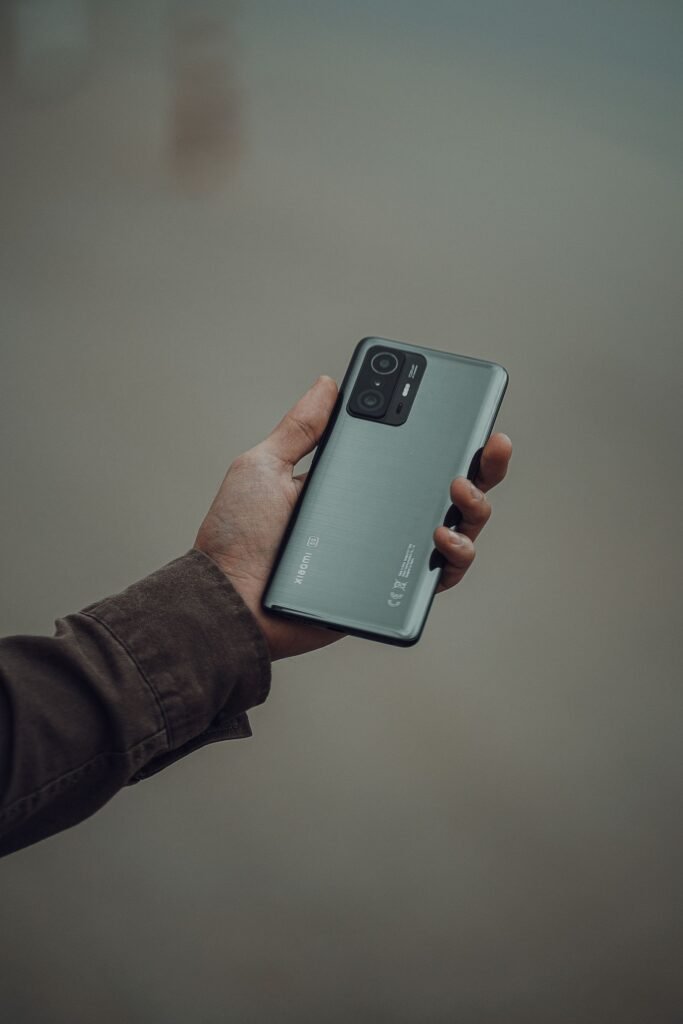
Apple holds its “Surprise and Shine” event tomorrow, September 9, and the headline product is the one the company has never made before: a folding iPhone, widely expected to be called the iPhone Ultra.
Most launch coverage this week is about what the phone will do. The more useful list, and the one that has stayed remarkably stable across months of supply chain leaks, is what it will not do. A folded phone has to fit two screens, a hinge and a battery into a body that ends up thinner than any iPhone Apple has ever shipped, and something has to give. Reporting from MacRumors, 9to5Mac and Bloomberg’s Mark Gurman has converged on five specific things that gave.
None of them are dealbreakers on their own. Together they describe a phone that costs roughly twice what an iPhone 18 Pro costs while carrying a shorter spec sheet, and that is a genuinely strange product to introduce.
📱 The short version
- Face ID is expected to be gone. At a rumored 4.5mm unfolded, there is no room for the TrueDepth array, so Apple is tipped to move back to a Touch ID power button.
- There is no telephoto lens. Two rear cameras, both 48MP, believed to be a main and an ultrawide. Optical zoom is out.
- mmWave 5G is probably missing in the US if the phone ships with Apple’s own C2 modem, which reportedly still does not support it.
- The Action button appears to be gone, and with it the mute switch, which would make this the first iPhone in eighteen years without a hardware silence control.
- MagSafe was on the missing list and has since flipped back. Gurman now says the magnet array made it in.
- Expected price is at least $1,999, with Ming-Chi Kuo’s range running to $2,500 depending on storage.
The Subtraction List
Here is the whole thing in one place, with the reasoning behind each cut and how much it is likely to matter in daily use.
| What is missing | Why | How much it stings |
|---|---|---|
| Face ID | TrueDepth hardware will not fit in a 4.5mm body | Moderate, and it depends on your habits |
| Telephoto camera | Only two rear sensors fit in the thin half of the chassis | High, at this price |
| mmWave 5G | Apple’s in-house C2 modem reportedly lacks support | Low for almost everyone |
| Action button and mute switch | Dummy units show volume keys moved to the top edge, no third button | Small but genuinely annoying |
| MagSafe | Thickness again, though reporting has now reversed on this one | Likely a non-issue |
Face ID Is Out and Touch ID Is Back
This is the change that will generate the most noise on launch day, and it is worth understanding why it is happening rather than treating it as a cost cut.
Face ID is not a camera. It is a small cluster of components Apple calls the TrueDepth array: a dot projector, an infrared emitter, an infrared camera and the supporting optics, all of which need physical depth behind the glass to work. Apple has spent years shrinking that stack and it is still one of the thickest things in an iPhone.
The iPhone Ultra is rumored to measure around 4.5mm unfolded. That is thinner than the iPhone Air, which was already the thinnest iPhone Apple had built. In a body that shallow, the TrueDepth array simply does not fit behind the display, and Apple’s under-display Face ID work is not ready to ship.
So the phone falls back to a fingerprint reader in the side button, the same approach Apple has used on the iPad Air and iPad mini for years. It works well there. It is fast, it is reliable, and it has the practical advantage of working when your face is covered or when the phone is flat on a desk.
What you lose is the invisible part. Face ID authenticates without you doing anything, which is why it disappears into the background when it works. Touch ID requires you to put a specific finger in a specific place, and on a device that folds, “a specific place” changes depending on whether the phone is open or closed. Apple will have thought hard about that. Whether the answer is elegant is one of the genuinely open questions going into tomorrow.
For context on how long a gap this is: the last flagship iPhone to ship with Touch ID was the iPhone 7 in 2016. The iPhone SE kept it alive at the budget end, but a $2,000 phone reviving a 2016 unlock method is going to read as a step backward to a lot of people regardless of how well it works.
Two Cameras, and the Missing One Is the Zoom
The camera cut is the one that should worry buyers most, because it is the one you will notice every week.
The iPhone Ultra is expected to carry two rear cameras, both 48MP, believed to be a main wide and an ultrawide. There is no periscope, no dedicated telephoto, and therefore no true optical zoom. Any zoom is a crop from the main sensor, which is a reasonable trick at 2x on a 48MP sensor and falls apart quickly beyond that.
Compare that with what Samsung already sells. The Galaxy Z Fold 8 carries a dedicated telephoto. So do Huawei’s and Honor’s folding flagships. Zoom in a book-style foldable is not an exotic ask in 2026, it is table stakes, and Apple is skipping it on the most expensive phone it has ever sold.
The reason is geometry rather than cost. In a folding phone, the camera module has to live in one half of the chassis, and that half is roughly half as thick as a normal phone. Periscope assemblies are long and awkward to place. Apple could have added a thickness bump. It clearly decided that a thin, flat foldable was the product and the zoom lens was the price.
If you take a lot of zoom photos, read this twice
On the rumored spec sheet, the iPhone 18 Pro Max will out-shoot the iPhone Ultra at anything past 2x, and it will cost hundreds of dollars less. That is an unusual position for Apple to put its own flagship in.
The Ultra’s pitch is the screen, not the camera. If your reason for upgrading is photography, the folding phone is very likely the wrong purchase, and the rest of the lineup is worth waiting for. Note that the standard iPhone 18 is not arriving in September at all under Apple’s new split release schedule.
mmWave, and Apple’s Long Modem Project
This one sounds worse than it is.
The iPhone Ultra is expected to use Apple’s own C2 modem rather than a Qualcomm part, and reporting suggests the C2 still does not handle mmWave 5G. US iPhone 18 Pro models are believed to be keeping Qualcomm silicon precisely so they can keep mmWave.
In practice, mmWave is the ultra-fast, ultra-short-range flavor of 5G that carriers deployed in stadiums, airports and a handful of dense downtown blocks, then largely stopped expanding. Sub-6GHz 5G is what actually covers the country and what almost every 5G connection you make already uses. Most people would never notice the difference over a two year ownership period.
It matters more as a signal than as a spec. Apple shipping its flagship halo device on an in-house modem that is not yet at feature parity with Qualcomm tells you the modem project is being pushed forward on Apple’s schedule rather than on the modem’s readiness.
No Action Button, and No Mute Switch Either
Leaked dummy units consistently show volume keys on the top edge, similar to the iPad mini, and no third button anywhere on the frame.
If that holds, the iPhone Ultra is the first iPhone since the original in 2007 without a physical way to silence it. The ring/silent switch survived every redesign for sixteen years, became the Action button in 2023, and would now be gone entirely on this one model.
It is a small thing that people feel strongly about, because muting a phone by touch, in a pocket, without looking, is one of those interactions you only appreciate once it is gone. Expect a software replacement in Control Center and expect a lot of complaints about it in the first month.
MagSafe: The Cut That Uncut Itself
MagSafe spent most of the rumor cycle on the missing list for the same reason as everything else, which is that magnets take up depth. Recent reporting has reversed.
Mark Gurman has said that every indication he has heard points to MagSafe being included, and the argument is straightforward: Apple already fit a magnet array into the iPhone Air, which was itself extraordinarily thin. If it fit there, it can fit here.
That matters more than it sounds, because MagSafe is now the anchor for an entire accessory economy. A $2,000 iPhone that could not use the wallet, the car mount and the charging stand its owner already has would have been a hard sell.
How It Stacks Up
Everything in the iPhone Ultra column below is rumor rather than confirmation, and tomorrow’s keynote is where it gets checked against reality.
| Spec | iPhone Ultra (rumored) | Galaxy Z Fold 8 |
|---|---|---|
| Inner display | About 7.8 inches | Book-style, comparable size |
| Cover display | About 5.5 inches | Wider cover panel |
| Unfolded thickness | About 4.5mm | Thicker |
| Biometrics | Touch ID side button | Fingerprint plus face unlock |
| Rear cameras | Two, 48MP, no telephoto | Three, including telephoto |
| Battery | 4,883mAh split across two cells | About 4,800mAh |
| Starting price | $1,999 or higher | Below the Ultra |
The battery figure is worth a second look. Leaks put the Ultra at 4,883mAh total, split into a 1,921mAh cell and a 2,962mAh cell, one in each half of the chassis. That is slightly ahead of the Z Fold 8 and well behind the roughly 5,567mAh the iPhone 18 Pro Max is rumored to carry. Two screens drawing from a smaller pack is not a combination that usually ends in great endurance figures, though Apple’s efficiency advantage buys back some of it.
Where the Money Actually Went
Reading only the subtraction list gives an unfair picture, because Apple did spend the engineering budget somewhere. It spent it on the fold itself.
The headline target is the crease. Reports point to a liquid metal hinge, a material that resists bending and deformation better than the stamped steel used in most folding phones, paired with a revised Samsung Display panel that removes one of the conventional screen layers. The claimed result is a crease depth of around 0.15mm, which would be close to invisible in normal use and a meaningful step past anything currently on sale.
Samsung Display is reported to have built a dedicated production line for these panels, which is the kind of commitment that only makes sense at real volume. That is a useful signal about how many of these Apple expects to sell, and it is a very different posture from the small experimental batches other manufacturers have used for their halo foldables.
If the crease really is gone, that is not a small thing. The visible fold line has been the single most common complaint about every book-style foldable since the category started, and it is the reason a lot of people who tried one in a store never bought one. Solving it is exactly the sort of unglamorous, expensive problem Apple tends to arrive late to and then fix properly, which is the pattern we described when Samsung and Apple both started fixing what was broken about foldables.
So Should You Buy One?
Three honest filters, assuming the rumors hold up tomorrow.
Who this phone is actually for
Buy it if the big screen is the point. If you read, edit documents, run two apps side by side or travel without a tablet, a nearly creaseless 7.8 inch display in your pocket is a real change to how you use a phone, and no spec sheet line item competes with that.
Skip it if you shoot photos. No telephoto at $2,000 is the single hardest thing to defend here, and the iPhone 18 Pro Max will do that job better for less money.
Wait a generation if you are unsure. First-generation Apple hardware improves fast and steeply. Face ID, a third camera and a thinner hinge are all obvious second-year additions, and the resale market for a version one foldable is unknowable right now.
There is one more consideration that has nothing to do with specs. Apple has moved the pre-order and shipping schedule around this launch deliberately, and the dates were rearranged for a reason worth understanding before you set an alarm. Early supply on a brand new folding mechanism is usually the tightest supply Apple ever has.
The Bottom Line
Every foldable ever made is a list of compromises, and pretending otherwise is how the category got a reputation for overpromising. Samsung compromised on thickness for years. Huawei compromises on software availability outside China. Apple, it seems, is compromising on the camera, the unlock method and one physical button, in exchange for the thinnest and flattest folding phone anyone has built.
That is a defensible set of trades. Whether it is a $2,000 set of trades depends entirely on whether the crease is really gone, because that is the one thing on this list that no competitor has solved and the one thing a spec sheet cannot show you.
We find out tomorrow.
