

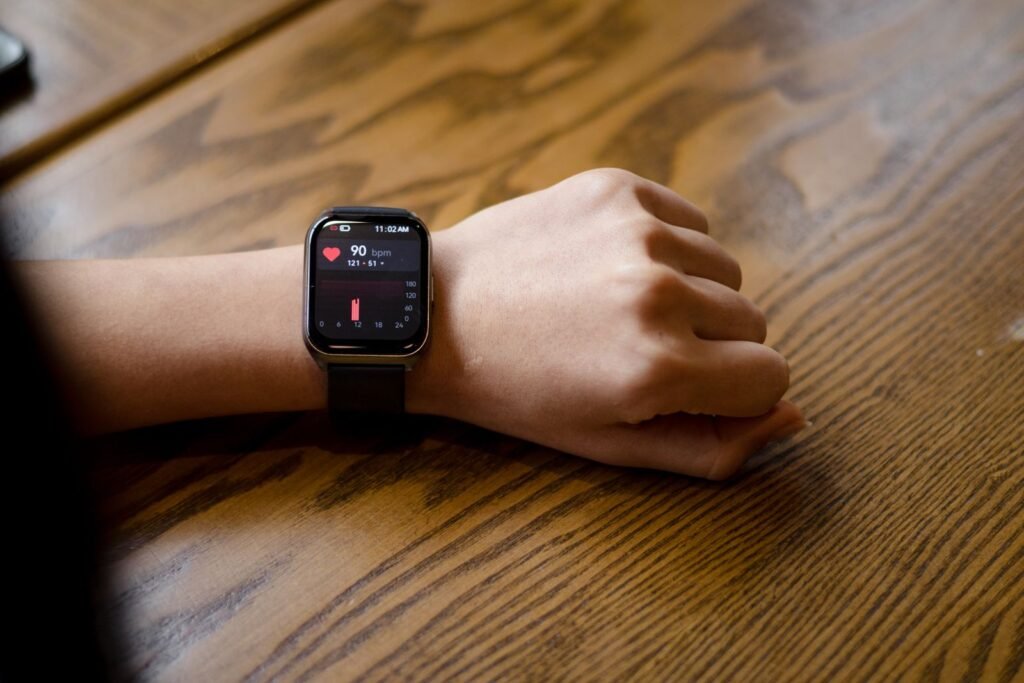
After a heart attack, a stent, a new pacemaker or a heart failure diagnosis, almost everyone has the same thought on the drive home: how will I know if something goes wrong again? A smartwatch for heart patients is one of the first things families look at, and for good reason. Today’s watches can record an ECG, flag an irregular rhythm, warn about a heart rate that stays too high or too low and call for help after a fall. But they also have blind spots, a few real safety rules for people with implanted devices, and some features that simply are not meant for people who already have heart disease. This guide covers what actually helps, what to switch off and which watch fits which situation in 2026.
Quick answer
For most heart patients with an iPhone, the Apple Watch Series 12 ($399) is the safest all-round choice: FDA cleared ECG, irregular rhythm alerts, AFib History, hypertension notifications and fall detection, with no body composition current. Android users should look at the Galaxy Watch 9 (from $379.99) or Pixel Watch 5 ($399). If you want a classic look and a month of battery, the Withings ScanWatch 2 is the quiet option. If you have a pacemaker or ICD, any of these is generally fine on the wrist, but skip body composition scans and keep the watch and its charger at least 6 inches from your chest. Always run your plan past your cardiologist first.
Why Heart Patients Are Turning to Smartwatches
Heart disease is still the leading cause of death in the United States, and a lot of the people living with it are managing at home between checkups. That gap between appointments is exactly where a watch can be useful. It does not replace a monitor your doctor prescribes, but it can collect weeks of data you would never get from a ten minute office visit.
805,000
heart attacks in the US every year
6.7 million
US adults living with heart failure
6 inches
distance the FDA suggests between a watch and an implant
Sources: CDC Heart Disease Facts; American Heart Association Heart Disease and Stroke Statistics; FDA.
Important: a smartwatch cannot detect a heart attack
No consumer watch is cleared to diagnose a heart attack. A single-lead watch ECG cannot see the changes doctors look for on a 12-lead ECG. If you have chest pain or pressure, shortness of breath, pain spreading to the arm, jaw or back, a cold sweat or sudden dizziness, call 911 right away. Do not wait for your watch, and do not let a “normal” reading talk you out of calling.
What a Smartwatch Can Actually Do for Heart Patients
1. Watch your rhythm and catch AFib
This is where watches have the strongest evidence. Apple, Samsung, Google, Fitbit, Garmin and Withings all sell watches with an FDA cleared single-lead ECG that sorts a 30-second recording into sinus rhythm, atrial fibrillation or inconclusive. Most also run background irregular rhythm notifications that check your pulse while you are still and nudge you to take an ECG when something looks off.
For heart patients the value is less about screening and more about documentation. If you feel a flutter at 2 a.m., you can record it on the spot and show your cardiologist the tracing instead of trying to describe it. If you already have AFib, Apple’s AFib History estimates how much of the week you spent in AFib, a feature the FDA has even qualified as a tool for clinical trials. We go deeper on this in our guide to the best smartwatch for AFib.
Good to know
Apple lists a pacemaker or ICD as a condition that can affect the ECG app’s ability to classify your rhythm, and a heart rate under 50 or over 120 BPM can also make AFib checks inconclusive. Paced rhythms and other known arrhythmias can confuse the algorithm. You can still record and share the tracing, but ask your doctor how much weight to give the automatic label.
2. Flag a heart rate that stays too high or too low
Every major watch lets you set a high and low heart rate alert that fires when your pulse stays outside a range while you are resting. For someone on rate control medication, or someone who had a slow rhythm before getting a pacemaker, that alert can be the first hint that a dose needs adjusting. Resting heart rate trends over weeks are often more useful than any single number, and wrist sensors are at their most accurate when you are sitting still.
That accuracy point matters. A 2025 validation study found that every wrist device it tested got noticeably worse during sudden changes, such as standing up fast or starting to move. The authors concluded that wrist wearables are better at averages and trends than at catching quick spikes. In other words, trust the weekly pattern more than one odd reading during a brisk walk.
3. Support cardiac rehab at home
Cardiac rehab is one of the most effective treatments after a heart attack or bypass surgery, yet many patients drop out or never start. Watches are being tested as a way to keep people going. A 2025 randomized trial from Beijing Anzhen Hospital found that a smartwatch-supported home rehab program improved exercise adherence and clinical outcomes in patients with coronary heart disease. In the RATE-AF study, researchers in the UK used wrist wearables to follow 53 older patients with permanent AFib and heart failure for 20 weeks, collecting more than 140 million heart rate data points to compare two medications.
The practical takeaway: a watch is a good coach for step goals, daily walks and logging rehab sessions, and it gives your rehab team real data. Just keep in mind that most of these trials excluded people with severe, uncontrolled heart failure, so the evidence is thinnest for the sickest patients.
4. Hint at high blood pressure, with big limits
Apple received FDA clearance in September 2025 for hypertension notifications, which look at 30 days of optical sensor data and tell you if your pattern suggests high blood pressure. The feature is only for adults 22 and older who have not been diagnosed with hypertension and are not pregnant. If you are already being treated for high blood pressure, it is not designed for you, and it does not give you a reading.
How well do watch hypertension alerts work?
Apple Watch hypertension notification validation study, threshold 130/80 mm Hg
The watch flagged 214 of 585 people with blood pressure of 130/80 or higher. Source: validation data reported by the American Academy of Family Physicians and Houston Methodist.
The American Heart Association went further in a December 2025 statement, saying cuffless blood pressure devices, including watches and rings, should not be used yet to diagnose, track or treat high blood pressure. Heart patients should keep using a validated upper arm cuff. Our deep dive on smartwatch blood pressure monitoring explains why the wrist is such a hard place to measure it.
5. Get help fast after a fall or emergency
Fall detection, emergency SOS and a Medical ID that first responders can read from the lock screen are some of the most practical features for older heart patients, especially those on blood thinners or medication that causes dizziness. A cellular model can call 911 even when the phone is in another room.
Google’s Pixel Watch adds Loss of Pulse Detection, cleared by the FDA in February 2025, which can call emergency services if your pulse seems to stop and you do not respond. It sounds tailor-made for heart patients, but Google says the feature is not intended for people with preexisting heart conditions or anyone who needs cardiac monitoring. It is a backup for the general public, not a monitor for a diagnosed patient, and it should never be treated as a substitute for an ICD or a prescribed monitor.
Pacemakers and ICDs: Is a Smartwatch Safe?
This is the question cardiologists hear most, and the short answer is yes for most people, with a few simple rules. There are two separate concerns: magnets and electrical currents.
The magnet issue
Pacemakers and ICDs have a magnet mode built in. A strong enough magnet close to the device can switch a pacemaker to a fixed pacing rate or pause an ICD’s shock therapy while the magnet is there. Watches and their charging pucks contain magnets. An FDA team measured an Apple Watch Series 6 and found about 983 gauss right against the back of the watch, well above the 10 gauss level that can trigger magnet mode. But the field drops off very quickly with distance.
How fast a watch’s magnetic field fades
Approximate static field from the FDA’s Apple Watch Series 6 measurements
Touching (1 mm)
~983 G
Can trigger magnet mode
About 1 cm
>10 G
Still above the trigger level
6 inches (15 cm)
Safe zone
FDA and Apple guidance
Field strength fell below about 10 G within roughly 2 cm. The FDA authors called the overall risk low and knew of no patient harmed. Source: FDA study in Heart Rhythm, reported by Cardiovascular Business and Physics World.
A watch on your wrist sits much farther than 6 inches from a device implanted under the collarbone. The situations to watch for are the ones that bring the watch or charger close: sleeping with your arm folded across your chest, hugging someone while your watch presses on the implant site, or leaving the magnetic charger in a shirt pocket.
The electrical current issue
Some watches send a tiny, unfelt electrical current through your body to estimate body fat, a method called bioimpedance. A 2023 University of Utah study published in Heart Rhythm tested this in simulations and bench tests and found the current could exceed FDA accepted limits and interfere with cardiac resynchronization devices from Medtronic, Boston Scientific and Abbott. Smartwatches produced more interference than smart scales or smart rings. The researchers stressed that this does not prove a real-world danger, but they did not recommend these features for people with implanted devices.
Samsung’s Galaxy Watch body composition tool uses bioimpedance, and Samsung’s own guidance tells people with implanted pacemakers not to use it. The watch is fine to wear. Just never start a body composition scan.
| Pacemaker and ICD checklist | Why it matters |
|---|---|
| Wear the watch on your wrist only | Keeps the magnet well past the 6 inch safe distance |
| Charge it on a nightstand, not your chest | Charging pucks are magnetic too |
| Skip body composition scans | Bioimpedance current may interfere with implanted devices |
| Keep your phone out of your shirt pocket | Phones carry the same type of magnets |
| Tell your device clinic | They know your exact model and can check logs for interference |
| Do not rely on watch ECG labels | Paced rhythms can confuse AFib algorithms |
Beta Blockers, Heart Rate Zones and Exercise
Here is a mistake a lot of new heart patients make. Watches set your heart rate zones from your age, usually starting with the old 220 minus age formula. If you take a beta blocker, your heart rate will not climb the way that formula expects. You might be working hard while the watch insists you are in an easy zone, so you push harder than your doctor wants.
Cardiac rehab programs usually set exercise intensity with a target range from your stress test and a perceived exertion scale, how hard the effort feels on a scale of 6 to 20. Ask your rehab team for your personal target heart rate range, then type it into the watch as custom zones. Most watches, including Apple, Garmin, Samsung and Pixel, let you do this in the workout or heart rate settings.
Pro tip
If you feel chest discomfort, unusual breathlessness or lightheadedness during exercise, stop, even if the watch says your heart rate is fine. How you feel always outranks the number on your wrist.
The Best Smartwatches for Heart Patients Compared
All five of the watches below carry FDA cleared heart features in the US. The right one depends mostly on your phone and on whether you have an implanted device. Prices are US list prices as of November 2026, and holiday sales are common.
| Watch | Price | ECG | Irregular rhythm alerts | Fall detection | Body composition current | Phone |
|---|---|---|---|---|---|---|
| Apple Watch Series 12 | $399 | Yes | Yes, plus AFib History | Yes | No | iPhone |
| Galaxy Watch 9 | From $379.99 | Yes | Yes | Yes | Yes, avoid with implants | Galaxy phone for ECG |
| Pixel Watch 5 | $399 | Yes | Yes | Yes | No | Android |
| Garmin Venu 4 | $549.99 | Yes | No, ECG on demand only | Incident detection, varies by model | No | iPhone or Android |
| Withings ScanWatch 2 | From $349.95 | Yes | Yes | No | No | iPhone or Android |
Features vary by region and software version. Confirm FDA cleared features for your exact model in the US before buying. For a full rundown of ECG accuracy by brand, see our guide to the best smartwatch with ECG.
Best for most iPhone users: Apple Watch Series 12
Apple has the deepest set of heart tools and the most published research behind them. ECG, irregular rhythm notifications, AFib History, high and low heart rate alerts, hypertension notifications for undiagnosed adults, fall detection and a lock screen Medical ID all live in one place. The Health app can export your ECG tracings as a PDF to email to your cardiologist. It has no bioimpedance sensor, which makes it a simple choice for pacemaker and ICD patients who follow the 6 inch rule. The catch is battery life of about a day and a half, so you need a charging routine.
Best for Samsung phone owners: Galaxy Watch 9
The Galaxy Watch 9 offers FDA cleared ECG and irregular heart rhythm notifications through the Samsung Health Monitor app, plus fall detection and SOS. Two cautions: the ECG features need a Samsung Galaxy phone, and the body composition sensor uses bioimpedance. If you have an implanted device, simply never run a body composition measurement.
Best for other Android phones: Pixel Watch 5
The Pixel Watch 5 brings the Fitbit ECG app, background AFib checks, fall detection and Safety Check, and it works with any modern Android phone. Loss of Pulse Detection is there too, but remember Google does not intend it for people with existing heart conditions.
Best for active patients and long battery: Garmin Venu 4
Garmin is the pick for patients who are serious about walking, cycling or rehab workouts. Custom heart rate zones are easy to set, battery life runs over a week, and the ECG app records and saves tracings. It lacks passive irregular rhythm alerts, so it is a weaker choice if AFib is your main worry.
Best low-key option: Withings ScanWatch 2
The ScanWatch 2 looks like a regular analog watch, lasts close to a month per charge and has ECG and AFib detection. It is a great fit for older patients who dislike touchscreens and nightly charging. It does not have fall detection or cellular SOS, though, so pair it with a medical alert button if falls are a concern.
How to Set Up a Smartwatch for a Heart Patient
- Fill in Medical ID. Add diagnoses, medications, allergies, your implanted device brand and model, and emergency contacts. Paramedics can read it without unlocking the watch.
- Set heart rate alerts with your doctor’s numbers. Ask what high and low resting thresholds make sense for you rather than leaving the defaults.
- Turn on irregular rhythm notifications if you have not been diagnosed with AFib, or AFib History if you have.
- Enter custom heart rate zones from your stress test or rehab program, especially if you take a beta blocker.
- Switch on fall detection and emergency SOS. Fall detection is on by default for some ages and off for others, so check it.
- Disable or ignore body composition if you have a pacemaker, ICD or CRT device.
- Practice recording and sharing an ECG. Do it once at home while you feel fine, so you know how when it matters.
Bring the data to your appointment
Doctors find watch data most useful when it is organized. Before a visit, export ECG PDFs of any episodes, note the dates and times you had symptoms and screenshot your resting heart rate trend for the last few months. A one-page summary gets read. Six hundred notifications do not.
When a Smartwatch Is Not Enough
A watch is a consumer gadget. For many heart patients, it should sit alongside medical monitoring, not replace it.
- Prescribed rhythm monitors. Holter monitors, patch monitors and implantable loop recorders record continuously for days to years. A watch only checks in short windows.
- Pacemaker and ICD remote monitoring. Most modern implants send data to your clinic through a bedside or phone-based monitor. That system, not your watch, is how your care team tracks the device.
- Multi-lead personal ECGs. A device like the KardiaMobile 6L records six leads instead of one and gives your cardiologist more to work with.
- Home blood pressure cuffs and scales. For heart failure, a daily weight on a regular scale is still one of the best early warnings of fluid buildup, and a validated arm cuff beats any wrist estimate.
Frequently Asked Questions
Can I wear a smartwatch if I have a pacemaker?
Yes, for most people. Wear it on the wrist, keep the watch, charger and phone at least 6 inches from the implant and avoid body composition features that send current through the body. Check with your device clinic, since they know your specific model.
Can a smartwatch detect a heart attack?
No. A single-lead watch ECG cannot reliably show the signs of a heart attack. If you have heart attack symptoms, call 911 immediately, whatever your watch says.
Are smartwatch heart rate readings accurate for heart patients?
Resting heart rate on the wrist is generally accurate, and trends over days and weeks are reliable. Readings get less accurate during sudden movement, irregular rhythms and fast changes in effort. Use the watch for patterns and confirm anything worrying with a medical device.
Should a heart failure patient wear a smartwatch?
It can help with activity goals, rest heart rate trends and fall alerts, and researchers are actively testing watches in heart failure care. But it does not track fluid, weight or blood pressure reliably, so it should add to, not replace, the daily weigh-ins and checks your care team asks for.
Can a smartwatch replace a Holter monitor?
Not today. A Holter or patch monitor records every heartbeat for days. A watch samples your rhythm in short windows and can miss brief episodes. It is useful between tests, not instead of them.
Final Verdict
The Bottom Line
The best smartwatch for heart patients is one that records an ECG when you feel something, alerts you to a heart rate that stays out of range and calls for help after a fall, while staying out of the way of any implanted device. For iPhone users that is the Apple Watch Series 12. Android users should choose the Galaxy Watch 9 with a Samsung phone or the Pixel Watch 5 with any other phone, and active patients will like the Garmin Venu 4. Set it up with your cardiologist’s numbers, skip body composition if you have an implant and treat every alert as a reason to call your doctor, not a diagnosis.
This article is for general information and is not medical advice. Talk with your cardiologist or device clinic before relying on any wearable for heart monitoring. Features and prices were checked in November 2026.
Sources and Further Reading
- CDC: Heart Disease Facts
- Cardiovascular Business: Magnets in some phones and smartwatches can affect implanted devices (FDA research)
- Physics World: Electronic gadgets can interfere with pacemakers and defibrillators
- University of Utah Health: Certain wearable gadgets could interfere with implantable cardiac devices
- AAFP: Smartwatch screening for hypertension
- Houston Methodist: Smartwatch hypertension notifications
- Google: Loss of Pulse Detection receives FDA clearance
- RATE-AF: Consumer wearables for heart rate control in AFib and heart failure
- Accuracy of wearable heart rate measurement under transient states
- Apple Support: Take an ECG with the ECG app on Apple Watch
Featured image: Pexels. Illustrative stock photo.
About this article: GeekBlog covers U.S. technology news, AI, phones, smartwatches and gaming. Every story is written and checked under our Editorial Policy. Spotted a mistake or have a story tip? Contact our editors.
