

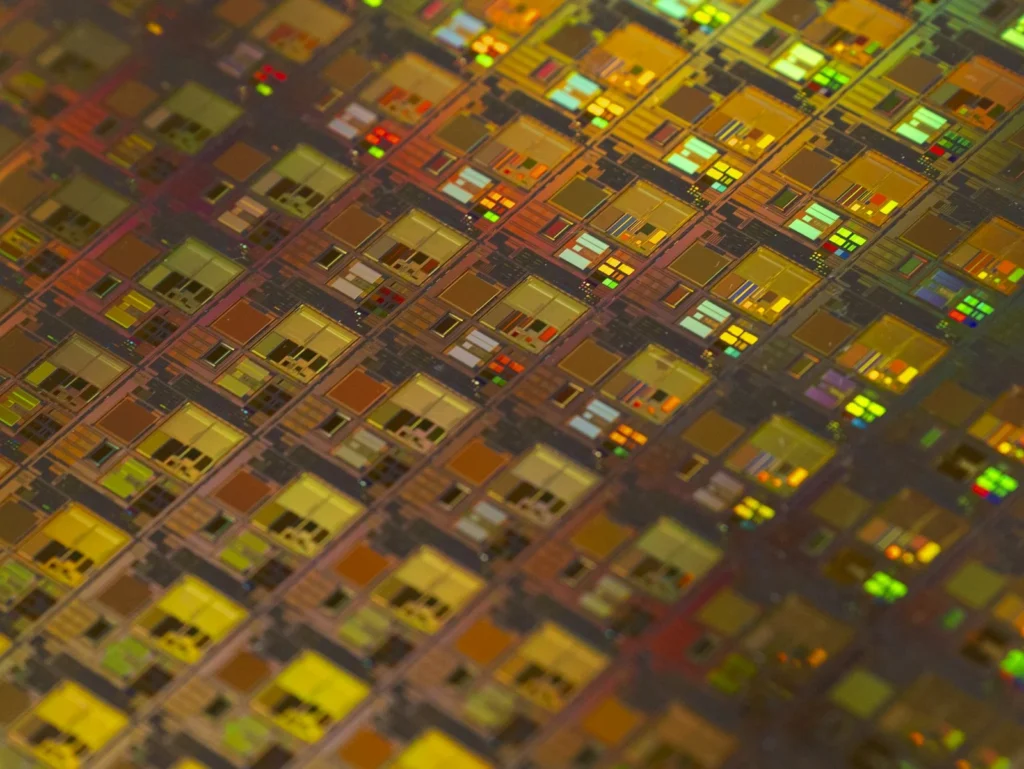
Elon Musk wants Tesla and SpaceX to stop depending on outside chipmakers. In March 2026 he unveiled TeraFab, a plan for a giant chip plant in Texas that would design, fabricate, package and test advanced AI chips in one place. Seven months later the project has a site, a first phase budget and Intel as a partner, but it has not produced a single commercial chip, and the biggest claims remain far ahead of anything built so far.
What Musk announced
Musk presented TeraFab during a livestream from the old Seaholm Power Plant in downtown Austin. His core argument was simple: the chips his companies can buy cover only about 2% of what he expects Tesla, SpaceX and its AI business to need, so they have to build their own supply. SpaceX absorbed xAI in February 2026, which is why AI training compute now sits on the SpaceX side of the deal.
The pitch that set TeraFab apart was vertical integration. Musk described one facility handling lithography masks, logic chips, memory, advanced packaging and testing, so engineers could make a chip, test it, change the design and run it again without shipping wafers between companies. He claimed that loop could make chip development dramatically faster.
Two families of chips were promised:
- Edge inference chips for Tesla vehicles, the Cybercab and Optimus humanoid robots.
- Radiation hardened chips for satellites and the orbital AI data centers SpaceX has been promoting.
Musk also said Tesla, SpaceX and xAI would keep buying from TSMC, Samsung and Micron, and wanted those suppliers to grow as fast as possible. The stated long term goal is more than one terawatt of AI compute per year.
The numbers, and how they have shifted
TeraFab’s figures have changed several times since March, which is one reason observers treat them with caution.
| Claim | What has been said |
|---|---|
| Headline cost at launch | About $25 billion (March 2026) |
| May filings | About $55 billion initially, up to $119 billion across all phases |
| Confirmed first phase | About $16.8 billion in Grimes County (August 2026) |
| Research fab output | A few thousand wafers per month, down from an early talk of 100,000 |
| Full scale ambition | Up to 1 million wafer starts per month and over 1 terawatt of compute per year |
| Site size and jobs | More than 100 million square feet at full build, at least 3,000 jobs in phase one |
Who is involved: Intel, Samsung and TSMC
Intel is the only outside chipmaker formally attached to TeraFab. It announced in early April 2026 that it had joined the project, saying its design, manufacturing and packaging experience would help reach the terawatt goal. On Tesla’s first quarter earnings call later that month, Musk said the full scale plant would use Intel’s 14A process, which he called state of the art but not yet finished. That matters for Intel, which had said it would only push 14A forward with a major outside customer.
Samsung is not a TeraFab partner, but it is a key Tesla supplier. Under a separate deal worth about $16.5 billion, Samsung is set to build Tesla’s AI6 chip at its plant in Taylor, Texas. TSMC also makes Tesla chips today. Neither company has announced a role inside TeraFab itself.
Timeline so far
- March 21, 2026: TeraFab announced in Austin.
- April 2026: Intel joins. Tesla breaks ground on an advanced research fab on the north side of its Giga Texas campus, meant for a few thousand wafers per month.
- May 2026: SpaceX filings describe TeraFab as a general framework with no binding commitments, no final split of intellectual property and no obligation for either company to stay in.
- June 2026: Grimes County approves tax abatements.
- August 6, 2026: Tesla and SpaceX confirm the Grimes County site on the former Gibbons Creek power plant land, about an hour northwest of Houston.
- Fall 2026: Site clearing is underway. State filings list a formal construction start of December 1, 2026 and completion by the end of 2028, while SpaceX points to limited operations near the end of 2027.
Why industry watchers are skeptical
Semiconductor analysts have generally welcomed the ambition while questioning the scale and speed. The common concerns:
- No fab experience. Tesla and SpaceX design chips but have never run a leading edge factory, which is among the hardest manufacturing jobs in the world.
- Unusual metrics. A terawatt of compute per year is not a standard industry benchmark, and the planned footprint would dwarf the largest existing fabs many times over.
- Soft commitments. The May filings made clear that key terms were still open.
- Track record. Musk timelines often slip, and several past Tesla product dates arrived years later than first promised.
Locally, some Grimes County residents have raised concerns about the project’s size and environmental impact. SpaceX says it will draw water from the existing reservoir rather than local groundwater and power the site with onsite natural gas generation and batteries.
FAQ
Is TeraFab making chips yet?
No. The research fab at Giga Texas is still being built out, and the main Grimes County plant is in early site work. No TeraFab chips had shipped as of October 2026.
Where is TeraFab being built?
A small research fab sits at Tesla’s Giga Texas campus near Austin. The large production plant is planned for Grimes County, Texas, between Houston and College Station.
Is TSMC part of TeraFab?
Not officially. TSMC and Samsung remain Tesla chip suppliers, but Intel is the only chipmaker that has announced it is part of the project.
How much will TeraFab cost?
The only firm number is the roughly $16.8 billion first phase. Earlier filings floated totals as high as $119 billion over several phases.
The verdict
TeraFab is real in the sense that land, money and a partner are lined up, but it is still a plan, not a factory. The research fab and Intel’s 14A progress will show whether Musk can turn a bold pitch into chips. Until then, treat the terawatt talk as a long range goal rather than a forecast.
Updated October 2026: rewritten to cover what TeraFab is, the Intel partnership, the Grimes County site, shifting budgets and the current construction timeline.
Featured photo: Maxence Pira on Unsplash.
About this article: GeekBlog covers U.S. technology news, AI, phones, smartwatches and gaming. Every story is written and checked under our Editorial Policy. Spotted a mistake or have a story tip? Contact our editors.
