

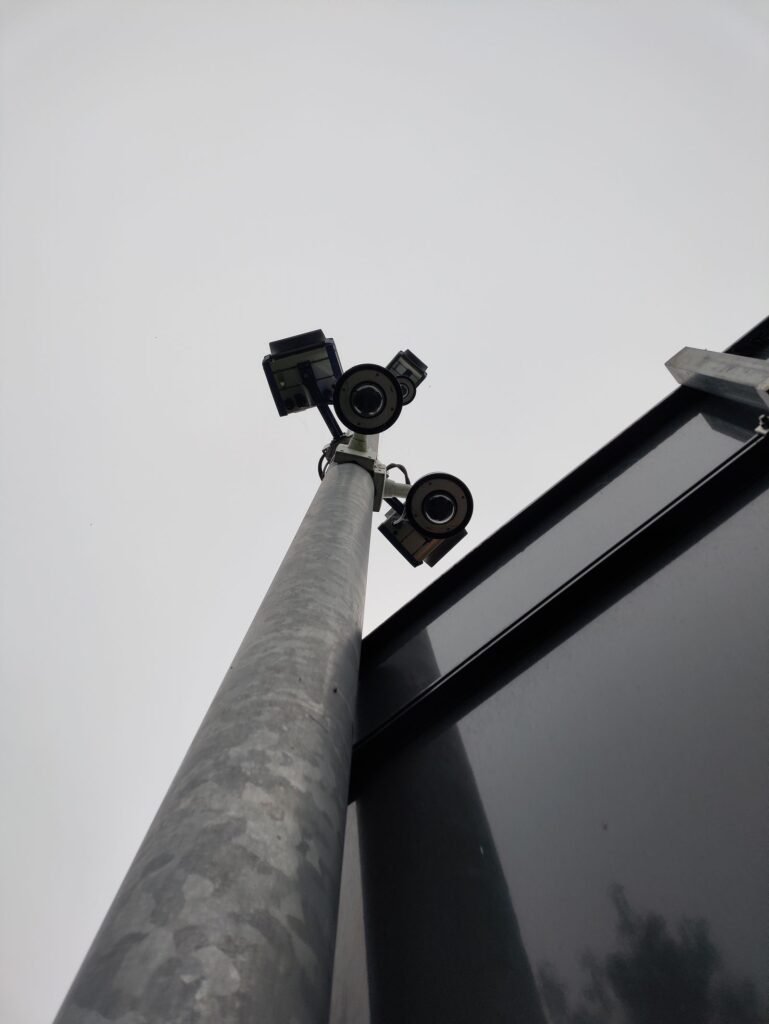
Between September 2024 and June 2026, a police officer in Haines City, Florida typed his estranged wife’s license plate into a camera network that blankets American roads. He did it 717 times. In one month alone, he did it 280 times, which works out to roughly nine searches a day, every day, for a woman who was not suspected of anything.
Every one of those searches required him to state a reason. He picked from the list: criminal motor vehicle offense, wanted person, drugs and narcotics, assault and battery, fleeing and eluding, theft, felony investigation. The system took the reason, logged it, and returned the location of her car.
Nobody noticed for 22 months. What finally ended it was not an audit. It was a reporter.
The case in numbers
- 717 searches of one license plate
- 280 of them in a single month
- 22 months between the first search and discovery
- 0 criminal investigations involving the vehicle
- 2 criminal charges filed against the officer
What happened
Christopher Anthony Goodson, 31, had been with the Haines City Police Department since March 2022. According to the arrest affidavit, he used the department’s access to Flock Safety’s automated license plate reader network to track his estranged wife’s vehicle across nearly two years.
His confession did not come from a supervisor catching an anomaly. It came after he received a text message telling him the Washington Post had contacted his wife and was preparing a story about his use of the database. Only then did he go to a supervisor, initially claiming he had been checking on the location of his children while they were in her care.
The investigation did not support that. Authorities said the woman was not part of any criminal investigation, and her vehicle was not connected to any crime that would justify a single search, let alone 717. Goodson was arrested on August 11 and charged with one count of offenses against users of computers, computer systems, computer networks and electronic devices, and one count of official misconduct. He was placed on administrative leave and has indicated he intends to resign.
Haines City Police Chief Isaac Jackson called it “an unfortunate incident” and said the department “does not tolerate the misuse, unauthorized access, or personal use of any investigative databases or law-enforcement information systems.” The department has since introduced quarterly reviews of database activity.
The audit trail worked perfectly. That is the problem.
It is tempting to read this as a story about a broken system. It is not. Every search Goodson ran was logged. The reason he gave was recorded. The timestamp, the plate, the result, all of it captured and stored exactly as designed.
The design just never asked whether the reason was true.
A justification field with no verification is not an access control. It is a formality. It creates a record that looks like accountability and functions like a signature on a visitor log, useful for reconstructing what happened after somebody already got hurt, useless for stopping it.
The thing that should have raised a flag was not any single search. It was the pattern. One plate, 280 times, in 31 days, by one officer. That is a query any half decent anomaly detection system would surface in an afternoon. It ran for nearly two years instead.
This is not the first time, and everyone involved knows it
Police database misuse has been documented for a decade. An Associated Press investigation published in 2016 examined records from state agencies and big city departments and found officers had been fired, suspended or forced to resign more than 325 times between 2013 and 2015 for misusing confidential databases, with reprimands or lesser discipline in more than 250 additional cases.
The cases in that reporting are the same shape as this one. An Ohio officer who pleaded guilty to stalking an ex-girlfriend after looking her up. A Michigan officer who pulled home addresses of women he found attractive. Two Miami-Dade officers who ran checks on a journalist who had reported unfavorably on their department.
The AP also found something more damning than any individual case: no agency tracks how often this happens nationally, and record keeping is inconsistent enough that the real number is unknowable.
Why ALPR changes the math
Older database abuse meant pulling a home address or a criminal record. A license plate reader network returns something different: a movement history. Where the car was, when, and how often. It answers the question a stalker actually wants answered, which is not who someone is but where they are right now.
The scale is the story
Flock’s network has grown to cover a large share of American roads, much of it installed by individual towns without much public debate. That expansion is now running into organized resistance, and this month a crowdsourced project put the whole thing on the record. We covered it when somebody mapped every Flock camera in America and cities started voting them out.
Residents in a growing number of places have noticed that the cameras marketed as license plate readers are increasingly aimed away from roads, toward parks, pools and playgrounds. In one New York town the fight over installation is currently splitting the city council and the mayor.
The technical capability is also moving. Plate readers have started collecting more than plates, a shift we looked at when reporting on readers that fingerprint the phone in your car rather than just the car. Each expansion of what the sensor captures expands what one misconfigured or malicious login can retrieve.
The uncomfortable general rule
Every surveillance system ever built has been used by an insider against someone they knew. Not occasionally. Structurally. The technology creates a capability, the capability is granted to thousands of people, and some fraction of those people have a personal life that intersects badly with it.
That is not an argument that ALPR systems should not exist. It is an argument that the question “does this help solve crimes” is the wrong one to build policy on, because it is not the question that determines the harm. The right question is what happens on the day somebody uses it wrong, and the honest answer in Haines City was: nothing, for 22 months, until a newspaper called.
It is the same pattern that shows up everywhere data outlives its stated purpose, including in the advice that women in 13 states have been getting about deleting their period tracking apps. Deleting the app is not enough, because the record is not in the app. The record is in the system, and the system keeps it.
What would actually help
- Require a case number. A justification tied to an open case is checkable. A dropdown selection is not.
- Alert on repeat queries. One plate searched more than a handful of times by one officer in one month should page a supervisor automatically.
- Notify the searched. Some jurisdictions already require notice when a citizen’s records were accessed without cause. It turns silent abuse into a discoverable event.
- Publish the audits. Quarterly reviews that exist only inside a department are quarterly reviews nobody outside it can verify.
Haines City added the quarterly review after this became public. That is better than nothing and it is also the point: the control that could have caught 717 searches was available the entire time, and it was installed only once a reporter forced the issue.
The cameras are still up. So is the same dropdown menu, in a lot of other departments.
About this article: GeekBlog covers U.S. technology news, AI, phones, smartwatches and gaming. Every story is written and checked under our Editorial Policy. Spotted a mistake or have a story tip? Contact our editors.
