

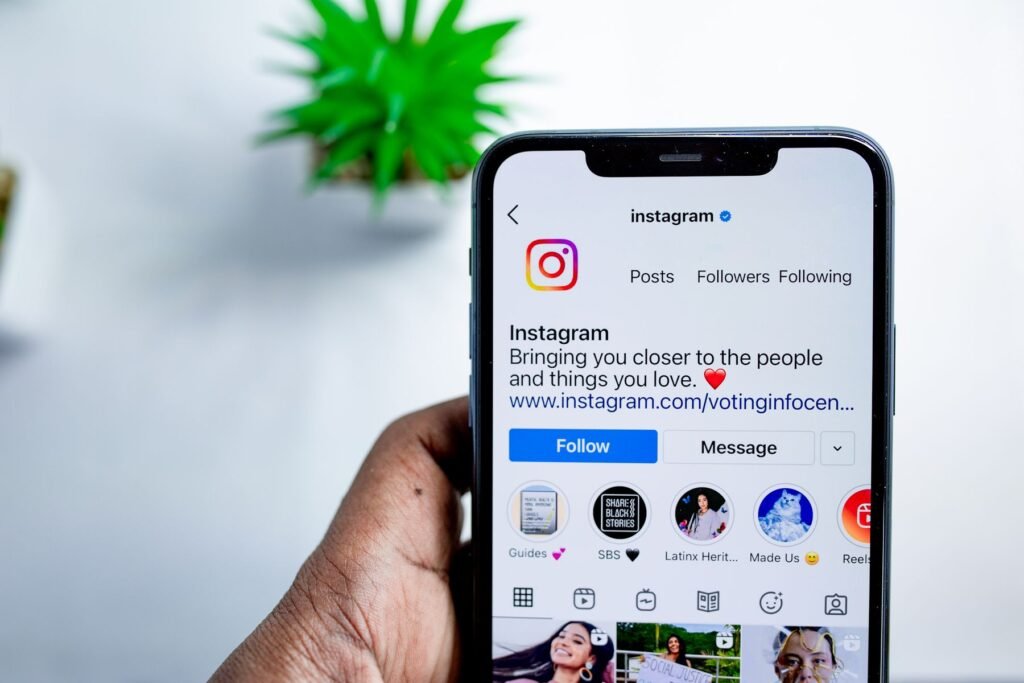
For most of Instagram’s life, the platform has treated a hyperlink like contraband. You could not put one in a caption. You could not put one in a comment. What you could do was type the three most tired words in social media, “link in bio,” and hope somebody cared enough to tap your profile, find the URL, and tap again.
That ritual may be ending. Instagram has been quietly testing clickable links inside post captions, and the people finding it are posting screenshots in disbelief.
The short version
- What changed: clickable external links can now appear inside post captions, not just in your bio
- Who has it: a small group of Meta Verified subscribers on personal and creator accounts
- The cap: an in-app message told one tester she could add up to 10 links per month
- Who is excluded: professional business accounts, which is to say most brands and publishers
- The cost: Meta Verified starts at $11.99 a month on the web and $14.99 in the app
- Status: still a test. Meta has not committed to a wider rollout.
How people found out
The feature surfaced the way most Instagram features surface, which is by accident. Blogger Andrea Valeria posted about it on Threads: “OMG, Instagram finally gave us the option to add a link in the caption.” She followed up with the part that matters. “Look, here it is. It’s the first time I see it and use the feature. Apparently, you can only do it 10 times in one month, according to the message I got when I did it.”
Meta later confirmed to Engadget that it is testing links in captions for Meta Verified subscribers. The company has not said how many accounts are in the test, when it started for any given user, or whether it ever leaves testing.
Over on Reddit, the discovery played out as pure confusion. “Just found a clickable external link in a reel caption. HOW? I always thought this wasn’t possible at all,” one user wrote. “I’m trying to guess how this creator did it, but so far haven’t found the answer.” The answer came from a reply: you need Meta Verified. The original poster’s response was the honest one. “Can’t wait to pay 50 bucks per month to add 2 links.”
Who actually gets it
This is where the excitement runs into the fine print. The test is not open to everyone with a subscription, and the account type you run decides whether you are even eligible.
| Account type | In the test? | Notes |
|---|---|---|
| Personal, Meta Verified | Some | Reported by testers, not universal |
| Professional “creator”, Meta Verified | Some | The main group where the feature has appeared |
| Professional “business” | No | Excluded for now, including publishers and brands |
| Any account without Meta Verified | No | Still stuck with link in bio |
That business account exclusion is strange on its face. Brands are the accounts with the most obvious reason to want a clickable link, and they are the ones with budget. Excluding them looks less like an oversight and more like a deliberate choice to keep commercial link traffic inside the ads system, where Meta gets paid per click rather than per subscription.
What it costs
Meta Verified is not one price, it is a ladder. The entry tier is cheap enough to be an impulse purchase, and it climbs fast from there.
| Tier | Monthly price (US) | Who it is for |
|---|---|---|
| Standard, web | $11.99 | Cheapest way in, billed through the browser |
| Standard, in app | $14.99 | Same product, plus the app store’s cut |
| Plus | $49.99 | The “50 bucks” tier people keep quoting |
| Premium | $149.99 | Full time creators |
| Max | $499.99 | Agencies and large accounts |
Buy Standard on the web instead of inside the app and you save $36 a year for an identical product. That gap exists because Apple and Google take a commission on in-app purchases, and Meta passes it straight through.
Where Instagram lets you put a link, ranked by pain
Why Instagram held the line for so long
The standard explanation is spam, and there is truth in it. Open link fields in a feed with two billion users is an invitation to phishing, affiliate junk and scam funnels, and moderating that at scale is genuinely hard.
The less flattering explanation is attention. Every clickable link in a caption is a door out of the app. Instagram’s entire economic model depends on you not walking through that door unless somebody paid for the privilege. A link sticker in a Story disappears in 24 hours. A link in a permanent, algorithmically distributed post does not.
Metering the feature at roughly 10 links a month is the tell. That is not a spam control, or at least not only a spam control. Ten is a number chosen to make links feel scarce enough that you spend them on the post that matters, which keeps the outbound click rate for the feed as a whole close to where it is now.
Do not cancel your link-in-bio tool yet
Ten links a month is roughly one every three days. If you post daily, most of your posts still cannot carry a link, and the tools that host a menu of links still do a job that a single caption URL cannot. Treat this as a supplement, not a replacement, until Meta says otherwise.
What it does to the link-in-bio economy
An entire product category exists because of a limitation Instagram invented. Link aggregator services built real businesses on the premise that you get exactly one clickable URL and therefore need a landing page to fan it out. If captions become linkable for everyone, that premise gets a lot weaker.
Only it probably will not, at least not soon. A hard monthly cap, a subscription gate and a business account exclusion together mean the aggregators keep their core audience: everybody who is not paying Meta. What they lose is the top of the market, the professional creators who were their best advertisement.
This is the same pattern Instagram has run before. The platform absorbs a third party tool’s core function, ships it as a subscriber perk, and lets the ecosystem sort itself out. It happened with scheduling, with analytics, and it is happening again here.
The context nobody should skip
The caption test is landing in the middle of a busy stretch for the app. Instagram swapped its cursive wordmark for the first time in a decade, a change that generated more genuine debate than most product launches, and Meta has been steadily converting features that used to be free into reasons to subscribe.
Meanwhile the company’s other text app has had links from day one. If you have been posting on Threads, you already know how normal a clickable URL feels in a social feed, and how strange Instagram’s ban looks by comparison.
What to watch next
- Whether the cap moves. Ten a month is a test number. If it rises, Meta has decided outbound clicks are worth more than it thought.
- Whether business accounts get in. Their exclusion is the clearest signal that this is about ad revenue, not spam.
- Whether links get demoted. Platforms have a long history of quietly reducing reach on posts that send people away. Watch your own numbers before and after.
- Whether it survives at all. Instagram has killed tests this far along before, and Meta has committed to nothing.
For now, the honest read is that “link in bio” is not dead. It just got a paid alternative, rationed at 10 a month, for a small group of people who were already paying Meta every month for a blue check.
About this article: GeekBlog covers U.S. technology news, AI, phones, smartwatches and gaming. Every story is written and checked under our Editorial Policy. Spotted a mistake or have a story tip? Contact our editors.
