

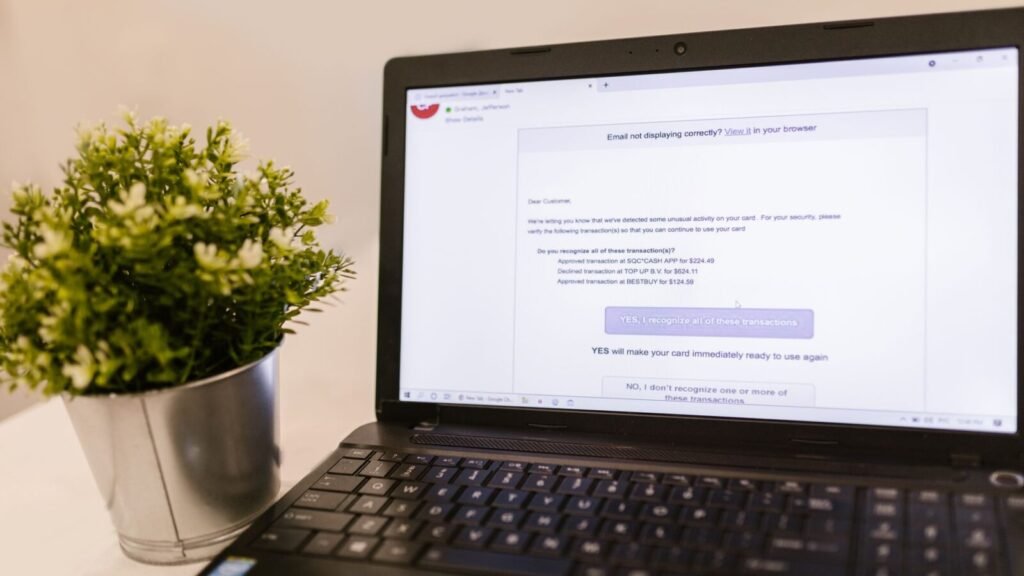
Two weeks after millions of people lost their email for most of a day, Microsoft has admitted internally just how bad it was. According to memos seen by Reuters, the company has declared a “Code Red” over the November 12 to 13 outage that knocked out Outlook and dragged down Teams, Copilot, SharePoint and OneDrive around the world.
The memos, first covered by UNILAD Tech after the Reuters report, paint a picture of engineers flying half blind, a bridge call with a thousand people on it, and a patching system so slow that one urgent fix needed nearly a week to reach every server.
The short version
- M365 Core President Jason Henderson called it the most customer impacting incident in Exchange Online’s history.
- The cause was a latent bug from a July update that overloaded Microsoft 365 network gateway servers.
- Microsoft says it was not a cyberattack and not caused by AI agents.
- The new goal is to go from detection to worldwide fix in one hour. A recent urgent fix took five to six days.
- Five workstreams will focus on load shedding, regional traffic splitting and faster recovery.
What “Code Red” means inside Microsoft
Henderson didn’t mince words in his staff memo. “Code Red means that this is the highest priority work for our team,” he wrote. In practice, that means the people who run Microsoft 365 are now in daily meetings about resilience, with weekly reviews on top, and other projects take a back seat.
The phrase has a history in tech. Google famously called a code red in December 2022 after ChatGPT launched, and OpenAI’s Sam Altman reportedly used the same term last year to rally staff against Google’s Gemini. Those were about competition. Microsoft’s version is about something more basic. Its biggest product stopped working, and its own leaders say they weren’t ready.
“Unfortunately, all the work we have done over the years was not sufficient to protect us on Thursday,” Henderson wrote.
What actually broke
Microsoft has traced the problem to a defect that sat quietly in its systems for months. A Windows update rolled out in July introduced a bug that, under the right conditions, caused lock contention on the network gateway servers that route Microsoft 365 traffic. When it finally triggered, those servers burned through their CPU and memory. Exchange Online was supposed to fail over to backup gateways. It didn’t.
The result was a slow motion collapse. Outlook took the hardest hit, while Teams chats and calls mostly held up but calendars and scheduling broke. Copilot, SharePoint and OneDrive all saw major disruptions. We covered Microsoft’s first explanation, and the service credits businesses can claim, in our breakdown of why the day long Outlook outage happened.
The outage by the numbers
Figures from Reuters, Microsoft and Downdetector.
~24 hrs
Main impact window
~130,000
Peak Downdetector reports
74
Countries reporting problems
1,000
People on the bridge call at peak
11,000+
Messages across 11 Teams chats
July
When the bug first shipped
The “fog of war” inside the war room
The most revealing memo came from Amanda Silver, the corporate vice president who oversees M365 Core and Work IQ. She described engineers working through a “fog of war,” with more than 11,000 messages flying across 11 separate Teams chats while a bridge call swelled to around 1,000 participants.
The bigger problem was information. Diagnostic data was “scattered across fragmented internal tracking systems,” which meant teams struggled to build a single picture of what was failing and where. If you’ve ever been in a group chat where nobody knows who’s handling what, imagine that at the scale of a company serving hundreds of millions of users.
Charles Lamanna, Microsoft’s executive vice president for Copilot, Agents and Platform, put it even more bluntly in a Code Red review. He said the incident amounted to “roughly ten years’ worth of acceptable failures” in one go.
Six days vs. one hour
The line that should worry IT departments most is about speed. In an earlier memo, Henderson said urgent patches to M365 Core services take too long to roll out globally. “In a separate recent incident, an urgent production fix took five to six days to reach worldwide saturation,” he wrote. “For our most urgent security issues, we need to get from detection to safe worldwide deployment in an hour. Needless to say, we aren’t here yet.”
Time to push an urgent fix worldwide
Hours, based on Henderson’s memo.
Getting from almost a week to an hour isn’t a tweak. It means rebuilding how code moves through Microsoft’s global fleet, with far more automation and far better ways to stop a bad change before it spreads.
The recovery plan
Silver’s memo lays out five workstreams. Reuters named three of them directly: load shedding, geographic traffic partitioning and faster recovery. The memos also describe the one hour target and new AI tooling.
| Focus | What it means in plain English |
|---|---|
| Load shedding | Drop low priority traffic on purpose so core email keeps running |
| Geographic traffic partitioning | Keep a failure in one region from spilling into others |
| Faster recovery | Shorter time from “it’s broken” to “it’s back” |
| One hour fixes | Ship urgent patches worldwide in about an hour |
| AI helpers for engineers | AI agents to sift diagnostics so humans can decide faster |
That last point is a little ironic. Microsoft was quick to say AI agents didn’t cause this outage, and now it plans to use them to help fix the next one. Given how scattered the diagnostic data was, a tool that pulls signals together in one place could genuinely help, as long as people stay in charge of the big calls.
Why it hit so many people
Governments in Australia, Japan and the United States were affected. Trading firms reported delays, and airline communications were disrupted. Microsoft’s infrastructure also sits underneath partners like OpenAI and Anthropic, so the ripple effects reached well past email. In one strange case in Germany, the outage even hid a chlorine alarm at a theme park hotel.
Quick math on Microsoft’s own promise
Microsoft 365’s business SLA promises 99.9% uptime, which allows roughly 43 minutes of downtime a month. A 24 hour outage in a 30 day month drops uptime to about 96.7%. That’s below the 99% threshold, which is why affected business customers can claim a 50% service credit for the month.
What this means for you
If you’re a regular Outlook user, nothing changes overnight. But this is a good moment to think about how much of your day depends on a single provider. Keep a second way to reach your team, like a phone number list or a backup chat app, and make sure anything urgent isn’t buried in an inbox you can’t open.
For IT teams, the memos are a rare look behind the curtain. Microsoft is openly admitting that its incident tooling was fragmented and its patch pipeline was slow. A company spokesperson told Reuters that “our work doesn’t end when service is restored.” The real test is whether the next outage, and there will be one, ends in an hour instead of a day.
About this article: GeekBlog covers U.S. technology news, AI, phones, smartwatches and gaming. Every story is written and checked under our Editorial Policy. Spotted a mistake or have a story tip? Contact our editors.
