

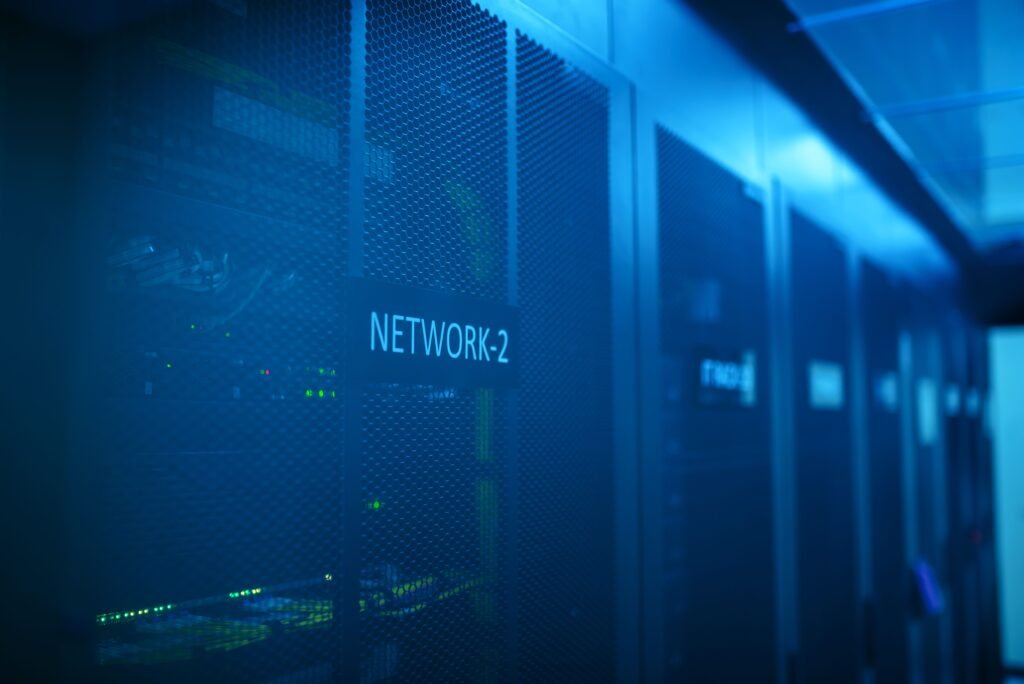
Eight of the biggest names in American telecommunications just did something they have never done before: they agreed to share their cybersecurity secrets with each other. AT&T, Charter Communications, Comcast, Cox, Lumen Technologies, T-Mobile, Verizon, and Zayo have formed a new alliance called the Communications Cybersecurity Information Sharing and Analysis Center, or C2 ISAC, built to trade real-time threat intelligence and coordinate defenses across an industry that has spent the last two years absorbing one of the worst espionage campaigns in its history.
For an industry built on fierce competition for your phone and internet bill, this level of cooperation is unusual. It also tells you how seriously carriers are taking the threats aimed at the networks that carry nearly every call, text, and data packet in the country.
Why Carriers Suddenly Need Each Other
The alliance did not come together in a vacuum. It is a direct response to Salt Typhoon, the Chinese state-sponsored hacking campaign that infiltrated at least nine major U.S. telecom and internet providers, reportedly including Verizon, AT&T, T-Mobile, Charter’s Spectrum network, Lumen, Consolidated Communications, and Windstream. According to congressional briefings and reporting that followed, the hackers first gained a foothold as far back as 2021 and in some cases kept quiet access to carrier systems for years before anyone noticed.
What made Salt Typhoon especially alarming was where the attackers ended up: inside the CALEA systems that carriers are legally required to maintain for law enforcement wiretaps. Investigators say the hackers used that access to pull detailed call records, timestamps, and phone numbers tied to more than a million people in the Washington, D.C. area alone, along with real-time call and text content belonging to a much smaller group of senior government officials and political figures. Most of the ordinary customers whose metadata was swept up have still not been individually notified, which is part of why this story keeps resurfacing in the news even months later.
How C2 ISAC Is Different From What Came Before
Information Sharing and Analysis Centers are not a new idea. Banks have had one for decades through FS-ISAC, and hospitals rely on Health-ISAC to track threats aimed at patient data. Telecom, strangely, never had an equivalent hub built specifically for it, despite running infrastructure that every other sector depends on.
C2 ISAC is meant to fill that gap, and its founders built it with one notable design choice: government agencies are kept out of the internal discussion channels. That might sound counterintuitive for a group formed partly in response to a nation-state hack, but the logic is straightforward. Carriers have historically been cautious about sharing early, unconfirmed details of a breach with federal regulators, worried that information could trigger investigations, public disclosure requirements, or reputational fallout before the full picture is even known. By keeping the day-to-day intelligence sharing private and member-only, organizers are betting that engineers and security teams will speak up sooner, comparing notes on suspicious activity while it is still happening rather than after lawyers get involved.
Valerie Moon, a former CISA and FBI official who now serves as executive director of the Institute for Critical Infrastructure Technology, has been named to lead the new organization. Her background in both government cybersecurity response and infrastructure policy is likely meant to reassure skeptics that the group will still coordinate with federal agencies where it matters, even if the daily threat chatter stays inside the club.
What This Actually Changes
The pitch from C2 ISAC’s founding members is simple: no single carrier can see the whole picture on its own. A phishing kit targeting Verizon customers today might hit T-Mobile subscribers next week. A vulnerability quietly probed on Lumen’s network could be the early warning sign of an attack aimed at Comcast. By pooling indicators of compromise, malware signatures, and attacker tactics in something close to real time, member companies hope to spot the next Salt Typhoon-style intrusion in weeks rather than years.
Whether that promise holds up will depend on execution. Information-sharing groups only work if members actually contribute, and past ISACs in other industries have occasionally struggled with participants who take more than they give. Eight of the largest carriers in the country signing on at launch is a strong start, and it also raises an obvious question: will smaller regional carriers and rural providers, who lack the security budgets of a Verizon or AT&T, eventually get a seat at the table too? Right now, C2 ISAC has not detailed a broader membership pipeline, but the pressure to widen participation will likely grow as smaller networks become the path of least resistance for attackers locked out of the majors.
What It Means for You
None of this happens in a vacuum for regular customers either. Telecom breaches translate directly into personal risk, since your phone number is often the thread that ties together your email, your bank login, and your two-factor authentication. It is one of the reasons device and account takeovers have overtaken traditional phone scams as the leading cause of identity theft, according to recent industry data. When attackers get their hands on call records or, worse, intercept an SMS verification code through a compromised carrier system, the damage rarely stays contained to a single account.
A stronger, faster-sharing telecom industry should, in theory, mean fewer incidents like Salt Typhoon slipping through undetected for years. But it is worth remembering that even the best industry alliance cannot undo a breach that already happened. If you want to check whether your own information has already been swept up in a prior leak, tools built to track and clean up exposed personal data are worth a look, and pairing that with an authenticator app instead of SMS codes closes off one of the easiest paths attackers use once they have carrier-level access.
If you are looking for a broader refresher on protecting yourself before the next headline-grabbing breach lands, our guide to cybersecurity basics for beginners walks through the handful of habits, like unique passwords and app-based two-factor authentication, that blunt the impact of almost any breach, telecom or otherwise.
The Bigger Picture
C2 ISAC will not be judged by its launch announcement. It will be judged the next time a state-sponsored group, a ransomware crew, or an opportunistic criminal outfit probes a carrier’s network and either gets caught fast because eight companies were comparing notes, or gets away with it for years because the sharing never happened the way it was supposed to. Given how central telecom infrastructure is to everything else online, from banking apps to smart home devices to the two-factor codes protecting your accounts, this is one industry alliance worth actually rooting for.
About this article: GeekBlog covers U.S. technology news, AI, phones, smartwatches and gaming. Every story is written and checked under our Editorial Policy. Spotted a mistake or have a story tip? Contact our editors.
