

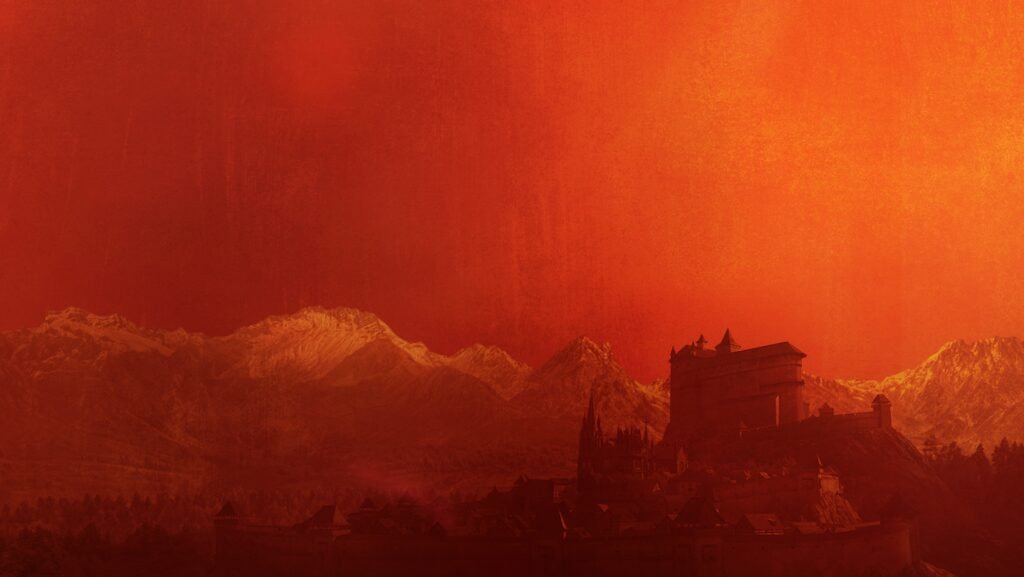
The short version: The Blood of Dawnwalker is very good, and in places it is genuinely special. Rebel Wolves, the studio built by the people who directed, wrote and art directed The Witcher 3: Wild Hunt, has shipped a debut that sits at 85 on OpenCritic with 93 percent of critics recommending it, and 83 on Metacritic. It earns that with a brutal 14th century vampire story, a time system that finally makes an open world feel urgent, and writing that carries the same weight the Witcher games did. It loses points for combat that runs out of ideas and a valley that is prettier than it is busy.
Quick answer
Yes, buy it, especially if you loved The Witcher 3. The Blood of Dawnwalker launched September 3, 2026 on PS5, Xbox Series X|S and PC at $69.99. Expect roughly 40 hours for a focused run, a 30 day story clock that forces you to skip content, and combat that is the weakest part of an otherwise excellent RPG.
This is the first chapter of a planned saga, built in Unreal Engine 5 by a studio that did not exist four years ago. That context matters, because the things Dawnwalker does badly are the things debut studios usually do badly, and the things it does well are the things almost nobody else is even attempting.
Yes, these really are the Witcher 3 people
Rebel Wolves is not a studio borrowing the Witcher comparison for marketing. It was founded in February 2022 by Konrad Tomaszkiewicz, who directed The Witcher 3: Wild Hunt and later ran production on Cyberpunk 2077 before leaving CD Projekt in 2021. He brought the band with him.
Konrad Tomaszkiewicz
Studio head. Director of The Witcher 3, head of production on Cyberpunk 2077.
Mateusz Tomaszkiewicz
Creative director. Lead quest designer on The Witcher 3.
Jakub Szamalek
Writing. Senior writer on The Witcher 3 and Cyberpunk 2077, and a published novelist.
Bartlomiej Gawel
Art direction. Art director on The Witcher 3.
By April 2026 the studio had grown to roughly 160 people, and Bandai Namco is publishing. You can feel that lineage inside five minutes of play: the muddy villages, the peasants who talk like people rather than quest dispensers, the sense that every settlement had a bad year before you arrived. If the phrase “similar vibe to The Witcher” is what you came here for, the answer is that it is not just a vibe, it is the same creative leadership working in the same register.
Vale Sangora, Coen, and a 30 day deadline
It is 14th century Europe. Wars have gutted the continent and the Black Death is finishing the job, and in that moment of weakness the vampires stop hiding. In the Carpathians, an ancient vampire named Brencis takes a valley called Vale Sangora and rules it through a blood tax, a literal quota of human blood paid by the living.
You play Coen, a young man caught halfway through the change. A Dawnwalker is not a vampire and not a human: sunlight does not kill him, but the curse is spreading and silver poisoning is eating him from the inside. His sister Lunka is dying. You have 30 days and 30 nights to save your family before Brencis makes the point moot.
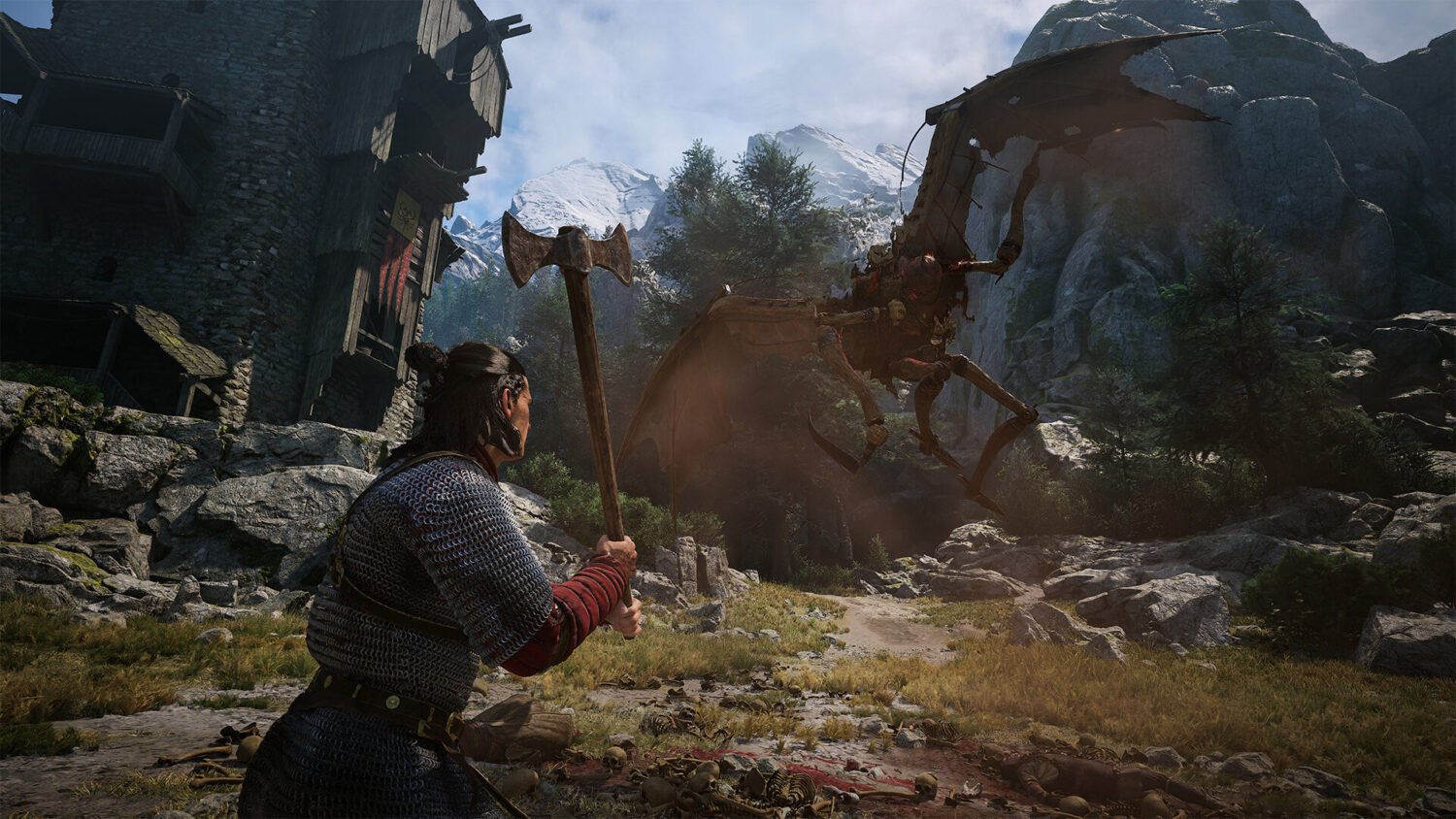
That deadline is the whole design. Rebel Wolves calls the game a narrative sandbox, and what that means in practice is that there is no fixed main quest to grind through. There are more things to do than there is time to do them, and the story you finish is defined by what you chose to leave undone.
How the 30 day clock actually works
This is the part worth understanding before you buy, because it is unusual and it is the reason critics keep calling the game brave.
Time is a resource you spend, not a timer that runs. Wandering the valley costs nothing. Travelling, eavesdropping, reading, scouting a fortress, talking to a blacksmith about rumours: all free. The sun only moves when you commit to an action that moves the plot, and the game tells you the cost before you agree to it. Each day between dawn and dusk is divided into eight blocks, and quests consume blocks.
Your entire budget: 30 days, 30 nights
Each day splits into eight blocks. Spent blocks are gone for good, and the valley keeps changing whether you were there or not.
| Costs you nothing | Burns the clock |
|---|---|
| Exploring, climbing, fast travel | Resolving a quest, in any of its endings |
| Listening in on conversations | Helping a villager with a personal problem |
| Scouting a location before you commit | Confronting a named character |
| Gathering rumours and evidence | Story beats that advance the Brencis plot |
Tip: resist the urge to play this like a checklist. Scouting is free, so walk the whole valley and gather information before you spend a single block. Players who plan the first week carefully end up seeing more of the story, not less.
The result is an open world that never once asks you to clear icons for the sake of it, and that is a genuinely new feeling. It is also the source of the game’s most honest criticism, which we will get to.
Day and night are two different games
Coen’s curse gives him a split identity, and the game builds a full mechanical loop around each half.
DAY: the human
Sunlight does not burn a Dawnwalker, so days are for people. You talk, bargain, investigate, lie and pick sides. Combat is a sword in your hands, with directional attacks, blocks and parries in the vein of Kingdom Come: Deliverance. Most quests can be finished here without anyone dying.
NIGHT: the monster
After dark the vampire takes over. Shadowstep teleports, wall climbing, claws, a bite that drains life and refills your power, plus hexes charged in combat. Night favours stealth and violence, and it opens routes into places that are sealed to a man with a sword.
Three skill trees sit underneath all of it, mixing active abilities with passive bonuses, so a stealth focused Coen and a swordsman Coen genuinely play differently. The clever part is that day and night are not just a lighting change: the same quest can be solved by charming a guard captain at noon or by peeling him off a wall at 3am, and the valley remembers which one you chose.
The writing is the reason to play it
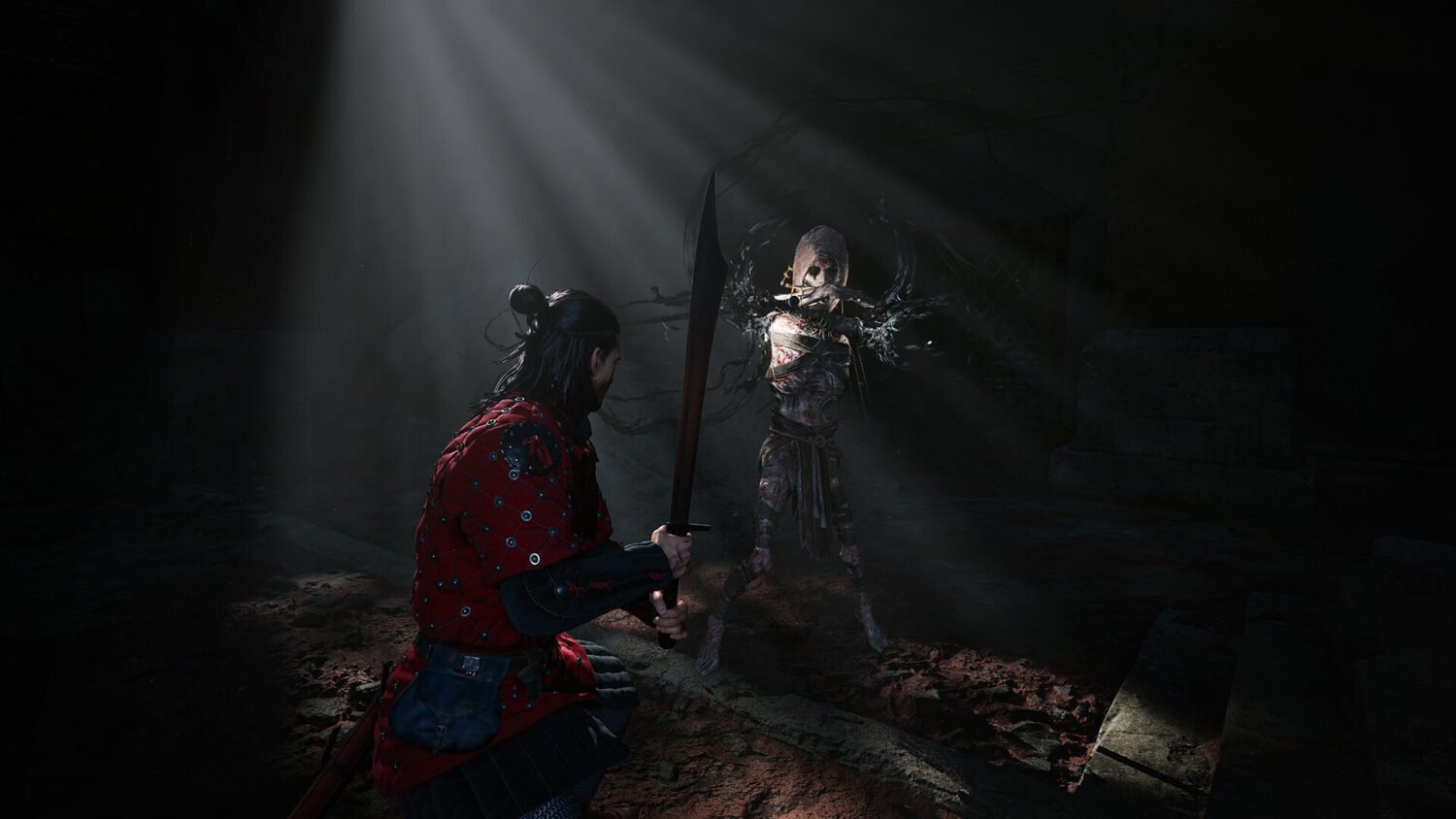
Every reviewer landed on the same thing, and so did we: this is a story game first. The quests are morally filthy in the Witcher tradition, where the good option usually costs somebody something, and the game refuses to reward you for being nice. Choices land with real weight because the clock means you cannot go back and fix the thing you skipped.
The valley itself is written like a place under occupation rather than a fantasy theme park. The blood tax is administered by humans who collaborate, and some of the sharpest material in the game is about them rather than about vampires. Bandai Namco also had Polish UFC champion Jan Blachowicz do motion capture for the antagonist Bakir, which sounds like a gimmick and reads on screen as a genuinely intimidating physical performance.
IGN called it an “impressive, bloody cocktail of interesting ideas” with strongly written characters, and gave it 9 out of 10. GameSpot, at 8, called it an “incredibly ambitious, deeply interesting first game from Rebel Wolves.” Even the outlets that disliked the combat spent their word count praising the script.
Where it falls short
Be clear about this before you spend $69.99. The complaints are consistent across reviews and they are all about systems, not story.
Know before you buy
Combat is repetitive, enemy variety is thin, the valley is quiet between landmarks, and the base PS5 had frame rate dips at launch. None of that is fatal, but if swordplay is the reason you buy an RPG, this is not the one.
Combat runs out of ideas. The directional system feels good on contact, but it never evolves. Push Square, the harshest mainstream review at 7 out of 10, points out that you fight the same four or five enemy types across a 40 hour game, and that the difficulty curve swings from enemies as damage sponges to enemies as furniture once your multipliers stack.
The world is bigger than its contents. Several reviewers describe long stretches of nothing between locations, plus a few familiar open world habits (climbable towers, map icons) that sit awkwardly next to a design that otherwise rejects busywork.
The clock is gentler than it sounds. PC Gamer’s argument is the interesting one: the pressure is partly illusory, because a focused player can finish most of what matters well before day 30. The system is brilliant, but the game blinks slightly rather than fully committing to its own idea.
Launch performance is uneven. On PS5 Pro it holds up at 30fps in quality mode and 40fps in balanced, but the base PS5 drops more often, particularly in the city. A day one patch adding a 60fps performance mode was promised. If you have had enough of buying games that need a month of patches, our piece on how expectation management has gone sideways for GTA 6 will feel familiar.
What the critics said
Scores as of September 3, 2026, launch day. The spread is wide, which usually signals a game with strong opinions rather than a mediocre one.
85
OpenCritic, 95 reviews
83
Metacritic, 59 reviews
93%
of critics recommend it
| Outlet | Score | The gist |
|---|---|---|
| IGN | 9 / 10 | Great ideas, great characters |
| GamingBible | 9 / 10 | Calls it a game of the year contender |
| GameSpot | 8 / 10 | Ambitious and deeply interesting debut |
| Eurogamer | 4 / 5 | Familiar dark fantasy, bold ideas |
| PC Gamer | 83 / 100 | Miserable in the best way, clock too soft |
| Push Square | 7 / 10 | Toothless combat holds it back |
| Hobby Consolas | 72 / 100 | Scope should have been better measured |
Full aggregates are on OpenCritic and Metacritic, and both are still moving as more reviews land.
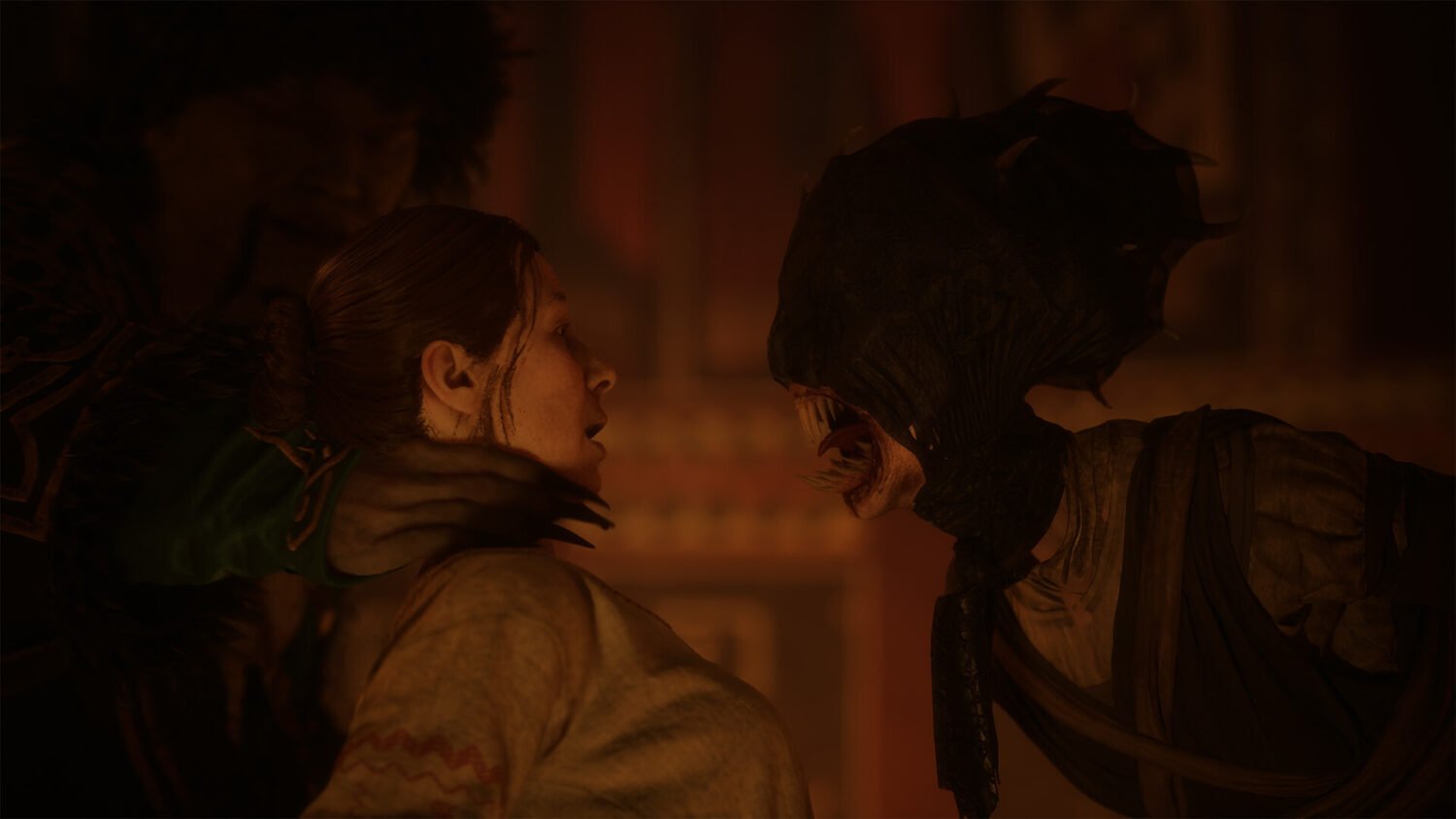
Should you buy The Blood of Dawnwalker?
Buy it now if
The Witcher 3 is your favourite RPG and you want that writing again
You are tired of open worlds that are checklists with trees
You replay RPGs and want choices that actually branch
You play on PC or PS5 Pro
Wait for a patch or a sale if
You buy action RPGs for the combat depth
You are a completionist who hates missing content
You are on a base PS5 and want 60fps confirmed first
You would rather see the sequel that fixes the fighting
Our position: at 8.5 out of 10 this is an easy recommendation for anyone who plays RPGs for the story, and a cautious one for anyone who plays them for the fighting. It is also worth remembering that this is chapter one of a saga, so the combat has room to grow the way most first entries do. If you are buying digitally, it is worth reading what Sony’s terms actually say about owning digital games before you click purchase.
Price, editions and platforms
| Release date | September 3, 2026 |
| Platforms | PS5, Xbox Series X|S, PC (Steam and GOG), GeForce NOW |
| Standard edition | $69.99 |
| Eclipse edition | $79.99, adds a digital compendium, the soundtrack and a comic |
| Collector’s edition | Limited run with physical extras including a map and a figure |
| Length | About 40 hours focused, 50 to 70 hours if you chase side content |
| Multiplayer | None. Single player only |
PC system requirements
| Minimum | Recommended | |
|---|---|---|
| CPU | Core i5 11400F or Ryzen 7 2700X | Core i7 11700K or Ryzen 7 5700X |
| GPU | GTX 1060 or RX 580 | RTX 4060, RX 7600 XT or Arc B580 |
| RAM | 16 GB | 16 GB |
| Storage | 60 GB | 60 GB, SSD strongly advised |
| OS | Windows 10, DirectX 12 | Windows 10 or 11, DirectX 12 |
Note: a GTX 1060 will start the game, but the recommended tier is where the Unreal Engine 5 lighting stops fighting you. On console, a DualSense with worn sticks will make the parry timing miserable, so it is worth fixing controller stick drift before you start a 40 hour run.
Frequently asked questions
Is The Blood of Dawnwalker made by the Witcher developers?
It is made by Rebel Wolves, an independent studio founded in 2022 by Konrad Tomaszkiewicz, the director of The Witcher 3, alongside former CD Projekt colleagues including creative director Mateusz Tomaszkiewicz, writer Jakub Szamalek and art director Bartlomiej Gawel. It is not a CD Projekt game, but the creative leadership is largely the same.
Do you really only get 30 days?
Yes, 30 days and 30 nights, but the clock only advances when you resolve something. Exploring, travelling and gathering information are free. You will not be able to finish everything in one run, and that is the point.
How long is The Blood of Dawnwalker?
Around 40 hours for a focused playthrough, and 50 to 70 hours if you take on side content and explore the valley thoroughly. Because content is gated by the time budget, replays show you material you missed rather than repeating what you saw.
Is it open world?
Yes, a single connected valley called Vale Sangora rather than a continent. It is smaller than The Witcher 3’s map and denser at its landmarks, though several reviewers found the space between those landmarks thin.
Is the combat any good?
It is the weakest part. Directional attacks, blocks and parries feel fine moment to moment, but the enemy roster is small and the system does not deepen over 40 hours. Vampiric abilities at night add variety that the daytime swordplay lacks.
Will there be a sequel?
Rebel Wolves has described this as the first chapter of a saga, so more is planned. Nothing has been dated.
The bottom line
The Blood of Dawnwalker is the rare debut that swings at something structural instead of playing it safe. The 30 day clock is the best argument anyone has made in years against the bloated open world, and the writing is good enough that skipping a quest genuinely stings. The combat is ordinary and the valley is quieter than it should be, and neither of those things stops this from being one of the best RPGs of 2026 and the clearest sign yet that the people who made The Witcher 3 still know exactly what they are doing.
How we scored this: our verdict combines the launch consensus from 95 critic reviews aggregated by OpenCritic and Metacritic with the developer’s published breakdown of the game’s systems, editions and technical specifications. Scores and prices are accurate as of September 3, 2026 and were taken from the official site, the Steam listing and the reviews linked above.
