

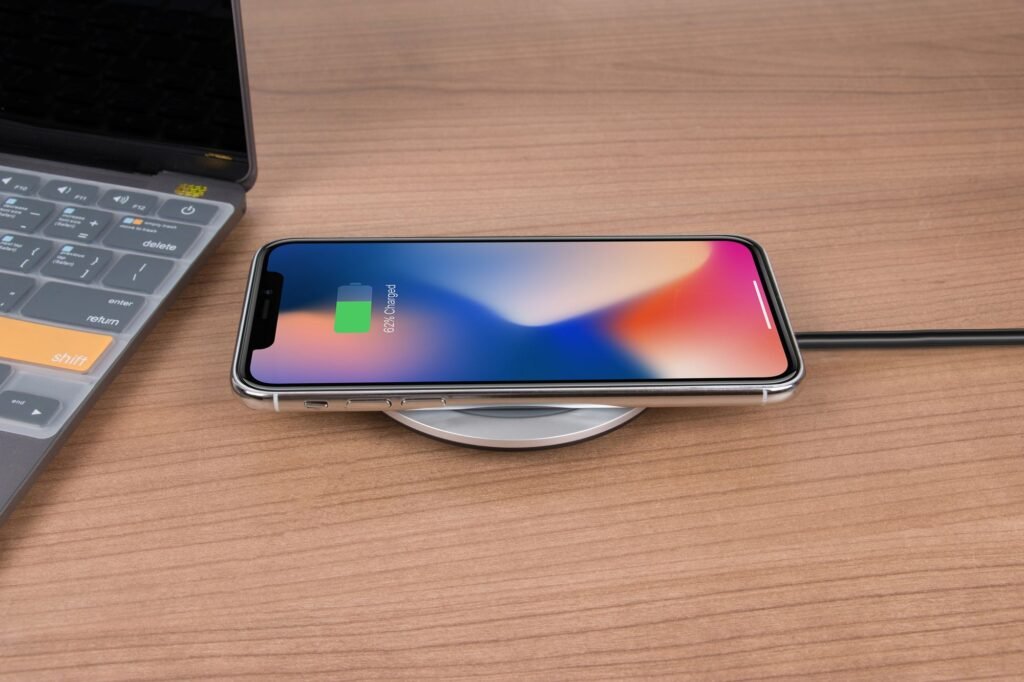
There is a phrase on Samsung’s spec sheets that does a remarkable amount of work. “Qi2 Ready.” It appears on the Galaxy S26, on the Z Fold 7, on the Z Fold 8, and it sounds like a feature. It is closer to a disclaimer.
What it means is that the phone speaks the Qi2 protocol and can charge at Qi2 speeds, but there are no magnets inside it. The magnets are the entire point of Qi2. Buy the phone, buy a magnetic case separately, and then the MagSafe style ecosystem of snap on chargers, wallets, car mounts and tripod grips becomes available to you. Without the case, you have a wireless charging pad and the familiar ritual of sliding your phone around on it until the light turns the right color.
Google solved this in 2025. Motorola solved it in July 2026. As of early October 2026, those two are still the only Android manufacturers who put the magnets where they belong.
What Qi2 was supposed to fix
The original Qi standard had one persistent flaw: nothing held the phone in the right place. Wireless charging works by inductive coupling between a transmitter coil in the pad and a receiver coil in the phone, and coupling efficiency falls off quickly as those two coils drift out of alignment. Energy that does not make the jump turns into heat, which is why a badly aligned phone charges slowly and gets warm doing it.
The Wireless Power Consortium’s answer in Qi2 was the Magnetic Power Profile, borrowed in spirit from Apple’s MagSafe. A ring of magnets in the phone and a matching ring in the charger pull the two coils into position. The published alignment figures tell the story: around plus or minus 0.5mm with the magnetic profile against roughly plus or minus 2mm for non magnetic Qi. That is a fourfold improvement in positioning accuracy, and it is what makes faster charging thermally safe in the first place.
The power ceiling followed. The Wireless Power Consortium introduced Qi2 25W, commonly written as Qi2.2, in 2025, raising the limit from 15W and tightening the magnet specification into what the group calls MPP 2.0. A further revision landed during 2026. The practical upshot is that a phone with internal magnets and a compliant charger can now take 25W wirelessly, which is close enough to a mid tier wired charger that the cable becomes genuinely optional for a lot of people.
Who actually has the magnets
| Phone | Magnets inside? | Peak wireless |
|---|---|---|
| Pixel 11 series, all four | Yes, Pixelsnap | 25W |
| Pixel 10 Pro XL | Yes, Pixelsnap | 25W |
| Pixel 10, 10 Pro, 10 Pro Fold | Yes, Pixelsnap | 15W |
| Motorola Edge 70 Max | Yes | Qi2 |
| Galaxy S26, S26+, S26 Ultra | No, case required | 25W on Ultra, about 20W on the others |
| Galaxy Z Fold 7 and Z Fold 8 | No, case required | 15W with a Qi2 case |
| iPhone, MagSafe generation | Yes, since 2020 | 25W on recent Pro models |
Google got here first and got it right. The Pixel 10 line was the first from a major Android brand to ship with the magnets built in, under the Pixelsnap name, and the implementation includes a detail worth noting: alongside the circular magnet ring there is a vertical orientation magnet, so accessories can tell which way up the phone is. That is how a stand knows to show you a landscape clock instead of a portrait one.
The Pixel 11 generation then fixed the one gap in the previous lineup. In 2025 only the Pixel 10 Pro XL could take the full 25W, because the larger body had the thermal headroom for it. With the Pixel 11 family, all four models get Qi2.2 at 25W, which puts Google level with Apple’s recent Pro iPhones on wireless charging speed. Existing Pixelsnap chargers carry over, though you need a USB-C adapter rated at 35W or more on the wall side to actually see the peak figure.
Motorola joined in July 2026 with the Edge 70 Max, which remains notable mostly for how long it took anyone else to follow.
Samsung’s position, and the Hall sensor detail
Samsung’s approach is more elaborate than simply leaving the magnets out, which is part of what makes it frustrating.
The Galaxy S26 series launched on February 25, 2026 and supports Qi2 at up to 25W. But the phones contain no magnet ring, and Samsung’s own compatibility notes tie the faster wireless rates to using a magnetic case. The mechanism is a Hall effect sensor: the phone detects the magnetic field of a compatible case and unlocks the higher charging profile once it knows one is attached. So the hardware to negotiate 25W is present, the magnets that make 25W safe are not, and the gap is filled by an accessory.
Leaks ahead of the S26 launch were unambiguous that this was deliberate, with one report putting it bluntly that the series would “100 percent” not include built in magnets. Samsung has since gone on selling magnetic accessories for Galaxy phones that have no magnets, which reads as a company that understands the demand perfectly well and has decided to monetize it one case at a time.
There are genuine engineering arguments on the other side. A magnet array occupies internal volume and adds weight in a product category obsessed with thinness. On the Ultra it has to coexist with the S Pen and its own magnetic hardware. Magnets near the top of the chassis can interfere with NFC and with compass calibration. None of these are imaginary problems. Apple, Google and Motorola have all solved them.
And the pricing context does not help the argument. Samsung raised Galaxy S26 prices seven months after launch without changing the phones, which makes “buy a case to get the charging speed you paid for” a harder sell than it was in February.
Samsung’s own charger, and what it really delivers
Samsung’s first proper Qi2 magnetic charger is the EP-P2900, and the speeds it delivers are tiered in a way the headline number hides.
| Device | Rate on the EP-P2900 |
|---|---|
| Galaxy S26 Ultra | Up to 25W |
| Galaxy S26 and S26+ | About 20W |
| Galaxy S25, Z Fold 7 and other Qi2 certified Galaxy models | Capped at 15W |
| Power supply required for peak | 45W adapter, or a 20V PPS source |
That last row catches people out constantly, and not only with Samsung. A 25W wireless charger plugged into a 20W phone brick does not deliver 25W. Wireless charging is lossy by nature, so the adapter has to supply meaningfully more power than the figure printed on the charging pad. If you bought a Qi2 charger and your phone is charging at what feels like old Qi speeds, the wall adapter is the first thing to check, not the pad.
It is also worth keeping the comparison honest. Wireless charging at 25W is slower and less efficient than a cable, and it generates more heat, and heat is the main thing that ages a lithium battery. This matters less than it used to now that silicon carbon cells have pushed Chinese flagships to genuine two day endurance, because a phone that does not need a daily emergency top up spends less of its life being fast charged at all. The case for Qi2 was never really speed. It was never having to think about where you put the phone down.
What changes in 2027
The Galaxy S27 looks like the generation where Samsung relents, but only partway.
Leaked case listings show the S27 Pro and Ultra dropping Samsung’s vertical camera stack for a horizontal camera bar, and the reported reasoning is interesting: rearranging the camera module frees internal volume, and that volume is said to be earmarked for a magnet array supporting 25W magnetic wireless charging. The same leaks indicate the base S27 and S27+ miss out again, which would make built in magnets a flagship tier feature at a moment when Google ships them on every Pixel including the cheapest one.
What to do about it today
If you are shopping now and you want the magnets without an accessory, the list is short: any Pixel 10 or Pixel 11, or the Motorola Edge 70 Max. Within that list, every Pixel 11 charges at 25W, while in the Pixel 10 generation only the Pro XL does.
If you already own a Galaxy, a Qi2 certified case gets you most of the way there for well under the price of a charger. You lose the phone’s finish and gain a few tenths of a millimeter, and in exchange the whole magnetic accessory ecosystem opens up, including Apple’s MagSafe products, which work fine on Qi2 hardware regardless of what logo is on the phone.
And if you are buying a charger, check the wall adapter before you blame the pad. A 25W magnetic charger fed by a 20W brick is a 15W magnetic charger with a nicer box.
Frequently asked questions
Is “Qi2 Ready” the same as Qi2?
No. “Qi2 Ready” means the phone supports Qi2 charging behavior but does not have the magnet array that the standard’s Magnetic Power Profile is built around. A full Qi2 phone snaps to a charger by itself. A Qi2 Ready phone needs a magnetic case to do the same thing.
Will MagSafe accessories work on a Pixel?
Yes. Pixelsnap uses the same magnet geometry as the Qi2 Magnetic Power Profile, which was derived from MagSafe, so Apple’s chargers, stands and wallets attach and work. Charging speed is negotiated by the Qi2 protocol rather than Apple’s proprietary layer, so you get the standard rate rather than any MagSafe specific behavior.
Does a magnetic case damage the phone or affect NFC?
A properly designed Qi2 certified case will not. The magnet ring sits below the wireless charging coil and clear of the NFC antenna, and the certification process exists partly to verify that. Cheap unbranded magnetic cases are a different matter, and the usual symptoms are failed tap to pay and a compass that thinks north has moved.
Why does my 25W wireless charger not reach 25W?
Usually the power supply. Wireless charging wastes a meaningful fraction of whatever you feed it, so a 25W pad typically wants a 45W adapter or a PPS capable source to deliver its rated output. The other common causes are a non compliant case, a hot phone throttling itself, and the phone simply not supporting the higher tier.
Does the Galaxy S26 really charge faster only with a case?
That is how Samsung’s compatibility guidance reads. The phone uses a Hall effect sensor to detect a compatible magnetic case and enables the faster wireless profile once it does. Without the case you are on the slower rate, because the alignment the faster rate depends on cannot be guaranteed.
Is wireless charging bad for battery health?
It is worse than a cable, mainly because it runs hotter, and heat is the main driver of lithium ion degradation. Qi2’s alignment improvement reduces that penalty by wasting less energy. For most people the convenience is worth it, and overnight slow charging on a magnetic stand is gentler on the cell than a fast wired top up in the afternoon.
Which phone should I buy if magnetic charging is the priority?
A Pixel 11. Every model in the range has the magnets and charges at 25W, which is not true of any other Android lineup on sale right now.
The bottom line
Qi2 is one of the rare industry standards that delivers something you can feel. You stop aiming. The phone goes near the charger, the magnets take over, and the whole irritating ritual of nudging a handset around a pad disappears. Accessories that were impossible become ordinary: wallets that stay put, car mounts without clamps, tripod adapters, battery packs that ride on the back of the phone.
Google understood that and built it into every Pixel, including the cheap one. Motorola followed. Samsung, three generations in, is still shipping flagships at Ultra pricing that need a case to do what a Pixel does out of the box, and selling the case.
The S27 Ultra may finally change that in early 2027, if the leaks hold and if the freed up space behind the redesigned camera bar goes where everyone assumes. That would be welcome. It would also be roughly seven years after Apple shipped MagSafe, for a feature whose main obstacle was never technical.
Sources and further reading
- Engadget: Here are all the Android phones that support Qi2
- 9to5Google: Motorola Edge 70 Max becomes the second Android brand with built-in Qi2 magnets
- 9to5Google: Galaxy S26 series will not have Qi2 magnets built in
- 9to5Google: Every Pixel 11 gets Qi2 25W wireless charging
- Android Central: Samsung Qi2 charger leak and the Galaxy S26
- GSMArena: Pixel 10 devices support Qi2 with built-in magnets
- Android Police: Wireless Power Consortium announces Qi2 25W
- Geeky Gadgets: Galaxy S27 Ultra leak points to Qi2 magnetic charging
- BGR: Samsung still cannot get magnetic Qi2 right despite Google paving the way
About this article: GeekBlog covers U.S. technology news, AI, phones, smartwatches and gaming. Every story is written and checked under our Editorial Policy. Spotted a mistake or have a story tip? Contact our editors.
