

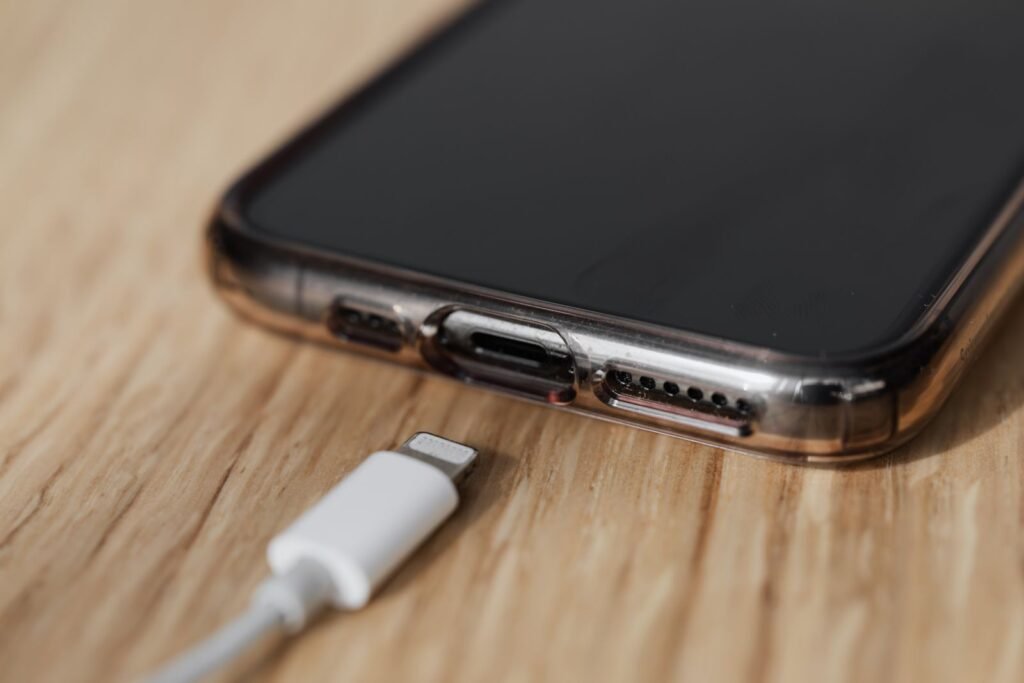
There is a phone on sale right now with a 10,001mAh battery inside a body 8.3mm thick. That is roughly double the capacity of the iPhone in your pocket, in a chassis that is not meaningfully fatter, and it is not a prototype or a rugged brick with a bulge on the back. It is a normal looking flagship.
Meanwhile the three phones most Americans actually buy, the iPhone 17 Pro Max, the Galaxy S26 Ultra, and the Pixel 11 Pro XL, all sit within a few hundred milliamp hours of 5,000mAh, a number the industry has been circling since about 2021.
The gap is not a manufacturing failure or a case of Apple being lazy. It is a deliberate split over one piece of chemistry, and both sides have a defensible argument. Understanding which side you agree with is genuinely useful if you are buying a phone in the next year, because the answer decides whether you get two days of battery life or a battery that still holds its charge in 2029.
⚡ The short version
- Silicon carbon anodes hold more energy in the same space. Roughly 20 percent higher volumetric energy density than the graphite used in conventional lithium ion cells.
- Chinese brands have gone all in. OnePlus, Xiaomi, Oppo, Honor, and iQOO are all shipping flagships between 7,000mAh and above 10,000mAh.
- Apple, Samsung, and Google have not moved. Their 2026 flagships are all still graphite, all still near 5,000mAh.
- The tradeoff is cycle life. Silicon carbon cells have tested at around 650 charge cycles to 80 percent capacity, against roughly 1,000 for graphite.
- Silicon swells when it charges. Pure silicon expands up to 300 percent. Blending it with carbon limits that, but does not eliminate it.
- Scale is the real blocker. Apple ships north of 200 million iPhones a year, and a chemistry change at that volume touches dozens of suppliers and several regulators.
- Capacity is not battery life. The iPhone 17 Pro Max still posts one of the longest rated video playback figures on the market with a far smaller cell.
What Silicon Carbon Actually Changes
Every lithium ion battery has an anode, the side that holds lithium ions while the battery is charged. For thirty years that anode has been made of graphite, which is cheap, stable, well understood, and not very dense.
Silicon holds around ten times more lithium per gram than graphite. That is the entire appeal, and it has been known since the 1990s. The reason nobody built a phone battery out of it is that silicon has a violent habit: as it absorbs lithium, it physically expands, by as much as 300 percent in its pure form. A material that quadruples in size several hundred times inside a sealed pouch cracks, crumbles, and destroys itself within a couple hundred cycles.
Silicon carbon is the compromise. You blend a modest amount of silicon into a carbon matrix that acts as a structural cage, absorbing the expansion. You give up most of silicon’s theoretical advantage in exchange for a cell that survives. What you keep is roughly 20 percent more energy in the same volume, and in a phone, volume is the only currency that matters.
That is the whole trick. Not a breakthrough, not a new physics. A structural workaround that finally got manufacturable at scale around 2024, and that Chinese manufacturers adopted with remarkable speed while everyone else watched.
The Capacity Gap, in Numbers
Laid out side by side, the split is stark, and it falls almost perfectly along the line between companies that adopted silicon carbon and companies that did not.
| Phone | Capacity | Anode |
|---|---|---|
| Honor Magic Win | 10,001mAh | Silicon carbon |
| Xiaomi 17 Pro Max | 7,500mAh | Silicon carbon |
| Oppo Find X9 Pro | 7,500mAh | Silicon carbon |
| iQOO 15 Ultra | 7,400mAh | Silicon carbon |
| OnePlus 15 | 7,300mAh | Silicon carbon |
| Oppo Find X9 Ultra | 7,050mAh | Silicon carbon |
| Google Pixel 11 Pro XL | 5,115mAh | Graphite |
| Apple iPhone 17 Pro Max | 4,832mAh 5,088mAh in the eSIM only US model | Graphite |
| Samsung Galaxy S26 Ultra | 5,000mAh | Graphite |
The Oppo Find X9 is the number that best illustrates the point. It carries over 7,000mAh in a body measuring roughly 7.99mm. That is thinner than several phones with 5,000mAh cells. The extra capacity did not come from making the phone bigger, which is precisely what silicon carbon was supposed to deliver.
Why the Bigger Number Does Not Mean Proportionally Longer Life
This is where the marketing and the reality separate, and it is the part most spec sheet comparisons get wrong.
A battery is one half of the equation. The other half is how much power the phone draws, and that is decided by the processor’s manufacturing node, the display’s refresh behavior, the modem, and above all the operating system’s willingness to shut things down when you are not looking. Apple has spent fifteen years optimizing that second half with total control over both silicon and software.
The result is a genuinely counterintuitive scoreboard. Despite a cell roughly 30 percent smaller than a OnePlus 15, the iPhone 17 Pro Max posts one of the longest rated video playback figures of any phone on the market. We went through this in detail when we compared Apple’s battery claims against real world measurements, and the short version is that Apple’s numbers hold up better than skeptics expect.
Google is the interesting counterexample in the other direction. The Pixel has the largest cell of the three Western flagships and generally the shortest endurance, because Tensor has never been the most efficient silicon in the room. When we measured what the Pixel’s capacity actually translates into over a day, the gap between the number on the spec sheet and the hours in your hand was the story.
What the extra capacity genuinely buys
- A real second day. Not a marketing second day. Heavy users on 7,000mAh phones routinely finish day two with charge left, which no 5,000mAh phone does.
- Headroom for bad days. Navigation, hotspot, and camera use are the battery killers. A larger cell absorbs them without a mid afternoon panic.
- Gentler charging habits. A bigger battery means fewer full cycles per year, which partly offsets the shorter cycle rating.
- Less thermal stress while fast charging. Pushing 100W into a 7,000mAh cell is proportionally less aggressive than into a 5,000mAh one.
The Catch That Does Not Go on the Box
Silicon carbon is not free capacity. It borrows against the future of the cell, and the interest shows up in two ways.
Silicon carbon versus graphite
Figures from comparative cell testing. Real world results vary with silicon content, which manufacturers rarely publish.
ENERGY DENSITY
+20%
More capacity in the same physical volume. The reason any of this is happening.
CYCLES TO 80%
~650
Against roughly 1,000 for graphite. Pure silicon manages about 200.
IRREVERSIBLE SWELLING
5 to 15%
Permanent thickness growth over the cell’s life, against about 2% for graphite.
EARLY CAPACITY LOSS
10 to 30%
In the first 50 to 200 cycles on high silicon designs, before the curve flattens.
Six hundred and fifty cycles sounds abstract until you convert it. If you charge once a day, that is under two years to reach the point where the battery holds 80 percent of what it started with. A graphite cell at the same usage reaches that mark closer to the three year mark.
The counterargument from the silicon carbon camp is fair and worth stating: a 7,300mAh cell degraded to 80 percent still holds 5,840mAh, which is more than a brand new iPhone. You are starting from so far ahead that the faster decline does not put you behind. That logic holds for the first few years and gets weaker after that, which is mostly a question of whether you keep phones for two years or five.
The swelling is the less discussed problem. Permanent thickness growth of 5 to 15 percent inside a sealed chassis is a real engineering constraint, and it is why phones using these cells need more internal clearance designed in from the start. It is not something you can retrofit into an existing chassis design late in development.
Why Apple and Samsung Are Sitting This Out
The lazy explanation is complacency. The actual reasons are more specific, and there are three of them.
Three blockers, in order of how much they matter
1. Scale. Apple ships more than 200 million iPhones a year. Sourcing silicon carbon anode material at that volume, at consistent quality, from qualified suppliers, is a supply chain problem nobody has solved. The nanoscale processes involved are more expensive and more finicky than making graphite.
2. Institutional memory. Samsung’s caution here is not abstract. The Note 7 recall is the most expensive battery decision in consumer electronics history, and it made the company structurally conservative about energy density in a way that has not worn off.
3. Regulation and logistics. Higher energy density cells attract stricter shipping rules, including state of charge limits on air freight. When you move product by the planeload on a fixed launch calendar, a chemistry that complicates air shipment is a scheduling risk, not just a paperwork one.
There is a fourth reason nobody at Apple would say out loud, which is that Apple does not need it. Its efficiency advantage means it can post competitive endurance with a smaller, cheaper, longer lived cell. Adopting silicon carbon would mostly buy headlines, and Apple has never optimized for headlines about specifications.
Cost pressure is also working against a change right now. With memory and silicon prices where they are, this is a bad year to introduce a more expensive component. We looked at how the 2026 spec sheet has been quietly shrinking under exactly that pressure, and battery chemistry is not where anyone wants to spend the remaining margin.
So Should You Buy One
If you can, and it fits how you use a phone, yes. With caveats.
The two day phone is real. It is not a spec sheet illusion, and people who switch to one describe the change in how they think about charging as the most noticeable upgrade they have had in years. Charge anxiety is a small, constant tax on daily life, and removing it feels disproportionately good.
The caveats are worth weighing honestly. If you keep phones for four or five years, the faster degradation curve will reach you, and a battery replacement is more likely to be part of your ownership. If you are in the United States, availability is the bigger problem anyway: most of these devices are not sold here, and buying an import means living without carrier support and with incomplete band coverage.
Which leaves most American buyers watching this from the outside for at least another cycle. Reporting suggests Western flagships will not carry silicon carbon in volume until late 2026 at the earliest, and given how conservative Apple and Samsung have been, “at the earliest” is carrying weight.
The Bottom Line
Silicon carbon is the most consequential thing to happen to phone batteries in a decade, and the fact that half the industry is ignoring it is not stubbornness. It is a genuine disagreement about what a battery is for.
One camp decided that capacity is the number that matters, accepted a shorter service life, and delivered a phone that lasts two days. The other camp decided longevity and supply chain stability matter more, kept optimizing the software side, and delivered a phone that lasts one day reliably for four years.
Neither is wrong. But the first camp is shipping something the second camp cannot currently match, and after a few years of spec sheets moving sideways, a phone you charge every other night is the rare upgrade you actually notice.
Wondering whether the chemistry itself is worth chasing? Our explainer covers silicon carbon batteries versus lithium ion, what the 10 to 20 percent gain really buys, and what it costs you later.
About this article: GeekBlog covers U.S. technology news, AI, phones, smartwatches and gaming. Every story is written and checked under our Editorial Policy. Spotted a mistake or have a story tip? Contact our editors.
