

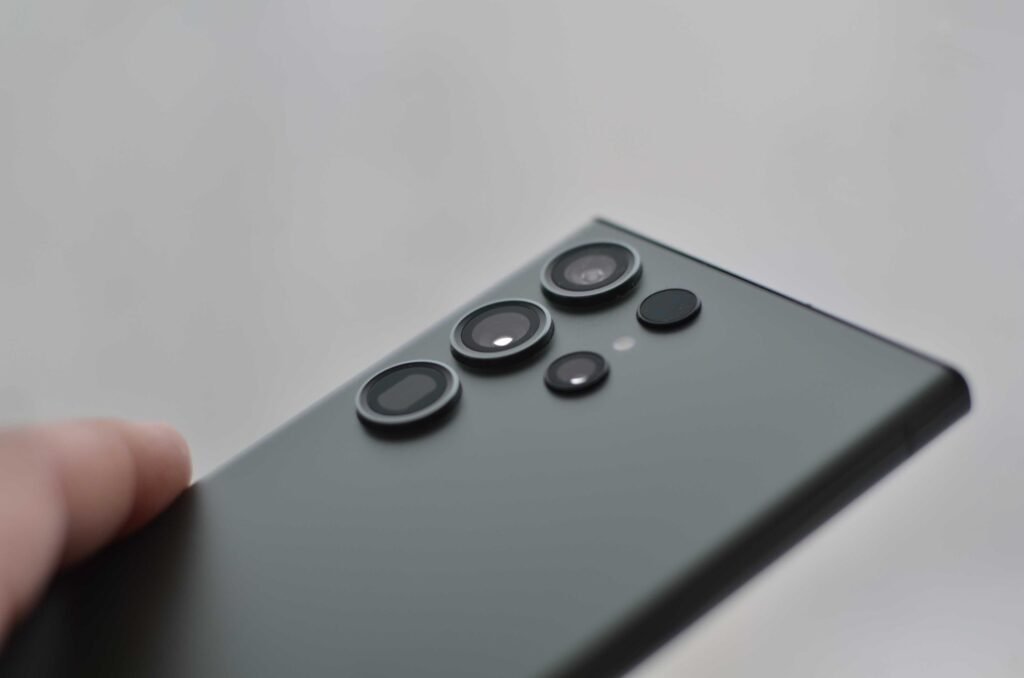
Phone zoom has been running on a lie for about five years. Manufacturers print a number like 100x on the box, you point the phone at something far away, and what comes back is a watercolor painting of a building. The optics stopped improving a while ago. The marketing did not.
Vivo’s answer to this is unusually honest. Instead of claiming the software can invent detail that the lens never collected, the company sells you a second lens. The Zeiss Telephoto Extender Gen 2 Ultra clamps onto the back of the X500 Pro Max and turns its 85mm equivalent telephoto into a 400mm equivalent one. No interpolation, no AI reconstruction, no asterisk. Actual glass, doing actual work.
The phone launched in China on September 21, 2026. The accessory costs 1,999 yuan on top of a 6,999 yuan phone. And having read through the optical specifications and the hands-on reports, the interesting thing is not that it exists. It is how much of the engineering lives in the phone rather than the lens.
What the phone brings before you attach anything
The teleconverter only makes sense because of what sits behind it. A magnifying attachment multiplies whatever the host lens already resolves, including its flaws, so a mediocre telephoto with a 4.7x extender gives you a magnified mediocre image. Vivo spent the hardware budget accordingly.
| Component | Specification |
|---|---|
| Main camera | 50MP Zeiss TrueDynamic with a LOFIC sensor, 23mm equivalent, gimbal grade stabilization |
| Telephoto | 200MP Zeiss APO, 1/1.4 inch sensor, 85mm equivalent, hardware 4x in sensor zoom |
| Stabilization | CIPA 7.0 rated |
| Chipset | MediaTek Dimensity 9600 Pro on 2nm, plus vivo V3+ and VS1+ imaging silicon |
| Display | 6.85 inch 2K Zeiss Master Color OLED, 144Hz |
| Video | 8K, 4K at 240fps, 10-bit 4:2:2 Log with ACES support |
| Battery | 8,000mAh |
The row that matters is the second one. A 1/1.4 inch sensor behind the telephoto is larger than the main sensor in a great many phones currently on sale, and putting it on the long lens rather than the wide one is a deliberate inversion of the usual priority. Most manufacturers give the telephoto the smallest sensor in the stack because it gets used least. Vivo gave it the biggest one in its class, then built an accessory that depends on it.
That choice is the opposite direction from where some of the competition is heading. Samsung is cutting the Galaxy S27 Ultra down to three cameras and dropping the 3x telephoto entirely, on the reasoning that a high resolution sensor can crop its way to the same framing. That argument holds at short reach. It falls apart somewhere past 10x, which is exactly where the teleconverter starts working.
A teleconverter is not a zoom lens
This distinction gets lost constantly, so it is worth being precise. A zoom lens changes its own focal length by moving elements inside the barrel. A teleconverter does not change the host lens at all. It is an afocal attachment, a small telescope that sits in front of the main optic and magnifies the image before the main optic ever sees it. The host lens still focuses the same way. It just receives a pre magnified scene.
There are two classic ways to build one. A Galilean design uses a negative rear element, stays physically short, and keeps the image the right way up, which is why it is the standard choice for cheap clip on phone lenses. A Kepler design uses two positive groups, delivers noticeably better sharpness toward the edges of the frame and better control of color fringing, and has one awkward side effect: it turns the image upside down.
Vivo went Kepler. The G2 Ultra packs 15 elements into two groups, five of them extra low dispersion glass and one a glass aspherical element. That is a serious optical formula for something you carry in a jacket pocket, and the ED elements are there for a specific reason. At 400mm, chromatic aberration shows up as purple and green fringes on every high contrast edge, which is precisely the kind of subject you shoot at 400mm: birds against bright sky, stadium floodlights, architectural detail at distance.
The software is doing more than you would guess
Because the Kepler design flips the scene, attaching the extender and opening the normal camera app gives you an upside down viewfinder. It is genuinely unusable. You switch to Telephoto Extender mode, the phone tells you which converter is attached, and it corrects the orientation while turning stabilization up.
That stabilization boost is not a nicety. At a 400mm equivalent, the old photographer’s rule of thumb says you want a shutter speed around 1/400s to cancel out hand shake, and a phone weighing a few hundred grams with a lump of glass hanging off one corner is harder to hold steady than a camera designed around a grip. The CIPA 7.0 rating on the phone’s own stabilization is what makes handheld 400mm plausible rather than theoretical.
One detail from hands-on reports stands out. On the X500 Pro Max the extender is not quarantined inside a single dedicated mode: once the phone knows what is attached, you can use it across the camera app rather than being locked into one stills mode. That sounds minor until you have tried the alternative, where a separate mode means separate settings, no video, and a mental context switch every time you want the long lens.
Oppo and Honor got here first. Vivo went further.
Vivo did not invent the phone teleconverter. Oppo has been shipping a Hasselblad unit with its Ultra models for two generations, and it is a well regarded piece of kit. The difference is where each one attaches and how far it goes.
| Vivo Zeiss G2 Ultra | Oppo Hasselblad teleconverter | |
|---|---|---|
| Reach | 400mm equivalent | 300mm equivalent |
| Magnification | 4.7x | Mounts on the 3x telephoto |
| Elements | 15 in two groups, five ED | 13, in three layers |
| Optical design | Kepler | Kepler |
| Shorter option | Yes, the 2.35x G2 | Single unit |
Apple does not play in this category at all, and for a company that sells a phone on its camera, that is a conspicuous absence. There is no official iPhone teleconverter, no mounting standard, and no sign of one. The third party clip on lens market exists, but clipping an unaligned lens over a phone camera is a different proposition from a manufacturer designed mount with firmware that knows what is attached.
The broader pattern here is familiar. Chinese manufacturers keep spending the camera budget on hardware while Western flagships spend it on processing. Oppo now fits three 200MP sensors to the Find X10 Pro Max where last year’s model had three 50MP ones, and Motorola has pushed a 200MP periscope onto a flagship aimed at the US market. The teleconverter is the same instinct taken one step further: when you run out of room inside the phone, put the optics outside it.
What the whole setup actually costs
| Item | China price | Rough conversion |
|---|---|---|
| X500 Pro Max, 12GB and 256GB | 6,999 yuan | about $1,045 |
| X500 Pro Max, 12GB and 1TB | 8,999 yuan | about $1,343 |
| Creator package, 16GB and 1TB | 12,999 yuan | adds satellite communication |
| Zeiss G2, 2.35x | 999 yuan | about $150 |
| Zeiss G2 Ultra, 4.7x | 1,999 yuan | about $300 |
| Photography kit case | 699 yuan | required to mount anything |
Who this is actually for
Not most people. That needs saying plainly, because the specification sheet is seductive and the use case is narrow.
If you shoot wildlife, motorsport, aviation, stage performances or anything else where you cannot physically get closer, a 400mm optical reach that fits in a coat pocket is a genuinely new capability. Nothing else in a phone does this. The nearest alternative is carrying a camera body and a telephoto zoom, which weighs several times as much and costs about the same.
If your longest regular shot is your kid at the far end of a soccer field, the built in 85mm telephoto with its 200MP sensor already crops to that framing without any accessory. The extender would spend its life in a drawer.
The honest summary is that vivo has built excellent gear for a small audience and priced it accordingly. Nineteen hundred and ninety nine yuan for a lens attachment is not an impulse purchase, and the mount case is a further 699 yuan before you can use it. This is camera accessory pricing applied to a phone, which is fair, because it is a camera accessory.
Frequently asked questions
Does the teleconverter work on the regular X500 Pro?
Yes. Vivo has said both the X500 Pro and the X500 Pro Max accept the 2.35x and 4.7x extenders. The base X500 does not.
Why is the image upside down without the special mode?
Because the extender uses a Kepler optical design, which inverts the image as a byproduct of how its two positive element groups work. Kepler gives better sharpness across the frame than the alternative Galilean layout, and vivo chose to correct the inversion in software rather than accept the optical compromise. Telephoto Extender mode flips the frame and raises stabilization at the same time.
How much image quality do you lose compared with a real camera?
Plenty, and that is the wrong comparison. The relevant question is how much you gain over the same phone shooting a digital crop at the same framing, and there the answer is a lot, because digital zoom past roughly 10x stops recovering detail and starts inventing it. Against a dedicated camera with a 400mm lens, the phone loses on sensor area, dynamic range and autofocus tracking. It wins on weight and on being in your pocket.
Is 3,200mm a real number?
It is a real number in the sense that the phone will display that framing. It is not optical. Everything beyond 400mm is cropping and upscaling the 400mm image, so expect it to behave the way extreme digital zoom always behaves: usable for identifying what something is, not for producing a photograph you would keep.
Will the extender work on older vivo phones?
The G2 and G2 Ultra were introduced alongside the X300 Ultra earlier in 2026 and carried forward to the X500 Pro and Pro Max. Compatibility depends on the mounting case and the firmware recognizing the attachment, so check vivo’s compatibility list rather than assuming any X series phone will take one.
Can I use it for video?
Yes, and that is one of the stronger arguments for it. The X500 Pro Max records 8K, 4K at 240fps and 10-bit 4:2:2 Log with ACES support, and because the extender is not locked to a single stills mode, the long reach is available while recording. A 400mm equivalent handheld video shot is demanding on stabilization, so expect to need a steady position.
Is there a US release?
No. Vivo does not sell phones through United States retail channels, and nothing about the X500 series changes that.
The bottom line
The most interesting thing about the Zeiss G2 Ultra is what it admits. For years the industry has insisted that computational photography would eventually close the gap with real optics, and for wide angle work it largely has. At 400mm it has not, and vivo has stopped pretending otherwise.
What makes this version work where clip on phone lenses have always failed is that the hard part is not the accessory. It is the 1/1.4 inch telephoto sensor, the CIPA 7.0 stabilization, the firmware that knows which converter is attached and corrects for it, and a camera app that does not quarantine the whole thing behind a separate mode. Any company can sell you a tube of glass. Vivo built the phone around it first.
It is expensive, it is narrow, and for now it is only on sale in one country. But it is the first phone telephoto system in a while that does not need an asterisk next to the zoom number, and for the small group of people who need 400mm in a pocket, that is worth more than another doubling of a digital zoom figure nobody believes.
Sources and further reading
- TechRadar: I tested vivo’s 400mm teleconverter lens with the X500 Pro Max
- GSMArena: vivo X500, X500 Pro and X500 Pro Max announced
- Android Authority: vivo X500 series specs, cameras, price and availability
- Notebookcheck: Vivo X500 Pro series launches with new flagship SoC and tweaked Zeiss camera setup
- PhotographyTalk: Vivo X500 Pro Max pairs a LOFIC main camera with a 200MP 85mm telephoto
- GSMArena: vivo 400mm and 200mm teleconverter lenses hands-on
- Amateur Photographer: vivo X500 Pro Max, Pro and X500 series Zeiss camera phones
- Have Camera Will Travel: Teleconverters explained, what they do and what they cost you
About this article: GeekBlog covers U.S. technology news, AI, phones, smartwatches and gaming. Every story is written and checked under our Editorial Policy. Spotted a mistake or have a story tip? Contact our editors.
