

Every hiker knows the sentence: “I’ll be back before dark.” It is also the sentence that causes the most worry at home when the afternoon runs long. Amazfit wants to take some of that guesswork out of the equation with LiveShare, a new feature for its flagship T-Rex Dual Solar expedition watch that lets friends and family follow your trek on a map in real time.
The idea is refreshingly simple. You create a link in the Zepp app before you set off, send it to whoever you like, and they watch your progress in an ordinary web browser. No account, no extra app. Here is what the feature does, how the watch behind it stacks up, and where the limits are.
Quick take
LiveShare shares your real-time location, heading and key activity data from the Amazfit T-Rex Dual Solar through a web link created in the Zepp app. Viewers need no account or app. The watch costs $649.99, went on sale September 22, 2026, and claims up to 25 days of typical battery life, stretching to 34 days with front solar charging. LiveShare is a convenience for peace of mind, not a replacement for a satellite emergency beacon.
What Amazfit LiveShare Actually Does
According to Amazfit’s launch material, LiveShare lets you share your real-time location, heading and key activity information with friends, family or teammates. Coverage of the rollout adds detail on what shows up on the other end: live GPS position, elevation, pace, distance and heart rate, all streamed to a page that anyone with the link can open.
That last point matters. Plenty of safety features work only if the person on the other end has the same brand of phone or has installed a specific app. Amazfit’s approach sidesteps that. Your partner, parent or hiking buddy just taps a link. For a feature meant to calm nerves, removing friction is half the battle.
The data also gives context that a plain location dot cannot. If your pace drops on a steep climb, the people following can see you are still moving steadily uphill. If you stop for an unusually long time, they can tell it was a break at a summit and not a problem on the trail.
The Catch: It Still Leans on Your Phone
This is the part worth reading carefully. Amazfit has not described LiveShare as a standalone satellite service. Tuttotek reports that the watch needs to stay connected to the Zepp app, and that the paired phone needs an active internet connection for the stream to reach the web. In plain terms, if you walk into a valley with no cell signal, the live feed will most likely pause until you are back in coverage.
That makes LiveShare very good for the everyday case: a day hike, a trail run or a ski tour where you pass in and out of coverage and want family to see roughly where you are. It is not the right tool for a remote multi-day trip where a missed check-in could mean real danger. For that, a dedicated satellite messenger remains the safer choice, and Amazfit itself frames the feature as added peace of mind for those back home, not an emergency service.
Good to know
We found no public details yet on how long a shared link stays active or whether a viewer can see a breadcrumb history after the hike ends. Check those settings in the Zepp app before you rely on the feature for a long outing.
The Watch Behind the Feature
LiveShare is only as useful as the hardware recording it, and the T-Rex Dual Solar is built for exactly this kind of use. Amazfit calls it the world’s first AMOLED smartwatch with dual-sided solar charging. Most solar watches use a dull, transflective screen to save power. Here you get a bright, full-color AMOLED display together with solar recovery, which is the combination Amazfit is betting hikers will want.
| Spec | Amazfit T-Rex Dual Solar |
|---|---|
| Price and release | $649.99, on sale September 22, 2026 at Amazfit.com and Amazon |
| Display | 1.32-inch AMOLED, up to 3,000 nits peak brightness |
| Build | Grade 5 titanium bezel, sapphire crystal, glass-ceramic back plate |
| Battery | 660 mAh, up to 25 days typical use, up to 41 hours in Accuracy GPS mode |
| Solar | Front panel plus a rear panel with twice the collection area |
| Water resistance | 10 ATM, recreational diving to 50 meters |
| Navigation | Preloaded color maps, downloadable contour and ski maps, turn-by-turn routing, waypoints |
| Extras | Flashlight with red light mode, Expedition activity mode, LiveShare |
| Subscription | None required for the Zepp app, per Amazfit |
Specs from Amazfit’s September 22, 2026 launch release. Battery figures are manufacturer claims from Amazfit’s own testing conditions.
Solar Charging: How Much Does It Really Add?
Here is where the “dual” in the name comes in. The front panel collects energy while you wear the watch. Under Amazfit’s typical-use test conditions, three hours of daily exposure at 50,000 lux stretches battery life from up to 25 days to up to 34 days. The rear panel, built into the glass-ceramic back, has twice the collection area, so leaving the watch face-down in the sun at camp can recover much more. A Solar Priority mode drops the watch into an ultra-low-power state to make the most of that off-wrist charging.
The practical benefit is less about extra days and more about insurance. Amazfit athlete and alpinist Jost Kobusch points out that solar charging can act as a backup when you are far from a power source, and that it may let you leave a power bank at home. A fully drained watch can be coaxed back to life with sunlight, restoring access to maps and route information. That is a genuinely useful safety net for navigation.
If long endurance is your main shopping criterion, our roundup of smartwatches with the longest battery life in 2026 shows how the T-Rex Dual Solar’s claims compare with other multi-week watches.
Navigation Features That Pair With LiveShare
Sharing your location is only half the story. The other half is knowing where you are going. The T-Rex Dual Solar ships with full-color preloaded maps with expanded road networks, and you can download contour and ski maps on top. Route planning supports turn-by-turn directions and waypoint navigation, while a new Navigation Gradient Curve shows a color-coded elevation profile so you can see upcoming climbs and descents at a glance.
Battery management also gets thoughtful treatment. An Outdoor Extreme battery mode cuts power use while keeping essentials such as GPS track points, and the new Expedition activity mode builds on that setting for trips that stretch over several days. Add a 3,000-nit screen for bright snow and a built-in flashlight with a red light option that protects night vision, and the watch reads like a checklist for a winter day in the mountains.
Choosing the right gear for the trail is a topic of its own, and our guide to the best smartwatch for hiking in 2026 covers GPS battery life and offline maps across brands.
How LiveShare Compares in Practice
Live location sharing is not a new idea. Several sport watch makers and phone platforms already offer some version of it. What stands out about Amazfit’s take is the combination: a browser-only viewer experience, biometric and elevation data rather than just a pin, and no subscription attached to the Zepp app according to Amazfit. The weak spot, as noted, is the dependence on a phone connection, a limit shared by many wearables without built-in cellular.
What works in its favor
- ✓ Viewers need no account or app
- ✓ Shares pace, elevation and heart rate
- ✓ Bright AMOLED with solar backup
- ✓ Offline maps and route guidance
- ✓ No Zepp app subscription, per Amazfit
Where it falls short
- ✕ Appears to need phone signal to stream
- ✕ Not a satellite SOS or emergency service
- ~ Link duration and history not documented
- ~ $649.99 is a premium price
- ~ Battery claims lack independent testing
Who Is the T-Rex Dual Solar For?
If you are still deciding between rugged options, our comparison of the best rugged smartwatches in 2026 shows what else is competing at this level.
Frequently Asked Questions
What is Amazfit LiveShare?
LiveShare is a feature for the Amazfit T-Rex Dual Solar that lets you share your real-time location, heading and key activity information, such as pace, elevation and heart rate, with friends and family through a web link created in the Zepp app.
Do the people following me need the Zepp app?
No. Coverage of the feature says contacts can open the link in any standard web browser without creating an account or installing an app.
Does LiveShare work without cell service?
Probably not continuously. Tuttotek reports that the watch relies on the paired phone’s internet connection, so updates are likely to pause in areas without coverage. It should not be treated as an emergency device.
How much does the T-Rex Dual Solar cost?
It costs $649.99 and has been on sale since September 22, 2026 at Amazfit.com and Amazon.
How long does the battery last?
Amazfit claims up to 25 days of typical use, up to 34 days with front solar charging under its test conditions, and up to 41 hours in Accuracy GPS mode. These are manufacturer figures.
Final Verdict
The Bottom Line
LiveShare is a small feature with a big emotional payoff. It turns a rugged, solar-assisted $649.99 watch into something your family can actually follow along with, with no extra apps for them to install. The limit is its reliance on your phone’s connection, so treat it as peace of mind for day trips and not as a lifeline for remote expeditions. If you already want the T-Rex Dual Solar for its screen and battery, LiveShare is a welcome bonus.
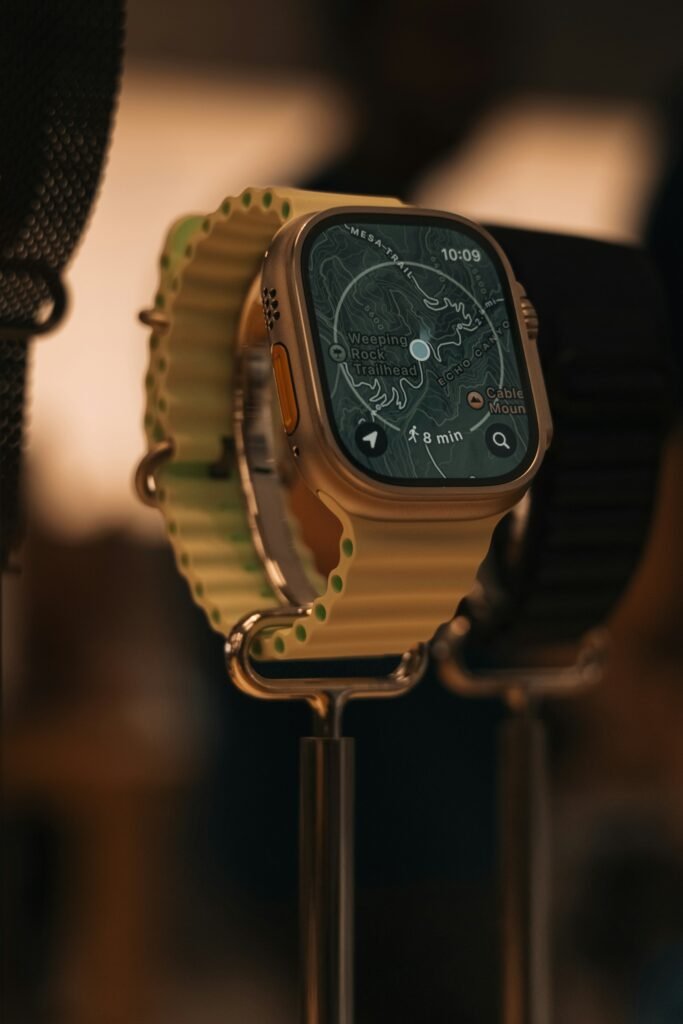
Featured image: Unsplash. Illustrative stock photo, not the Amazfit T-Rex Dual Solar. Sources: Mashable via Yahoo Tech, Amazfit press release via Stock Titan and Tuttotek.
About this article: GeekBlog covers U.S. technology news, AI, phones, smartwatches and gaming. Every story is written and checked under our Editorial Policy. Spotted a mistake or have a story tip? Contact our editors.
