

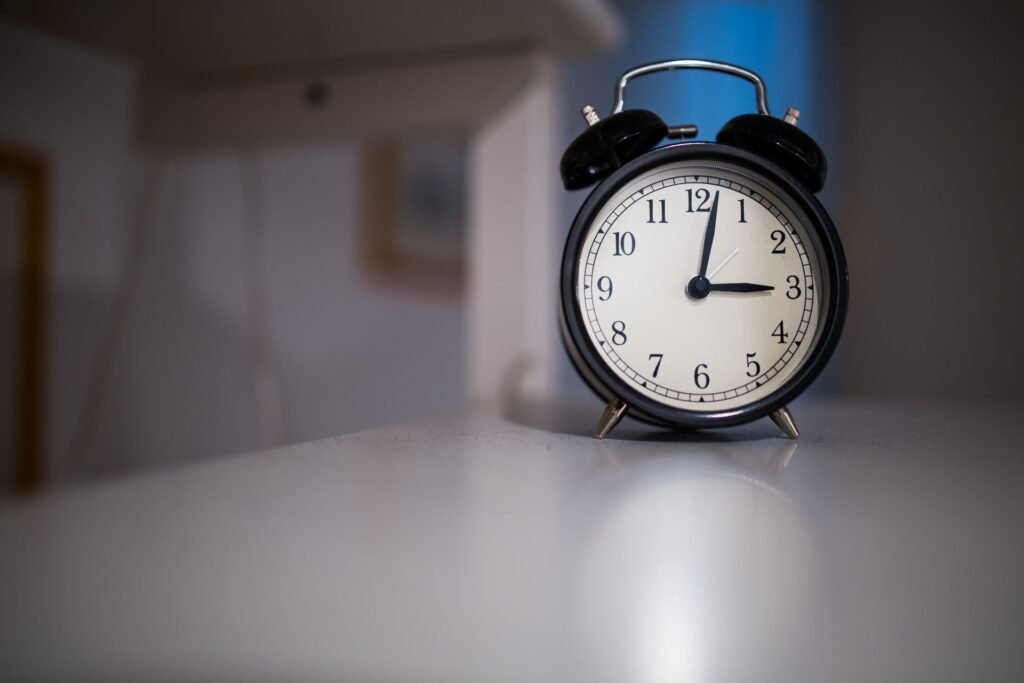
Britain and most of Europe set their clocks back an hour early this morning, and the annual round of “which of my gadgets is lying to me” has already started over there. UNILAD Tech’s rundown, built on advice Utility Bidder managing director James Longley gave The Sun, lists the usual suspects: microwaves, ovens, heating timers, car clocks and standalone alarm clocks.
Americans get a one-week head start. Daylight saving time ends in the US at 2 a.m. local time on Sunday, November 1, 2026, when clocks fall back to 1 a.m. This year there is an extra wrinkle: several Canadian provinces are not falling back at all, which makes the software side of the change messier than usual. Here is what fixes itself, what doesn’t, and where the long fight to stop changing clocks actually stands.
The short version
- The UK and EU fell back on Sunday, October 25. The US and most of eastern Canada follow on Sunday, November 1, at 2 a.m. local time.
- Phones, computers, smart thermostats and radio-controlled clocks update themselves. Microwaves, ovens, coffee makers, older car dashboards, wall clocks, watches and many cameras do not.
- British Columbia, Alberta, the Northwest Territories and Manitoba will not fall back this year, so devices running outdated time zone data could get the hour wrong there.
- The House passed the Sunshine Protection Act 308 to 117 in July, but it is stuck in the Senate. Nothing has changed for this weekend.
The week the time gaps go wrong
Because Europe changes on the last Sunday of October and the US waits for the first Sunday of November, the two sides spend a week out of their normal alignment. Until November 1, London is four hours ahead of New York instead of five, and Paris is five hours ahead instead of six. Calendar apps handle this fine; a meeting time typed into a chat as “9 a.m. your time” is on you.
The US date itself is fixed by federal law, which sets daylight saving time to end on the first Sunday in November. At 2 a.m. the clock rolls back to 1 a.m., which means the hour from 1:00 to 1:59 a.m. happens twice. That repeat hour is where automations misbehave: a smart-home routine or backup job scheduled for 1:30 a.m. can run twice, or not at all, depending on how the app handles the overlap. If something important lives in that window, move it to 3 a.m. for the night.
What updates itself, and what doesn’t
The rule of thumb is simple: if a device gets its time from the internet, a cell network or a radio signal, it will probably handle the change. If it has a clock button, it won’t. Longley’s advice for the stubborn ones is unglamorous but right: on most microwaves you hold the clock button for a few seconds until it beeps, then set the new time, and newer ovens usually have a clock mode with up and down buttons.
Radio-controlled “atomic” wall clocks are the pleasant surprise. They pick up NIST’s WWVB signal from Colorado, which carries a flag announcing daylight saving transitions, so a working one shifts on its own overnight. Cars are the opposite. GPS gives a car precise time, but not necessarily your time zone or DST rules, and owners regularly find that a car with built-in navigation still needs the hour changed by hand. Look in the settings for an “automatic time” or “GPS time” option before you dig out the manual.
| Device | Changes itself? | What to do before Nov 1 |
|---|---|---|
| iPhone, Android phone | Yes | Keep “Set automatically” on. If the time is off Sunday, restart or toggle airplane mode. |
| Windows PC, Mac | Yes | Install pending updates, especially if you work with Canadian offices. |
| Smart thermostat, smart meter | Usually | Check the schedule on Monday morning so heat comes on at the right hour. |
| Smart speakers, plugs, displays | If online | If Wi-Fi or power drops overnight, recheck alarms and routines. |
| Radio-controlled clock | Yes | Confirm the time zone and DST switch are set correctly. |
| Car dashboard | Depends | Look for automatic or GPS time in settings; otherwise set it by hand. |
| Microwave, oven, coffee maker | No | Set manually. Recheck delayed-start brew timers. |
| Older heating programmer, plug-in and sprinkler timers | No | Reset, or every program runs an hour off. |
| Bedside alarm clock, wall clock, watch | No | Set back one hour before bed Saturday. |
| Dashcam, security DVR, trail cam, camera | Often no | Fix the clock. A timestamp an hour off is a headache when footage goes to an insurer or police. |
| Smoke and CO alarms | n/a | Press test, swap replaceable batteries, replace units older than 10 years. |
That last row is a tradition rather than a clock problem. Fire departments have long used the time change as a reminder to check smoke alarms, and the advice holds: test monthly, replace standard batteries at least once a year, and replace the whole unit once it passes 10 years. If yours are sealed long-life models, a chirp means the alarm needs replacing, not a battery. We covered how connected smoke detectors change that routine earlier this year.
Phones are reliable now. They weren’t always.
Trusting your phone is mostly safe, but the record is not spotless. In 2010, iOS 4.1 had a bug where repeating alarms fired an hour off around the time change. Apple acknowledged it in a support note and told people to use one-time alarms; Europeans who didn’t hear about it overslept on the Monday after their clocks went back. In March 2011 some Verizon iPhones jumped the wrong way and ended up two hours off until they were restarted.
The 2026 risk is different and more specific. Phones and computers don’t calculate DST themselves; they rely on a shared time zone database, maintained by volunteers under IANA, that gets updated whenever a government changes its rules. This year it needed four updates for Canada alone: British Columbia (release 2026b), Alberta (2026c), the Northwest Territories (2026d) and Manitoba (2026e, published September 29). Microsoft told IT admins it was shipping the Manitoba zone in its October 2026 Windows security update, and warned that devices that can’t be updated in time may show the wrong time after November 1.
Your sleep tracker will notice
The American Academy of Sleep Medicine’s position, published in the Journal of Clinical Sleep Medicine in 2024, is that the US should drop seasonal changes and adopt permanent standard time, which it says “aligns best with human circadian biology.” It cites increased car crashes, cardiovascular events and mood problems after the spring change, and the American Medical Association, National Sleep Foundation and Sleep Research Society have taken similar positions. If you use one of the best sleep trackers, give the numbers a few days to settle before reading much into them.
Where the fight to stop changing clocks stands
United States. The Sunshine Protection Act would make daylight saving time permanent, the opposite of what sleep doctors want. On July 14, 2026, the House passed it (H.R. 139) by 308 to 117, the first time the bill has cleared the chamber; Republicans voted 193 to 22 in favor and Democrats split 114 to 95. The Senate is the wall. Sen. Tom Cotton of Arkansas has vowed to block attempts to fast-track it, arguing that Congress made DST permanent before and repealed it “once Americans experienced absurdly late sunrises in the winter.” President Trump, who in December 2024 said Republicans would try to eliminate DST, then called it a “50-50 issue,” and in April 2025 urged Congress to push for “more Daylight at the end of a day,” responded in early October with a Truth Social post singling out Cotton and urging Arkansans to lean on their senator: “Almost everybody wants ‘The Sunshine Protection Act’ to pass, except for Tom Cotton.” As of today the bill has not passed the Senate, so November 1 goes ahead as normal.
The states. Federal law lets states stay on standard time all year but not on permanent daylight time. Hawaii and most of Arizona already skip DST (the Navajo Nation in Arizona observes it), along with Puerto Rico, Guam, the US Virgin Islands, American Samoa and the Northern Mariana Islands.
Europe. The European Parliament voted in 2019 to end seasonal clock changes, but member states in the Council never agreed on whether to keep summer or winter time, and the plan has sat there since. Spain’s government pushed to revive it in October 2025, arguing the energy savings are close to zero. The Council still says no decision has been taken and no timeline set, and the Commission has already published clock-change dates running through 2031.
So for one more year, the job falls to you and a microwave clock button. If you like the idea of clocks that never need fixing, the most accurate atomic clocks lose a second in billions of years. Your oven is not one of them.
Sources and further reading
- UNILAD Tech: Every gadget you actually need to manually update when the clocks go back
- Office of the Clerk, US House: Roll Call 238, H.R. 139 Sunshine Protection Act
- Fox 32: Sunshine Protection Act hits Senate wall
- AP via WSLS: Trump wants Congress to end the changing of clocks (April 2025)
- IANA tz database release notes (2026b to 2026e)
- Microsoft 365 Message Center MC1490598: Manitoba time zone changes
- CTV News: Hours of service changing at B.C. border crossings
- AASM: Permanent standard time is the optimal choice for health and safety
- NIST: Help with WWVB radio-controlled clocks
- MacTech: Apple acknowledges iOS 4.1 daylight saving time glitch (2010)
- Euro Weekly News: Spain’s 2026 plan to end clock changes has failed
- E&E News: Spain restarts push to kill daylight saving time in EU
- WTOP: The states and territories that don’t observe daylight saving time
About this article: GeekBlog covers U.S. technology news, AI, phones, smartwatches and gaming. Every story is written and checked under our Editorial Policy. Spotted a mistake or have a story tip? Contact our editors.
