

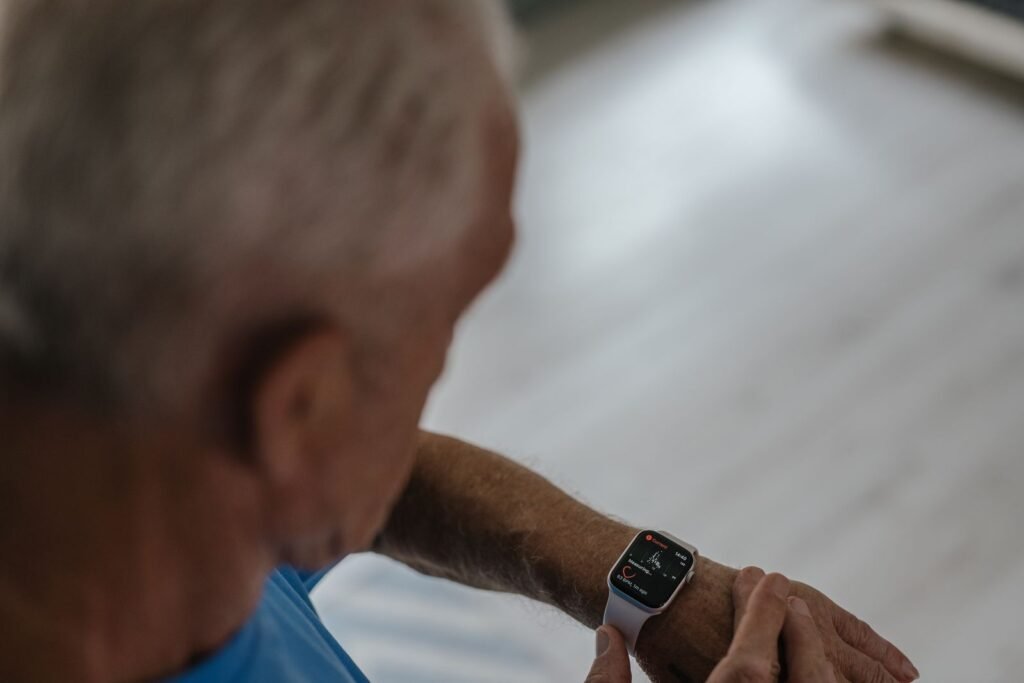
If you live with COPD, a wrist that can show your oxygen level sounds like a gift. No clip on your finger, no extra gadget in the drawer, just a number you can glance at all day. The catch is that COPD is exactly the situation where a wrist sensor is hardest to trust.
This guide to choosing a smartwatch for COPD sticks to what research actually found. It covers which readings are worth looking at, where the errors creep in, how the popular watches compare, and the point where you still need a proper fingertip oximeter.
Quick answer
A smartwatch can be a useful trend tracker for COPD, covering resting heart rate, overnight oxygen dips, breathing rate and daily activity. It is not a substitute for a medical pulse oximeter. Studies in people with COPD found wrist readings that were fine at rest but drifted when oxygen was low or when the person was moving. Use the watch to spot patterns, and confirm any worrying number with a fingertip device and your care team.
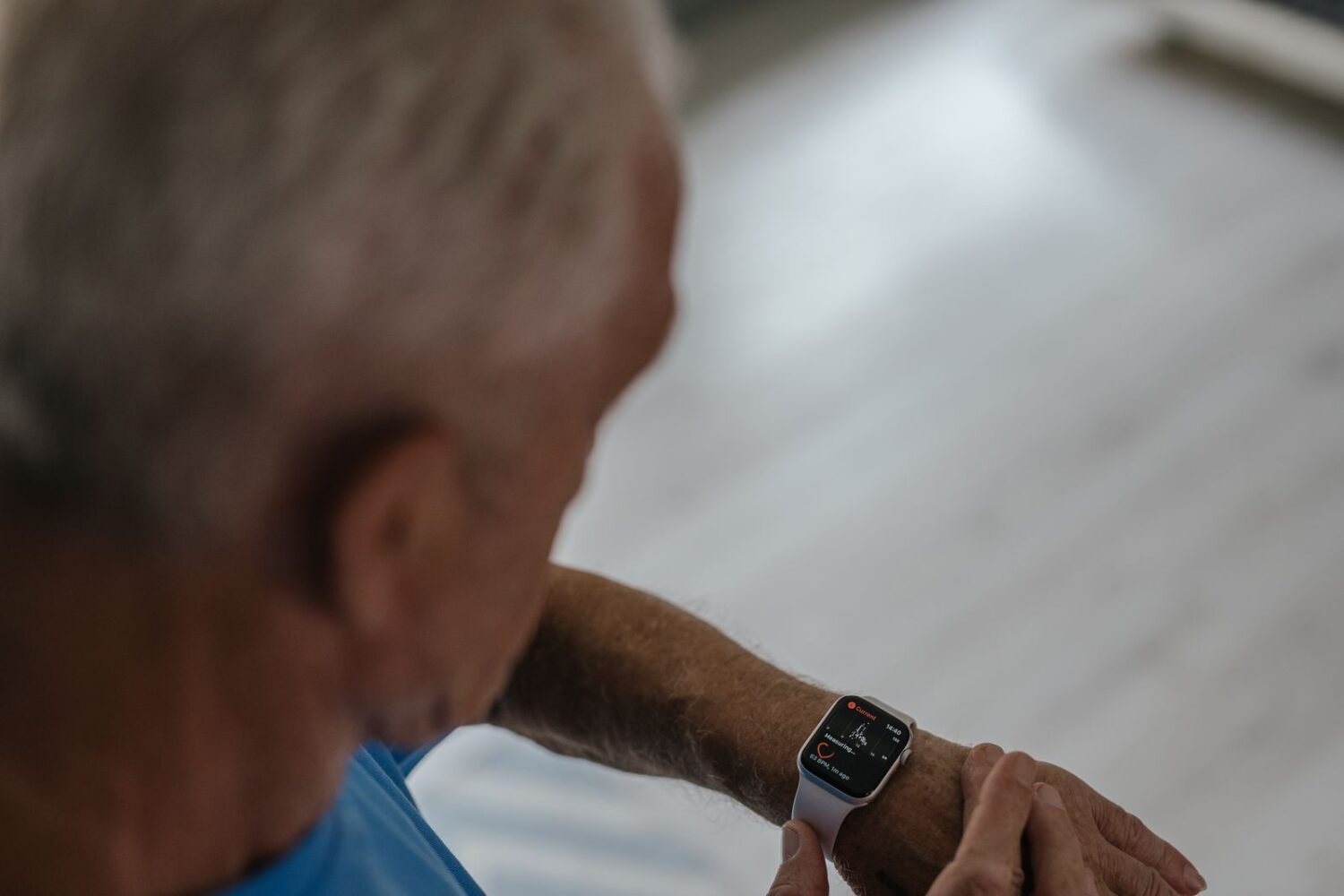
Why COPD Patients Look at Smartwatches
COPD is common and it keeps people in and out of care. The CDC reports that 854,000 emergency department visits in the US had COPD as the main diagnosis, and state level prevalence in 2022 ranged from about 3% of adults in Hawaii to 12% in West Virginia. Flare-ups, called exacerbations, often build over days. That is why people want something that watches for early changes in the background.
Sources: CDC FastStats and CDC state-level COPD estimates; JMIR Aging patient interviews.
What a Smartwatch Can Track for COPD
Most modern watches offer the same core set of sensors. How useful each one is for someone with COPD varies a lot, so here is an honest ranking.
| Metric | How useful for COPD | Main limitation |
|---|---|---|
| Resting heart rate | Good for spotting a sustained rise over several days | Illness, stress and caffeine also move it |
| Blood oxygen (SpO2) | Useful for overnight dips and trends at rest | Less accurate when levels are low or when you move |
| Breathing rate | A rising baseline can be an early warning sign | Usually measured during sleep, not during activity |
| Daily steps and activity | Shows whether your good days and bad days are changing | Counts movement, not effort or breathlessness |
| Sleep tracking | Helps you see restless nights and frequent waking | Stages are estimates, not a sleep study |
Notice what is missing. No mainstream watch measures lung function, tells you when to use a rescue inhaler, or detects an exacerbation by itself. They record numbers, and you or your clinician interpret them.
What the Research Found on Wrist SpO2 in Lung Disease
The evidence is mixed, and the mix matters. Here is what the better-known studies reported.
- It looked fine in a mixed group at rest. A study of 100 people with lung disease and healthy volunteers compared an Apple Watch with conventional oximeters. Of those, 23 had COPD, 61 had interstitial lung disease and 16 were healthy. The researchers saw no significant differences in SpO2 or heart rate, though the correlation was only moderate.
- It held up in an emergency setting. One study of patients arriving with an acute COPD flare concluded that the Apple Watch Series 6 was accurate and reliable compared with a medical pulse oximeter and a blood gas test. Patients who breathed fast sometimes needed several attempts to get a reading.
- It drifted during exercise rehab. In pulmonary rehabilitation, the Apple Watch Series 7 and Garmin Vivosmart 4 overestimated SpO2 when true saturation was under 95% and underestimated it when saturation was above 95%. The authors advised against using wearables for oxygen monitoring in that setting.
- Accuracy varies by model. A Duke study of 49 mostly lung-disease patients at rest found an average error of 2.2 percentage points for the Apple Watch Series 7 and 5.8 for the Garmin Venu 2S. Our guide to smartwatch blood oxygen accuracy digs into why that gap is so large.
Do not rely on the watch when you feel bad
If you are struggling to breathe, your lips look blue, or you feel confused, act on your symptoms and your action plan. Do not wait for the watch to confirm it. Breathing trouble also makes your wrist move, which is exactly when a watch is least able to read oxygen.
The Stillness Problem
A watch needs a flat, steady wrist for roughly 15 seconds to take a spot SpO2 reading. In interviews with COPD patients who tried an Apple Watch against a finger oximeter, that was a recurring complaint. When your breathing is labored, you tend to shift, lean forward and move your arms, which is when you most want a reading. Overnight and background readings avoid this problem, which is why they are more dependable than a quick check in the middle of a flare.
Can a Watch Screen for COPD?
Researchers are trying. In one diagnostic accuracy study, a Huawei watch combined heart rate, breathing rate, oxygen saturation and temperature to flag likely COPD. Vital signs alone reached 68.2% accuracy. Adding the sound of coughing lifted it to 82.6%. That is interesting science, but it is a screening experiment and not a product feature you can buy today.
Which Smartwatch Features Matter Most
Since no watch is a medical device for COPD, shop for the features that make daily tracking comfortable and consistent. Here is how the main options line up.
| Watch | Best for | Worth knowing |
|---|---|---|
| Apple Watch Series 11 | iPhone owners who want overnight vitals in one place | Oxygen is a wellness feature in the US, calculated through the paired iPhone |
| Samsung Galaxy Watch 8 | Android users who want sleep and oxygen trends | Needs frequent charging if you track sleep every night |
| Garmin Venu or Forerunner | Multi-day battery and all-day breathing rate | Garmin’s SpO2 was the weaker result in the Duke comparison |
| Withings ScanWatch 2 | Long battery life and a classic watch look | Fewer apps, simpler experience |
| Google Pixel Watch | Android users who like the Fitbit health app | Best readings still need a still wrist and snug fit |
Features change with each software update. Check the manufacturer’s page for your exact model before buying.
Beyond brand, a few practical points matter for COPD:
- Battery life. A watch that survives several days is more likely to be worn overnight, which is when SpO2 data is most useful. Our list of smartwatches with the longest battery life is a good starting point.
- Screen and buttons. A bright, large display helps if you are tired or short of breath.
- Fit. A snug, comfortable band cuts down on failed readings.
- Emergency features. Fall detection and an SOS button are useful extras if you live alone.
How to Use a Smartwatch Alongside Your COPD Plan
- Get a fingertip oximeter too. Treat the watch as the always-on tracker and the fingertip device as the one you trust for decisions.
- Learn your baseline. Record a week of normal resting heart rate, overnight oxygen and breathing rate when you feel well.
- Watch for sustained changes. A rising resting heart rate or more overnight dips across several days is worth mentioning to your care team.
- Take readings the right way. Rest your arm on a table, keep the watch snug, and stay quiet for the full measurement.
- Share the trends. Export or screenshot a few weeks of data for your next appointment instead of quoting single numbers.
- Follow your action plan. Your written plan from your clinician always outranks a wrist number.
If sleep is part of the picture, you might also like our look at a smartwatch for sleep apnea, since overnight oxygen dips matter in both conditions.
Frequently Asked Questions
Can a smartwatch diagnose COPD?
No. COPD is diagnosed with a breathing test called spirometry. Research watches can flag possible cases, but no consumer smartwatch can diagnose it.
Is smartwatch blood oxygen accurate enough for COPD?
It can be reasonable at rest, but studies found errors that grew when oxygen was low or when people exercised. Confirm important readings with a fingertip pulse oximeter.
What blood oxygen level is normal with COPD?
Targets differ from person to person. Many people with COPD have a lower baseline than healthy adults, so ask your doctor what range is right for you.
Which smartwatch is best for COPD?
No watch is clearly best, since none is a medical device for the condition. Choose one with a comfortable fit, good battery life and overnight oxygen and breathing tracking, then use it for trends.
Does Medicare or insurance cover a smartwatch?
Usually not for a standard consumer smartwatch. Home oximeters and remote monitoring programs prescribed by a clinician are more likely to be covered, so ask your provider.
Final Verdict
The Bottom Line
A smartwatch is a handy companion for COPD, good for tracking heart rate, breathing and overnight oxygen trends. It is a poor judge of whether you are in trouble right now. Pair it with a fingertip oximeter, share the trends with your care team, and let your symptoms and action plan make the call.
This article is for general information and is not medical advice. If you have severe shortness of breath, chest pain, confusion or blue lips, seek emergency care immediately.
Sources and Further Reading
- Scientific Reports: Comparison of SpO2 and heart rate on Apple Watch and commercial oximeters in patients with lung disease
- PubMed: Accuracy of the Apple Watch in measuring oxygen saturation, comparison with pulse oximetry and ABG
- PubMed: Noninvasive oxygen saturation in COPD during pulmonary rehabilitation, smartwatch versus pulse oximeter
- JMIR Aging: Experiences of patients with COPD using the Apple Watch versus a finger pulse oximeter
- PLOS Digital Health: Accuracy of blood oxygen measurements in consumer smartwatches
- Smartwatch-based ventilatory assessment for COPD screening: a diagnostic accuracy study
- CDC FastStats: Chronic Obstructive Pulmonary Disease
- CDC: State estimates of COPD
Featured image: SHVETS production on Pexels.
About this article: GeekBlog covers U.S. technology news, AI, phones, smartwatches and gaming. Every story is written and checked under our Editorial Policy. Spotted a mistake or have a story tip? Contact our editors.
