

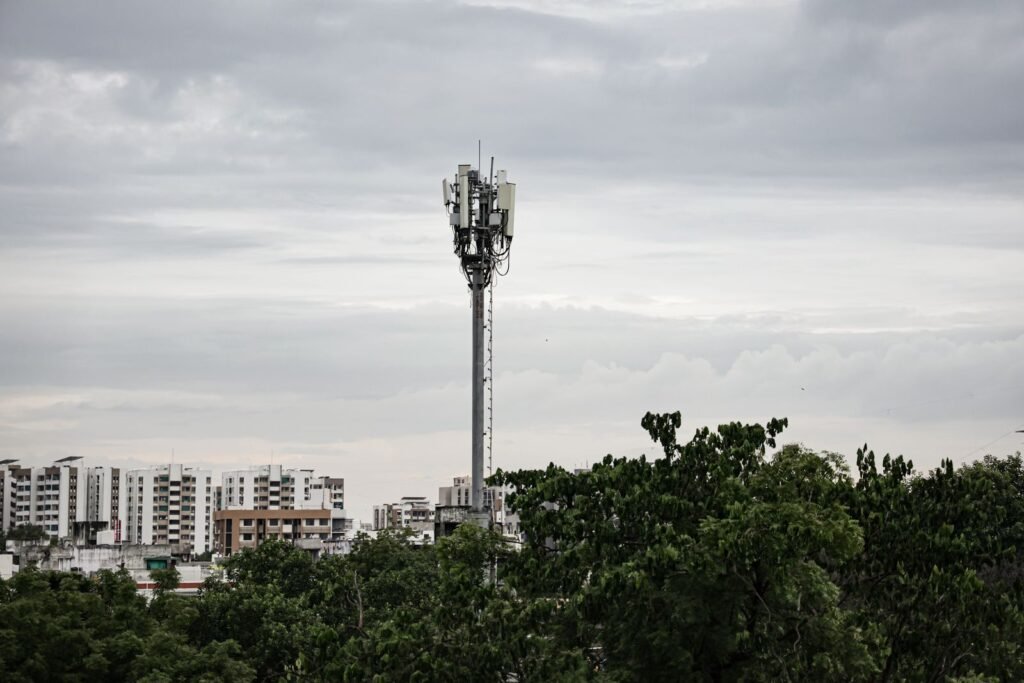
Elon Musk has been promising for months that Starlink would become a real phone carrier, not just a satellite backup for dead zones. On November 4, 2026, that promise picked up its first piece of serious ground equipment. Qualcomm announced that SpaceX has chosen its Dragonwing cellular infrastructure platforms to power the base stations of Starlink Mobile’s planned nationwide 5G network.
Qualcomm calls it “our biggest 5G deal yet.” The multi-year agreement covers “tens of thousands of sites,” and deployment is due to begin in 2027. Musk celebrated on X, writing that “at last there will be one network with good signal everywhere!”
It is a real milestone. It is also only one box ticked on a long checklist. A radio needs a place to live, spectrum to transmit on and customers to serve, and on two of those three SpaceX still has more questions than answers. Here is what the Qualcomm deal actually covers, what is still missing, and what it means if you pay Verizon, AT&T or T-Mobile today.
What SpaceX and Qualcomm actually agreed
The announcement is short on money and long on hardware. According to Qualcomm and SpaceX, Starlink Mobile will build its terrestrial network on two Dragonwing platforms:
- Dragonwing QRU100 handles the radio unit, the part bolted to the tower or rooftop that actually sends and receives signals to your phone.
- Dragonwing QDU100 handles baseband processing, the computing that schedules traffic, encodes data and decides which phone gets which slice of the airwaves.
- The radios will use Massive MIMO with 64 transmit and 64 receive paths (often written 64T64R), the same class of antenna array the big carriers use in busy city sites to steer beams toward individual users.
Qualcomm says the base stations are “designed to improve coverage, capacity and spectral efficiency, helping the network serve more traffic efficiently.” The chips are also pitched as power efficient, which matters when you are paying the electricity bill on tens of thousands of sites.
Starlink senior vice president Michael Nicolls framed the goal in consumer terms: “We shouldn’t live in a time where phone calls are still dropping whether you’re at home or on-the-go.” Qualcomm executive vice president Durga Malladi went further, saying the partnership would advance 5G today “with an opportunity to lay the foundation for AI-native 6G in the years ahead.”
Why SpaceX needs towers at all
If Starlink is a satellite company, why is it buying base station chips? Because satellites alone cannot do what a phone carrier does.
Today’s Direct to Cell service, which powers T-Mobile’s T-Satellite, is good at texts, basic data and emergency messages when you are far from any tower. It is not good at the things people actually do on phones most of the day: streaming video on a train, calling from inside an office building, or sharing a stadium with 60,000 other people. A satellite beam covers a huge area, so its capacity gets split among everyone underneath it, and the signal struggles to get through walls and roofs.
Ground sites fix that. They sit close to users, reuse the same spectrum over and over across a city, and push signal indoors. SpaceX’s own description of Starlink Mobile is now “a fully integrated nationwide satellite and terrestrial network,” with towers covering cities and satellites covering everything else. The Qualcomm deal is the first concrete sign of what the terrestrial half will be built from.
That is also a quiet admission of something rival carriers have been saying for weeks. When T-Mobile’s CEO called satellite “an inferior version” of the fixed wireless internet his company sells, he was making the same point from the other side. We covered why all three big carriers turned down a Starlink MVNO deal last week, and that refusal is exactly why SpaceX now has to build its own ground network.
Starlink Mobile, step by step
Seen as a sequence, the plan is coherent. SpaceX started with spectrum because spectrum is the scarcest ingredient and the slowest to acquire. The 2GHz airwaves from EchoStar are good for capacity but weak at reaching indoors, which is why the company followed up with low band 800MHz licenses. Our breakdown of what the 14MHz Grain deal does and does not solve explains why that purchase matters for in building coverage. Now it has the radios. What it does not have yet is somewhere to put them.
The missing piece: towers, and possibly a carrier
Telecom analyst Tim Farrar of TMF Associates put it plainly to TechRadar: “This deal is an important part of building a new mobile network in the US. But even more important will be for Starlink to secure the spectrum and tower leases that will be used with the Qualcomm equipment.”
That is the gap in Wednesday’s announcement. SpaceX has not named a tower partner and has not said how many new towers it might need. In the US, carriers rarely own most of their sites. They lease space on structures run by companies such as American Tower, Crown Castle and SBA Communications, which can host several carriers on a single tower. Earlier reports said SpaceX was negotiating access to around 80,000 cell sites, but no agreement has been announced.
Farrar’s suggested shortcut is telling: “I think a purchase of the remaining EchoStar spectrum assets and a settlement with the tower companies is the easiest and quickest way to go about that, especially as Starlink intends to start deploying equipment next year.” That lines up with the Washington Post’s report this week that SpaceX is in talks to acquire Boost Mobile from EchoStar. Buying Boost would bring an existing subscriber base, a retail brand and, potentially, a path into the tower leases EchoStar signed when it was building its own network.
| Building block | Status | What it means |
|---|---|---|
| Mid band spectrum (2GHz) | Owned, FCC approved | Capacity for satellites and ground sites |
| Low band spectrum (800MHz) | Agreed, awaiting FCC | Better range and indoor coverage |
| Base station hardware | Qualcomm deal signed | Radios and baseband for the ground network |
| Tower and rooftop sites | No partner announced | The biggest open question |
| Next-gen phone satellites | FCC cleared, launches mid 2027 | Coverage outside cities |
| Phone chips | In development | SpaceX is hiring for custom RF modules |
| Customers and retail | Boost Mobile talks reported | A ready-made subscriber base if it closes |
Green: in hand. Amber: agreed or under way. Red: not yet announced.
Qualcomm has been here before
Qualcomm is best known for the modems inside your phone, not the gear on the tower. It started pushing into 5G infrastructure around 2020, and its earlier customers include Verizon, Vodafone in Europe and, notably, Dish.
That last name is a useful warning. Dish, now EchoStar, spent years building a brand new 5G network from scratch, using the same open, software driven approach SpaceX appears to be taking. It reached millions of potential customers on paper, then ran out of runway. In 2025 EchoStar agreed to sell spectrum to AT&T and to SpaceX, and Boost Mobile shifted much of its traffic onto AT&T’s network. The very airwaves that now anchor Starlink Mobile came from a company that discovered how hard it is to be America’s fourth carrier.
SpaceX has two things Dish never did: a satellite network already serving millions of customers, and access to enormous amounts of capital after its record IPO. That does not make towers appear faster, but it does mean money is less likely to be the bottleneck.
What this means for you right now
If you are a customer of one of the big carriers, nothing changes today. Here is the practical picture:
- T-Mobile’s T-Satellite keeps working. It already runs on Starlink’s Direct to Cell satellites, and nothing in this announcement affects it.
- You cannot sign up for Starlink Mobile yet. Ground deployment starts in 2027, and the reported target for a full phone service is 2028.
- Your current phone may or may not work with it. SpaceX has not published which bands it will use on the ground or what device support will look like. It is building its own RF modules, which suggests the best experience may need newer phones.
- Competition is already doing its job. The prospect of a well funded fourth carrier has pushed the big three to talk up their own satellite options. Our guide to how SpaceX plans to become your next wireless carrier covers the full strategy if you want to follow it as it unfolds.
Frequently asked questions
What is Starlink Mobile?
Starlink Mobile is SpaceX’s planned US cell phone service. It combines Starlink’s direct to phone satellites with a ground network of cell sites, aiming to compete with Verizon, AT&T and T-Mobile rather than just filling dead zones.
What does Qualcomm provide for Starlink Mobile?
Qualcomm supplies its Dragonwing QRU100 radio unit platform and QDU100 baseband platform for Starlink Mobile’s terrestrial base stations, using 64T64R Massive MIMO radios. The multi-year deal covers tens of thousands of sites.
When will Starlink Mobile launch?
Base station deployment begins in 2027, alongside the launch of next-generation satellites in mid 2027. Reports put the target for a full mobile service in 2028, but SpaceX has not given an official launch date.
Is SpaceX buying Boost Mobile?
The Washington Post reported that SpaceX is in talks to acquire Boost Mobile from EchoStar. Neither company has confirmed a deal.
Will Starlink Mobile work on my current phone?
SpaceX has not said yet. Satellite texting already works on many recent phones through T-Mobile, but compatibility with the new ground network will depend on which bands SpaceX uses and on device certification.
Sources and further reading
- TechRadar: SpaceX joins forces with Qualcomm to build Starlink Mobile 5G network
- CNBC: SpaceX signs deal with Qualcomm to provide network technology for U.S. mobile service
- Not a Tesla App: SpaceX taps Qualcomm to build nationwide Starlink Mobile network
About this article: GeekBlog covers U.S. technology news, AI, phones, smartwatches and gaming. Every story is written and checked under our Editorial Policy. Spotted a mistake or have a story tip? Contact our editors.
