

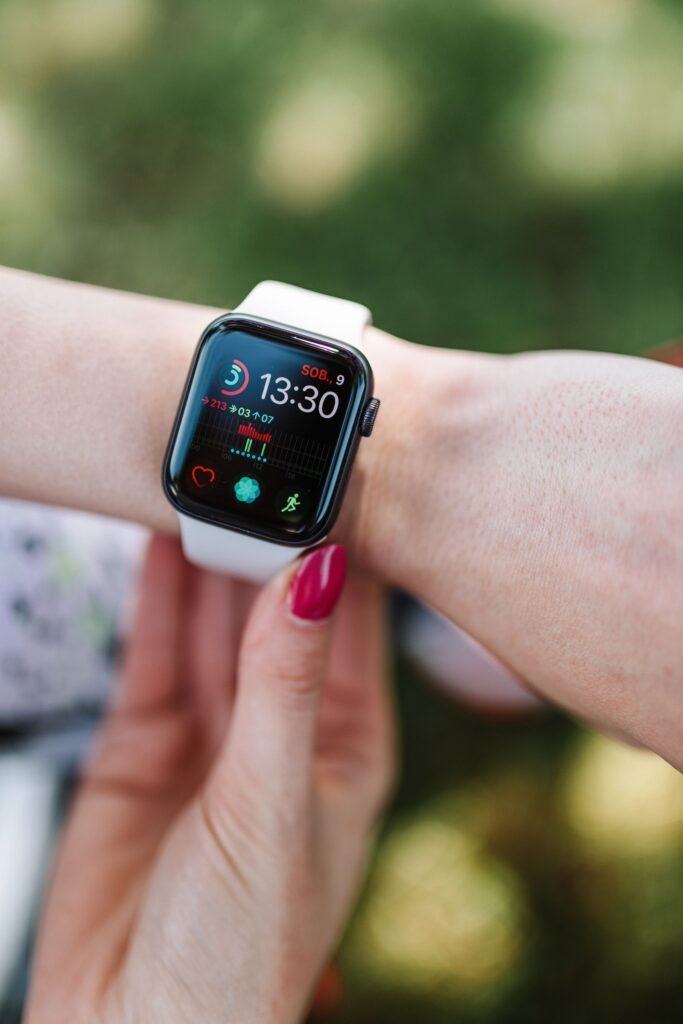
When Apple released the Series 11 in September 2025, it landed in a slightly awkward spot: clearly the newer watch, yet sitting next to a Series 10 that still looks and feels almost identical. If you are choosing between them in 2026 — buying new, hunting a discounted older model, or wondering whether to trade up — the Apple Watch 10 vs 11 decision comes down to a short list of real differences rather than a sweeping generational leap. Here is what actually changed and who should care.
Quick Answer
If you are buying new and the price gap is small, get the Series 11 — you gain a 24-hour battery rating, tougher glass and 5G on cellular models for the same launch price the Series 10 carried. If you already own a Series 10, do not rush to upgrade: the headline health features (hypertension notifications and Sleep Score) arrive on your watch through watchOS 26 anyway. And if you spot a Series 10 at a steep refurbished discount, it remains an excellent buy.
The same design, and the same chip
Start with what didn’t move. Both watches share Apple’s thin, large-screen design with bright always-on LTPO OLED displays, the same case sizes, and the same overall look on the wrist. More surprisingly, they also share a processor. For the first time in the line’s history, Apple did not give its newest watch a new chip — the Series 11 runs the same S10 silicon as the Series 10, a 64-bit dual-core processor paired with a four-core Neural Engine and 64GB of storage. In practice that means day-to-day speed, app launching, and Siri response feel the same on both. If you were expecting the Series 11 to be dramatically faster, it isn’t, and that sameness is the backdrop for everything else here.
That shared foundation is genuinely good news for anyone weighing a used Series 10. There is no processor gap to “grow out of,” no slower silicon that will feel sluggish a year from now, and both watches are in line for the same watchOS updates for the foreseeable future. When the hardware underneath is identical, the conversation shifts to a handful of targeted upgrades rather than raw performance.
The health features that set them apart
The most talked-about upgrades are on the health side. The Series 11 launched alongside hypertension notifications, which use the optical heart sensor to look for signs of chronic high blood pressure over roughly 30-day windows and nudge you to check it properly if the watch sees a pattern. It also debuted a Sleep Score, distilling your night into a single number with a breakdown of how often you woke and how restorative your rest actually was. For anyone using the watch as a serious health tool, those two additions are the features that grabbed the headlines.
Here is the crucial nuance the spec sheet hides: both of those features ship through watchOS 26 software, not Series 11 hardware. Apple has confirmed hypertension notifications reach the Series 9 and later (plus Ultra 2 and later), and Sleep Score arrives on the same broad set of watches. That means a Series 10 running the latest software gets hypertension alerts and a Sleep Score too. So while these are marketed as the reason to buy an 11, they are not exclusive to it. If you already own a Series 10, you are missing far less than the launch marketing implies — in fact, on the two most-hyped features, you are missing nothing at all. If sleep is your main reason for wearing a tracker, it is also worth reading how a dedicated device stacks up in our Withings Sleep Analyzer review before you decide the watch is the right tool.
Battery life: the upgrade you’ll feel daily (with a caveat)
If there is one practical improvement most people will notice, it is battery — though it deserves an honest asterisk. The Series 11 is rated for up to 24 hours of normal use, a step up on paper from the 18-hour rating that defined Apple Watches for years, and Apple says it stretches to around 38 hours in low power mode. Fast charging is quick too, with roughly 8 hours of use from a 15-minute top-up.
The caveat: reviewers who have tested both note that part of that jump is a measurement change rather than a pure hardware leap. Apple’s newer 24-hour estimate folds in about six hours of power-efficient sleep tracking that older ratings didn’t count, so the real-world gap between a Series 10 and a Series 11 is real but more modest than “18 to 24” suggests. Even so, for sleep tracking that extra headroom genuinely changes the routine: a Series 11 comfortably survives a full day plus an overnight and a quick shower-time top-up, whereas the older 18-hour figure left less margin. It is not a multi-day battery like some rivals, but it makes all-day-plus-all-night wear noticeably less stressful.
Durability and connectivity
The Series 11 also toughened up its screen. On the aluminum models, Apple says the Ion-X cover glass is about twice as scratch resistant as the Series 10’s, along with improved visibility in bright outdoor light. It is the kind of upgrade you never notice until months down the line, when your watch face has fewer hairline marks than it otherwise would — useful if you are hard on your gear or skip a screen protector.
On the cellular models, the Series 11 added support for 5G — specifically a power-efficient flavor called 5G RedCap — letting it connect to modern networks on its own without leaning on a paired iPhone, and doing so without the battery hit full-fat phone 5G would bring. For most buyers this is a minor footnote rather than a deciding factor, since the GPS-only models are unaffected and LTE was already perfectly serviceable. But if you rely on an untethered, cellular watch for runs and calls away from your phone, it is a forward-looking touch.
Apple Watch Series 10 vs 11: the spec comparison
| Feature | Apple Watch Series 10 | Apple Watch Series 11 |
|---|---|---|
| Launch price (GPS) | $399 (42mm) / $429 (46mm) | $399 (42mm) / $429 (46mm) |
| Battery (rated) | Up to 18 hours | Up to 24 hours (~38h low power) |
| Chip | S10 SiP | S10 SiP (same) |
| Hypertension & Sleep Score | Yes, via watchOS 26 | Yes, out of the box |
| 5G (cellular models) | LTE only | 5G RedCap + LTE |
| Durability | Ion-X glass | Tougher Ion-X, ~2x scratch resistant |
| Best for | Bargain hunters buying refurbished | New buyers wanting the longest support runway |
Specs reflect Apple’s published figures and 2026 US launch pricing; discounted street prices vary and are discussed below.
Price, and what that means for the decision
Apple held pricing steady, which is the detail that really shapes this comparison. The Series 11 starts at around $399 for the 42mm aluminum GPS model and roughly $429 for the larger 46mm, with cellular versions from about $499 and $529 — the same launch pricing the Series 10 carried. Because the new watch costs no more than the old one did at launch, a brand-new Series 10 on shelves only makes sense if it is meaningfully discounted.
In practice, 2026 pricing has been fluid. The Series 11 has repeatedly dipped to around $299 for the 42mm and $329 for the 46mm during sales, roughly $100 off list. That matters, because when the current model is on sale it can undercut a full-price older one — always check the live price of both before deciding.
Buying a used or refurbished Series 10
This is where the Series 10 shines. Apple’s own certified refurbished store has listed Series 10 models from roughly $209 to $339 depending on size and connectivity, each carrying a full one-year warranty and the same fresh battery and casing you’d expect from new. Third-party sellers such as Back Market, Reebelo and Woot push discounts further — grade-A refurbished GPS units have appeared around $220 to $240, with savings advertised up to 60% off original retail.
The calculus is simple. If a refurbished Series 10 lands well below a discounted Series 11, you are giving up a slightly better battery rating, tougher glass and 5G on cellular — and getting the identical chip, identical design, and (thanks to watchOS 26) the same hypertension and Sleep Score features. For a lot of buyers that is an easy trade. Just prioritize sellers who offer a warranty and a return window, confirm the battery health, and make sure the watch is not activation-locked to a previous owner before you pay.
Who should upgrade, and who should skip
Upgrade to the Series 11 if you are coming from a Series 6, 7 or 8, if you wear the watch overnight and want the longest comfortable battery, if you are rough on the screen, or if you use a cellular watch untethered and want 5G on the newest network gear. New buyers with no watch at all should simply take whichever of the two is cheaper at the moment they buy, leaning toward the 11 when the gap is small for the extra years of software support.
Skip the upgrade if you already own a Series 10. The features being marketed as reasons to jump — hypertension alerts and Sleep Score — are already landing on your wrist through software, the chip is the same, and the remaining hardware differences are incremental. Your money is better saved for a genuinely new-generation watch down the line. To get more out of whatever you own, our guides on whether the Apple Watch is worth it in 2026 and setting a realistic Move goal are the fastest way to squeeze value from the watch already on your wrist.
Key Takeaways
- Same design and same S10 chip — the Series 11 is a refinement, not a redesign.
- Hypertension notifications and Sleep Score come via watchOS 26, so the Series 10 gets them too.
- Battery jumps from an 18-hour to a 24-hour rating, but part of that is a measurement change; the real-world gain is modest.
- Series 11 adds tougher, ~2x more scratch-resistant glass and 5G RedCap on cellular models.
- Launch prices match ($399/$429 GPS), so a Series 10 only wins when it is clearly cheaper — which refurbished units usually are.
The Bottom Line
The Apple Watch 10 vs 11 story is refinement, not reinvention: same design, same chip, but a longer battery rating, hardier glass, 5G on cellular models, and the headline health features that are actually shared through software. New buyers should tilt toward the Series 11 when the price gap is small; existing Series 10 owners should stay put and enjoy the updates; and bargain hunters should grab a warrantied refurbished Series 10 without a second thought.
Frequently Asked Questions
Is the Apple Watch Series 11 worth upgrading from the Series 10?
For most Series 10 owners, no. The chip is identical, and the two marquee health features — hypertension notifications and Sleep Score — arrive on the Series 10 through watchOS 26. Unless you specifically want the longer battery, tougher glass or 5G, the differences are incremental.
Do hypertension notifications and Sleep Score work on the Series 10?
Yes. Both are watchOS 26 features that Apple has confirmed reach the Series 9 and later (and Ultra 2 and later), which includes the Series 10. They are marketed alongside the Series 11 but are not exclusive to it.
How much better is the Series 11 battery, really?
Apple’s rating rises from up to 18 hours to up to 24 hours, with roughly 8 hours of use from a 15-minute charge. Reviewers note part of that jump reflects a change in how Apple measures the estimate, so the real-world improvement is meaningful for overnight wear but smaller than the numbers suggest.
What are the Apple Watch Series 11 prices?
At launch the Series 11 started around $399 (42mm GPS) and $429 (46mm GPS), with cellular models from about $499 and $529. Through 2026 it has frequently gone on sale to roughly $299 and $329, so check current pricing before buying.
Is a refurbished Series 10 a good buy in 2026?
It can be an excellent value. Apple’s certified refurbished Series 10 has listed from about $209 with a one-year warranty, and third-party sellers go lower. You give up the battery, glass and 5G upgrades but keep the same chip, design and software features.
Does the Series 11 have 5G?
Only the cellular models, and specifically a power-efficient version called 5G RedCap. GPS-only models are unchanged, and the older Series 10 cellular used LTE. For most people this is a minor difference.
Featured image: www.kaboompics.com on Pexels.
About this article: GeekBlog covers U.S. technology news, AI, phones, smartwatches and gaming. Every story is written and checked under our Editorial Policy. Spotted a mistake or have a story tip? Contact our editors.
