

Battery capacity has been the quiet arms race of the past three years, and it has been won almost entirely in China. While Apple and Samsung moved their flagship cells up by a couple of hundred milliamp hours at a time, Chinese brands went from 5,000mAh to 6,000mAh to 7,000mAh without making their phones noticeably thicker. Each step looked like the ceiling until the next one arrived.
The OnePlus 16 puts a number on the table that is hard to argue with. OnePlus has confirmed an October 12 launch in China, and the phone is going out with a 9,000mAh battery, a 200MP main camera, Qualcomm’s fastest mobile chip, and a display that runs at 165Hz across the whole system and climbs to 185Hz inside supported games. On raw specification it is the most aggressive mainstream flagship anyone has announced this year.
There is a catch, and it is not a small one. If you live in the United States or in Europe, this phone is not coming to a store near you, because OnePlus no longer sells there. Whether that matters to you depends on details most spec roundups skip entirely, and those details are worth more of your attention than the battery figure is.
What is confirmed, and what is still just circulating
OnePlus announced the launch date itself on Weibo and used its 2026 gaming conference in China to talk about performance, so some of this comes straight from the company. Other parts come from the usual supply chain leaks. The difference matters.
| Detail | What is claimed | Where it comes from |
|---|---|---|
| October 12 launch | China unveiling | OnePlus, on Weibo |
| Snapdragon 8 Elite Extreme Gen 6 | Described as the strongest performance OnePlus has shipped | OnePlus |
| 185Hz in games | Native 185fps in specific titles, 165Hz elsewhere | OnePlus gaming conference |
| 9,000mAh battery | Silicon carbon cell, 100W wired, 50W wireless | Consistent across many leaks and teasers |
| 200MP main camera | Plus a 50MP periscope telephoto | Widely reported |
| Chinese pricing | 4,999 to 7,499 yuan across four configurations | Leaked, not announced |
| Any US or European release | None. OnePlus has left both markets. | OnePlus, earlier in 2026 |
One more caveat on the display. Early leaks described a 240Hz panel, and that number is still floating around in roundups. What OnePlus actually described is 165Hz across the operating system with a ramp to 185Hz in a handful of optimized games. If you see 240Hz anywhere, it is an old leak that did not survive.
The battery jump is bigger than any single generation before it
OnePlus has been climbing this ladder for years, and the steps have been getting longer. The OnePlus 12 shipped with 5,400mAh. The OnePlus 13 went to 6,000mAh. OnePlus then skipped the number 14 entirely, for the same reason many Chinese brands avoid it, and the OnePlus 15 arrived with 7,300mAh, which was the largest cell in any phone sold through normal channels in the United States and Canada at the time.
Going from 7,300mAh to 9,000mAh is a 23 percent increase in a single generation. For context, that single jump is larger than the entire gap between the OnePlus 12 and the OnePlus 15. It is the kind of step that normally requires a phone to get thicker and heavier, and reports put the OnePlus 16 at around 8.1mm, which is roughly where the OnePlus 15 already sat.
How you fit 9,000mAh into a phone that thin
The answer is the anode. A conventional lithium ion cell uses graphite to hold lithium ions when the battery is charged. Silicon holds roughly ten times more lithium by weight, but it also swells as it fills, which cracks the electrode and kills the cell after too few cycles. The compromise that made it into shipping phones blends a small amount of silicon into a carbon structure that absorbs the expansion, which buys most of the density gain without destroying cycle life.
That is why capacity has been climbing so fast without phones getting fatter, and it is also why the split between brands that adopted silicon carbon cells and brands that did not has become the clearest dividing line in phone endurance. OnePlus has been on the aggressive side of it since the OnePlus 13.
The charging figures deserve a note, because they went sideways rather than up. The OnePlus 16 is reported at 100W wired, and earlier leaks had suggested 120W. A bigger cell at the same wattage takes longer to fill, so the practical charging time may be slightly worse than on the OnePlus 15 even though the endurance is much better. That is a reasonable trade, but it is a trade.
The display claim, translated
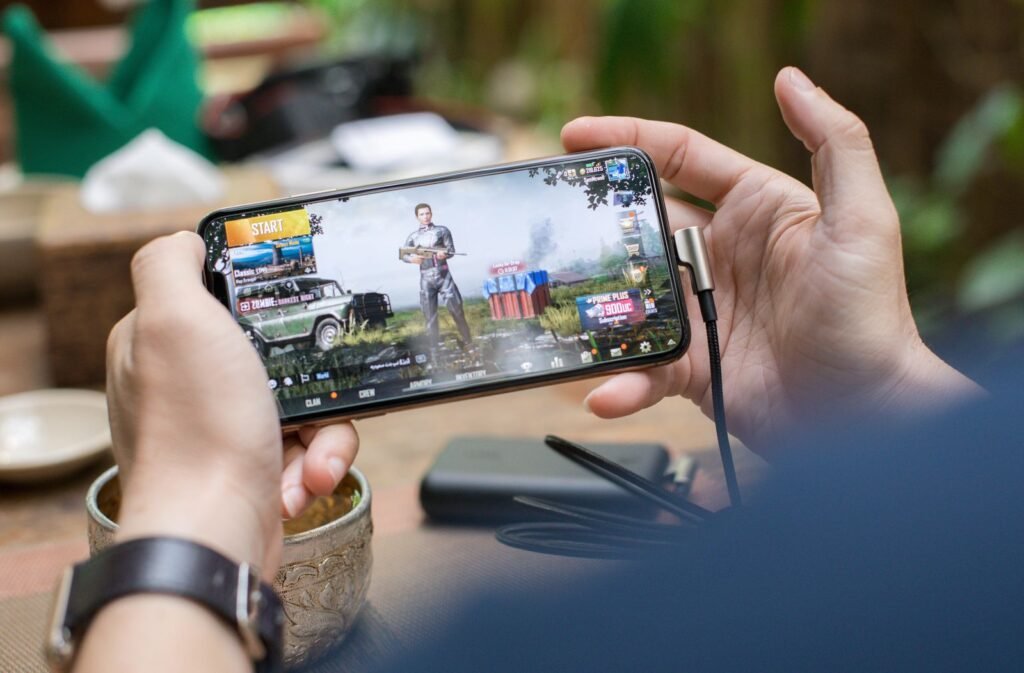
High refresh numbers on phone spec sheets have become slippery, so it is worth being precise about what OnePlus said. The panel is a BOE LTPO OLED. It runs at up to 165Hz throughout the interface, which is already unusually high, since most flagships top out at 120Hz. In a specific list of optimized games, including Arena Breakout, Naruto Mobile and Peace Elite, it will render at a native 185fps.
Native is the operative word there. Plenty of phones advertise high frame rates that are reached through frame generation, where the phone interpolates extra frames rather than the game engine producing them. Interpolated frames smooth motion but do not reduce input latency, which is the thing competitive players actually care about. A native 185fps means the game itself is running that fast.
Whether you will notice the difference between 165Hz and 185Hz is another question, and honestly, most people will not. The jump from 60Hz to 120Hz is obvious. Everything above 120Hz delivers rapidly diminishing returns for anyone who is not playing shooters competitively.
OnePlus 15 against OnePlus 16, where it counts
| OnePlus 15 | OnePlus 16 (reported) | |
|---|---|---|
| Battery | 7,300mAh | 9,000mAh |
| Wired charging | 80W in some regions | 100W SUPERVOOC |
| Main camera | 50MP | 200MP |
| Front camera | 32MP | 50MP |
| Display | 165Hz | 165Hz, 185Hz in supported games |
| Sold in the US and Europe | Yes | No |
Read the last row and then read the rest of the table again. Almost every line is a meaningful upgrade, and the one line that is a regression is the one that decides whether any of the others are available to you.
On the chip, the Snapdragon 8 Elite Extreme Gen 6 is the higher tier of a flagship generation Qualcomm split into two parts this cycle. The Extreme version clocks past 5GHz and carries the full set of AI cores, while the standard Gen 6 does not. OnePlus taking the Extreme tier is consistent with how it has positioned its flagships, and it is a real difference rather than a marketing suffix.
The import question, answered honestly
OnePlus confirmed earlier this year that it would stop launching new products in North America and Europe. We covered what that actually meant for people who already owned a OnePlus phone, and the short version was that existing devices bought through official channels keep their warranty and their updates. A phone you import from China is a completely different situation, and importers tend to discover the problems in a predictable order.
The first problem is cellular bands, and it is the one that cannot be fixed by software.
Low band spectrum is what makes a phone work in a basement, in a parking garage, and thirty miles outside a city. A phone missing n71 and the low LTE bands will often show bars in a downtown area and then fail in exactly the places where you need it most. Nothing you install can add a band the radio hardware does not cover.
What it costs in China
| Configuration | Reported price | Rough US equivalent |
|---|---|---|
| 8GB and 256GB | 4,999 yuan | About $700 |
| 12GB and 256GB | 5,499 yuan | About $770 |
| 12GB and 512GB | 5,999 yuan | About $840 |
| 16GB and 1TB, limited edition | 7,499 yuan | About $1,050 |
Treat the dollar column as arithmetic, not as a price. Currency conversion ignores tariffs, import duties, the reseller’s margin and shipping, and imported Chinese flagships routinely land 30 to 50 percent above the straight conversion by the time they reach a doorstep in the United States. An 8GB base configuration on a 2026 flagship is also worth noticing, since 8GB is thin for a phone running this much on device processing.
Frequently asked questions
Is the OnePlus 16 coming to the United States?
No. OnePlus stopped launching new products in North America and Europe earlier in 2026, and nothing in the October 12 announcement changes that. The only route is importing a China market unit, with the band, warranty and software issues that come with it.
Is the battery really 9,000mAh?
That figure comes from leaks and company teasers rather than a published specification sheet, but it has been consistent across many sources for months and OnePlus has been promoting battery life heavily. It is very likely correct, and it will be confirmed on October 12.
Does the display run at 240Hz?
No. Early leaks claimed 240Hz and some roundups still repeat it. What OnePlus described is 165Hz across the system and a native 185fps in a specific list of optimized games.
Will a bigger battery make the phone heavy?
Less than you would expect. Silicon carbon chemistry packs more energy into the same volume, and reports put the phone at roughly 8.1mm, close to the OnePlus 15. Weight has not been confirmed, and a cell this large will add some.
Is 100W charging a downgrade?
Not compared with the OnePlus 15, which shipped at 80W in some regions. It is a downgrade against earlier rumors of 120W, and a 9,000mAh cell at 100W will take longer to fill than a 7,300mAh cell at the same wattage.
Will it get Android updates if I import it?
China market builds follow a different update track from global builds and are tied to Chinese services. You may receive updates, but not the ones a global model would get, and changing region on these devices is not straightforward.
The bottom line
On the specification sheet, the OnePlus 16 is the most interesting flagship announced this autumn. A 23 percent battery increase in one generation, a 200MP main sensor replacing a 50MP one, Qualcomm’s top tier silicon and a genuinely native 185fps gaming mode add up to a phone that would have been an easy recommendation two years ago, when OnePlus still sold to you.
It does not sell to you now, and that changes the calculation completely. Importing means accepting a phone that may not hold a signal where you live, cannot be repaired locally, and runs software built for a different market. For a small number of people who live in dense urban coverage, know exactly which bands their carrier uses, and enjoy the tinkering, it may still be worth it. For everybody else, the OnePlus 16 is best understood as a preview of where battery capacity is heading rather than a phone to plan around. The 9,000mAh cell will show up in phones you can actually buy. It will just have a different name on the back.
Sources and further reading
- Android Authority: It’s official, the OnePlus 16 launches next month with Elite Extreme
- GSMArena: Here’s when the OnePlus 16 is launching
- Android Authority: We know pretty much everything about the OnePlus 16 now
- Android Authority: OnePlus 16 battery, configurations and pricing details leaked
- 91mobiles: OnePlus 16 to launch on October 12th in China with 185Hz display
- 9to5Google: OnePlus 15 officially has a 7,300mAh battery
