

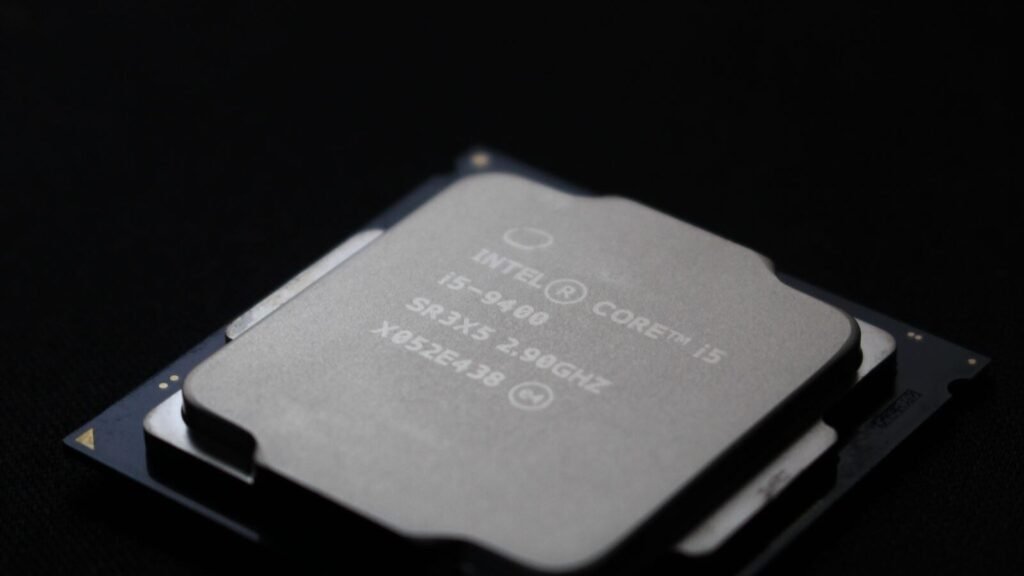
Qualcomm has spent a decade selling one flagship chip a year and letting phone makers argue over who got the best bin of it. That ended on September 22. There are now two chips at the top of the stack, the Snapdragon 8 Elite Gen 6 and the Snapdragon 8 Elite Extreme Gen 6, and the gap between them is not a clock speed footnote. One of them has dedicated AI hardware inside the graphics pipeline. The other does not.
We flagged the split back in August when it was still a rumor, and the shape of it was right. What nobody had was the detail of where Qualcomm drew the line, which turns out to be the most interesting part of the whole launch.
The numbers, side by side
Qualcomm quotes its gains against the Snapdragon 8 Elite Gen 5, so that is the baseline for everything below.
| Spec | 8 Elite Gen 6 | 8 Elite Extreme Gen 6 |
|---|---|---|
| Process | 2nm | 2nm |
| CPU | 8 core Oryon, 2 prime at up to 5GHz, 6 performance at up to 4GHz | Same layout, top bin clocked slightly higher |
| L2 cache | 16MB shared across both clusters | 16MB shared across both clusters |
| CPU vs Gen 5 | 10 percent faster, 37 percent better power efficiency | 13 percent faster |
| GPU | Adreno, three slices at 1.45GHz | Adreno, three slices at 1.45GHz, plus Matrix Cores |
| GPU vs Gen 5 | 35 percent faster, 40 percent better power efficiency | 44 percent faster |
| Adreno High Performance Memory | 12MB | 18MB |
| Video capture | Below the Extreme ceiling | 8K at 60fps, 4K slow motion at 240fps |
| Modem | X105, 14.8Gbps down, 4.2Gbps up | X105, 14.8Gbps down, 4.2Gbps up |
| Wi-Fi | FastConnect 8800, Wi-Fi 8, up to 11.6Gbps | FastConnect 8800, Wi-Fi 8, up to 11.6Gbps |
| Memory | LPDDR5X and LPDDR6, up to 5,300MHz | LPDDR5X and LPDDR6, up to 5,300MHz |
The 5GHz headline, and what it actually buys you
Qualcomm is the first to put a phone chip past 5GHz, and it is a genuine milestone, but it is worth understanding why the CPU gain is only 10 to 13 percent when the clock went up by a similar amount. A prime core that hits 5GHz on a 2nm process for a few hundred milliseconds inside a phone chassis is not a core that runs at 5GHz. Thermal headroom in a handset is measured in single digit watts, and the moment a sustained workload starts, the clock comes down.
The number that matters more is the efficiency one. Thirty seven percent better CPU power efficiency means the same work at meaningfully lower draw, which shows up as a phone that stays cool during a long video call rather than a phone that wins a benchmark. Early Geekbench 6 runs landed around 4,377 single core and 13,363 multi core, which is roughly a 13 to 14 percent single core improvement over the previous generation. That is a solid year, not a revolution.
Where the two chips genuinely diverge
The CPU is effectively the same silicon with a different top bin. The GPU is where Qualcomm built a real tier.
Adreno Matrix Cores are the headline. Qualcomm describes them as AI units built directly into the graphics pipeline, which is the same architectural idea Nvidia shipped as Tensor Cores on the desktop. They exist to run models where the pixels are, rather than shuttling data out to a separate NPU and back.
What they enable is Adreno Neural Fusion, Qualcomm’s name for doing super resolution and frame generation inside the render loop. If that sounds familiar it is because it is DLSS logic arriving on a phone: render fewer real pixels, reconstruct the rest, spend the saved power on frame rate or battery. On a device where the entire thermal budget is a few watts, that trade is worth more than it is on a desktop.
The 18MB of Adreno High Performance Memory is the unglamorous half of the same story. Qualcomm describes it as low latency memory sitting close to the GPU, holding tiles, frame buffers and compute data locally instead of pushing them out to system RAM repeatedly. More of it means fewer round trips, and the Extreme gets 50 percent more than the standard part.
The NPU is doing something new
The Hexagon NPU was rebuilt around the workloads people are actually running now. It carries twelve scalar units, eight vector units and one tensor unit, plus a new Element Accelerator designed specifically for transformer models, which is to say the architecture behind essentially every language model on a phone today.
On the Extreme, Qualcomm claims 35 percent better AI performance and 33 percent better performance per watt, and it can run Mixture of Experts models past 30 billion parameters entirely on device with context windows up to 32K. That is a genuinely large number for a handset. It is the difference between an assistant that sends everything to a datacenter and one that can hold a long conversation without a connection.
Which phones get which
Honor has already confirmed the standard Snapdragon 8 Elite Gen 6 for the Magic 9 line, and that is the pattern to expect: the standard part will carry the vast majority of 2027 Android flagships because it is the one that fits a normal flagship bill of materials.
The Extreme is expected to land in the Galaxy S27 Pro and S27 Ultra globally, with Samsung likely running a mix of Snapdragon and Exynos across the rest of the S27 line depending on region and model. Beyond Samsung, expect it in the small number of phones that are sold on gaming and video credentials rather than price.
The part nobody is putting on a slide
LPDDR6 support on both chips is quietly one of the most consequential lines in the announcement, and it arrives at the worst possible moment. Memory pricing has been brutal all year. It is why Poco reused last year’s chipset and said out loud that RAM prices were the reason, and it is why Xiaomi went to the trouble of pairing its own silicon with domestic LPDDR6 rather than paying market rates.
A new memory standard normally arrives at a premium and settles over eighteen months. This one is arriving into a market where the previous standard is already expensive. Whatever these chips cost to buy, the memory sitting next to them is going to be the line item that moves retail prices, and a 16GB flagship in 2027 may be a harder sell than it should be.
Frequently asked questions
Is the Snapdragon 8 Elite Extreme Gen 6 worth paying more for?
For most people, no. The CPU difference is three percentage points, the modem and Wi-Fi are identical, and the day to day experience will be indistinguishable. If you play graphically demanding games for hours or you shoot a lot of high resolution video, the Matrix Cores, the extra GPU memory and the 8K60 ceiling are real. Otherwise you are paying for headroom you will not touch.
Are both chips really 2nm?
Yes. Both are built on a 2nm process, which makes them the first mobile chips to get there and is the single biggest reason the efficiency numbers are as good as they are.
Do both chips support LPDDR6?
Both support LPDDR5X and LPDDR6 at up to 5,300MHz. Which one a given phone actually ships with is a decision the manufacturer makes based on cost, and given current memory pricing, plenty of them will stay on LPDDR5X.
What is Adreno Neural Fusion?
Qualcomm’s technique for running AI super resolution and frame generation inside the graphics pipeline rather than as a separate pass. It depends on the Adreno Matrix Cores, so it is exclusive to the Extreme.
Which is faster, the CPU or the GPU upgrade?
The GPU, by a wide margin. CPU gains are 10 to 13 percent while GPU gains are 35 to 44 percent. That tells you where Qualcomm spent its transistor budget this year, and it reflects that graphics and on device AI are now the workloads that differentiate a flagship.
When will phones with these chips ship?
The first devices arrive in the closing weeks of 2026, with the bulk of the flagship wave landing through the first half of 2027. Samsung’s Galaxy S27 line is the one most people are waiting for.
The bottom line
Qualcomm delivered a strong generation and then made it harder to buy. The engineering is real: a 2nm process, a smarter cache layout, a 35 to 44 percent GPU jump and an NPU rebuilt around transformer models are not incremental changes, and the efficiency figures suggest phones that run cooler rather than just faster.
The complication is that “Snapdragon 8 Elite Gen 6” no longer tells you what a phone can do. Matrix Cores, Neural Fusion, 18MB of GPU memory and 8K60 video sit behind a word in the middle of the name. Check for that word before you assume the chip in the phone you are buying is the chip from the reviews you read. And if the answer is the standard part, that is still an excellent processor. It is just not the one on the poster.
Sources and further reading
- Qualcomm press release: Snapdragon 8 Elite Gen 6 and 8 Elite Extreme Gen 6
- Qualcomm: Snapdragon 8 Elite Extreme Gen 6 specifications
- Android Authority: What is actually different between the two chips
About this article: GeekBlog covers U.S. technology news, AI, phones, smartwatches and gaming. Every story is written and checked under our Editorial Policy. Spotted a mistake or have a story tip? Contact our editors.
