

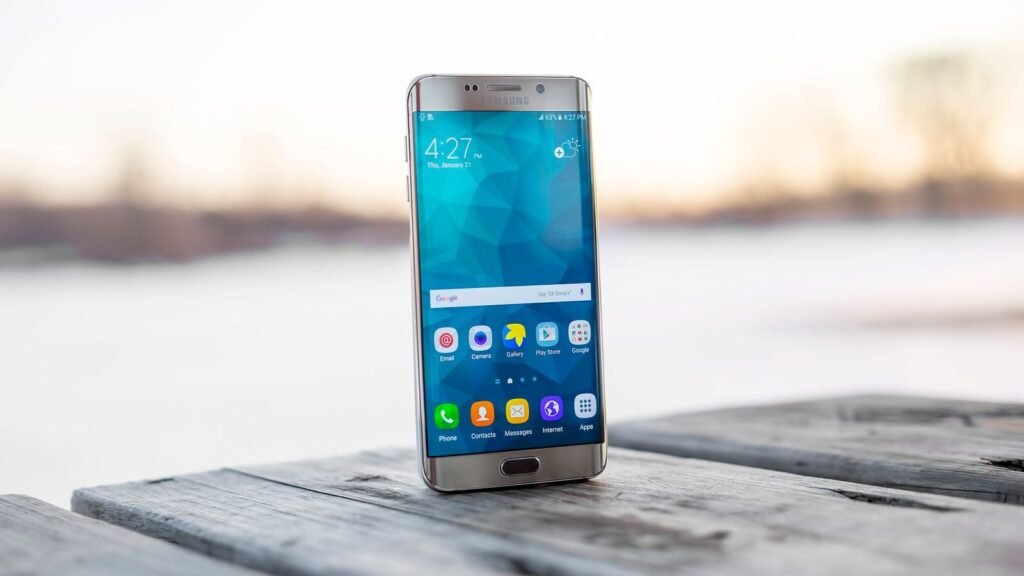
On September 14, Samsung Display walked through the specifications of its newest smartphone OLED stack at the launch of Vivo’s iQOO 16 in China. One number led every headline that followed: 10,000 nits. That is roughly the brightness of a bright overcast sky, coming out of a panel thin enough to sit in your pocket.
The number is real. It is also close to the least useful thing Samsung said that day. The figure worth your attention is 30 percent, and it has nothing to do with how bright the screen gets.
What Samsung actually announced
The M-series is Samsung Display’s naming scheme for the material stack inside a flagship phone panel, not the panel itself. The number refers to the generation of emitter and functional materials used in the sandwich. M16 is the newest, and the reference panel Samsung showed off is a 6.9 inch unit that will ship first in the iQOO 16.
| Specification | M16 reference panel |
|---|---|
| Peak brightness, 1% window | 10,000 nits |
| Peak brightness, full screen | 2,800 nits |
| Size and resolution | 6.9 inch, 2,560 x 1,440 (WQHD), 508 ppi |
| Refresh rate | LTPO, variable 1Hz to 165Hz |
| PWM dimming | 3,300Hz |
| Touch sampling | 5,000Hz |
| Color coverage | 1.24x DCI-P3 |
| Panel structure | LEAD 2.0, polarizer-free on-cell film, anti-reflective coating |
| Power draw | Up to 30% lower than the M14 stack |
One oddity in that list: there is no M15. Samsung has historically built even-numbered stacks for Apple and odd-numbered ones for everybody else, and this time the odd generation was cancelled outright, with its improvements folded into M16. That is why the efficiency claim is measured against M14 rather than against last year’s panel. It is a two-generation jump described as one.
Why 10,000 nits is not what it sounds like
Brightness claims for OLED panels always come with a hidden variable, and it is the size of the lit area. An OLED pixel generates its own light, and the whole panel shares a power and thermal budget. Light up one small patch and you can pour everything into it. Light up the entire surface and the same budget has to be spread across roughly a million times more pixels.
That is what a “1 percent window” means. Samsung lit up 1 percent of the panel area on an otherwise black frame and measured 10,000 nits there, for a burst lasting seconds. It is a legitimate measurement, and it maps to something real: the glint on a chrome bumper in an HDR video, the sun on water, a specular highlight in a photograph. It is not a measurement of how bright your screen will be while you read this article in a parking lot.
For scale, the industry crossed the 5,000 nit mark in a 1 percent window in early 2025. Doubling that in under two years is a genuinely fast pace for a display technology, and 10,000 nits happens to be the ceiling defined by current HDR mastering standards. There is nowhere obvious to go next on that particular metric, which is part of why the rest of the announcement matters more.
The polarizer is gone, and that is the real story
Every conventional OLED phone panel has a circular polarizer laminated on top. Its job is to stop ambient light from bouncing off the metal wiring inside the panel and washing out the image. It works, and it costs you dearly. The polarizer absorbs a large share of the light the panel emits on its way out, which means the emitters have to be driven far harder than the brightness you see would suggest.
The replacement is called color filter on encapsulation, or on-cell film in Samsung’s language. Instead of a separate polarizing layer, red, green and blue color filters are printed directly onto the thin-film encapsulation that seals the OLED. Those filters absorb the reflected ambient light while letting far more of the panel’s own light through.
The trade is not free, and it is worth knowing before you buy a phone based on a spec sheet.
Lower current means less heat, which means the panel can sustain high brightness for longer before throttling.
Lower current also means slower emitter aging, especially for the blue subpixel that limits OLED lifespan.
A thinner stack, which matters enormously in folding phones.
Ambient contrast in direct sun is the weak spot, which is why Samsung pairs the design with an anti-reflective coating.
Manufacturing is harder, and the filters have to be deposited with very tight alignment, which affects yield and therefore price.
What 30 percent less power actually buys you
On a modern phone the display is typically the largest single draw on the battery during active use, ahead of the modem and usually ahead of the chip outside of gaming. Cutting panel power by up to 30 percent is not a rounding error, and it arrives at a moment when the rest of the industry is solving the same problem with chemistry instead of physics.
Samsung gave a second, more concrete figure through iQOO: the new display draws roughly 31 percent less power at 150 nits than a comparable 1.5K panel. That comparison matters because 150 nits is close to normal indoor reading brightness, and because raising a panel from 1.5K to 2K resolution while also pushing refresh to 165Hz would normally cost battery life rather than save it. Doing both and coming out ahead is the trick.
It also puts the display alongside the other lever manufacturers have been pulling this year. Chinese brands have been buying endurance with denser cells, which we went through in detail when we compared silicon carbon packs against conventional lithium ion. A more efficient panel attacks the same problem from the other end, by needing less of what the battery holds. The two stack, and the phones that get both will pull away from the ones that get neither.
Which phones get it
This is where the story gets contested, and it is worth separating what has been confirmed from what has been reported.
| Device | M16 status |
|---|---|
| Vivo iQOO 16 | Confirmed by Samsung Display at the launch event. First Android phone with the stack, and the first phone of any kind with a 2K 165Hz panel. |
| iPhone Duo | Widely reported to use M16. Apple’s first foldable is exactly the kind of device a thinner, more efficient stack was built for. |
| iPhone 18 Pro and 18 Pro Max | Disputed. Korean supply chain reporting said yes, and Samsung’s own material list implies it, but the published display specs are identical to the iPhone 17 Pro and Apple quotes 3,000 nits full screen without giving a window figure. |
| Galaxy S27 Pro and S27 Ultra | Reported for early 2027. Samsung’s own phones have historically waited a generation behind Apple for the newest stack. |
| Pixel 11 series | Probably not. Earlier rumors pointed to M16, but the iQOO 16 being announced as the Android debut strongly implies Google is on an earlier generation. |
The iPhone 18 Pro question is the interesting one, because it is a good reminder of how little a material stack tells you about the finished product. A panel maker sells the stack. The phone maker decides how hard to drive it, what brightness ceiling to expose, and whether to spend the efficiency gain on a brighter screen or on a longer day. Apple has historically spent it on the second, which is roughly what showed up when we went through the real battery numbers on the iPhone 18 Pro.
The number nobody puts on the box
Buried in the specification list is 3,300Hz PWM dimming, and for a slice of readers it is the most important line on the sheet. OLED panels dim by switching the emitters on and off very rapidly rather than by reducing voltage smoothly, and at low brightness that flicker is deep enough to trigger headaches, eye strain and nausea in people who are sensitive to it.
The fix is to flicker faster, far above the frequency the human visual system can register. Cheaper panels still run at 240Hz or 480Hz. Moving to 3,300Hz puts this one among the highest rates shipping, and the panel also supports DC dimming at higher brightness levels. If you have ever put a phone down because it gave you a headache after twenty minutes in bed, this line matters more to you than the other nine combined.
Frequently asked questions
What is Samsung’s M16 OLED?
M16 is the sixteenth generation of Samsung Display’s luminescent material stack for flagship smartphone panels. It was detailed publicly on September 14, 2026 at the iQOO 16 launch, and it combines new emitter materials with Samsung’s second generation polarizer-free panel structure, LEAD 2.0.
Does the M16 panel really reach 10,000 nits?
In a 1 percent window, yes, which means a small bright highlight on an otherwise dark frame, sustained for seconds rather than minutes. Full screen brightness is 2,800 nits. Both numbers are real, and only the second one describes what happens when you use the phone outdoors.
What does polarizer-free actually mean?
Conventional OLED panels use a circular polarizer to stop ambient light reflecting off internal wiring, and it absorbs much of the panel’s own light in the process. Polarizer-free designs replace it with color filters printed onto the panel’s encapsulation layer, which block reflections while letting far more emitted light escape.
Why is there no M15?
Samsung skipped it. The company has typically reserved even-numbered stacks for Apple and odd-numbered ones for other customers, and the M15 generation was cancelled with its advances rolled into M16. That is why the 30 percent efficiency claim is measured against M14.
Which phones use the M16 OLED?
The iQOO 16 is confirmed and is the Android debut. The iPhone Duo is widely reported to use it, the Galaxy S27 Pro and Ultra are expected to in early 2027, and the iPhone 18 Pro is disputed. The Pixel 11 series most likely uses an earlier generation.
Will a brighter panel drain my battery faster?
Not necessarily, and that is the point of this generation. The panel reaches a given brightness using significantly less current than the previous stack, so at the brightness levels you actually use, it should consume less power rather than more.
Is 165Hz useful on a phone?
Only in games written to take advantage of it, and only if the chip can render that many frames. The bigger practical benefit of the LTPO design is the bottom of the range, where the panel drops to 1Hz on a static screen and stops redrawing content that is not changing.
The bottom line
Samsung led with 10,000 nits because 10,000 nits is a headline, and because it happens to be the ceiling written into current HDR standards, which makes it a satisfying place to plant a flag. It is a real measurement of a real capability that will show up as better looking highlights in HDR video, and it will change almost nothing else about using a phone.
The polarizer-free structure underneath it is the part that compounds. It makes panels thinner, cooler, longer lived and considerably less hungry, and it does so at a moment when memory prices are squeezing spec sheets and every manufacturer is looking for battery life that does not come from a bigger cell. A screen that needs less power to do the same job is the rarest kind of upgrade, because nobody has to give anything up to get it. The reviews will tell us in a few weeks whether the 30 percent survives contact with a finished phone.
Sources and further reading
- GSMArena: Samsung details its bright M16 OLED display
- SamMobile: Samsung unveils a 10,000 nit smartphone OLED
- TechRadar: 10,000 nit OLED with 30 percent efficiency gain
About this article: GeekBlog covers U.S. technology news, AI, phones, smartwatches and gaming. Every story is written and checked under our Editorial Policy. Spotted a mistake or have a story tip? Contact our editors.
