

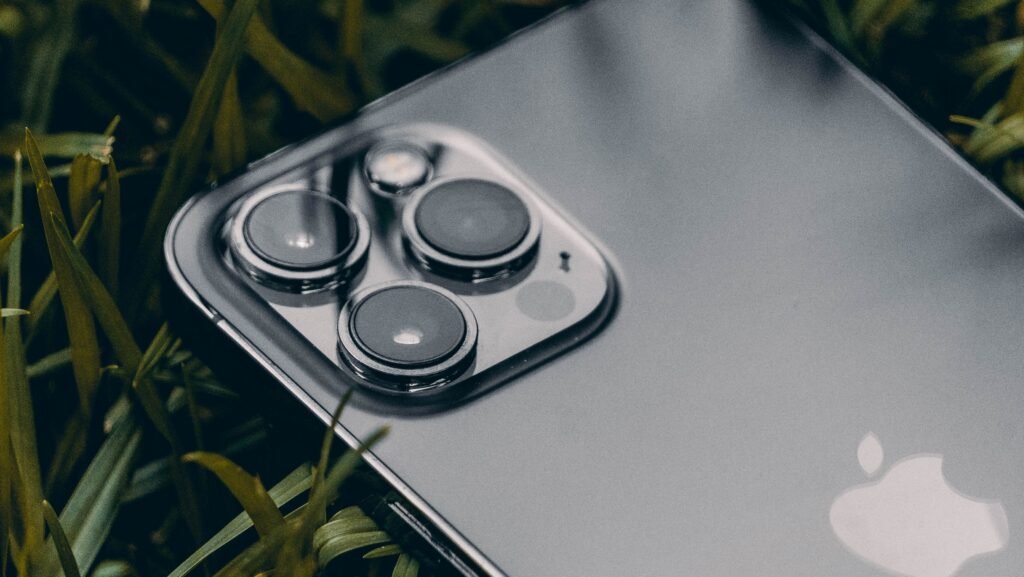
Motorola has not seriously competed for the American flagship buyer in more than a decade. It sells a lot of phones in the US, but they are Edge and Moto G phones, the ones that win on price and lose on spec sheets. On September 22, during Qualcomm’s Snapdragon Summit keynote, that changed. The Motorola Signature 27 showed up with the fastest mobile chip on the market, a 200MP periscope camera and a promise of seven years of Android updates. Everything about it reads like a phone designed to be compared against a Galaxy Ultra.
Everything except one line, which Motorola has not written yet. Nobody knows what it costs.
The spec sheet, with nothing hidden
Motorola gave a first look rather than a full launch, so some details are still coming. Here is everything confirmed or listed so far.
| Component | Motorola Signature 27 |
|---|---|
| Chipset | Snapdragon 8 Elite Extreme Gen 6, 2nm, prime cores up to 5GHz |
| Display | 6.8 inch LTPO AMOLED, 1264 x 2780, 165Hz, Dolby Vision, HDR10+, Gorilla Glass Victus 2 |
| Main camera | 50MP Sony LYTIA 910, 1/1.28 inch, 1.22µm, PDAF, 3.5 degree hardware OIS |
| Telephoto | 200MP periscope, 5x optical zoom, PDAF, OIS |
| Ultrawide | 50MP, f/2.0, 12mm, 122 degree field of view, autofocus |
| Selfie | 50MP, f/2.0, 21mm, dual pixel PDAF |
| Video | 8K at 30fps in Dolby Vision, 4K at 120fps, 1080p at 240fps |
| Battery | 6,000mAh silicon carbon |
| Charging | 90W wired, 50W wireless, 10W reverse wireless, 5W reverse wired |
| Memory | 12GB or 16GB RAM, 256GB to 1TB UFS 4.1, no card slot |
| Durability | IP68 and IP69, MIL-STD-810H tested, aluminum frame |
| Audio | Stereo speakers, Dolby Atmos, 24-bit/192kHz Hi-Res, Sound by Bang & Olufsen |
| Software | Android 17, up to seven major OS updates |
| Colors | Pantone Coal Smoke, Pantone Capulet Olive, textured rear panel |
| Availability | Global late 2026, US release in November |
The 200MP periscope is the actual story
A 200MP sensor on a phone is not new. A 200MP sensor behind a 5x periscope lens is a different proposition, and it is the reason this phone is worth paying attention to.
Here is why the combination matters. A periscope module folds the optical path sideways through a prism so a long focal length fits inside a 7mm chassis. The compromise has always been sensor size: there is not much room in that folded tunnel, so telephoto sensors have historically been small, which means they collect little light, which means zoom shots fall apart indoors and at dusk. Manufacturers papered over that with heavy sharpening and, increasingly, with AI reconstruction that invents detail rather than capturing it.
Putting 200 million pixels back there changes the arithmetic. Those pixels are individually tiny, so in low light the camera bins them in groups, typically sixteen to one, and outputs a 12.5MP image from a sensor that behaves like it has much larger pixels. In good light it can read the full array and crop into it, which gives you a genuine 10x or 12x frame that is a crop of real optical data rather than an upscale. The 5x native reach is already longer than most rivals, which sit at 3x or 3.2x.
The 3.5 degree hardware OIS figure on the main camera is worth a second look too. Most phone stabilizers correct roughly one degree of shake. Tripling that range does not make the camera sharper in a still frame, but it dramatically widens the window in which a long handheld exposure stays usable, which is exactly where phone cameras lose to real ones.
ArcticMesh, and why cooling is now a flagship feature
Motorola paired the Extreme chip with a redesigned cooling stack it calls ArcticMesh, built around a vapor chamber that is 40 percent larger than the one in the previous Signature. A vapor chamber is a sealed, flattened copper pocket holding a small amount of fluid. Heat at the hot end boils it, the vapor spreads across the whole chamber, it condenses where the phone is cooler, and a wick draws the liquid back. It moves heat sideways far faster than solid metal can.
This is not decoration. We wrote last week about how Qualcomm split its flagship into a standard Gen 6 and an Extreme tier, and the Extreme is the one with Adreno Matrix Cores, 18MB of dedicated GPU memory and an 8K60 video ceiling. Those are all sustained workloads. A prime core touching 5GHz is a marketing number that lasts a few hundred milliseconds. A GPU rendering at 44 percent above last generation for forty minutes of gameplay is a thermal problem, and the phone that manages the heat best is the phone that actually delivers the chip’s advertised performance.
The battery is the quiet upgrade
Six thousand milliamp hours in a phone this size is only possible because Motorola went with a silicon carbon cell rather than conventional lithium ion. Swapping graphite for a silicon composite in the anode lets the same physical volume hold meaningfully more charge, which is why Chinese flagships jumped past 6,000mAh while Western ones sat at 4,500mAh for years. We covered the chemistry and the reasons Apple and Samsung have been slow to adopt it in more detail.
Motorola’s charging spread is genuinely complete: 90W wired, 50W wireless, 10W reverse wireless and 5W reverse wired. Fifty watts over a coil is the number that stands out, because wireless charging wastes a meaningful fraction of what it delivers as heat, and most manufacturers cap it far lower to protect the cell. It also fits the pattern we saw at IFA, where the interesting Motorola charging trick was on the cheaper phone: the Edge 70 Plus shipped with bypass charging that routes power straight to the chip and leaves the battery out of the loop entirely.
Seven years of updates, from Motorola
This is the commitment that should raise eyebrows, in a good way and a skeptical one. Seven major Android versions puts the Signature 27 level with Google and Samsung, and it is a dramatic reversal for a company whose mid range phones have historically received two updates delivered late.
The promise is only as good as the delivery, and there is no track record here to check it against. What makes it more credible than it would have been three years ago is that the update burden has shifted. Google’s Project Mainline moves large parts of Android into modules that update through the Play Store, and Qualcomm now commits to extended kernel and driver support on its flagship silicon, which used to be the thing that killed long update windows. Motorola is still the one that has to do the work, but the work is smaller than it was.
The price question is the whole review
Every spec above is a premium spec, and premium specs in late 2026 arrive into an expensive components market. Memory pricing has been the story of the year. Flagship RAM and storage cost far more than they did eighteen months ago, and manufacturers have been absorbing it, delaying parts or quietly reusing older silicon to avoid passing it on.
The Signature 27 has 16GB of RAM and up to a terabyte of UFS 4.1 in its top configuration, plus the most expensive mobile chip Qualcomm makes and a 200MP periscope module. That bill of materials does not land at $799.
That is the strategic risk. Motorola’s US brand equity is built on value. A buyer who walks into a store looking for a $400 phone and finds a $1,100 Motorola next to a $1,100 Samsung has no reason built up over a decade to pick the Motorola. The Signature 27 is not just a product launch, it is an attempt to convince Americans that Motorola belongs in a price bracket they have not associated it with since the Droid era.
Frequently asked questions
When does the Motorola Signature 27 launch in the US?
Motorola has confirmed a November 2026 US release and has opened early access registration for people who want pre-order notification. A specific on sale date has not been announced.
How much will the Signature 27 cost?
Motorola has not said. Indian listings suggest a starting figure equivalent to roughly $1,000, but US pricing is set independently and is likely to arrive alongside the full launch.
Is the Signature 27 the fastest Android phone?
It is among the first with the Snapdragon 8 Elite Extreme Gen 6, which is currently the fastest mobile chip Qualcomm sells. Whether it is the fastest in practice depends on sustained performance, which is what the ArcticMesh cooling system is meant to address. Benchmarks from retail units will settle it.
What is the difference between the Extreme chip and the regular Snapdragon 8 Elite Gen 6?
Both are 2nm and both have prime cores past 5GHz. The Extreme adds Adreno Matrix Cores for AI work inside the graphics pipeline, 18MB of Adreno High Performance Memory instead of 12MB, and 8K video capture at 60fps. Day to day, the two feel nearly identical.
Does the Signature 27 have a headphone jack or microSD slot?
Neither. It has USB Type-C 3.1 Gen2 with DisplayPort output, stereo speakers tuned by Bang & Olufsen, and storage configurations up to 1TB with no expansion.
How long will it get updates?
Motorola has promised up to seven major Android OS updates, which would carry the phone from Android 17 through Android 24, alongside an extended security update window.
The bottom line
The Signature 27 is the most serious flagship Motorola has built, and the parts list backs that up. A 200MP periscope with 5x reach, the top Qualcomm chip, a 165Hz LTPO panel, a 6,000mAh silicon carbon cell with 90W charging and IP69 sealing is not a list assembled by a company hedging its bets.
Two things will decide whether it matters. The first is camera processing, because Motorola has bought excellent sensors before and then not known what to do with them. The second is the price, and the fact that Motorola announced a phone this loudly while staying silent on cost suggests the company knows the number is the hard part of the conversation. November will tell us both.
Sources and further reading
- Android Authority: Motorola Signature 27 is coming to the US
- GSMArena: Motorola unveils Signature 27 with 200MP telephoto camera
About this article: GeekBlog covers U.S. technology news, AI, phones, smartwatches and gaming. Every story is written and checked under our Editorial Policy. Spotted a mistake or have a story tip? Contact our editors.
