

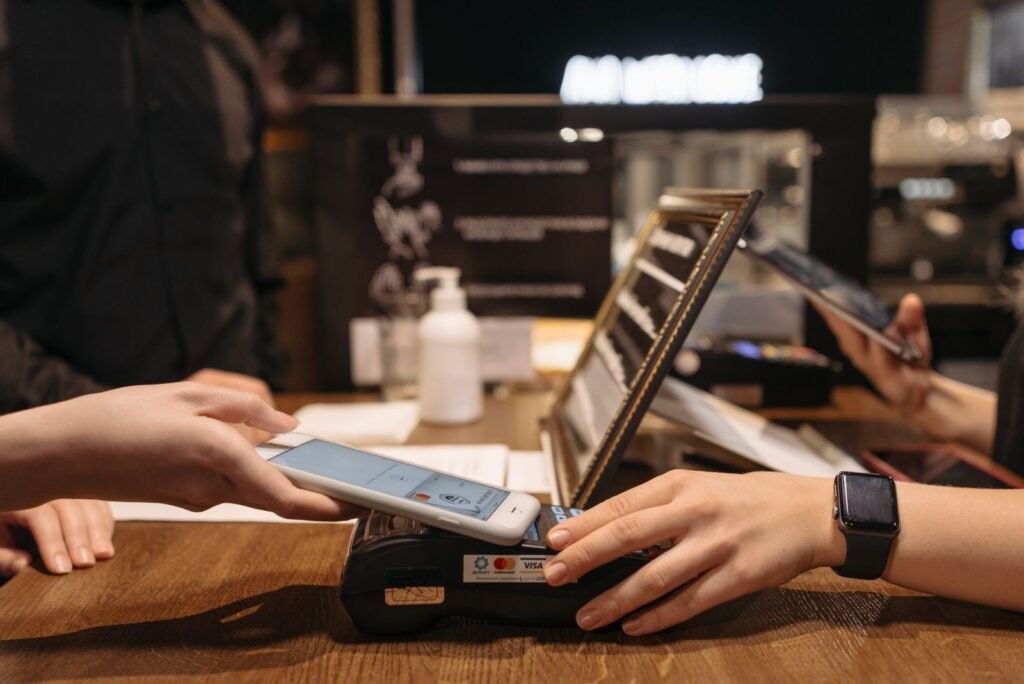
For about twelve years, the checkout lane at Walmart has been the one place in American retail where your phone was useless. You could tap to board a plane, tap to ride the subway, tap to buy a coffee at almost any counter in the country, and then you would walk into a Walmart, hold your iPhone over the terminal, and nothing would happen. The terminal had the hardware. Walmart had simply switched it off.
That ends today. Starting August 24, Walmart and Sam’s Club begin accepting Tap to Pay at registers, which means Apple Pay, Google Pay, Samsung Wallet and plain contactless cards all work. The rollout starts at a limited set of stores and clubs, expands to every U.S. Walmart and Sam’s Club by the end of 2026, and reaches fuel stations by the middle of 2027.
It is a small change at the register and a very large change in what it says about who won the payments argument.
⚡ The short version
- Tap to Pay goes live August 24 at select Walmart stores and Sam’s Club locations, not everywhere at once.
- All the big wallets are in. Apple Pay on iPhone and Apple Watch, Google Pay, Samsung Wallet, and contactless credit and debit cards.
- Full coverage is promised by the end of 2026, with Walmart fuel stations following by mid 2027.
- Nothing is being taken away. Walmart Pay stays in the Walmart app, and Sam’s Club Scan & Go is unchanged.
- Your Walmart, Sam’s Club and OnePay cards can go into your wallet app, which is the part of this announcement that explains the timing.
What Actually Changes at the Register
The mechanics are boring, which is the point. You wake your phone, hold it near the reader, authenticate with your face or fingerprint, and you are done. No app to open, no QR code to line up, no waiting for the camera to focus under fluorescent lights.
Walmart’s own framing was deliberately low key. “Tap to Pay gives customers and members another familiar and convenient way to pay at checkout using contactless payment methods,” the company said in its announcement. Google, which has spent a decade watching its wallet get blocked at the country’s largest retailer, sounded rather more pleased. “Tap to pay using Google Pay is a proven time-saver for in-store shoppers, and now, we’re excited to bring that convenience to Walmart customers,” said Stavan Parikh, Google’s vice president and general manager for payments.
| When | What turns on | Where |
|---|---|---|
| August 24, 2026 | Tap to Pay goes live at checkout | Select Walmart stores and Sam’s Club locations |
| Through fall 2026 | Staged expansion, store by store | Rolling across the U.S. footprint |
| End of 2026 | Full availability at registers | All U.S. Walmart stores and Sam’s Clubs |
| Mid 2027 | Contactless at the pump | Walmart fuel stations |
The staged approach matters more than it sounds. If you drive to your local Walmart tonight and tap, there is a real chance nothing happens, and that is not a fault with your phone. Until the switch reaches your store, the reader stays deaf. The reliable tell is the contactless symbol lighting up on the terminal display when the total appears.
Which Wallets and Devices Work
Because this is standard NFC acceptance rather than some bespoke Walmart arrangement, essentially everything that taps anywhere else now taps here.
| Payment method | Works at checkout | Notes |
|---|---|---|
| Apple Pay | Yes | iPhone and Apple Watch, once your store is switched on |
| Google Pay | Yes | Android phones and Wear OS watches |
| Samsung Wallet | Yes | Galaxy phones and Galaxy Watch |
| Contactless cards | Yes | Any credit or debit card with the wave symbol |
| Walmart, Sam’s Club and OnePay cards | Yes | Eligible cards can be added to your phone’s wallet app |
| Walmart Pay | Still here | QR flow inside the Walmart app, unchanged |
| Sam’s Club Scan & Go | Still here | Scan as you shop and skip the lane entirely |
Why Walmart Said No for Twelve Years
The usual explanation you hear is that Walmart was being stubborn. The real reason is arithmetic, and it is worth understanding, because it explains why this took so long and why it eventually stopped making sense.
Every time a customer pays with a credit card, roughly one to three percent of the transaction goes to the card issuer and the networks as an interchange fee, better known as the swipe fee. For a retailer moving hundreds of billions of dollars a year through American registers, a fraction of a percent is real money. Walmart has fought that cost for as long as it has existed, and Apple Pay, from Walmart’s perspective, was a beautifully designed machine for making card payments easier and therefore more frequent.
There was a second objection, and it was about data. Apple Pay is deliberately opaque to the merchant. Walmart Pay is not. When you check out through the Walmart app, the purchase attaches cleanly to your account, which is exactly what a company building an advertising business and a fintech arm wants.
Twelve years of saying no
2012
Retailers band together
Walmart, Target, CVS and others form MCX to build CurrentC, a QR based wallet that routes around the card networks.
2014
The readers go dark
Weeks after Apple Pay launches, MCX members switch off NFC acceptance on terminals that already supported it.
2016
CurrentC collapses
The consortium falls apart and most members quietly turn contactless back on. Walmart launches Walmart Pay, also QR based, and holds the line alone.
2026
The holdout ends
After reaffirming its position as recently as January, Walmart flips the switch on August 24 and brings its own cards into third party wallets.
Almost every other major MCX member abandoned the strategy within two years. Walmart kept it for a decade longer than anyone else.
The strategy was not irrational when it started. In 2014, contactless payment in America was a curiosity. Blocking it cost Walmart almost nothing, because almost nobody was trying to use it.
Why It Stopped Working
What broke the position was not a change of heart. It was the country catching up.
Contactless share of U.S. card payments
Industry estimates. The exact figures vary by source, but the shape of the curve does not.
2017 around 3%
2020 the pandemic jump
2023 around 25%
2026 a clear majority of in person card transactions
More than 90 percent of U.S. card terminals supported contactless by the end of 2025, and the share of shoppers who tap rather than insert has climbed every year since.
Once tapping became the default gesture rather than the novelty, refusing it stopped reading as a negotiating position and started reading as a broken checkout. Home Depot, Lowe’s, Kroger and H-E-B had all folded. Aldi and Publix remain among the few large chains still holding out. Walmart was the headline name on a shrinking list, and every one of those failed taps was a small friction in a business built on removing friction.
There is also a straightforwardly commercial reason, and it sits in the announcement itself. Walmart, Sam’s Club and OnePay cards can now go into Apple Wallet and Google Wallet. OnePay is Walmart’s fintech venture, and a card that cannot live in the wallet app people actually use is a card that gets left behind. Once Walmart wanted its own products inside Apple’s and Google’s wallets, refusing to accept those wallets in its own stores became untenable. This is the same logic that has been pulling retailers to weave payments into everything they touch, and Walmart is now playing that game from both sides of the counter.
The Privacy Trade Nobody Mentions at Checkout
Tapping is not just faster than the QR code flow. It is built differently underneath, and the difference is worth knowing.
What happens when you tap:
- Your real card number never leaves your phone. It is replaced by a device specific token, stored in a hardware chip separated from the operating system.
- Every transaction gets a one time cryptogram. Intercepting the token achieves nothing, because it cannot be replayed.
- Your face or fingerprint authorizes the release. A lost phone is not a usable payment card.
- The merchant sees an amount, not an identity. Walmart still knows what you bought and can still tie it to a loyalty account if you scan one, but the card credentials stay out of its systems.
Walmart Pay works the other way around. It runs inside Walmart’s app, on Walmart’s account, and the purchase attaches to your profile by design. Neither approach is sinister, but they optimize for different people. Tap to Pay optimizes for you. Walmart Pay optimizes for Walmart, and now that both sit at the same register, you get to choose which one you would rather feed.
The security argument is the stronger half of the case anyway. Card skimming at the terminal is a solved problem for anyone tapping, which is the same reason the habits that keep you safe when paying online safely increasingly point back at tokenized wallets rather than typed in card numbers.
One thing worth thinking about first
Moving your everyday payment method onto your phone makes the phone itself more valuable to steal. That is not a reason to avoid it, but it is a reason to make sure the basics are switched on: a real passcode rather than a four digit repeat, biometric unlock, and remote wipe configured.
Android users should also make sure the platform’s newer anti theft protections are enabled, since they are designed for exactly this scenario.
How to Be Ready Before You Get to the Lane
Five minutes of setup:
- On iPhone, open Wallet, tap the plus button, and add your card. Double click the side button at the terminal, authenticate, then hold the phone near the reader.
- On Android, install or open Google Wallet, add a card, and confirm NFC is on under Settings, Connected devices. Unlock the phone and hold it to the reader.
- On a Galaxy, Samsung Wallet works the same way, and swiping up from the bottom of the screen brings up your default card.
- Add your Walmart, Sam’s Club or OnePay card too if you carry one, since eligible cards can now live alongside everything else.
- Keep a backup for now. Until the rollout reaches your store, carry the physical card, because a store that has not been switched over will simply not respond.
What This Actually Settles
It would be easy to file this as a convenience update. Register accepts phone, shoppers save four seconds, story over. But the twelve year standoff was a genuine argument about who controls the checkout, and it has now been resolved.
Walmart did not win the fight against swipe fees by blocking Apple Pay, and it was never going to. What it did instead was build its own bank, its own card program and its own rewards currency, and then it discovered that all of those things need to live inside the wallets Apple and Google already own. The concession at the register is the price of admission to the wallet on your phone.
For shoppers, none of that strategy matters much. What matters is that the last conspicuous dead spot in American contactless payment is being switched on, store by store, between now and New Year. If you tap tonight and nothing happens, try again next month. The long argument is over. The rollout is just logistics.
