

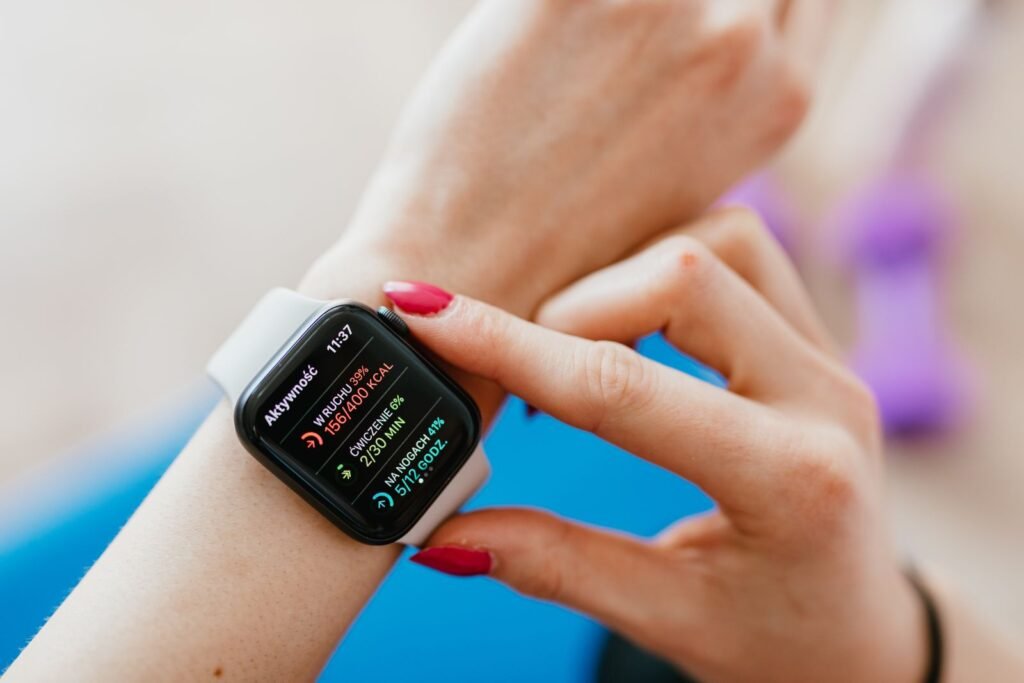
Most “best smartwatch” roundups are written around a single default wrist, and it usually is not a small one. Cases ship in 44mm and 46mm as the norm, bands are cut for a men’s watch and then simply belted tighter, and features like cycle tracking get mentioned as an afterthought bullet point rather than a real buying factor. That gap is exactly why so many women end up returning their first smartwatch and trying again.
This guide compares the smartwatches that actually get sizing, weight, and health tracking right in 2026, using real case dimensions, battery figures, and prices rather than marketing rounding. Whether you want the smallest possible case, the longest battery life, or the most useful cycle tracking, there is a specific answer below rather than a generic top five.
Quick answer
For most people, the Apple Watch Series 11 is the best smartwatch for women who carry an iPhone, thanks to a proper battery upgrade and detailed cycle tracking built into the Health app. On Android, the Samsung Galaxy Watch9 matches it feature for feature. If a small case matters more than a big screen, the Withings ScanWatch Light (37mm) and Garmin Lily 2 Active (38mm) are the two genuinely compact options that do not skimp on sensors.
What Actually Matters When You’re Buying a Smartwatch as a Woman
Spec sheets bury the details that matter most for a comfortable fit and useful health data underneath megapixel-style marketing numbers. Before comparing specific watches, it helps to know which numbers to actually look at.
- Case diameter and lug-to-lug length. A 44mm case can still overhang a small wrist if the lug-to-lug measurement (the distance from the top edge to the bottom edge) is long. Anything at or under 38mm with a lug-to-lug near 40mm sits flush on most wrists under 6 inches around.
- Band width. Standard bands run 20 to 22mm wide. Watches built with women specifically in mind usually drop to 16 to 18mm, which changes how the whole watch sits and looks.
- Weight. A hybrid or fitness-focused case without a bright always-on display can weigh half as much as a flagship smartwatch, which matters if you wear it to sleep for tracking.
- Cycle and hormone-linked tracking. Wrist-based skin temperature is now common across brands, and it is genuinely useful for spotting fertile-window and cycle-length trends, but it is a wellness estimate rather than a diagnostic tool. Our breakdown of what each smartwatch actually tracks and which features are FDA cleared covers exactly where that line sits for health sensors in general, and the same logic applies here.
- Battery life versus display quality. An always-on AMOLED screen looks better but drains faster. Hybrid watches trade that screen for weeks of runtime instead of hours.
Best Smartwatches for Women in 2026, Compared
Here is how the six watches worth actually considering stack up on paper before getting into which one fits which kind of buyer.
| Watch | Smallest Case | Battery Life | Cycle Tracking | Starting Price |
|---|---|---|---|---|
| Apple Watch Series 11 | 42mm | Up to 24 hours (38 in Low Power Mode) | Yes, via Apple Health | From $399 |
| Apple Watch SE 3 | 40mm | Up to 18 hours (32 in Low Power Mode) | Yes, via Apple Health | From $249 |
| Samsung Galaxy Watch9 | 40mm | Up to 30 hours with always-on display | Yes, via Samsung Health | From $379 |
| Google Pixel Watch 4 | 41mm | Up to 30 hours | Yes, via the Fitbit app | From $349 |
| Garmin Lily 2 Active | 38mm | Up to 9 days | Yes, via Garmin Connect | From $249.99 |
| Withings ScanWatch Light | 37mm | Up to 30 days claimed | Yes, symptom and temperature logging | From $249.95 |
The Best Picks, Broken Down
Best overall for iPhone: Apple Watch Series 11
Series 11 is the first mainline Apple Watch to clear a full day of normal use without a top-up, rated at 24 hours with the always-on display running and stretching to 38 hours in Low Power Mode. Cycle tracking lives inside the Health app and combines wrist temperature, retrospective ovulation estimates, and logged symptoms into a single view that also feeds your sleep and heart rate data. The tradeoff is still price and platform lock-in: this is a $399-and-up watch that only pairs properly with an iPhone.
Best budget pick for iPhone: Apple Watch SE 3
The SE 3 keeps the same 40mm and 44mm case options and the same Health app cycle tracking as the flagship, minus the always-on display and a couple of the newest sensors. At $249 to start, it is the cheapest way into Apple’s health ecosystem, and the tradeoff in battery life (18 hours rated, 32 with Low Power Mode on) is honestly close enough to the pricier model that most casual users will not notice the difference day to day.
Best for Android: Samsung Galaxy Watch9
Samsung’s 40mm case is the smallest Galaxy Watch has offered in a few generations, and the larger 390mAh battery in that size finally gets it to a genuinely usable 30 hours with the screen always on. Samsung Health folds skin temperature readings into cycle length predictions and pairs that with the same body composition and sleep tools available on the larger Watch9 Ultra. If you want the fuller picture of how it stacks up against other Android options, our guide to the best Android smartwatches in 2026 compares it against Wear OS alternatives beyond just the women’s-fit angle covered here.
Best value on Android: Google Pixel Watch 4
At $349, the Pixel Watch 4’s 41mm case splits the difference between Samsung and Apple’s smaller sizes, and its 30-hour battery life matches the Galaxy Watch9 almost exactly. Cycle tracking runs through the Fitbit app rather than a dedicated Google tool, which means slightly less polish than Samsung or Apple’s native implementations, but the underlying temperature sensor and symptom logging cover the same ground for less money.
Best small and stylish pick: Garmin Lily 2 Active
Garmin built the Lily 2 Active specifically around a smaller wrist rather than shrinking a men’s case. The 38mm body is 11mm thick and weighs just 29 grams, noticeably lighter than any watch above, and it still packs GPS, SpO2, heart rate, and skin temperature sensors that feed Garmin Connect’s cycle tracking. Battery life is the real headline here: up to 9 days in smartwatch mode, which is four to nine times longer than anything running a full-color always-on display.
Best hybrid and longest battery: Withings ScanWatch Light
If the idea of a touchscreen on your wrist has never appealed to you, the ScanWatch Light is the one genuine exception on this list. It looks like a normal analog watch with a small secondary dial for step progress, at 37mm and just 27.1 grams it is the lightest and smallest watch here, and Withings rates the battery at up to 30 days per charge, with most real-world use landing closer to two to three weeks. You lose full app notifications and a bright display, but for symptom logging, temperature-based cycle tracking, and sleep monitoring without ever thinking about a charger, it is hard to beat. It is also a good example of the broader category covered in our guide to the best hybrid smartwatches, which trade a screen for battery life across several brands.
Finding Your Size: A Quick Wrist-to-Case Guide
Case size charts on retail sites rarely mention wrist circumference, which is the number that actually predicts whether a watch will look and feel right. Measure around your wrist bone with a soft tape or a strip of paper, then match it here.
| Wrist Circumference | Recommended Case Size | Good Fits From This List |
|---|---|---|
| Under 6 inches (15.2cm) | 34 to 38mm | Withings ScanWatch Light, Garmin Lily 2 Active |
| 6 to 6.5 inches (15.2 to 16.5cm) | 38 to 40mm | Apple Watch SE 3, Samsung Galaxy Watch9 |
| 6.5 to 7 inches (16.5 to 17.8cm) | 40 to 42mm | Google Pixel Watch 4, Apple Watch Series 11 |
| Over 7 inches (17.8cm) | 42mm and up | Any watch on this list, or the larger case option of each |
As a rule of thumb, keep the case diameter at or under about 70 percent of your wrist circumference, and check the lug-to-lug measurement specifically if you have a shorter wrist rather than just a thin one. A watch can be small in diameter and still overhang badly if the lugs stick out too far on either side.
Cycle tracking is a wellness estimate, not a lab test
Every brand covered here uses wrist skin temperature, not core body temperature, to estimate ovulation timing and flag cycle irregularities. That is genuinely useful for spotting trends over months, but none of it replaces a basal body thermometer or a doctor’s visit if something feels off. Treat a flagged irregularity as a reason to pay closer attention, not as a diagnosis.
Frequently Asked Questions
Do I need a “women’s” smartwatch, or can I just buy a smaller size of a regular one?
In most cases the smaller size of a mainstream watch, like the 40mm Apple Watch SE 3 or Samsung Galaxy Watch9, works fine. Watches marketed specifically toward women, like the Garmin Lily 2 Active, mainly add value if you need a case under 38mm or a genuinely lighter build, not because the software or sensors are meaningfully different.
Which smartwatch has the best cycle tracking?
Apple and Samsung currently offer the most detailed implementations, combining skin temperature with retrospective ovulation estimates and symptom logs inside their respective health apps. Garmin and Withings track the same underlying data but present it with less polish, which is worth knowing if a clean, guided interface matters to you.
How long do these smartwatches actually last on a charge in real use?
Touchscreen smartwatches with always-on displays, meaning the Apple, Samsung, and Google options here, typically land at the low end of their rated battery life with everyday notifications and workout tracking turned on. Garmin’s Lily 2 Active and the Withings ScanWatch Light are the exceptions, since neither relies on a bright always-on color screen to function.
Is a smaller case worse for fitness tracking or GPS accuracy?
No. Case size affects comfort and screen space, not sensor quality. The Garmin Lily 2 Active has built-in GPS despite its 38mm case, and the accuracy of the heart rate and SpO2 sensors depends far more on fit and skin contact than on case diameter.
Final Verdict
There is no single best smartwatch for women in 2026, only the best one for how you actually want to wear it. If you are on iPhone and want the most complete health picture, the Apple Watch Series 11 earns its price. Android owners get nearly identical coverage from the Samsung Galaxy Watch9, and the Pixel Watch 4 covers the same ground for less. If a genuinely small, light case matters more than a bright display, the Garmin Lily 2 Active and the Withings ScanWatch Light are the two watches on this list actually built for that, and the ScanWatch Light in particular means you may only think about charging it twice a month.
