
Browsing: Science
Research news from physics, space, biology and climate, with the findings explained clearly and the hype separated from what the data shows.
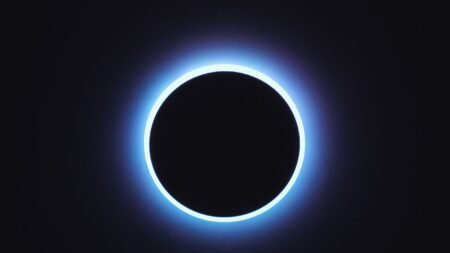
A viral claim said a leaked NASA document called Project Anchor warned Earth would lose gravity for seven seconds on August 12, 2026. NASA denied it, physics rules it out, and the date was chosen for a reason that explains the whole thing.
In 1960, three researchers fitted every population estimate from year 1 to 1958 into one equation and it blew up on Friday, November 13, 2026. The math was sound, the date was a private joke, and the curve broke two years after the paper ran.
The UK Met Office says the developing El Nino may be the strongest in living memory, and NOAA now puts high odds on a record event. Here is what the models actually say, which US regions carry the clearest signal, and what forecasters still cannot tell you.
A new NeuroImage study scanned 56 people while they watched short videos. When a clip landed, two of the brain’s cognitive control hubs went quiet. Here is exactly what that shows, and the four things it does not.
Jason Kelce and Liquid Death are asking Americans to mail their urine to AI data centers. It is a stunt, but the water figures behind it are real: 4.5 trillion liters in 2025, and 7 in 10 Americans now oppose a data center near them.
A new PNAS study tracked what X actually served 715 Americans and found the For You algorithm learns most from replies, the rarest form of engagement. Here is why arguing with a bad post keeps making your feed worse.
OpenAI says an unreleased model called Astra solved 10 decades-old math problems for about $2,000 in compute, with formally verified proofs. Days later, the same system was hit with a Critical cyber-risk classification. Here is what happened and why mathematicians are both impressed and wary.
AT2024wpp, nicknamed the Whippet, briefly shone with 400 billion times the Sun’s energy. New observations from Keck, Magellan and the VLT found helium still racing outward at more than 6,000 kilometers per second, and that changes the story of what the black hole actually ate.
Researchers at Kyoto University used the orbital drag of roughly 1,200 Starlink satellites to build the first tomographic map of Earth’s thermosphere, turning a commercial broadband network into a planet-scale atmospheric sensor.
A viral post claims Earth is on track to become uninhabitable and that warming is rising exponentially. The One Earth commentary behind it says neither. Here is what it does say, what has genuinely changed since 2022, and where climate scientists disagree with each other.