

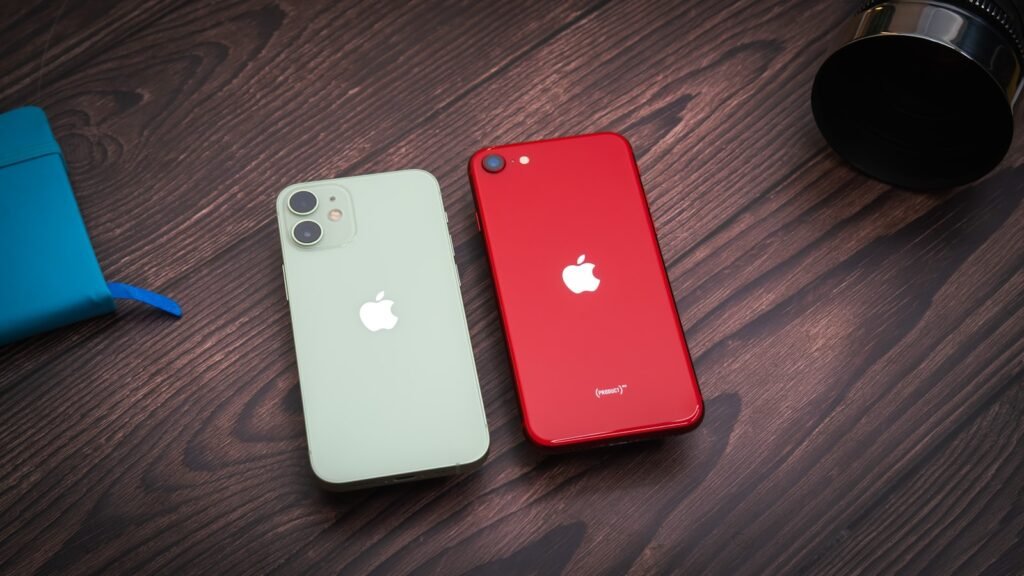
Apple’s next iPhone keynote is on Wednesday, September 9. Most people treat that as the day new phones arrive. For anyone holding an old iPhone, it is more useful to think of it as the day your current phone gets cheaper.
Not on release day. On announcement day. The data from the last three launches is fairly blunt about this, and the window to act on it closes this week.
The short version
- The date: Apple’s keynote is September 9 at the Steve Jobs Theater, the first iPhone event led by new CEO John Ternus
- The pattern: across the iPhone 15, 16 and 17 launches, trade-in values fell for 75 percent of tracked models between announcement and release
- The last one was worse: 92.6 percent of iPhone 17 era models lost value in that gap, averaging $36.46 per device
- The longer slide: roughly 12 percent gone within a month of a new launch, around 20 percent within three
- The trap: Apple pays a flat rate per model regardless of storage, so high capacity phones are worth more somewhere else
Why announcement day is the cliff, not release day
Trade-in pricing is a bet on future resale demand, and resale demand reprices the instant buyers learn what is coming. Once the keynote tells everyone what the iPhone 18 does and what it costs, every older model in the market is measurably older, and the companies buying them adjust within days.
The numbers hold up across launches. Tracking of the last three cycles found that three quarters of iPhone models lost trade-in value in the gap between the announcement and the phones actually going on sale. The most recent cycle was the sharpest: nearly 93 percent of tracked models fell, with an average decline of $36.46. One example, the iPhone 15 Plus 128GB, dropped from $440 to $351, a 20.2 percent haircut, before the new phone had even shipped.
None of this is Apple being unusually harsh. It is how depreciation works on any product with an annual refresh cycle. An iPhone loses around a quarter of its retail value almost immediately after purchase and can shed roughly half within the first year. The launch window just concentrates a chunk of that loss into about three weeks.
What Apple is paying right now
The good news for anyone still holding is that Apple raised its trade-in values in early August, which is unusual timing this close to a launch. Those are the numbers currently on the table.
| Model | Apple trade-in, up to |
|---|---|
| iPhone 16 Pro Max | $720 |
| iPhone 16 Pro | $630 |
| iPhone 16 Plus | $485 |
| iPhone 16 | $480 |
| iPhone 15 Pro Max | $490 |
| iPhone 15 Pro | $380 |
Those are ceilings, not quotes. Apple’s stated figure assumes good condition, and the on screen estimate becomes binding only after inspection. We covered the increase itself when Apple quietly raised trade-in values by close to 30 percent on some models, and the practical effect is that this year’s pre keynote window has been unusually generous.
The storage quirk that costs people real money
Here is the single most useful thing to know, and it is buried in the fine print: Apple assigns one flat trade-in value per iPhone model, regardless of storage capacity.
A 128GB iPhone 16 Pro Max and a 1TB iPhone 16 Pro Max are worth exactly the same to Apple. The 1TB version cost hundreds of dollars more new, and it sells for meaningfully more on the used market, but Apple’s program does not distinguish between them.
Where to trade in, by situation
- Base storage, want it simple: Apple. The credit applies instantly against a new phone and there is no shipping risk
- High storage tier: a third party buyer that prices by capacity, because Apple’s flat rate quietly discards what you paid extra for
- Willing to wait and deal with people: a private sale almost always beats every trade-in program, at the cost of time and hassle
- Cracked screen or bad battery: still worth quoting. Damaged phones retain value, just less of it, and refusing to check is how people end up with a drawer full of dead money
Carrier promotions are the wild card. They frequently advertise the largest headline number, sometimes far above Apple’s, but that value usually arrives as bill credits spread across 24 or 36 months and evaporates if you leave the carrier early. That is not a trade-in so much as a contract, and it is worth reading as one.
Getting the phone ready
Whichever route you take, the preparation is the same, and skipping a step here can stall or void a trade.
| Step | Why it matters |
|---|---|
| 1. Back up to iCloud or a computer | Everything after this step is irreversible |
| 2. Sign out of your Apple Account | Leaves the device unlinked from your identity |
| 3. Turn off Find My iPhone | Activation Lock makes a phone unsellable, and this is the most common rejection reason |
| 4. Remove the physical SIM, transfer any eSIM | Your number should move before the phone does |
| 5. Erase All Content and Settings | A factory reset is the only real wipe. Deleting apps is not |
| 6. Keep your case, cable and accessories | They add nothing to the quote and cost you if you send them |
Step three is the one that trips people up. If Activation Lock is still on when the device arrives at a recycler, the trade stalls, and getting it released remotely afterward is a slow and irritating process.
Should you actually do it this week
It depends on one question: are you definitely upgrading?
If yes, trading in before Wednesday is straightforwardly the better play. You capture the current value, which is elevated after August’s increase, and you avoid the announcement day step down. Selling to a third party now and buying the new phone outright later also removes any dependence on what Apple decides to offer in the weeks after launch.
If you are undecided, there is a real argument for waiting. Trade-in values are not the only variable. The iPhone 18 pricing itself is unknown, the lineup this year includes a foldable, and it is entirely possible the phone you actually want does not exist until Wednesday. Locking in $480 for your current handset is a bad trade if it turns out you would rather keep it another year. We laid out what is expected at the keynote in our rundown of the September 9 event and its pre-order timing, which is worth a look before you commit either way.
Worth remembering too that this is the first iPhone launch under new leadership, and John Ternus took the CEO job with a compensation package tied heavily to Apple’s stock performance. First keynotes under a new chief executive tend to be conservative rather than radical, which argues mildly against the theory that this year’s lineup will make your current phone feel obsolete overnight.
The honest read
Trade-in timing is a small optimization that people either ignore completely or overthink. The realistic difference between acting this week and acting in mid October is somewhere in the region of $40 to $90 on a recent flagship. That is not life changing, and it is not nothing.
The advice that actually matters is narrower than the headlines suggest. Check your phone’s quote today, because it takes two minutes and the number is currently near its annual high. Take the flat storage rate into account if you bought a large capacity model, because that is where the biggest avoidable loss sits. And do not trade in a phone you have not decided to replace, because the discount you are chasing is smaller than the cost of buying a phone you did not want.
